G’day, Auckland. If there is one thing that unites every suburb from Orewa down to the Waitākere Ranges, it is the sheer volume of rubbish we produce on a daily basis. But here is the hard truth that most folks ignore: your waste is a five-star buffet for rodents, cockroaches, and ants.
Right now, in May 2026, we are staring down the barrel of a massive autumn pest surge. Thanks to a mild winter and a scorching summer last year, pest populations have exploded across the region. Now that the weather is cooling down, they are looking for a warm place to crash and a reliable food source.
We see it every day, especially out here in West Auckland where the native bush meets urban living. You can have the cleanest kitchen in Henderson, but if your outdoor bins are a mess, you are fighting a losing battle. Effective waste management and pest control in Auckland is not just about tying up your rubbish bags; it is about structural exclusion and scientific eradication.
We do not just spray chemicals and walk away like some of the old-school operators. We find the root cause, block the entry points, and keep your property compliant and safe. Let’s get into what you actually need to know about managing waste and keeping pests off your property.
Key Takeaways
Proper waste management and pest control in Auckland requires integrated pest management (IPM), not just toxic sprays. Commercial food businesses must meet strict Food Act 2014 standards using non-toxic monitoring. For residents, securing wheelie bins and sealing structural entry points is the only way to stop the 2026 autumn pest surge.
The Autumn 2026 Pest Surge: Why Auckland’s Waste is a Magnet
We are currently dealing with one of the most aggressive autumn pest surges Auckland has seen in years. The combination of last year’s mild winter and hot summer created the perfect breeding conditions for rats and cockroaches. Now, as temperatures drop, these pests are migrating indoors rapidly.
Your rubbish bins are the frontline of this invasion. Poor waste habits draw pests onto your property, and from there, it is only a short trip into your wall cavities or roof space. We constantly remind our clients that waste management and pest control in Auckland go hand-in-hand; you cannot succeed at one while ignoring the other.
Out in West Auckland, the problem is amplified by our proximity to dense bushland. Rats will happily forage in the Waitākere Ranges during the summer, but come autumn, your overflowing wheelie bin looks much more appealing. Once they establish a reliable food source, they will immediately start looking for nesting sites in your ceiling insulation.
Hardware store bug bombs and cheap baits will not solve a waste-driven infestation. They only treat the symptoms, leaving the root cause—and the structural entry points—wide open for the next generation of pests.
Commercial Waste: The Food Act 2014 Reality Check
Auckland’s hospitality sector is booming, contributing to a record $15.99 billion turnover nationwide in FY2025. But more food means more waste, and the Ministry for Primary Industries (MPI) is not messing around. The Food Act 2014 enforces a strict, zero-tolerance policy for pests in commercial kitchens and waste areas.
If you run a cafe, restaurant, or warehouse, your waste storage area is your biggest legal liability. Food outlets that fail to show they produce safe kai are named and shamed, and poor waste management is the fastest way to drop your food grade certificate. An MPI audit failure due to a pest infestation can result in immediate closure and hefty fines.
Toxic “spray and pray” applications near dumpsters are not just outdated; they are often illegal in sensitive food zones. Under the EPA HPC Notice 2017 and the HSNO Act 1996, applying Class 9 ecotoxic substances requires a highly qualified technician. You must use a contractor holding the New Zealand Certificate in Pest Operations (Level 3).
Commercial waste management and pest control in Auckland has shifted entirely to Predictive Integrated Pest Management (IPM). This means using non-toxic monitoring stations, mechanical traps, and strict hygiene protocols around commercial bins. We work alongside businesses to ensure their waste areas meet every compliance standard without risking food contamination.
| Methodology | Old School “Spray & Pray” | 2026 IPM Standards |
|---|---|---|
| Primary Action | Reactive chemical spraying | Predictive monitoring & structural exclusion |
| Food Safety Risk | High (toxic drift near waste/food) | Zero-emission / Non-toxic monitoring |
| MPI Compliance | Likely to fail HACCP audits | Fully compliant with Food Act 2014 |
| Long-Term Value | Low (pests return quickly) | High (permanent root-cause solutions) |
Specific Pests Attracted to Auckland Waste
Different types of waste attract different types of pests. Understanding exactly what you are dealing with helps you manage your bins more effectively and stop an infestation before it starts.
- Rodents (Rats and Mice): They are drawn to high-protein and high-fat food scraps. A poorly sealed compost bin or a cracked wheelie bin lid is a primary target.
- Cockroaches: These scavengers thrive on decaying organic matter and moisture. Rinse your recyclables, as the sugary residue in soft drink cans is a major attractant.
- Ants: Argentine ants are a massive issue across Auckland. They will swarm unsealed rubbish bags looking for sweet foods and fats, often trailing directly into your kitchen.
- Wasps and Flies: During the warmer months, meat scraps and sugary drinks in open bins will attract aggressive wasps. This becomes a high-risk safety issue for commercial hospitality venues.
Residential Rubbish: Navigating the Tenancy Tribunal
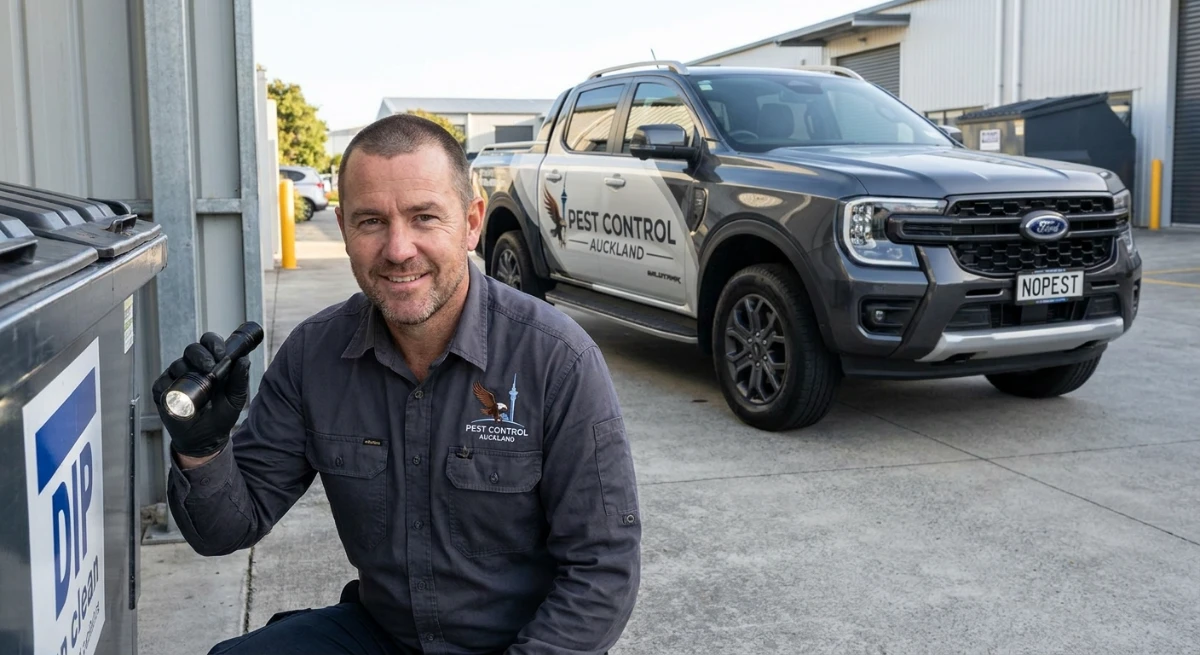
For residential properties, wheelie bins and compost heaps are the usual suspects for drawing in pests. A cracked bin lid or a poorly managed compost pile is an open invitation for rodents and flies. Once they are feeding comfortably outside, it is only a matter of time before they chew their way inside your home.
This dynamic frequently leads to intense disputes between landlords and tenants over who is responsible for the pest control bill. Under the Residential Tenancies Act, landlords must provide a pest-free home at the start of a tenancy. However, tenants are legally required to maintain reasonable cleanliness throughout their stay.
If a tenant’s overflowing rubbish or unsealed compost bin causes a rat problem, the liability can quickly shift away from the landlord. We provide clear, unbiased documentation after our inspections that satisfies Tenancy Tribunal requirements. We identify exactly how the pests are entering and whether waste management is the root cause.
Always keep your wheelie bin lids tightly closed. Wash them out monthly with a weak bleach solution to remove food odours that attract flies and rodents from neighbouring properties.
Furthermore, if you are attempting DIY trapping around your bins, you must adhere strictly to the Animal Welfare Act 1999. Live-capture traps must be physically inspected within 12 hours of sunrise every single day without fail. Glue boards for rodents are heavily restricted, illegal in most contexts, and frankly inhumane, which is why we never use them.
The Auckland Regional Pest Management Plan (RPMP) 2020-2030
Pest control is not just a backyard issue; it is a regional biosecurity mandate that affects all of us. The Auckland Council’s Regional Pest Management Plan (RPMP) 2020-2030 sets strict rules for managing invasive species across the region. This expansive 10-year document puts Auckland at the forefront of biodiversity protection nationally.
The RPMP includes strict pathway management rules for the Hauraki Gulf Controlled Area, including Waiheke and Aotea Great Barrier. This ensures pests do not hitchhike on waste, gear, or boats moving to the islands. Managing your household waste properly is a direct contribution to protecting these vulnerable native ecosystems.
We have seen massive regional successes recently, such as the operations in the Hūnua Ranges where rat tracking plummeted to just 1.3%. But these macro-level victories are completely undermined if urban Aucklanders leave their rubbish unsecured. A collective effort is required to maintain these low pest numbers across our city.
FutureProofing: The FAOPMA Pest Summit 2026
The pest management industry is evolving rapidly, and our city is right at the centre of this global shift. In July 2026, Auckland is proudly hosting the FAOPMA Pest Summit at the New Zealand International Convention Centre (NZICC). The theme for this year is “FutureProof: Smarter Pest Solutions for a Rapidly Changing World.”
This summit highlights the industry’s move towards digital transparency, sustainability, and eco-conscious interventions. We are moving away from reactive poisons and embracing smart technology, like IoT-enabled monitoring for commercial waste bins. The future of pest control is predictive, data-driven, and deeply integrated with smart waste management.
The 2026 FAOPMA Summit in Auckland reinforces our local commitment to advanced, zero-emission pest management techniques that protect both our communities and native wildlife.
How We Fix It: The Silver Bullet Guarantee
At Pest Control Auckland, we tackle the intersection of waste and pests with scientific precision and local know-how. We know that simply laying bait around a dumpster will not solve a systemic issue. We focus on structural entry-point exclusion, identifying nesting areas, and providing practical, long-term prevention advice.
Our technicians are fully certified to handle Class 9 Urban Pest Management pesticides, but we always prioritise a safety-first approach. We assess your waste storage setup, implement zero-emission treatments where appropriate, and protect your family, pets, or commercial brand. That commitment to thorough, reliable work is what we call our Silver Bullet Guarantee.
Stop relying on hardware store sprays. Contact us for a comprehensive property assessment and let us secure your home or business against the autumn pest surge.
Practical Steps to Starve Pests Out
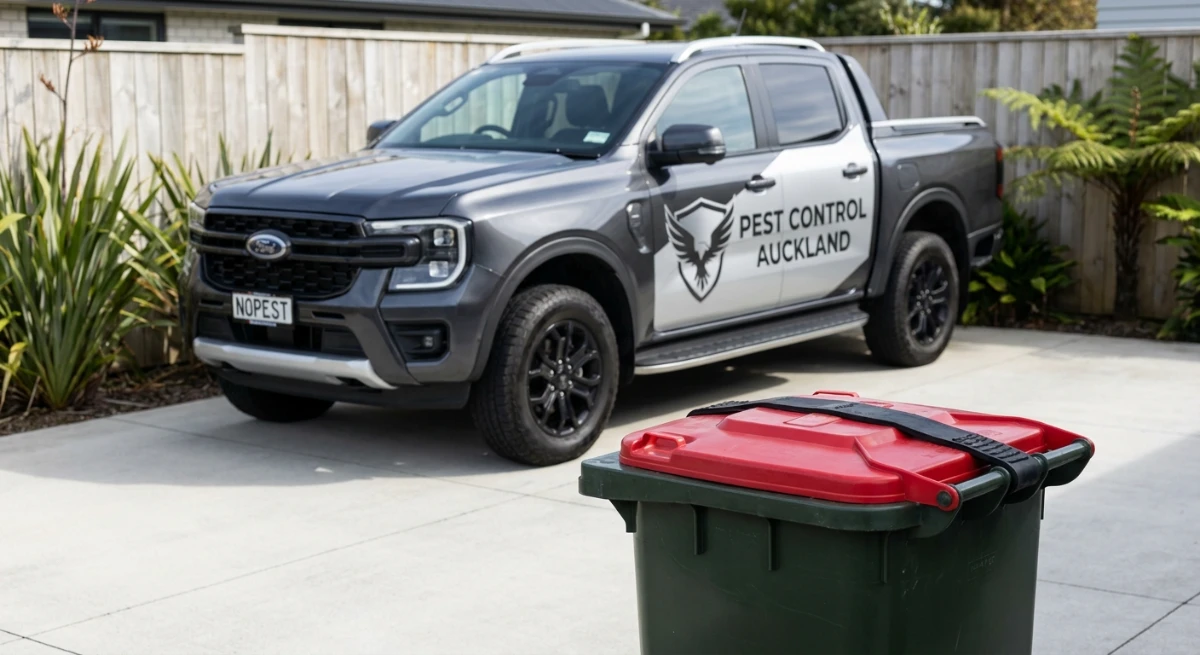
You can drastically reduce your pest risk by making a few simple, everyday changes to how you handle rubbish. Pests fundamentally need three things to survive: food, water, and shelter. If you cut off their food supply at the bin, they will likely move on to easier pickings.
- Double-bag food waste: This reduces odours that attract flies and rats from miles away.
- Elevate your compost: Keep compost bins off the ground and use rodent-proof mesh around the base.
- Rinse recyclables: A dirty baked bean can is a feast for a cockroach. Rinse all tins and plastics before binning them.
- Fix leaky outdoor taps: Bins often sit near outdoor hoses. Fix drips to deny pests a reliable water source.
Mastering waste management and pest control in Auckland is a true team effort between you and your pest technician. You handle the day-to-day hygiene and bin security, and we will handle the scientific eradication and structural exclusion. Together, we can keep your property compliant, safe, and completely pest-free.
Frequently Asked Questions

About the Author: Ronnie
Founder, Pest Control Auckland · Commercial & Residential Pest Expert · Certified Urban Pest Management Specialist
With years of experience in structural exclusion and Level 3 urban pest management, Ronnie is the definitive expert to write about Waste Management & Pest Control: What Aucklanders Need to Know. Having consulted for numerous West Auckland hospitality venues on Food Act 2014 compliance, he understands exactly how to align commercial waste practices with rigorous biosecurity standards.