Rats in the roof? We will find how they are getting in, block it, and clear them out — usually in one visit. You do not need a sales pitch when pests are chewing through your wiring or invading your kitchen.
The reality is simple. South Auckland properties face immense pressure from urban pests. The autumn of 2026 brought a massive surge in rodent and insect activity following a mild winter and scorching summer.
We provide straightforward, highly effective Pest Control Services South Auckland residents can rely on. No fear-mongering, just certified technicians solving the problem at its root.
Key Takeaways
To get the most reliable Pest Control Services South Auckland has to offer, you need structural exclusion, not just surface sprays. Landlords must provide pest-free homes, while tenants must maintain hygiene. Ensure your technician holds a Level 3 qualification for safe, MPI-approved treatments that permanently eradicate rodents and insects.
The Reality of South Auckland Pests in 2026
The pest landscape in Auckland is changing fast. Suburbs like Manukau, Papatoetoe, and Takanini are expanding rapidly, pushing wildlife out of their natural habitats and directly into our homes. This urban sprawl means rodents are adapting to live closer to humans.
As the city prepares to host the FAOPMA Pest Summit in July 2026 [1], the industry focus is shifting globally. The era of cheap, toxic “spray and pray” treatments is officially over. Modern pest management requires a highly scientific, predictive approach that targets the biological habits of pests.
We are also seeing the downstream effects of massive regional conservation efforts. Following the highly successful 2025 aerial drops that plummeted rat tracking in the Hūnua Ranges to 1.3%, displaced urban pests are seeking new territories. Your property is their primary target.
Common Invaders: Rats, Mice, and Cockroaches
The Norway rat and the Roof rat are the two primary culprits causing property damage in South Auckland. They breed rapidly and can squeeze through gaps as small as a 20-cent coin. Once inside, they shred insulation to build nests and leave toxic droppings near your food sources.
Cockroaches are equally destructive. The German cockroach, in particular, thrives in the warm, humid environments of South Auckland kitchens. They reproduce at an alarming rate, making them incredibly difficult to eradicate with standard off-the-shelf sprays.
When searching for Pest Control Services South Auckland, you are dealing with aggressive, climate-adapted urban populations. Roof rats are seeking shelter in warm ceiling cavities, while German cockroaches are invading kitchen appliances. You need a fast, decisive response.
Stop wasting money on hardware store bug bombs. They only scatter the nest deeper into your walls. Call a certified professional to identify the structural entry points and eradicate the colony at its source.
Why Standard Sprays Fail (And What Actually Works)
Most budget exterminators will walk into your home, spray the skirting boards, and hand you a bill. That is not pest control. That is merely symptom management.
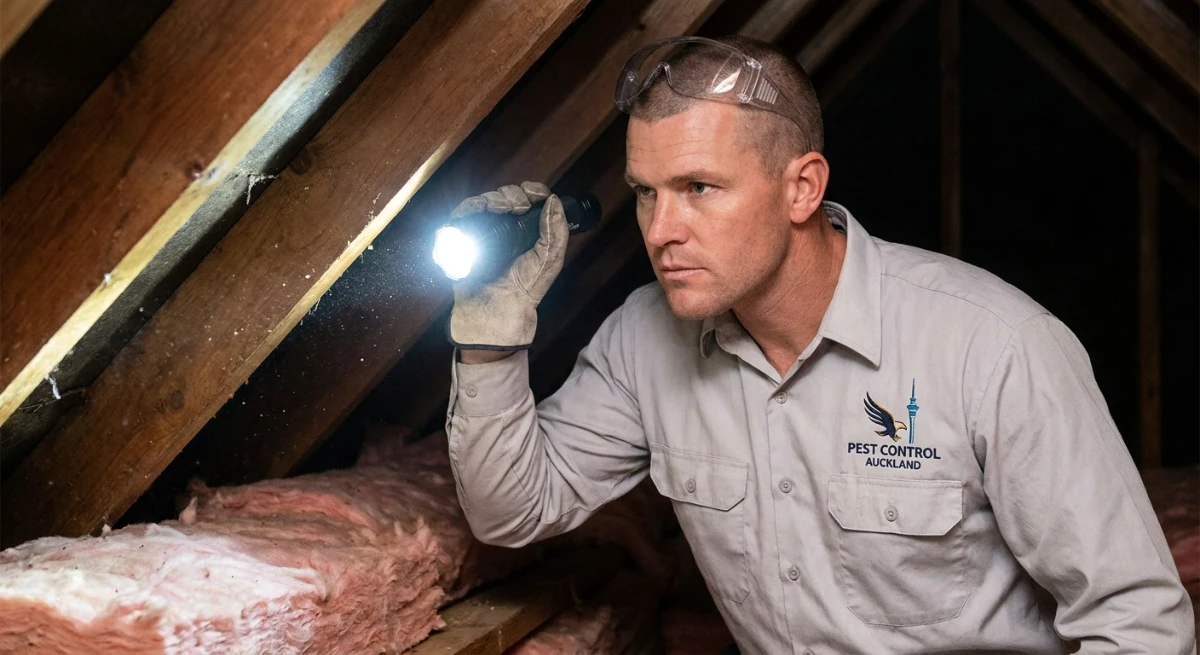
Real pest management is about exclusion and root-cause analysis. If you have rats in the ceiling, poisoning them without blocking the entry point guarantees another rat will simply move in next month. We find the hole, we block it, and then we clear out the stragglers.
This is why our Pest Control Services South Auckland programs are built entirely around Predictive Integrated Pest Management (IPM). We focus on the biology and habits of the specific pest invading your home, rather than blanketing your property in chemicals.
The Importance of Level 3 Certification
Handling commercial-grade pesticides is not a game. Under the HSNO Act 1996, operators handling Class 9 ecotoxic substances must be a “Qualified UPM Contractor.” This requires the New Zealand Certificate in Pest Operations (Level 3).
We never cut corners with your family’s safety. Our treatments are MPI-approved and strictly applied to ensure zero risk to your children and pets. If a pest control company cannot immediately produce their safety data sheets upon request, show them the door.
Do not attempt DIY trapping without understanding the law. The Animal Welfare Act 1999 mandates that live-capture traps must be physically inspected within 12 hours of sunrise every day. Glue boards for rodents are also heavily restricted in New Zealand.
Landlord vs. Tenant: Who Pays for Pest Control?
This is the single most common dispute we see in the rental market. A tenant wakes up to cockroaches, and the landlord refuses to pay the exterminator. The Residential Tenancies Act 1986 provides very clear guidelines on this exact issue [2].
Simply put: landlords must provide a clean, pest-free property at the start of the tenancy. They are also legally responsible for structural defects, such as gaps in the roof or unsealed pipe penetrations, that allow pests inside.
However, tenants must keep the property reasonably clean. If a tenant leaves food out constantly, fails to manage rubbish, and attracts a rat infestation, the extermination bill falls squarely on them. It is all about establishing the root cause.
| Scenario | Who Pays? | Reasoning (NZ Law) |
|---|---|---|
| Pests present when tenant moves in | Landlord | Property must be in a reasonable state of cleanliness at start of tenancy. |
| Rats entering through broken roof tiles | Landlord | Landlords must maintain structural integrity and seal entry points. |
| Cockroaches due to unmanaged rubbish | Tenant | Tenants must maintain hygiene and not invite infestations. |
| Flea outbreak caused by tenant’s dog | Tenant | Tenant’s pet directly caused the issue; requires end-of-tenancy flea treatment. |
When you book our Pest Control Services South Auckland team, we provide a detailed, independent inspection report. This document clearly identifies the entry points and the likely cause, which helps resolve tenancy disputes immediately without heading to the Tribunal.
Commercial Pest Compliance in South Auckland
South Auckland is an industrial and hospitality powerhouse. For cafes, restaurants, and massive logistics warehouses, pest control is not optional. It is a strict legal requirement enforced by the Ministry for Primary Industries (MPI) and the Food Act 2014.
You cannot use toxic rodenticide bait in food preparation areas. Commercial operators must rely on non-toxic monitoring, mechanical traps, and rigorous exclusion strategies. A single pest sighting can result in a failed health inspection and severe brand damage.
We also ensure your business complies with the Auckland Regional Pest Management Plan (RPMP) 2020-2030 [3]. This plan enforces strict pathway management rules to prevent the spread of invasive species. We handle the complex compliance paperwork so you can run your business.
Zero-Emission Treatments for the Food Sector
The commercial market is shifting away from heavy chemical applications. We offer specialized “Zero-Emission Transition Kits” for restaurants and cafes. This proactive approach uses smart monitoring stations and mechanical traps to maintain a completely hygienic, chemical-free kitchen environment.
By adopting these advanced IPM strategies, your business stays ahead of stringent MPI regulations. You protect your stock, your staff, and your hard-earned reputation without relying on outdated, toxic methods.
We provide full commercial biosecurity compliance auditing for the hospitality sector. You receive transparent logbooks and digital reporting that satisfy council health inspectors instantly.
Native Wildlife vs. Invasive Threats
It is vital to draw a hard line between invasive urban pests and New Zealand’s protected native wildlife. We are often called out for “strange noises” in the roof, only to discover a native bird or a protected gecko.
Let us be clear: we do not exterminate, kill, or remove protected native wildlife. If you have native birds, skinks, or frogs on your property, they are protected under the Wildlife Act. We will assess these enquiries case by case and refer you to the Department of Conservation (DOC) if needed.
Similarly, if you spot a severe biosecurity threat—like a suspected Yellow-Legged Hornet or an exotic spider—this is not a standard pest control job. It is a national biosecurity concern. You must report it immediately to MPI on 0800 80 99 66.
Our Root-Cause Approach to Eradication
We are a local, family-owned team. We do not hide behind corporate call centres or vague pricing structures. When you hire us, you get direct access to experienced technicians who know the local Auckland environment intimately.
Whether we are delivering Pest Control Services South Auckland or tackling complex jobs for pest control in West Auckland, our methodology remains identical. We assess, we exclude, and we eradicate.
- Thorough Inspection: We find the nests and the exact structural entry points.
- Targeted Treatment: We use advanced, zero-emission treatments that are safe for your family.
- Structural Exclusion: We advise on how to block holes, fix vents, and trim foliage to stop re-entry.
- The Silver Bullet Guarantee: We fix it right the first time, providing long-term peace of mind.
Do not let a minor pest issue become an expensive structural nightmare. Rats chew through electrical wiring, creating severe fire hazards. Cockroaches spread bacteria across your food prep surfaces. Act fast and act decisively.
We also offer the “Auckland Winter Defense Pack,” a proactive subscription model. Instead of waiting for a massive infestation to take hold, we provide scheduled preventative barriers that keep your home completely secure year-round.
Frequently Asked Questions

About the Author: Ronnie
Founder, Pest Control Auckland · Commercial & Residential Pest Expert · Certified Urban Pest Management Specialist
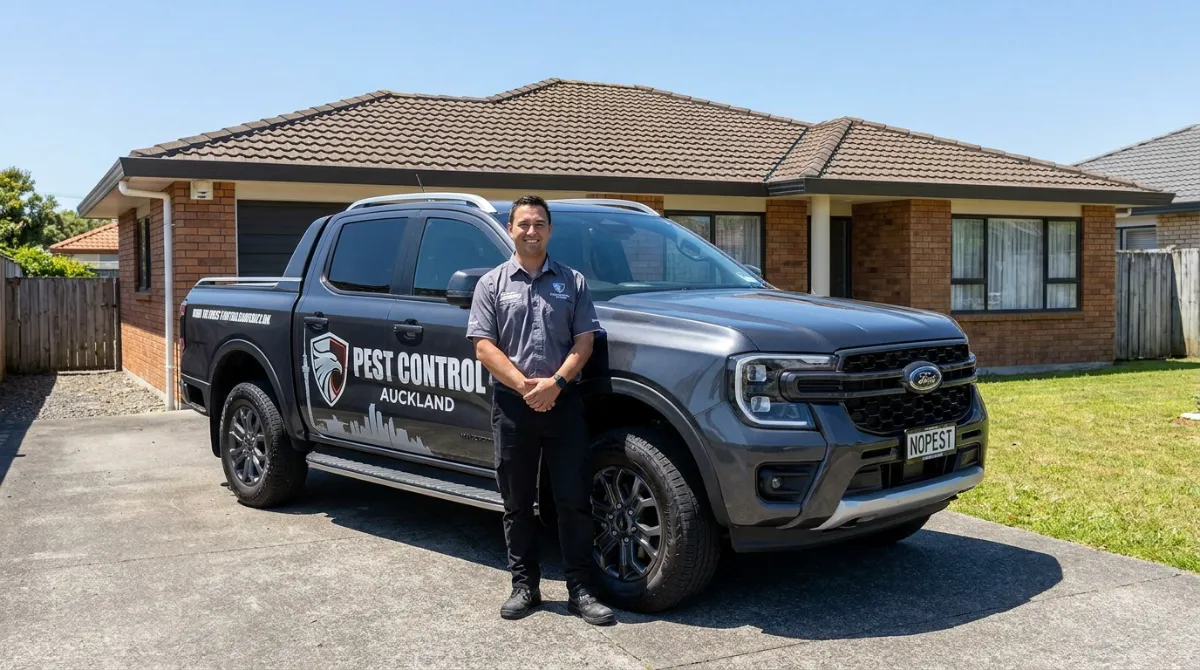
With years of experience managing complex urban infestations, Ronnie is the definitive expert on Pest Control Services South Auckland. Having consulted for property managers and landlords across the region, he ensures all treatments strictly align with the Residential Tenancies Act and the Auckland Regional Pest Management Plan.