Got birds nesting in your roof or pigeons destroying your deck? We’ll find out how they’re getting in, block the entry points, and clear them out—usually in one visit.
When dealing with residential bird control, the goal isn’t just to scare them away for a week. You need a permanent, physical barrier that stops them from roosting, nesting, and destroying your property. We use UV-stabilised netting, stainless steel spikes, and solar panel mesh to lock them out for good.
Key Takeaways
Effective residential bird control requires physical exclusion, not just scare tactics. By installing UV-stabilised netting, stainless steel spikes, and solar panel mesh, we permanently stop pest birds like pigeons and starlings from roosting. Always ensure treatments comply with the Wildlife Act 1953 to protect native New Zealand species.
The Real Cost of Pest Birds on Your Property
Pigeons, starlings, and sparrows aren’t just noisy. They cause serious, expensive damage to Auckland homes. Bird droppings are highly acidic and act like a corrosive paste on your property’s exterior. If left unchecked, this guano will eat through your roof paint, corrode metal gutters, and permanently stain your driveway.
Beyond the structural damage, their nesting habits create massive headaches. Nests block downpipes and ventilation shafts, leading to internal flooding during heavy autumn rains. When built near downlights or electrical wiring inside your roof cavity, dried nesting material becomes a severe fire hazard.
Health Risks and Toxic Droppings
The biggest issue isn’t the mess; it’s what’s living inside it. Feral pigeons are known carriers of severe pathogens and diseases. When bird droppings dry out, they turn into a toxic dust that can easily get sucked into your home’s HVAC system or blown through open windows.
Inhaling this dust can lead to Histoplasmosis, a severe respiratory disease caused by a fungus that thrives in bird guano. Pigeons also bring secondary pests right into your living space. Bird nests are breeding grounds for bird mites, ticks, and fleas, which quickly migrate into your bedrooms once the chicks leave the nest.
Knowing the Enemy: Pest Birds vs. Protected Natives
We don’t touch native New Zealand birds. The Wildlife Act 1953 strictly protects species like the Kererū, Tūī, and Fantail. If a native bird is nesting in an inconvenient spot, we will assess it on a case-by-case basis and advise you accordingly.
Usually, the only legal and ethical advice is to wait until the chicks fledge, then block the hole to prevent them from returning next season. However, introduced pest species like feral pigeons, starlings, and mynas are a completely different story, and we can take immediate action to exclude them.
Never attempt to harm, trap, or poison native New Zealand birds. Doing so violates the Wildlife Act 1953 and carries severe financial penalties. Always consult a certified professional to identify the species before taking action.
The Main Offenders in West Auckland
Feral pigeons are the most common issue in urban Auckland. They breed year-round due to the mild climate, and a single pair can produce up to six broods a year. They love to roost on ledges, under wide eaves, and beneath solar panels.
Starlings and mynas are aggressive cavity nesters. They will rip out your ceiling insulation to build massive nests inside your roof void. Sparrows are smaller but relentless, exploiting any cracked tile or loose flashing to squeeze into gaps as narrow as 20mm.
Proven Residential Bird Control Methods
You cannot spray a chemical to make birds disappear. Effective residential bird control relies entirely on structural modification and physical exclusion. We assess your property, identify the exact roosting spots, and install barriers that make it physically impossible for birds to land.
Bird Netting (The Ultimate Barrier)
High-density, UV-stabilised polyethylene netting is the gold standard for bird exclusion. When installed correctly under canopies, over courtyards, or across balconies, it creates an impenetrable barrier. It is nearly invisible from the ground and will last for over a decade in the harsh Auckland sun.
We tension our nets using marine-grade stainless steel wire ropes and turnbuckles. This ensures the net stays taut and doesn’t sag over time. A perfectly tensioned net simply bounces birds off, preventing accidental entanglement and keeping you compliant with animal welfare standards.
Stainless Steel Bird Spikes
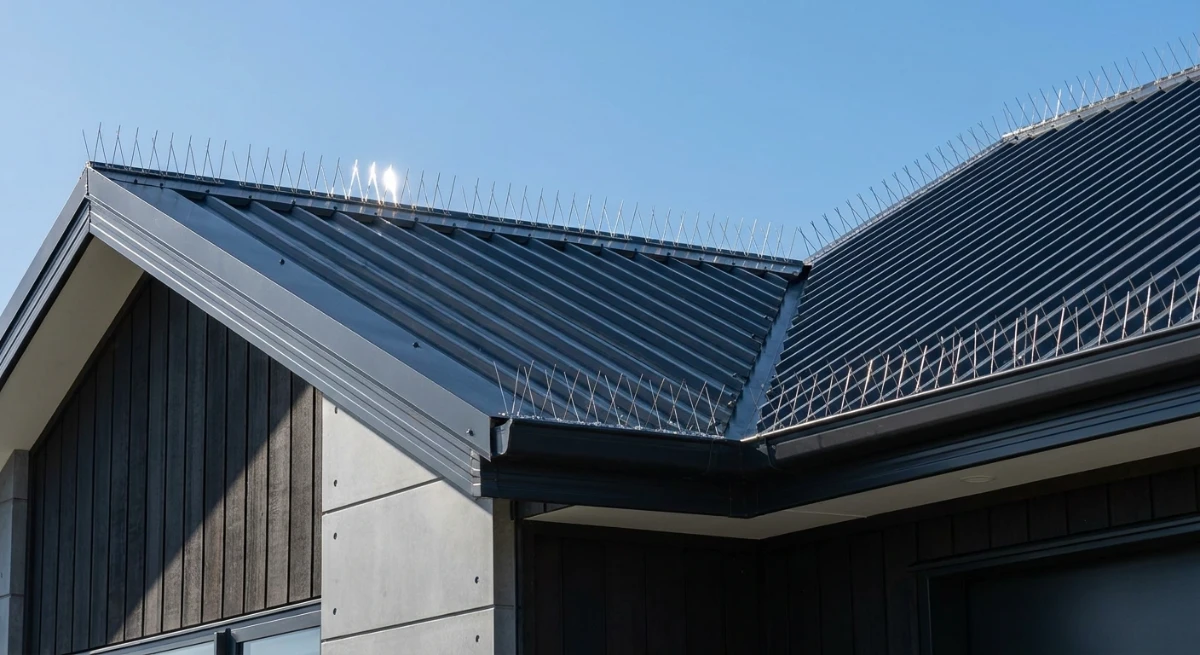
Spikes look aggressive, but they are completely humane. They do not impale the birds; they simply remove the flat surface area, so pigeons physically cannot land. We use marine-grade stainless steel spikes glued and screwed to roof ridges, parapets, and window ledges.
Unlike cheap plastic spikes from the hardware store, our professional-grade spikes won’t become brittle and snap after a year in the sun. They don’t rust, they don’t break, and they provide instant relief from roosting pigeons.
Solar Panel Bird Proofing
Solar panels are an expensive investment. Pigeons love them because they provide shade in summer and warmth in winter. Once they move in, the buildup of highly acidic guano on the panels reduces their efficiency, and the dry nesting material underneath creates a major fire risk.
We install a specialised wire mesh skirt around the perimeter of your solar array. Our mesh systems are fastened using custom UV-stable clips that hook onto the lip of the solar panel. We never drill into the panels, ensuring your warranty remains fully intact.
| Control Method | Initial Cost | Longevity | Effectiveness |
|---|---|---|---|
| DIY Plastic Owls / Tape | Very Low | 1-2 Weeks | Very Low (Rapid Habituation) |
| Ultrasonic Repellers | Medium | 1-3 Months | Low (Ignored by urban birds) |
| Professional Bird Spikes | Medium-High | 10+ Years | High (Prevents landing entirely) |
| Solar Panel Mesh System | High | 10+ Years | Very High (Complete exclusion) |
The Cycle of Despair: Why DIY Bird Deterrents Fail
Most hardware store bird deterrents are a complete waste of money. Birds are highly intelligent and adapt incredibly quickly to changes in their environment. The “Cycle of Despair” begins when homeowners buy cheap gadgets, thinking a quick fix will solve a structural problem.
Plastic owls, reflective tape, and CDs hanging on strings might work for a few days. However, once the birds realise the “predator” never moves or attacks, they lose their fear. We frequently find pigeons literally building nests on top of plastic owls.
Urban birds are already accustomed to loud noises, flashing lights, and human activity. Visual and auditory scare tactics fail because of ‘habituation’—the birds simply get used to them. Only physical barriers offer long-term success.
Ultrasonic Devices and Gels
Ultrasonic noise emitters claim to drive birds away with high-frequency sound. In reality, city birds are used to loud noises and quickly learn to ignore these devices. They are a gimmick that rarely produces lasting results.
Bird repellent gels are sticky substances applied to ledges. While they can deter landing, they trap dirt, look terrible, and the SPCA warns they can cruelly trap smaller non-target birds. Stick to physical exclusion—it is the only method that provides a permanent, humane fix.
Our Scientific, Eradication-First Approach
We treat residential bird control as an engineering problem, not a chemical one. Our approach is rooted in scientific exclusion. First, we inspect the roof cavity and the entire exterior to find every single entry point.
We don’t just look at the obvious holes; we check the entire roofline, soffits, and flashing. Once we identify how they are getting in, we design a custom exclusion plan using industry-leading materials to lock them out permanently.
Before agreeing to any bird control service, ensure the technician physically inspects the roof void. A proper assessment must include checking for secondary pests like bird mites and assessing the fire risk of old nests.
Clean-Up and Decontamination
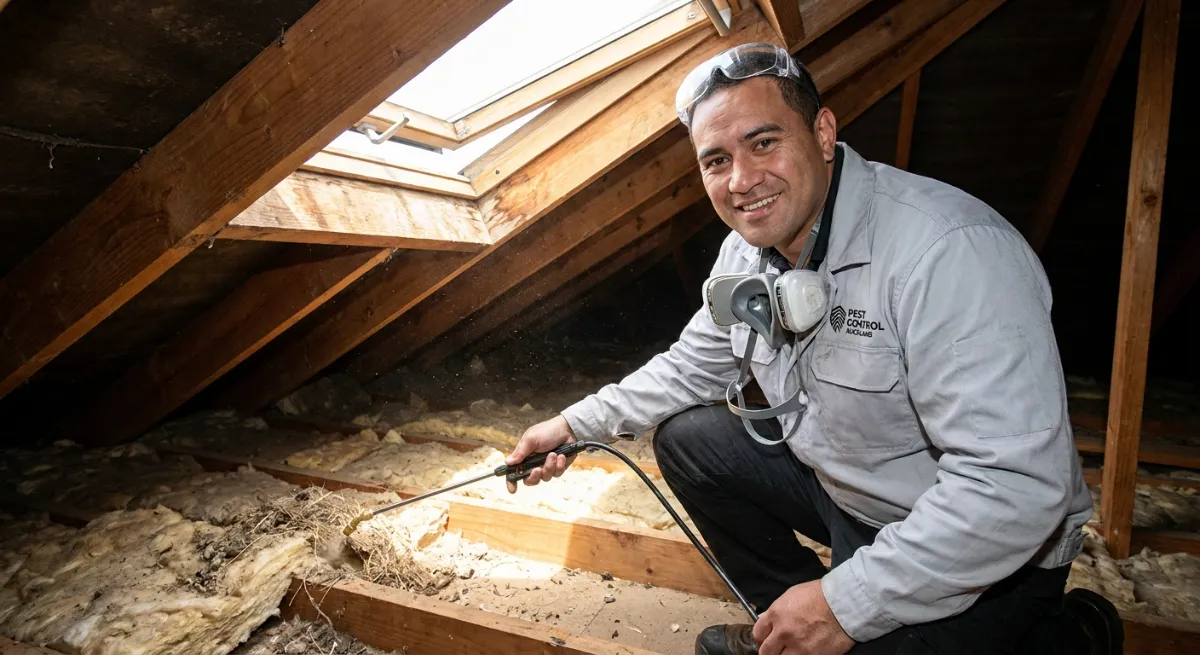
Removing the birds is only half the job. We must also remove the toxic mess they leave behind. We clear out the nesting material, vacuum the droppings, and treat the area with professional-grade disinfectants to neutralise pathogens.
Bird mites are a massive secondary problem. When we exclude the birds, the mites are left without a food source and will march down through your ceiling to bite humans. Our decontamination process includes a targeted residual insecticide treatment in the roof void to kill these mites instantly.
Tenancy and Landlord Compliance
If you own a rental property in West Auckland, bird infestations can quickly become a legal headache. Under the Residential Tenancies Act and Healthy Homes standards, landlords are required to provide a safe, habitable environment.
A roof full of starlings, toxic guano, and biting bird mites directly violates those standards. Tenants have the right to demand immediate action, and failing to resolve the issue can result in hefty fines from the Tenancy Tribunal.
Who Pays for Bird Removal?
Because birds enter through structural gaps and roof defects, the responsibility almost always falls on the landlord, not the tenant. It is considered a maintenance issue.
If you are looking for reliable residential bird control, we provide detailed service reports and photographic evidence of our exclusion work. This documentation proves you have met your legal obligations and protects you in the event of a dispute.
Frequently Asked Questions

About the Author: Ronnie
Founder, Pest Control Auckland · Commercial & Residential Pest Expert · Certified Urban Pest Management Specialist
Expert Justification: With over a decade of hands-on experience in Auckland’s unique climate, Ronnie is the definitive expert on residential bird control. Having consulted for both local homeowners and large commercial facilities, his deep understanding of structural exclusion and New Zealand’s Wildlife Act ensures every bird issue is resolved safely, legally, and permanently.