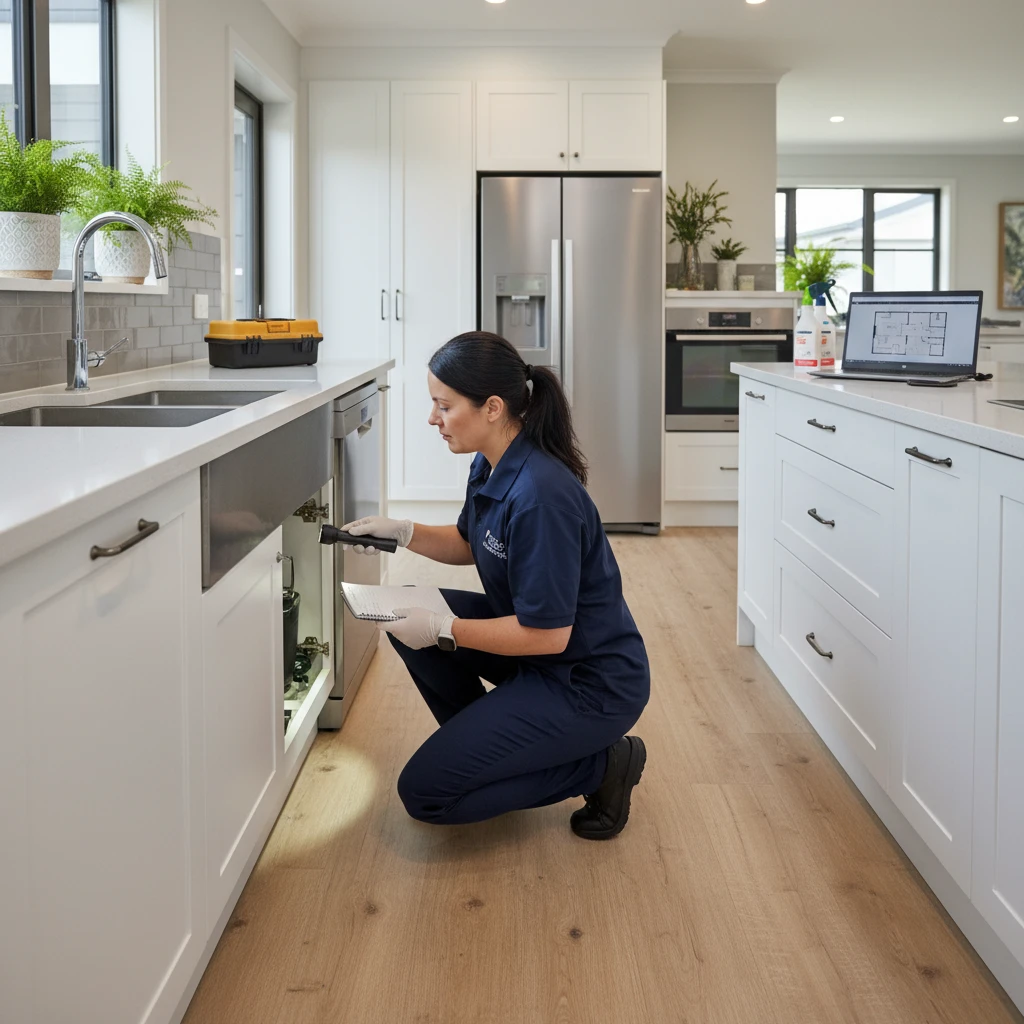
Pest control technician inspecting a New Zealand rental property

Residential Tenancies Act Pest Control Rules

Waking up to the sound of rats scurrying in the ceiling is a nightmare for any tenant. However, the ensuing argument over who pays the exterminator can quickly become a massive headache for both parties involved. Navigating the residential tenancies act pest control rules is absolutely essential for resolving these stressful disputes quickly and legally.

In New Zealand, the law provides a strict framework for property maintenance, but pest control often falls into a frustrating legal grey area. Determining liability requires looking closely at the timing of the infestation, the structural integrity of the home, and the daily living habits of the occupants.

Whether you are a property investor protecting your asset or a renter trying to maintain a healthy home, understanding your legal obligations is non-negotiable. Ignorance of the law can lead to severe financial penalties, strained relationships, and unsafe living conditions.

Key Takeaways

Under the residential tenancies act pest control rules, landlords must provide a pest-free property at the start of a tenancy and seal structural gaps. Tenants are responsible for extermination costs if their poor hygiene or pets cause the infestation. When neither party is at fault, costs are typically shared or covered by the landlord.

Who is Responsible for Pest Control in NZ?

When pests suddenly invade a rental property, the first question is always about financial responsibility. The Residential Tenancies Act 1986 (RTA) does not have a single clause dedicated exclusively to pest control. Instead, it relies on broader property maintenance and cleanliness obligations to assign blame.

Liability generally depends on two critical factors: exactly when the pests appeared and what ultimately caused them. If the property was infested before the tenant moved in, the landlord must cover the extermination costs without hesitation.

Conversely, if the tenant’s daily lifestyle attracted the pests, the financial burden shifts entirely to them. Understanding these baseline landlord responsibilities and tenant duties is the key to avoiding costly legal battles.

📝

Note on Pre-existing Pests

If pests are discovered within the first few weeks of a new tenancy, the Tenancy Tribunal almost always views this as a pre-existing issue that the landlord must pay to resolve.

Pest control technician inspecting a New Zealand rental property

Landlord Responsibilities: Providing a Clean Property

Under Section 45(1)(a) of the RTA, landlords are legally required to provide the premises in a reasonable state of cleanliness. This means handing over a property that is completely free of rodents, insects, and other vermin at the very start of the tenancy.

If a tenant discovers a cockroach nest or a rat problem immediately after moving in, it is highly likely the issue pre-dated their arrival. In these specific scenarios, the landlord must arrange and pay for professional pest control immediately to comply with the law.

Furthermore, the introduction of the Healthy Homes Standards has added another strict layer of responsibility. The draught-stopping standard requires landlords to seal any unreasonable gaps or holes in walls, ceilings, windows, and floors to prevent heat loss.

Structural Maintenance Check

Landlords must regularly inspect the exterior of the property for damaged vents, broken floorboards, or unsealed pipes. Fixing these structural flaws is the best way to keep rodents out.

By sealing these structural gaps to meet the Healthy Homes Standards, landlords are indirectly forced to pest-proof their properties. If a landlord fails to maintain the structural integrity of the home and pests enter through a broken vent, the landlord is entirely liable for the resulting infestation.

Property investors must realize that ignoring these maintenance duties is a fast track to legal trouble. Providing a safe, habitable environment is the most fundamental aspect of property management.

Tenant Responsibilities: Infestations Caused by Living Habits

Tenants also carry a heavy burden under New Zealand tenancy law. Section 40(1)(c) of the RTA explicitly states that tenants must keep the premises reasonably clean and tidy at all times.

If a tenant’s poor hygiene directly leads to a pest problem, they will be footing the extermination bill. Common examples of tenant-caused infestations include leaving unsealed food on kitchen counters, which rapidly attracts ants and cockroaches.

Similarly, allowing rubbish bags to pile up outside the back door for weeks is an open invitation for rats and mice. When tenant responsibilities are blatantly ignored, the landlord has every right to demand compensation for the resulting damage.

💡

Proactive Reporting Tip

Tenants should report any signs of pests to their landlord immediately in writing. Delaying the report can allow the infestation to worsen, which might lead the landlord to blame the tenant for the escalation.

If a landlord can prove that the tenant’s negligence caused the outbreak, they can apply to the Tenancy Tribunal to recover the costs of fumigation. Tenants must understand that a quick spray of supermarket bug repellent is rarely enough to fix a systemic hygiene issue.

Prompt communication is essential. Failing to notify the landlord of a minor pest issue until it becomes a massive infestation is considered a breach of the tenant’s duty to mitigate damage.

Scenario Who is Responsible? Reasoning under the RTA
Pests present on move-in day Landlord Breach of Section 45 to provide a clean property.
Rats entering through broken roof tiles Landlord Failure to maintain structural integrity and seal gaps.
Cockroaches due to unwashed dishes Tenant Breach of Section 40 to keep premises clean and tidy.
Flea infestation from a pet dog Tenant Damage beyond fair wear and tear caused by the tenant’s pet.

Clean residential property exterior in Auckland

Pet Clauses and End of Tenancy Obligations

Allowing pets in a rental property introduces very specific pest control challenges, most notably the high risk of fleas. While the pet laws under the RTA are currently evolving in New Zealand, landlords still have the right to impose reasonable conditions when granting pet consent.

One of the most common and practical conditions is requiring a professional flea treatment at the very end of the tenancy. This ensures that the next occupant does not inherit a hidden pest problem buried deep in the carpets.

Legal Requirements for Flea Treatments

If a tenant’s dog or cat brings fleas into the home, the tenant is unequivocally responsible for eradicating them. Flea infestations are legally considered damage beyond fair wear and tear, and they directly violate the tenant’s obligation to keep the property clean.

Many tenancy agreements include a specific, legally binding clause mandating a professional flea fumigation upon vacating the property. Even if the tenant does not physically see fleas when moving out, this preventative measure is strictly enforced if agreed upon in the contract.

⚠️

Warning on DIY Treatments

Supermarket flea bombs rarely penetrate deep enough into carpets to kill unhatched eggs. If a tenant uses a cheap DIY method and fleas return weeks later, the landlord can deduct professional fumigation costs from their bond.

Can a Landlord Demand a Specific Pest Control Company?

A frequent point of friction is whether a landlord can force a tenant to use one specific exterminator. Generally, a landlord cannot dictate the exact company a tenant must hire, provided the tenant uses a legitimate, professional service.

However, the tenant must provide a valid tax invoice demonstrating that the work was completed to a professional standard. If the tenant hires a substandard service and the fleas survive, the landlord is legally entitled to hire their own exterminator and pass on the cost.

Therefore, it is always in the tenant’s best financial interest to hire a highly reputable, guaranteed pest control company the first time around. Cutting corners on end-of-tenancy pest control almost always leads to bond disputes.

Resolving Disputes Over Pest Infestations

Not all pest problems have a clear and obvious culprit. What happens when ants invade a spotless kitchen mid-tenancy, or spiders take over the exterior of the house? These unexpected mid-tenancy infestations are the most common source of conflict.

When neither party is clearly at fault, Tenancy Services recommends a cooperative, common-sense approach. In many practical cases, landlords and tenants will simply agree to split the cost of the exterminator to resolve the issue quickly and amicably.

However, if communication breaks down completely, either party can issue a formal 14-day Notice to Remedy. If the issue remains unresolved after the notice period, the next legal step is mediation or a formal hearing at the Tenancy Tribunal.

Tenancy agreement and legal documents

Tenancy Tribunal Rulings on Rodents and Insects

The Tenancy Tribunal takes pest control failures very seriously, particularly when they heavily impact the health and safety of the occupants. Landlords who blatantly ignore pest complaints can face massive financial penalties and severe compensation orders.

In a landmark August 2024 ruling, a group of tenants was awarded over $12,000 after enduring a severe, ongoing cockroach infestation. The landlord claimed to have treated the property before the tenancy began but failed to produce any actual receipts to prove it.

The Tribunal noted that the sound of cockroaches scuttling across the ceiling kept the distressed tenants awake at night. Because the landlord failed to provide a clean property and ignored requests for professional help, they were heavily penalized.

Common Pest Disputes in New Zealand Rentals

Conversely, when looking at Tenancy Tribunal pest control rulings, landlords have also won cases where tenants were proven to be entirely negligent. In a June 2024 case, a landlord sought to recover $549 in pest control costs after a tenant was hospitalized for a spider bite.

The Tribunal had to carefully examine whether the tenant’s cleanliness met the standard set by Section 40(1)(c). These rulings prove that detailed evidence, such as text messages and professional invoices, is the only way to win a Tribunal dispute.

Compliance Documentation for Auckland Rentals

Providing reliable pest control in Auckland comes with unique, region-specific challenges. The city’s high humidity and dense urban environment make it a perfect breeding ground for cockroaches in the hot summer and rats in the cold winter.

For Auckland landlords and property managers, keeping meticulous records is the absolute best defense against Tribunal claims. Every pest control treatment, routine property inspection, and structural repair must be documented with dates and official receipts.

If a tenant reports a rat problem in an Auckland rental, the landlord should immediately dispatch a licensed technician and keep the invoice safely on file. Verbal assurances hold absolutely no weight in a legal dispute; the Tenancy Tribunal strictly demands hard, written evidence.

  • Keep all receipts: Never pay cash for pest control without getting a formal tax invoice outlining the specific treatments used.
  • Document inspections: Take date-stamped photos during routine 3-monthly property inspections to prove the home was clean and structurally sound.
  • Use email for complaints: Always require tenants to submit pest complaints in writing so there is a clear timeline of events.
  • Schedule annual preventative treatments: Many proactive landlords schedule a yearly exterior spray at their own cost to stop insects before they enter.

Furthermore, property managers conducting routine inspections should actively look for hidden signs of pests. Checking for rat droppings in the hot water cupboard or borer dust in the floorboards can catch an infestation before it becomes a legal nightmare.

By strictly adhering to the residential tenancies act pest control rules, both landlords and tenants can ensure a safe, healthy, and harmonious living environment. Proactive communication and a steadfast commitment to property maintenance are the ultimate keys to renting success.

Happy tenant and landlord outside a rental property

People Also Ask (FAQ)

Are landlords responsible for pest control in NZ?
Yes, landlords are generally responsible for pest control if the infestation was present before the tenancy began, or if pests entered due to a failure to maintain the property’s structural integrity (such as holes in the roof or walls).
Do tenants have to pay for flea treatments?
If the tenant has a pet that brings fleas into the property, the tenant is entirely responsible for the cost of professional flea extermination. This is often a mandatory clause in pet-friendly tenancy agreements.
What does the Residential Tenancies Act say about rats?
The Act requires landlords to provide a clean, secure property (Section 45) and tenants to keep it reasonably clean (Section 40). If rats enter due to structural gaps, the landlord pays. If they are attracted by the tenant’s rubbish, the tenant pays.
Can I break my lease because of a cockroach infestation?
You cannot simply abandon the property. You must first issue the landlord a 14-day Notice to Remedy. If they fail to fix the severe infestation within that timeframe, you can apply to the Tenancy Tribunal to have the lease legally terminated.
How do Healthy Homes Standards affect pest control?
The draught-stopping standard requires landlords to block unreasonable gaps and holes in walls, floors, and ceilings. By complying with this standard, landlords naturally block the entry points that rodents and insects use to invade the home.
Who pays for wasp nest removal at a rental property?
Wasp nests are generally considered a landlord’s responsibility, as they are an exterior environmental hazard that the tenant did not cause. Professional removal is recommended to ensure the safety of the occupants.

Leave a Comment

Your email address will not be published. Required fields are marked *

Scroll to Top