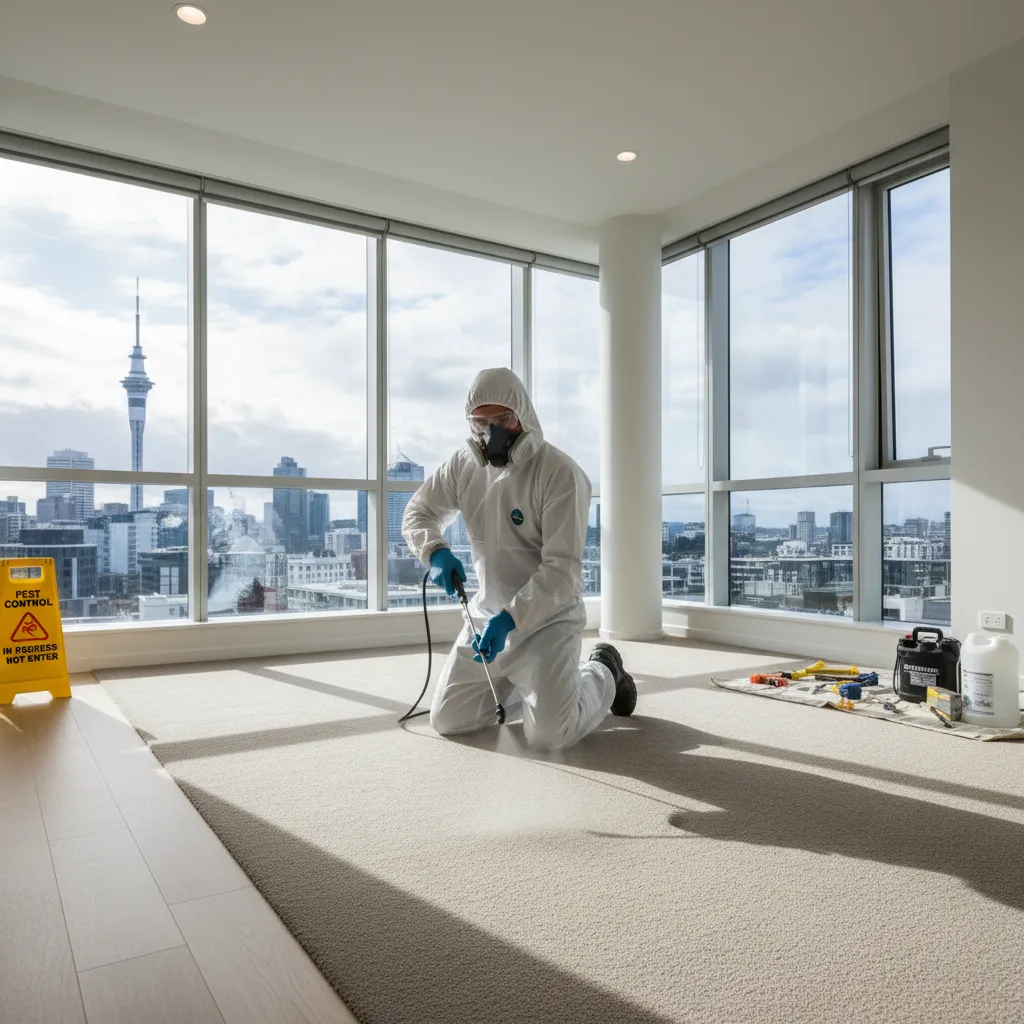
Professional end of lease flea spray technician in Auckland

End of Lease Flea Spray Auckland

Moving out of an Auckland rental property is stressful enough without the looming threat of a landlord withholding your bond over a pet clause. If you have kept a dog or cat on the premises, your tenancy agreement almost certainly includes a strict pest control stipulation. Landlords across New Zealand are increasingly enforcing these specific clauses to ensure their properties remain safe and habitable for the next incoming tenant. Even if your pet has been treated regularly and you have never seen a single insect indoors, you cannot assume the property is completely clear.

The hidden danger lies in the dormant pupae that hide deep within the carpet fibres and floorboard cracks. These microscopic cocoons can remain entirely inactive while the house is empty, waiting patiently for a new host to arrive. The moment the house is tenanted again, the vibrations from footsteps trigger a sudden, aggressive hatching. This biological reality is exactly why booking a professional end of lease flea spray in Auckland is often a non-negotiable legal requirement for getting your full bond returned.

Key Takeaways

An end of lease flea spray in Auckland is frequently required by tenancy pet clauses to secure your bond. DIY foggers fail to penetrate carpets where dormant pupae hide. Professional treatments cost between $180 and $380, providing residual protection that eliminates all lifecycle stages and satisfies property manager inspections.
The Importance of Professional Grade Flea Sprays

Professional end of lease flea spray technician in Auckland

Landlords and property managers in New Zealand are incredibly vigilant when it comes to the signs of a lingering pest problem. Under the Residential Tenancies Act, landlords cannot legally charge an extra “pet bond,” but they can absolutely enforce special clauses requiring professional pest control upon vacating. This strict legal framework means that simply running a vacuum over your floors will not satisfy the final inspection criteria. Property managers require a valid tax receipt from a licensed pest control technician to prove the property has been comprehensively treated.

Attempting to bypass this documentation requirement almost always results in frustrating delays to your bond refund. Furthermore, if the next tenant moves in and immediately discovers an infestation, you could be held entirely liable for the subsequent extermination costs. The tribunal heavily favors landlords when specific pet clauses have been ignored by the outgoing tenant. Therefore, treating the property correctly the first time is your safest financial bet.

Investing in a certified end of lease flea spray in Auckland provides immediate peace of mind and an undeniable paper trail. Professional exterminators utilize commercial-grade insect growth regulators (IGRs) that actively break the reproductive cycle. These advanced chemical formulations are restricted from public sale and provide residual protection that continues working for months after you have handed back the keys.

Why Supermarket Foggers Fail Tenancy Inspections

Many outgoing tenants attempt to save money by purchasing DIY flea bombs or aerosol foggers from their local supermarket. Unfortunately, these over-the-counter products are notoriously ineffective at resolving deeply established infestations. Foggers release a vertical chemical mist that only settles on the top surfaces of your flooring and exposed furniture. They lack the targeted application required to reach the hidden micro-environments where the real threat lives.

⚠️

Warning: DIY Foggers

Supermarket flea bombs cannot penetrate carpet fibres where pupae hide. Property managers are aware of this limitation and will rarely accept supermarket receipts as proof of treatment.

The aerosol droplets from DIY bombs simply cannot penetrate deep into the dense carpet pile or the tight cracks in wooden floorboards. As a direct result, they only kill the adult fleas that happen to be exposed at the exact moment of activation. Relying on these cheap alternatives is a classic false economy that will likely cost you significantly more in the long run. When the property manager rightfully rejects your DIY attempt, you will be forced to hire a professional anyway, effectively doubling your total expenses.

Breaking the Flea Pupae Lifecycle

To truly understand why professional treatments are mandatory, you must understand the complex, multi-stage biology of these resilient pests. The flea lifecycle consists of four distinct stages: the egg, the larva, the pupa, and finally the adult. While jumping adult fleas are the most visible and annoying, they only represent a tiny fraction of the total population inside a home. The vast majority of the infestation exists invisibly as eggs and larvae buried in your flooring.

The pupal stage is by far the most problematic phase for outgoing tenants trying to clean a property. Flea larvae spin a sticky, protective silk cocoon that shields them from standard household cleaning products and weak retail insecticides. Inside this impenetrable cocoon, the pupa can lay completely dormant for up to 5 to 12 months, simply waiting for the ideal environmental conditions to arrive.

💡

Tip: Vibration Triggers

Flea pupae hatch in response to movement, body heat, and vibration. Vacuuming right before the technician arrives forces them to emerge from their cocoons and face the chemical spray.

When a rental home is left vacant during a change of tenancy, the dormant pupae simply wait in the carpets without starving. The moment a new tenant moves their boxes in, the vibrations from their heavy footsteps signal the pupae to emerge instantly as hungry adults. A commercial-grade end of lease flea spray in Auckland utilizes residual chemicals that remain active on the floor long enough to eliminate these newly hatched adults before they can feed and reproduce.

Preparing Your Home for a Flea Spray

Tenant vacuuming empty rental property before flea treatment

A successful pest control treatment requires seamless teamwork between the outgoing tenant and the visiting exterminator. If a rental property is cluttered or poorly prepared, the chemical application will be uneven and significantly less effective. Proper preparation ensures the technician can access all the critical micro-environments where larvae and pupae instinctively hide. Property managers will inevitably inspect these hidden corners, so thorough chemical coverage is absolutely essential for your bond return.

Your chosen pest control provider will usually send a comprehensive preparation checklist a few days before your scheduled appointment. Following these specific instructions to the letter is crucial for your service warranty to remain legally valid. If you fail to prepare the home adequately, the technician may be forced to reschedule the job entirely. This unexpected delay could severely jeopardize your move-out timeline and frustrate your landlord.

Vacuuming Guidelines Before Treatment

Thorough vacuuming is unequivocally the single most important step you can take before the exterminator arrives at your door. Vacuuming serves a vital dual purpose: it removes the physical organic debris that larvae feed on, and the mechanical vibration stimulates dormant pupae to hatch prematurely. By forcing the pupae to emerge early, you expose them directly to the incoming chemical spray. This dramatically increases the immediate knockdown rate of the treatment.

Action: Vacuum Disposal

Immediately empty your vacuum canister into a sealed plastic bag and place it in an outdoor bin to prevent trapped fleas from escaping back into the house.

Pay special attention to the areas where your pets spent the most time, such as living room rugs, bedroom corners, and under staircases. Use the narrow crevice tool on your vacuum to reach along the skirting boards and deep into the gaps of wooden floors. Once you have finished vacuuming the entire house, do not run the vacuum over the floors again for at least 7 to 14 days after the treatment. This vital waiting period allows the residual chemicals to settle and do their job.

Clearing Floor Spaces and Pet Bedding

The technician needs unobstructed access to the maximum amount of floor surface area possible. Before they arrive, you must pick up all small items and elevate them off the carpets. The more floor space you expose, the more comprehensive and effective the treatment will be.

  • Small Furniture: Move dining chairs, side tables, and lightweight stools onto larger items or out of carpeted rooms entirely.
  • Personal Items: Pick up all shoes, clothing, children’s toys, and loose electrical cables from the floor.
  • Pet Accessories: Remove and hot-wash all pet beds, blankets, soft toys, and feeding mats.
  • Under-Bed Storage: Clear out any boxes or storage bins pushed underneath beds so the technician can spray the hidden carpet.
📝

Note: Pet Bedding

Always wash your pet’s bedding in hot water (above 60°C) before packing it. This ensures you do not accidentally transport flea eggs to your new rental property.

If your pet’s bedding is old and heavily soiled, it may be safer to throw it away and purchase a new bed for your next rental. Ensure that all pet food bowls and water dishes are washed and packed away securely before the spraying begins. Leaving food bowls exposed to airborne insecticides is a serious health hazard for your animals.

Pricing and Packages for Auckland Rentals

Average Cost of Flea Treatment in Auckland by Bedroom Count

Budgeting for your move requires a clear and accurate understanding of the expected pest control costs. The price of an end of lease flea spray in Auckland varies depending on the size of the property, the severity of the infestation, and the specific company you choose to hire. However, the established industry standard is to price these services strictly based on the total number of bedrooms. This allows companies to provide accurate quotes over the phone without a prior inspection.

Auckland pest control companies generally offer streamlined flat-rate packages for end of lease treatments, assuming the property is already empty or mostly empty. These packages usually include a full interior spray of all carpeted areas, hard floors, and wooden skirting boards. Some companies may also offer exterior lawn treatments for an additional fee if your pet spent a significant amount of time in the garden.

Property Size Estimated Cost (NZD) Typical Warranty Treatment Time
1-2 Bedroom Home $180 – $200 + GST 3 to 6 Months 1 Hour
3 Bedroom Home $250 – $300 + GST 3 to 6 Months 1.5 Hours
4+ Bedroom Home $330 – $380+ + GST 3 to 6 Months 2 Hours

Flat Rates Based on Bedroom Count

For a standard one to two-bedroom apartment or compact unit in Auckland, you can expect to pay between $180 and $200 plus GST. This entry-level pricing is highly competitive and usually comes bundled with a standard 3 to 6-month service warranty. It is a remarkably small price to pay to secure the immediate release of a rental bond that is likely worth several thousands of dollars.

Medium-sized family homes with three bedrooms typically cost between $250 and $300 plus GST. Because these properties have significantly more floor space and often include multiple living areas, the technician requires more time and chemical product to complete the job thoroughly. The application process must be meticulous to ensure no hidden corners are missed.

Large family homes with four or more bedrooms will generally range from $330 to $380 plus GST. If the property features extensive outdoor decking, a large subfloor area, or a known history of feral animals roaming underneath, the exterminator may recommend an optional subfloor misting treatment. This extra layer of protection ensures that outdoor populations do not migrate indoors after you leave.

Secure Your End of Lease Flea Spray

Handing over keys after successful end of lease flea spray

Timing is absolutely everything when coordinating your complex move-out schedule. The ideal time to book your pest control treatment is for the day after the professional cleaners have finished, but before you hand the keys back to the property manager. This specific sequence ensures the pest chemicals are not accidentally washed away by heavy carpet steam cleaners.

Most treatments require the property to be completely vacated for at least 3 to 4 hours to allow the water-based spray to dry safely. Once the floors are visibly dry, it is perfectly safe for you and the landlord to re-enter for the final property inspection. The technician will provide you with a digital tax invoice and a certificate of treatment to present to your property manager.

Do not make the mistake of leaving your booking until the absolute last minute. The demand for an end of lease flea spray in Auckland peaks massively at the end of the month when most tenancy agreements roll over. By scheduling your appointment two to three weeks in advance, you guarantee the availability of a licensed technician and ensure a smooth, stress-free transition to your new home.

People Also Ask

Can my landlord legally force me to get a flea spray?
Yes, while landlords cannot charge an illegal “pet bond” in New Zealand, they can enforce specific pet clauses in your written tenancy agreement. If your contract explicitly stipulates professional pest control upon vacating, you are legally bound to fulfill this requirement to retrieve your bond.
How long does an end of lease flea treatment take?
A standard interior treatment for a two-to-three-bedroom home usually takes between 1 to 1.5 hours to physically complete. However, you must vacate the property for an additional 3 to 4 hours to allow the water-based chemicals to dry completely before re-entering safely.
Do I need to clean the carpets before or after the flea spray?
You must always arrange for professional carpet cleaning before the flea treatment occurs. If you clean the carpets after the pest control technician has sprayed, the intense steam and extraction process will wash away the residual insect growth regulators, rendering the pest treatment completely useless.
How long do fleas live in an empty house?
Adult fleas can only survive for 1 to 2 weeks without a blood host. However, flea pupae can lay dormant inside their protective silk cocoons for up to 5 to 12 months in an empty home. They will only hatch when the vibrations of a new tenant trigger their sudden emergence.
Will a professional flea spray hurt my cat or dog?
Professional pest control companies use advanced water-based, eco-friendly formulations that have an excellent safety profile for mammals. Once the treated surfaces are completely dry (usually after 3 to 4 hours), it is entirely safe for your pets and children to walk and play on the floors.
What happens if fleas return after the end of lease treatment?
Reputable Auckland exterminators provide a written service warranty, typically lasting between 3 to 6 months. If fleas emerge during this warranty period, the technician will return to re-treat the property at no additional cost, ensuring your landlord remains satisfied with the result.

Leave a Comment

Your email address will not be published. Required fields are marked *

Scroll to Top