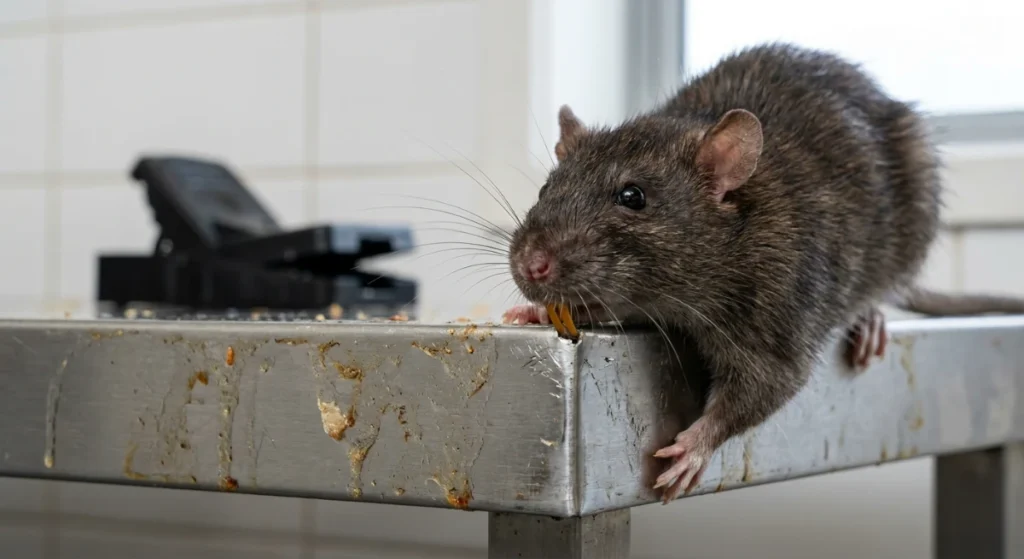
I see it every single week across Auckland. A busy cafe owner spots a rat near the dry store, panics, and throws a handful of cheap toxic bait under the prep benches. They think they have solved the problem, but all they have done is create a massive legal liability.
When that rat eats the bait, it does not die instantly. It wanders around, potentially tracking toxins across your food surfaces, before dying inside a wall cavity where you cannot reach it. Fast forward a few days, and a Ministry for Primary Industries (MPI) auditor walks in, smells the decay, spots the toxic pellets in a restricted zone, and shuts the doors immediately.
We are currently facing a severe autumn pest surge in May 2026, driven by a mild winter and a scorching summer last year. With the New Zealand hospitality sector hitting a record $15.99 billion turnover, the stakes have never been higher. You cannot afford to cut corners with reactive spray-and-pray tactics.
To survive an MPI audit, operators must rely on non-toxic mechanical trapping in commercial kitchens. We do not just treat the symptoms; we find exactly how these pests are getting in, block the entry points, and implement certified, zero-emission exclusion strategies that actually work.
Key Takeaways
To pass MPI audits under the Food Act 2014, implementing non-toxic mechanical trapping in commercial kitchens is a strict legal requirement. Toxic rodenticides are banned in food prep zones. Businesses must use high-impact snap traps or live multi-catch systems, ensuring daily 12-hour inspections to comply with the Animal Welfare Act 1999.
Why Rodenticide Baits are Banned in Food Prep Areas
The Food Act 2014 takes a zero-tolerance approach to chemical contamination in sensitive hospitality environments. When you operate a commercial kitchen, you are legally obligated to ensure that no maintenance compounds or pesticides adversely affect the food being processed. This is not just a suggestion; it is a rigid legal framework designed to protect public health.
This means that standard toxic rodenticides are strictly prohibited in areas where food is prepared, cooked, or plated. The risk of secondary poisoning is simply too high. If a rodent consumes a toxic block and then crawls across your cutting boards, the cross-contamination can cause a severe public health incident.
Using unapproved toxic baits in a food preparation zone is a direct breach of HACCP standards. MPI auditors will issue an immediate closure notice if they discover loose rodenticide pellets near food storage, costing you thousands in lost revenue.
Furthermore, poisoned rodents behave unpredictably. They often seek out water sources as the toxin takes effect, meaning they will inevitably die near your dishwashing stations, under commercial sinks, or inside your plumbing voids. The resulting odor and blowfly infestation will ruin your venue’s reputation overnight.
To remain compliant, we enforce strict Integrated Pest Management (IPM) protocols. We focus on structural exclusion first, sealing up the building so pests cannot enter in the first place. When internal control is necessary, non-toxic mechanical trapping in commercial kitchens is the only legally sound and scientifically proven method to physically remove the threat without risking chemical drift.
Types of Mechanical Traps for Hospitality
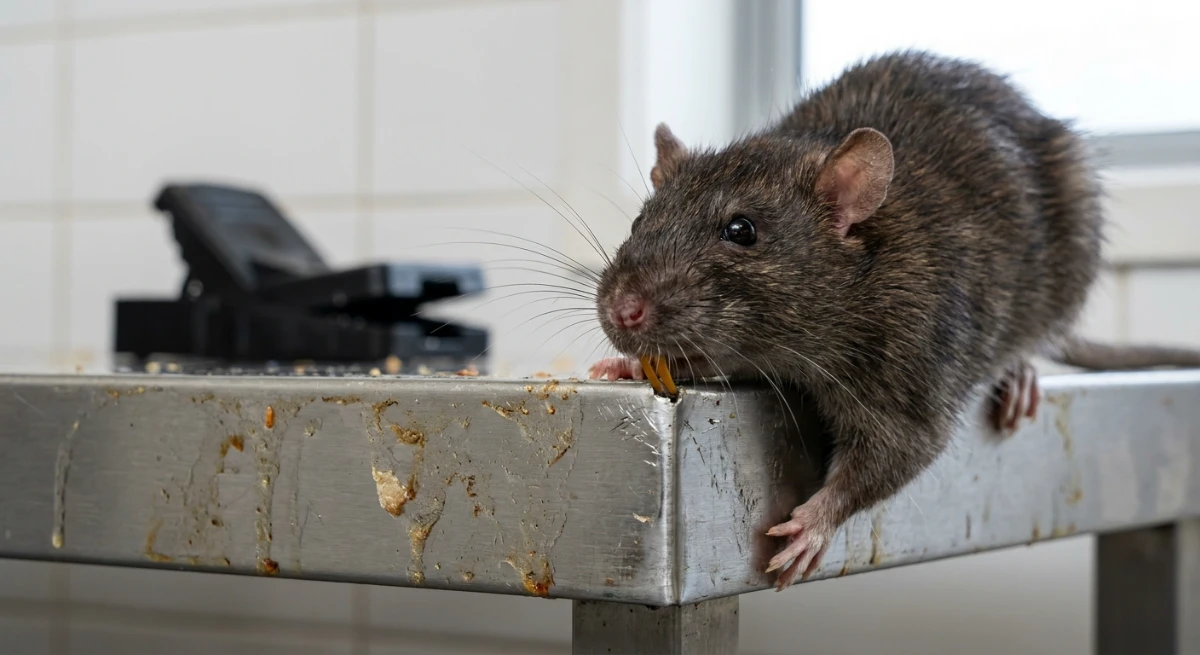
Modern commercial pest control has evolved far beyond the cheap, flimsy wooden snap traps you buy at the local supermarket. Today, we utilize highly engineered containment systems designed specifically for the rigorous hygiene standards of the Auckland hospitality sector.
These systems ensure that when a pest is caught, it is contained cleanly and out of sight from your staff and patrons. There are two primary categories of mechanical traps we deploy depending on the specific layout, pest pressure, and risk profile of your venue.
Multi-Catch Live Traps (And Animal Welfare Act 1999 Rules)
Multi-catch live traps are highly effective for monitoring and controlling large mouse populations without using a single drop of poison. These units utilize one-way doors, allowing them to capture multiple rodents sequentially and hold them securely in a ventilated chamber.
However, setting a live trap comes with strict legal responsibilities. Under Section 36 of the Animal Welfare Act 1999, any live-capture trap must be manually inspected within 12 hours after sunrise on every single day it remains set. You cannot just leave it over a long weekend.
Failing to check a live trap and leaving an animal to suffer is a prosecutable offence. Fines can reach up to $25,000 for a body corporate. We ensure your management staff are fully trained on these mandatory daily logging requirements.
High-Impact Snap Traps in Tamper-Proof Stations
For instant, humane eradication, high-impact mechanical snap traps are the gold standard. When utilizing non-toxic mechanical trapping for commercial kitchens, these traps must never be left exposed on the floor where they can be kicked or triggered accidentally.
We secure all snap traps inside heavy-duty, lockable, tamper-proof bait stations. This prevents accidental triggering by kitchen staff during busy service hours or high-pressure washdowns. More importantly, it keeps the deceased rodent fully contained, preventing any airborne contamination, blood splatter, or biohazard spread near your prep areas.
The Illegality and Cruelty of Glue Boards in NZ
Every so often, a desperate restaurant manager will ask us if we can just lay down some glue boards to quickly solve a severe rat problem. I will tell you plainly: absolutely not. They are cruel, they are indiscriminate, and they are highly illegal.
Under the Animal Welfare (Glueboard Traps) Order 2009, the sale and use of rodent glue boards have been strictly banned in New Zealand since January 1, 2015. You cannot use them without a rare, specific ministerial exemption from MPI, which is almost never granted for standard hospitality venues.
We rely entirely on humane, instant-kill mechanics or carefully monitored live-capture systems. This protects your business from massive legal fines while aligning with New Zealand’s world-leading ethical pest management standards.
Using illegal glue boards can result in a fine of up to $50,000 for an individual. It is simply not worth the risk when professional, HACCP-compliant exclusion methods are readily available. We focus on sealing the building and removing the attractants, rather than resorting to barbaric trapping methods that cause immense suffering.
Strategic Trap Placement for Maximum Efficacy
You can have the best equipment in the world, but if you place it in the wrong spot, you will catch absolutely nothing. Rodents are neophobic, meaning they are deeply afraid of new objects in their environment. They stick to established runways along walls and behind heavy equipment.
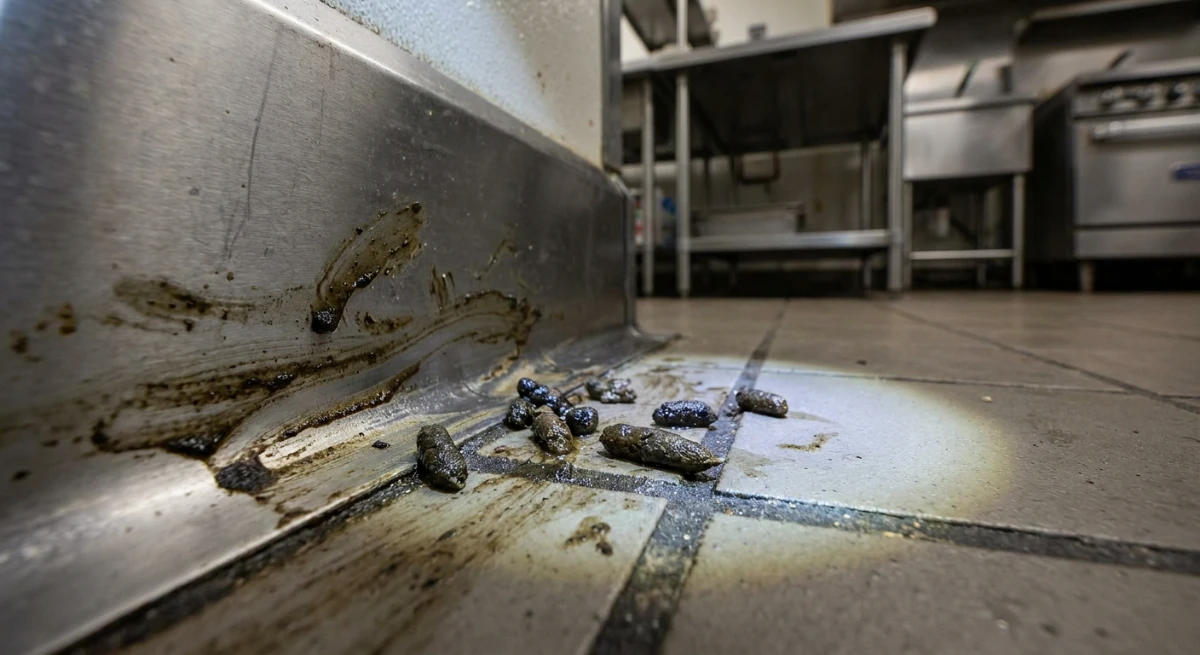
We conduct a thorough entomological and structural assessment of your venue before placing a single trap. We identify the grease marks, the droppings, and the exact entry points. By positioning tamper-proof stations directly along these high-traffic runways, we intercept the pests before they ever reach your food stores.
Trapping is only half the battle. If you do not seal the physical entry points, new rodents will simply replace the ones we catch. Always check your exterior doors for damaged weather stripping.
During our inspections, we frequently identify common vulnerabilities that hospitality owners overlook. These structural gaps are the root cause of the infestation. Common entry points we seal include:
- Plumbing Voids: Rats can easily squeeze through unsealed gaps around pipes under commercial sinks and dishwashers.
- Refrigeration Compressors: The constant heat generated by commercial fridges makes them prime nesting real estate.
- Damaged Weather Stripping: A gap of just 6mm under a rear delivery door is all a mouse needs to enter your dry store.
To give you a clear understanding of what is legally permissible in your venue, we have broken down the compliance standards for each trapping method below.
| Trap Type | MPI / Food Act Compliance | Inspection Requirement | Best Commercial Use Case |
|---|---|---|---|
| Tamper-Proof Snap Station | Fully Compliant | Regular maintenance schedule | Under prep benches and dry stores |
| Multi-Catch Live Trap | Fully Compliant | Strictly 12 hours after sunrise | High-volume monitoring in warehouses |
| Toxic Rodenticide Bait | Banned in Food Prep Zones | N/A (Restricted Use) | External perimeter defense only |
| Rodent Glue Boards | Highly Illegal (Animal Welfare Act) | N/A (Do not use) | None. Banned since 2015. |
Proper execution of non-toxic mechanical trapping in commercial kitchens requires immense discipline. We map every single station on a digital floor plan. This ensures that during a busy Friday night service, no traps are accidentally kicked away or lost under the deep fryers.
Daily Inspection Protocols and Digital Logging
When MPI audits your venue, they do not just look for pests; they look for proof of a proactive system. You must present a comprehensive digital log showing exactly when your traps were checked, what was found, and what corrective actions were taken.
As we prepare for the FAOPMA Pest Summit 2026 here in Auckland, the industry is shifting heavily toward IoT-enabled smart traps. These digital systems send instant alerts to our technicians the moment a trap is triggered, allowing for rapid, discreet removal before your morning staff even arrive.
This level of transparency is what separates a professional Level 3 Urban Pest Management contractor from a guy with a spray pack. We provide you with the exact documentation needed to satisfy your Food Control Plan. We take the stress out of compliance so you can focus entirely on running your restaurant and serving your customers.
If you are relying on outdated methods or crossing your fingers ahead of your next health inspection, it is time to upgrade. Get in touch with us today, and we will implement a foolproof, certified IPM strategy that protects your brand and your bottom line.
Frequently Asked Questions

About the Author: Ronnie
Founder, Pest Control Auckland · Commercial & Residential Pest Expert · Certified Urban Pest Management Specialist
With over a decade of hands-on experience navigating rigorous MPI audits and Food Act 2014 compliance, Ronnie specializes in implementing HACCP-approved non-toxic mechanical trapping in commercial kitchens. Having consulted for some of Auckland’s top hospitality venues, he provides straight-talking, science-backed exclusion strategies that protect businesses from critical hygiene failures and legal liabilities.