Operating a hospitality business in Auckland right now is brutal. The industry just hit a record $15.99 billion turnover in FY2025, and commercial kitchens are running at absolute maximum capacity [1]. But while revenue is up, so is the regulatory heat from the Ministry for Primary Industries (MPI).
If you are still relying on a pest guy to swing by once a month to check dusty plastic bait stations, you are playing a dangerous game. The old “spray and pray” model is dead, and relying on it puts your Food Act 2014 compliance at serious risk.
Welcome to the era of IoT pest monitoring commercial kitchens. We are talking about predictive, 24/7 digital surveillance that catches a rodent breach the second it happens. This technology alerts us immediately, rather than three weeks later when an MPI auditor finds droppings near your prep station.
Key Takeaways
IoT pest monitoring in commercial kitchens uses 24/7 smart sensors to detect rodent activity instantly without toxic baits. This zero-emission approach ensures absolute compliance with the Food Act 2014 and provides health auditors with real-time, timestamped data to protect your hospitality business.
The Digital Revolution in Pest Control
Auckland’s mild winters and scorching summers create the perfect storm for urban pests. Heading into the autumn surge of 2026, rats and cockroaches are aggressively infiltrating commercial spaces. Traditional pest control simply cannot keep up with this volume.
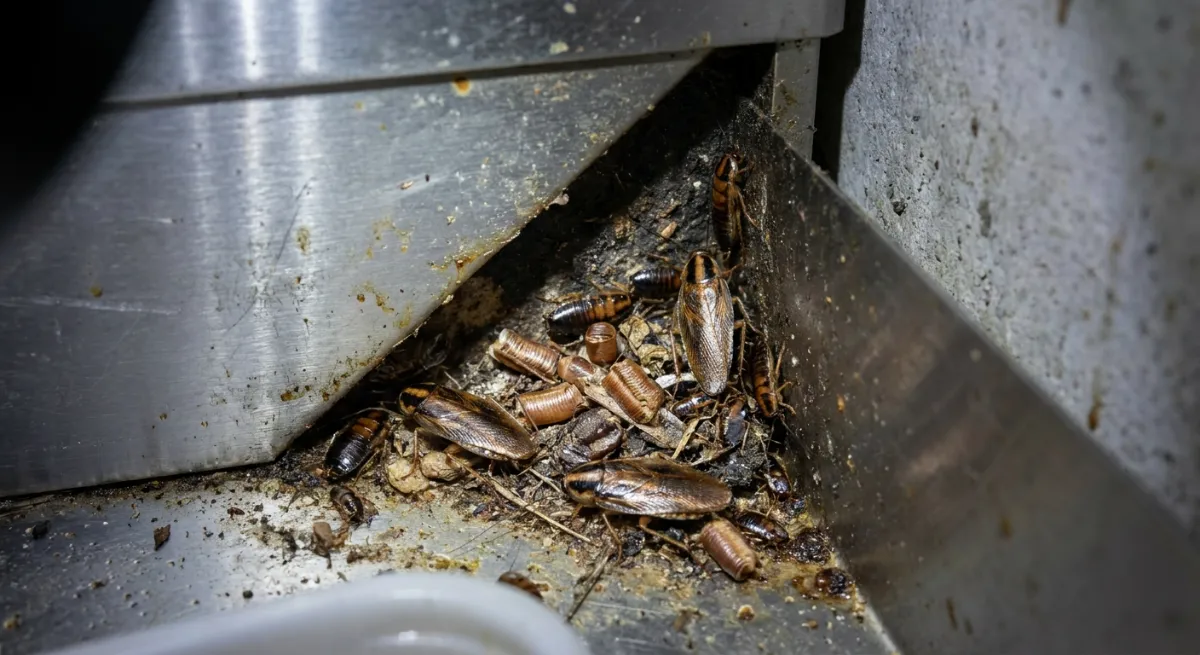
It relies entirely on reactive measures—waiting for a technician to physically spot the evidence during a scheduled visit. By the time someone notices a chewed wire, a greasy rub mark, or a German cockroach casing, the infestation is already established. You are already fighting a losing battle.
That is exactly where IoT pest monitoring commercial kitchens changes the game. IoT (Internet of Things) devices turn your physical premises into a smart, interconnected grid. It is a proactive defense system designed specifically for high-risk hospitality environments.
With the FAOPMA Pest Summit 2026 coming to Auckland in July under the theme “FutureProof,” the entire industry is shifting toward these smart solutions [2]. If your kitchen is not adapting to these digital standards, you are getting left behind by competitors who are.
How Smart Sensors Detect Rodent Activity 24/7
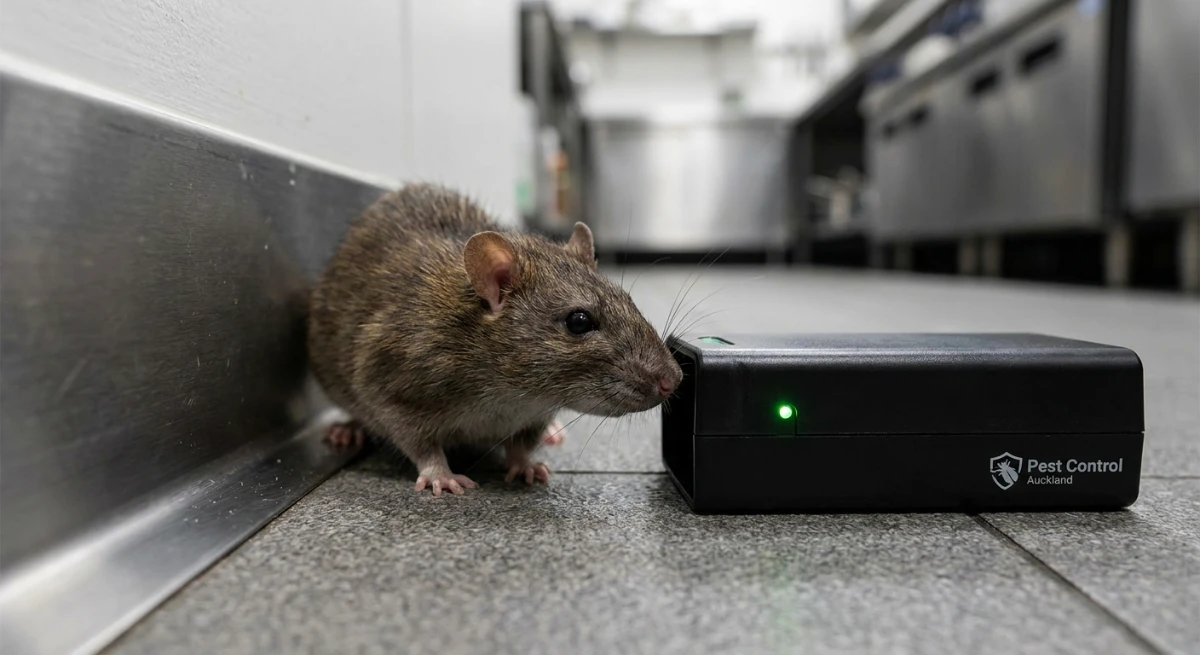
Smart sensors are discreet, zero-emission devices installed at critical structural entry points. We place them in high-risk zones like ceiling voids, behind commercial freezers, and near dry goods storage. These devices use advanced infrared and motion-tracking technology to monitor activity in the dark.
This is crucial because pests like roof rats and cockroaches operate almost exclusively when the lights go out. When a rat scurries through a hidden cavity, the sensor instantly logs the movement. There is no guessing game and no waiting for a rodent to eventually take a toxic bait.
These digital traps communicate via a secure wireless network back to a central hub. This means your certified pest technician has eyes on your kitchen’s most vulnerable areas 24 hours a day, 7 days a week.
Instant Alerts for Rapid Intervention
The true power of IoT pest monitoring in commercial kitchens lies in its unprecedented speed. The absolute moment a sensor is triggered, an automated alert is sent directly to our dispatch system. Instead of discovering a problem during a routine monthly check, we know about the structural breach within seconds.
This allows us to dispatch a Level 3 qualified technician immediately. We intercept the pest before it ever reaches your food preparation areas. Rapid intervention stops a minor, isolated incursion from becoming a full-blown infestation.
In the fast-paced Auckland hospitality sector, this speed is the difference between a clean health inspection and a forced shutdown. It protects your revenue and your peace of mind.
Under the Food Act 2014, a single sighting of a live pest or fresh droppings during an audit can result in immediate closure. Reactive pest control leaves you blind between monthly visits, exposing you to massive legal and financial liabilities.
The Auckland Regulatory Landscape in 2026
Operating a commercial kitchen means navigating a minefield of New Zealand legislation. Ignorance of the law is not an excuse when an MPI verifier shuts down your operation. Under the EPA HPC Notice 2017 and the HSNO Act 1996, operators handling Class 9 ecotoxic substances must hold strict qualifications.
This is why you cannot just send a kitchen hand to the hardware store for bug bombs. Furthermore, the Animal Welfare Act 1999 dictates strict mandates for pest control. Live-capture traps must be physically inspected within 12 hours after sunrise every single day.
IoT sensors help manage this massive legal burden. By providing instant alerts when a mechanical trap is triggered, we ensure we meet these strict animal welfare timeframes without requiring a technician to drive to your site every single morning just to look at an empty trap.
The End of the “DIY Cycle of Despair”
Many cafe owners try to cut costs by managing pests themselves. They buy cheap surface sprays and scatter toxic pellets under the counters, hoping for the best. This creates the “DIY Cycle of Despair.”
The hardware store products only kill the weakest pests, leaving the strongest to breed and multiply inside your walls. Worse, these DIY methods leave zero paper trail for health auditors.
When you invest in professional pest control in Auckland, you replace amateur guesswork with a scientifically backed, heavily documented defense grid. It solves the root cause once and for all.
The Animal Welfare Act 1999 strictly regulates trapping. IoT connected traps ensure we receive an instant ping the moment a trap is activated, allowing us to dispatch a technician immediately and remain 100% compliant with humane dispatch laws.
Advantages of IoT over Traditional Bait Stations
Let’s be completely straight: traditional toxic bait stations have no place inside a modern commercial kitchen. They are outdated, risky, and largely ineffective against cautious urban rodents. When you rely on poison, you are hoping the rat eats it, and then hoping it wanders outside to die.
More often than not, it dies inside your walls. This creates a massive biohazard, a foul odor that drives customers away, and an influx of secondary pests like blowflies. IoT systems eliminate this dangerous guesswork entirely.
They provide hard, actionable data that tells us exactly where the pests are moving. We know how they are getting in, allowing us to block the entry point permanently.
| Feature | Traditional Pest Control | IoT Pest Monitoring |
|---|---|---|
| Detection Speed | Days to Weeks (Reactive) | Instantaneous (Proactive) |
| Toxic Chemicals | High Reliance on Rodenticides | Zero-Emission / Non-Toxic |
| Audit Documentation | Manual Logbooks | Timestamped Digital Dashboards |
| Food Act 2014 Compliance | High Risk of Cross-Contamination | 100% Compliant & Safe |
Eliminating the Need for Toxic Baits in Food Zones
The Food Act 2014 and HACCP standards are explicitly clear regarding chemical use. Toxic rodenticides are strictly prohibited in sensitive food handling and preparation zones. Using them puts your business at massive risk of chemical cross-contamination.
IoT pest monitoring commercial kitchens relies entirely on non-toxic, mechanical, and digital solutions. We use smart multi-catch traps and infrared monitors that do not introduce any harmful chemicals into your pristine environment.
This zero-emission approach ensures absolute compliance with MPI regulations. It protects your staff, your customers, and your brand reputation from catastrophic chemical spills. It also aligns perfectly with modern consumer demands for eco-conscious business practices.
Ditch the interior poison baits. Transitioning to a 100% mechanical and digital monitoring system inside your kitchen automatically removes a major red flag for health auditors, streamlining your verification process.
Highly Accurate Data for Health Auditors
When an Auckland Council health inspector walks through your doors, they want to see undeniable proof of proactive pest management. A dusty logbook with a few scribbled dates no longer cuts it in 2026. IoT systems generate real-time, timestamped reports that you can access instantly.
You can hand the auditor a digital dashboard showing exactly how your premises are monitored. The data proves the exact times of any activity and documents the immediate corrective actions taken by your pest control provider.
This level of extreme transparency is bulletproof. It proves to the auditor that you are in complete control of your facility. This digital paper trail is the secret to virtually guaranteeing you maintain that coveted ‘A’ Grade rating year after year.
Common Invaders: What the Sensors Catch
Different pests require different digital monitoring strategies. Our IoT systems are calibrated to detect the specific behaviors of Auckland’s most notorious commercial invaders. We do not just blanket your kitchen in technology; we deploy it strategically.
- Roof Rats (Rattus rattus): Agile climbers that infiltrate via overhanging branches and compromised rooflines. Sensors in ceiling voids track their exact movement patterns above your prep areas.
- Norway Rats (Rattus norvegicus): Ground-dwelling rodents that exploit sub-floors and loading docks. We place heavy-duty smart traps near grease traps and waste disposal zones to intercept them.
- German Cockroaches: The ultimate kitchen nightmare. While primarily tracked via specialized digital insect monitors, IoT climate sensors also detect the high heat and humidity zones these pests need to breed.
- Argentine Ants: Highly invasive and relentless. Smart monitoring helps us identify the exact structural crack they are using to march into your dry goods storage.
By understanding the entomological behavior of these pests, we place our sensors with pinpoint accuracy. This targeted approach minimizes costs while maximizing detection speed. It is the definition of working smarter, not harder, in the fight against urban pests.
Integrating Smart Tech with Structural Exclusion
Technology alone is not a silver bullet. An alert tells us a rat is inside, but our job as certified urban pest managers is to figure out how it got there and stop it from happening again. This is the core of predictive Integrated Pest Management (IPM).
When an IoT sensor triggers, we use that specific location data to trace the pest’s exact pathway. We track it back to the structural entry point, whether that is a compromised sub-floor or an unsealed roof cavity. We then perform rigorous structural exclusion to seal the breach.
This involves sealing gaps around pipe penetrations, fixing broken vents, and installing heavy-duty door sweeps. We fix the root cause rather than just treating the symptom. By combining smart technology with physical exclusion, we break the cycle of despair.
You stop paying for endless return visits and start investing in a permanent, fortified solution. This is how we deliver our Silver Bullet Guarantee to Auckland business owners.
Modernize Your Kitchen’s Pest Defenses
The hospitality landscape in Auckland is unforgiving. With record-breaking revenues on the line and MPI inspectors cracking down harder than ever, you cannot afford to rely on outdated methods. The financial and legal risks are simply too high.
Embracing IoT pest monitoring commercial kitchens is not an unnecessary luxury; it is a critical operational safeguard. It gives you 24/7 protection and instant response times. More importantly, it provides the undeniable digital proof you need to pass any strict health audit.
It takes the stress of pest management completely off your plate so you can focus on running your business. If you are ready to ditch the toxic baits and upgrade to a zero-emission, highly certified defense system, it is time to talk to a true expert.
Do not wait for an auditor to find a problem. Contact our Level 3 qualified technicians today to audit your premises and design a custom, zero-emission IoT monitoring plan tailored to your specific layout.

About the Author: Ronnie
Founder, Pest Control Auckland · Commercial & Residential Pest Expert · Certified Urban Pest Management Specialist
With years of experience handling high-stakes commercial biosecurity across Auckland, Ronnie is the definitive expert on IoT pest monitoring commercial kitchens. Having consulted for top-tier hospitality venues to ensure strict Food Act 2014 compliance, he brings unparalleled, science-backed insights into zero-emission pest exclusion.