Every year, silent destroyers are chewing through the structural integrity of homes and commercial buildings worldwide. Borer & Termite Inspections are not just a routine maintenance task; they are a critical financial safeguard. Without professional intervention, these wood-eating pests can cause catastrophic structural failure before you even notice a single symptom.
The statistics are staggering. Globally, termite damage accounts for an estimated $40 billion in economic losses annually. In regions like Australia and New Zealand, the combination of subterranean termites and the Common Household Borer (Anobium punctatum) costs property owners billions in remediation and repair.
Many homeowners mistakenly believe their standard insurance policies will cover the cost of timber pest damage. Unfortunately, most insurers classify this destruction as preventable, leaving the financial burden entirely on the property owner. Regular, comprehensive timber inspections are the only proven method to detect activity early and mitigate these devastating risks.
As weather patterns shift and urban environments expand, the habitats for these insects are increasingly overlapping with residential zones. This makes proactive pest management more vital than ever before. Protecting your investment requires a deep understanding of how these pests operate and the modern technologies used to stop them.
Key Takeaways
Professional Borer & Termite Inspections are essential for detecting hidden timber pests before catastrophic structural failure occurs. Utilizing advanced tools like thermal imaging and moisture meters, these inspections identify active colonies, assess structural risks, and recommend targeted treatments to protect your property’s value and safety.
Comprehensive Timber Inspections and Structural Treatments for Wood-Boring Pests
When evaluating a property for timber pests, technicians must look beyond the surface. Borer & Termite Inspections require a meticulous examination of subfloors, roof voids, and exterior perimeters. These are the primary staging grounds where invasive insects establish their initial colonies.
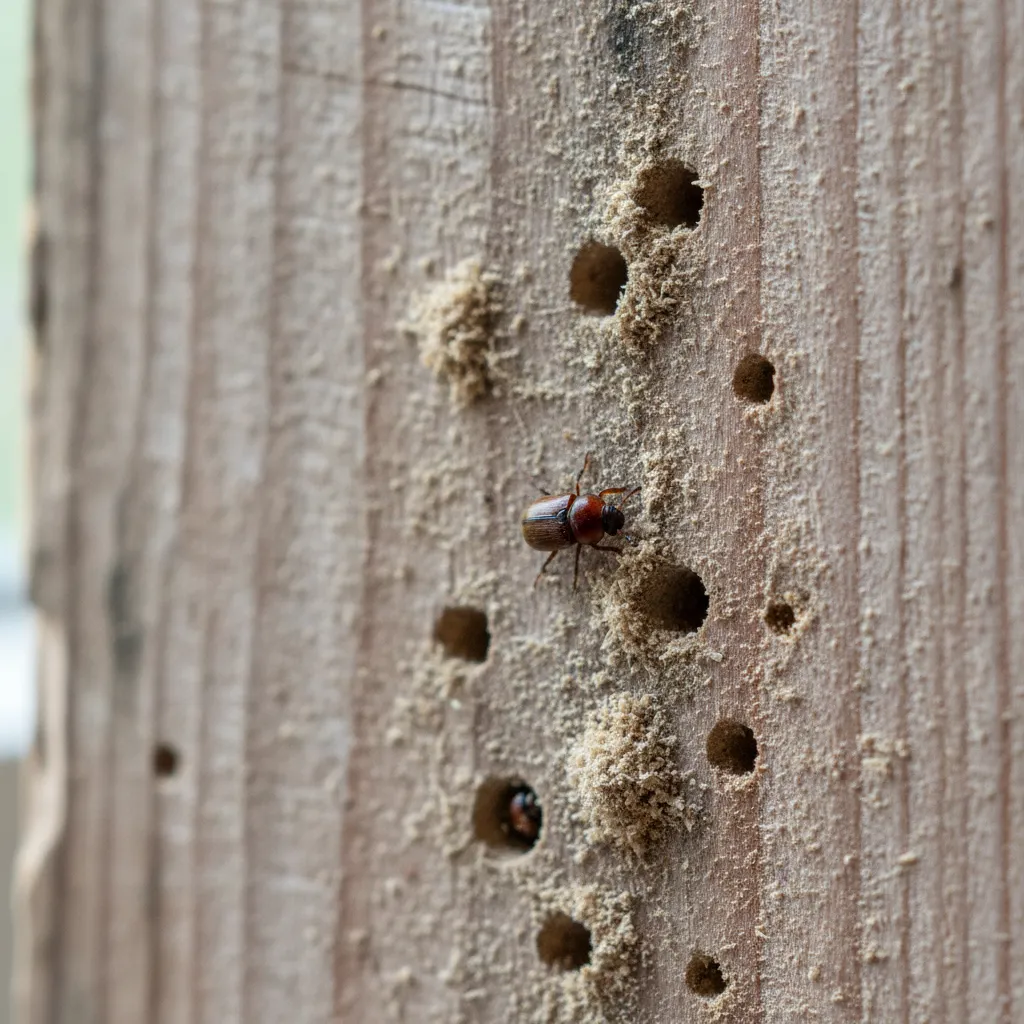
The Common Household Borer (Anobium punctatum) is particularly deceptive. Adult beetles emerge only briefly during the warmer months to mate and lay eggs. However, the real destruction occurs out of sight, as borer larvae spend two to five years tunneling through the structural sapwood of a home. This extended larval stage means that by the time you see the characteristic flight holes, significant internal damage has already been done.
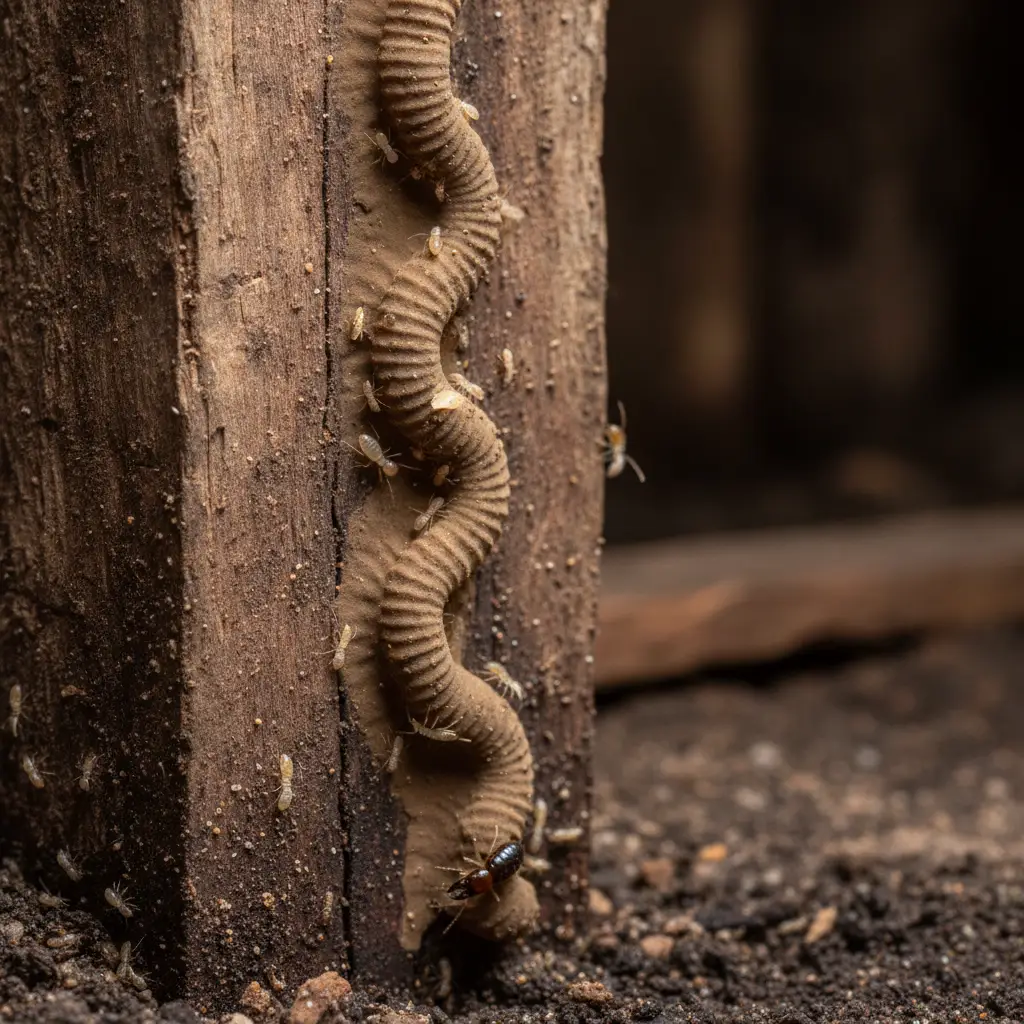
Termites, conversely, operate in highly organized colonies that can number in the millions. Subterranean species build intricate mud tubes to travel from the soil to your home’s timber framing, protecting themselves from sunlight and predators. Because they consume wood from the inside out, the exterior surface often appears completely pristine until the structural integrity is entirely compromised.
A timber beam may look perfectly solid to the naked eye. However, a simple tap with a sounding tool could reveal it has been hollowed out to a paper-thin veneer by relentless wood-boring pests.
During a comprehensive inspection, professionals do not rely on visual checks alone. They utilize advanced technology such as thermal imaging cameras, moisture meters, and radar-based movement detectors like Termatrac. These tools allow technicians to see through walls and detect the subtle heat signatures or moisture accumulations associated with active termite nests.
Radar technology is especially useful for non-invasive diagnostics. It can detect the physical movement of termites inside a wall cavity without needing to drill holes or remove plasterboard, saving homeowners from unnecessary repair costs.
High-moisture readings inside a dry wall cavity are often the first major red flag during an inspection. Termites bring moisture up from the soil to maintain the humidity of their workings, which modern meters can instantly detect.
Once an infestation is confirmed, structural treatments must be tailored to the specific pest. For borer issues, technicians may apply penetrating insecticidal timber treatments that soak into the wood to eradicate larvae. In severe cases, structural timbers may need complete replacement or reinforcement before treatment can be deemed successful.
Termite treatments are generally more complex, often requiring a multi-tiered approach. This can include the installation of chemical soil barriers around the property’s perimeter or the deployment of specialized baiting stations. These systems are designed to eliminate the entire colony by exploiting the termites’ natural foraging and grooming behaviors.
Baiting stations intercept foraging workers, who then carry the slow-acting termiticide back to the nest. This cascading effect eventually destroys the queen, collapsing the entire colony structure.
Why Choose Professional Yard and Property Services
Attempting DIY pest control for wood-destroying insects is a dangerous gamble. Over-the-counter surface sprays merely kill the few insects you can see, leaving the hidden colony entirely unaffected. Professional Borer & Termite Inspections provide a level of diagnostic accuracy that simply cannot be replicated by untrained homeowners.
Expert technicians understand the complex biology and seasonal behaviors of timber pests. They know exactly where to look, whether it’s checking damp subfloor ventilation issues or inspecting hardwood retaining walls in the yard. This environmental risk assessment is a crucial component of long-term property protection.
Furthermore, professional services help preserve your property’s market value. A documented history of annual timber inspections provides peace of mind to future buyers. Conversely, discovering an undocumented termite infestation during a pre-purchase building inspection can instantly derail a property sale.
Standard homeowner insurance policies globally do NOT cover damage caused by termites or borers. Insurers classify this as a preventable maintenance issue, meaning all repair costs will come directly out of your pocket.
A professional inspection extends beyond the house itself. Your yard, fences, and landscaping elements are often the initial attractants for foraging termites. By identifying conducive conditions, such as poor drainage, earth-to-wood contact, or decaying tree stumps, technicians can help you secure your property’s perimeter.
Termites can travel up to 100 meters underground in search of food. This means a colony nesting in a dead tree at the back of your yard could easily be feeding on your home’s foundation without you ever seeing a single mud tube.
Investing in a professional service ensures that all treatments are carried out safely and effectively. Licensed pest managers use specifically formulated termiticides that are highly targeted. This minimizes environmental impact while maximizing the protective lifespan of the structural barrier.
Key Metrics & Essential Standards
The pest control industry operates under strict regulatory frameworks to ensure consumer protection and treatment efficacy. In Australasia, the governing benchmark is the AS 3660.2-2017 standard. This document dictates the precise protocols for termite management in and around existing buildings and structures.
Under AS 3660.2-2017, an inspection is not merely a quick walk-through. It is a rigorous, standardized process that demands detailed reporting on current activity, historical damage, and environmental risk factors. The standard also emphasizes the need for clear communication between the pest manager and the property owner regarding the limitations of the inspection.
The economic metrics surrounding timber pests are a stark reminder of why these standards exist. Subterranean termites alone are responsible for an estimated 80% of the $40 billion in global annual timber pest damages. In Australia, the annual cost of termite damage to homeowners is estimated at $1.5 billion.
Understanding the differences between the major timber pests is vital for effective management. While both borers and termites consume wood, their lifecycles, warning signs, and treatment requirements differ significantly. The table below outlines these critical distinctions.
| Feature | Wood Borers (e.g., Anobium punctatum) | Subterranean Termites |
|---|---|---|
| Primary Signs | Flight holes (1-2mm), fine powdery frass (dust) | Mud tubes, hollow-sounding timber, blistering paint |
| Lifecycle Focus | Larvae cause damage over 2-5 years inside wood | Workers forage 24/7 from a central soil-based colony |
| Moisture Needs | Can survive in relatively dry structural timber | Require high moisture and constant soil contact |
| Standard Treatment | Penetrating insecticidal timber sprays/injections | Chemical soil barriers or localized baiting systems |
To maintain compliance with industry standards and protect your property, several proactive measures should be implemented. Homeowners play a critical role in minimizing the environmental factors that invite these pests indoors.
- Ensure all subfloor ventilation is clear of obstructions to reduce moisture buildup.
- Fix leaking plumbing, downpipes, and air conditioning condensation lines immediately.
- Remove dead tree stumps, landscaping timber, and firewood stored against the home’s exterior.
- Schedule professional timber inspections at least once every 12 months.
Service Bookings & Quotations
Securing a professional assessment for your property involves a structured quotation and booking process. When you request Borer & Termite Inspections, reputable pest control providers will first outline the scope of the inspection. This ensures you understand exactly which areas of the property will be assessed and what diagnostic tools will be utilized.
If live activity of economic significance is discovered during the inspection, industry standards dictate specific next steps. Rather than simply handing over a generic quote, the technician is required to draft a formal Termite Management Plan (TMP). This clinical document details the proposed treatment methodology, expected outcomes, and ongoing monitoring requirements.
The TMP is a vital regulatory document that separates professional pest managers from unlicensed operators. It provides a clear, actionable roadmap for eliminating the infestation and restoring the safety of your property.
A legitimate timber pest quotation will always separate the cost of the initial inspection from the cost of the proposed treatment. Never trust a service that offers to treat a property without conducting a thorough, documented inspection first.
The cost of treatments can vary wildly depending on the severity of the infestation and the architecture of the building. Factors influencing the quotation include the lineal meterage of the property’s perimeter, the type of soil present, and whether concrete cutting is required to install a chemical barrier. Transparency in these pricing variables is a hallmark of a trustworthy provider.
Ultimately, the booking process should prioritize rapid response times and thorough documentation. A comprehensive digital report, complete with photographic evidence and environmental risk assessments, should be delivered shortly after the inspection concludes. This report forms the baseline for all future pest management strategies on your property.
Review your property’s maintenance history. If it has been more than 12 months since your last formal timber pest assessment, it is highly recommended to arrange a new inspection to maintain your property’s defenses.