Waking up to itchy, red welts is a nightmare that millions of households face every year. As global travel surges in the post-pandemic era, urban centers are experiencing a massive spike in parasitic infestations. To combat these resilient pests, experts are increasingly turning to bed bug heat treatments as the ultimate eradication method.
Unlike traditional chemical sprays that require weeks of repeated applications, thermal remediation offers an immediate solution. By raising the ambient temperature of a room to scientifically proven lethal levels, professionals can destroy the entire infestation in a single day. This method leaves no toxic residue and requires zero downtime for families.
In this comprehensive guide, we will explore the science behind thermal eradication and why it outperforms traditional pesticides. You will learn the exact temperature thresholds required to kill these pests and what to expect during a professional service.
Key Takeaways
Bed bug heat treatments offer a single-day eradication solution by raising room temperatures above 118°F (48°C). Unlike chemical sprays, thermal remediation penetrates furniture and walls to instantly kill adults, nymphs, and pesticide-resistant eggs. This professional method is the fastest, most comprehensive way to permanently eliminate an infestation.
Introduction to Bed Bug Heat Treatments
The global landscape of pest control has drastically shifted over the last few years. Recent industry data from 2024 and 2025 highlights a staggering increase in urban bed bug infestations across major metropolitan areas [1]. As these insects continue to spread through travel and dense housing, traditional eradication methods are struggling to keep up.
For decades, exterminators relied heavily on synthetic chemicals to manage outbreaks. However, modern insect populations have developed powerful genetic resistances to common pyrethroid pesticides. This biological adaptation makes standard chemical applications increasingly ineffective, leading to prolonged, frustrating battles for homeowners.
This is where thermal remediation steps in to level the playing field. By utilizing industrial-grade heaters to bake the interior of a structure, technicians can bypass chemical resistance entirely. The intense heat denatures the proteins within the insects, ensuring total systemic failure regardless of their genetic makeup.
Thermal Remediation and Chemical Treatments
When comparing chemical sprays to bed bug heat treatments, the differences in speed and efficacy are monumental. Chemical treatments rely on the insect physically walking across a treated surface to absorb the poison. If a bug stays hidden deep inside a wall void or mattress seam, it can easily survive the initial application.
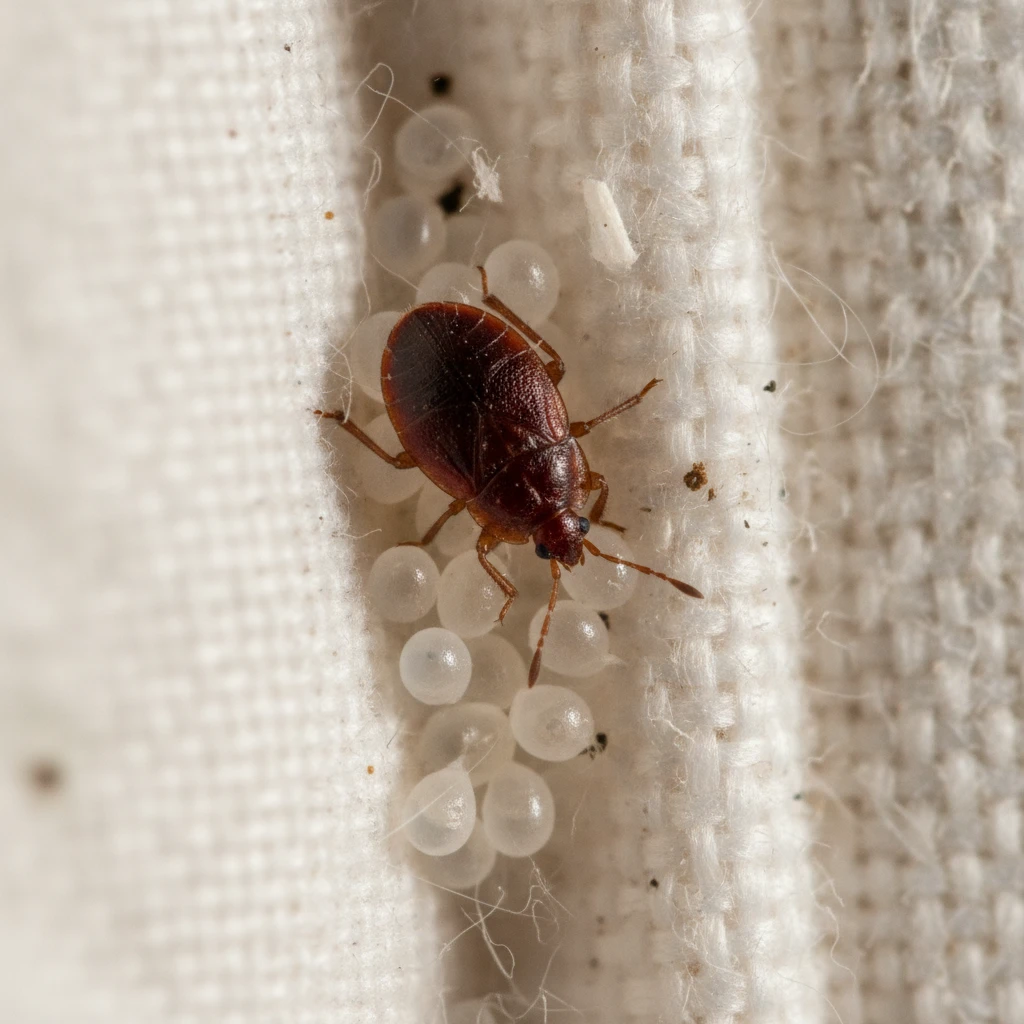
Furthermore, chemical sprays cannot penetrate the protective outer shell of a bed bug egg. Because eggs take up to two weeks to hatch, exterminators must return for multiple follow-up visits to kill the newly emerged nymphs. This drawn-out process can leave families living out of plastic bags for over a month.
Studies show that over 80% of modern bed bug populations carry genetic mutations that make them highly resistant to over-the-counter and commercial pesticide sprays.
In stark contrast, thermal remediation treats the entire structural environment simultaneously. The ambient air is heated and circulated rapidly, penetrating deep into couches, carpets, and electronics. Because the heat reaches every microscopic crevice, it destroys adults, nymphs, and unhatched eggs all at once.
| Feature | Heat Treatment | Chemical Spray |
|---|---|---|
| Eradication Speed | 1 Day (Immediate) | 3 to 6 Weeks |
| Kills Unhatched Eggs | Yes | No |
| Toxicity Level | 100% Chemical-Free | Contains Pesticides |
| Preparation Required | Moderate (Remove meltables) | High (Bag all clothing) |
The Environmental and Health Benefits
Beyond eradication speed, thermal remediation is championed for its minimal environmental impact. Chemical pesticides often leave behind toxic residues that can degrade indoor air quality. For households with young children, elderly family members, or sensitive pets, minimizing exposure to harsh neurotoxins is a major priority.
Because bed bug heat treatments rely entirely on pure, clean heat, there is absolutely zero chemical off-gassing. Once the home cools back down to a normal temperature, the indoor environment is completely sterile and safe. This makes it the premier eco-friendly choice for modern pest management.
Why Choose Professional Heat Treatment Services
When faced with an infestation, many homeowners attempt to save money by purchasing domestic space heaters. However, attempting DIY pest control is risky, which is why professional bed bug heat treatments are highly recommended. Consumer-grade heaters simply cannot generate the sustained thermal power required to penetrate structural framing.
If a room is heated unevenly, the insects will simply migrate to cooler areas of the home to escape the thermal stress. They will hide inside wall voids, beneath baseboards, or in adjacent rooms until the temperature drops. This effectively spreads the infestation throughout the entire property, making it infinitely harder to cure.
The Risk of Structural Migration
One of the most insidious behaviors of bed bugs is their ability to sense temperature gradients. When amateur heaters are used, the room warms up far too slowly. This gradual warming acts as an alarm bell, triggering the insects to flee deep into the structural framework of the building.
In multi-family housing units like apartments and condos, this migration can be disastrous. The pests will travel through shared electrical conduits and plumbing lines to invade neighboring units. Professional exterminators prevent this by rapidly raising the temperature, effectively trapping and neutralizing the pests before they have a chance to escape.
Professional technicians utilize specialized convection equipment that rapidly forces superheated air into every corner of the room. They strategically place industrial fans to eliminate cold spots, ensuring the heat is distributed with absolute precision. High-tech thermal sensors are also monitored remotely to verify that lethal temperatures have reached the deepest layers of your furniture.
Never attempt to use propane heaters, household space heaters, or kitchen ovens to treat an infestation. These DIY methods are highly ineffective against pests and pose a severe risk of catastrophic house fires.
Key Metrics & Essential Standards
The success of bed bug heat treatments relies entirely on strict scientific parameters. The biological makeup of these parasites makes them extremely vulnerable to thermal stress, but only if specific thresholds are met. If the temperature falls even a few degrees short, the eggs will survive and hatch weeks later [2].
Entomologists have identified the exact Thermal Death Point for this species. At 113°F (45°C), adult insects begin to experience severe physiological trauma and will die if exposed for over 90 minutes. However, to guarantee total eradication of all life stages, temperatures must be pushed higher.
Industry standards dictate that the target treatment zone must reach at least 118°F (48°C) and be sustained for a minimum of 90 minutes. At this elevated temperature, even the most deeply hidden eggs are instantly dehydrated and destroyed. Many commercial systems will push ambient air up to 135°F (57°C) to ensure rapid, fail-proof penetration of dense materials [3].
- 113°F (45°C): Adults and nymphs die after 90+ minutes of sustained exposure.
- 118°F (48°C): The critical threshold where all life stages, including eggs, are destroyed within 90 minutes.
- 122°F (50°C): Immediate death occurs for adults, nymphs, and eggs in less than a minute.
- 130°F – 140°F: The target ambient air temperature generated by professional heaters to warm dense furniture interiors.
The Importance of Airflow and Convection
Achieving the lethal temperature is only half the battle; maintaining it evenly is the real challenge. Heat naturally rises to the ceiling, which can leave the floors and baseboards dangerously cool. If the floor remains below 113°F, the treatment will ultimately fail.
To counter this, professionals use high-velocity axial fans to create intense convection currents. This forces the superheated air down to the floor level and pushes it into the microscopic gaps beneath baseboards. Proper airflow guarantees that there are zero thermal refuges left for the insects to exploit.
What to Expect from Professional Quotations and Service
Navigating the logistics of pest control can feel overwhelming, but understanding the process makes it much easier. When you request an assessment for a thermal remediation service, a licensed technician will first conduct a thorough site inspection. They will identify the epicenter of the infestation and map out the structural layout of your home.
The size of the property, the volume of clutter, and the type of building materials all influence the final treatment strategy. For example, concrete walls absorb more heat than drywall, requiring more powerful equipment and longer dwell times. This detailed assessment ensures that the specialized heating units deployed are perfectly scaled to your unique environment.
Before the heating process begins, you must remove all heat-sensitive items from the target area. This includes candles, vinyl records, oil paintings, aerosol cans, and prescription medications.
The Hybrid Treatment Approach
In cases of severe, long-standing infestations, some professionals may recommend a hybrid treatment protocol. This involves executing a full thermal remediation to instantly wipe out 99% of the population, including all hidden eggs. Once the property cools, a targeted, low-toxicity residual dust is applied to the wall voids.
The logic behind this approach is simple: heat has no memory. While it sanitizes the home perfectly on the day of service, it cannot stop a new bug from being brought inside a week later. The residual barrier acts as an insurance policy, neutralizing any new hitchhikers before they can establish a new colony.
Once the treatment begins, the property must be completely vacated by all residents and pets. The heating process typically takes between six to eight hours from start to finish, depending on the square footage. During this time, technicians continuously monitor wireless thermal sensors to verify that every square inch has reached the lethal benchmark.
After the equipment is powered down and the home is allowed to cool, you can safely return to a sanitized space. Unlike chemical applications that demand ongoing vigilance and secondary treatments, thermal remediation provides immediate closure. You will be able to sleep peacefully that very same night, knowing the infestation has been completely eradicated.
A reputable provider will always conduct a post-treatment walkthrough. They will review the thermal sensor data logs with you to prove that lethal temperatures were successfully maintained throughout the entire service.