Rats in the roof? We’ll find how they’re getting in, block it, and clear them out — usually one visit. That is the fundamental difference between a professional pest inspection and a frantic trip to the hardware store. Most people wait until they see a cockroach scuttling across the kitchen bench or hear scratching in the walls before they act. By then, you are already losing the battle.
The role of professional pest inspections in prevention isn’t about spraying toxic chemicals everywhere and hoping for the best. It is about predictive science, structural exclusion, and root-cause eradication. As Auckland faces a massive autumn pest surge following a mild winter, relying on reactive measures is a costly mistake.
If you want to protect your home or business, you need to stop the pests before they cross the threshold. We do not just treat the symptoms; we diagnose the property. This is what earns trust, saves money, and keeps your environment genuinely safe.
Key Takeaways
The role of professional pest inspections in prevention is to identify structural vulnerabilities, eliminate root-cause entry points, and apply targeted, eco-safe treatments before infestations occur. Certified inspections ensure legal compliance, protect property values, and break the costly cycle of failed DIY pest control.
Why a Professional Pest Inspection is the Only Real “Silver Bullet”
People always ask me for the “silver bullet” to get rid of pests. They want a magic spray that fixes everything forever with zero effort. The blunt truth is, the only real silver bullet is a thorough, professional inspection.
We do not just spray baseboards and walk away. A proper inspection involves crawling into your roof cavity, checking the subfloor, and identifying exactly how rodents or insects are getting inside. We look for the moisture issues drawing in ants, the structural gaps inviting rats, and the nesting zones you cannot see.
Once we find the entry points, we block them. This is called structural exclusion, and it forms the absolute core of professional pest prevention. If you do not seal the fortress, the enemy will just keep marching in.
Breaking the DIY Cycle of Despair
I see it every week. A homeowner spends hundreds of dollars on hardware store bug bombs and rat baits. They set them off, see a few dead bugs, and think the job is done.
A month later, the pests are back, and the cycle repeats. DIY treatments only kill the pests foolish enough to be out in the open. They do nothing to address the breeding colony hidden deeply inside your wall framing.
Professional inspections identify these harbourage areas so we can target the nest directly. We fix the root cause, stopping the cycle of despair in its tracks.

The Financial and Legal Reality of Pest Prevention in Auckland
Pest control in New Zealand is not the Wild West. We operate under strict legal frameworks designed to protect public health, animal welfare, and the fragile native environment. If you are running a business or renting out a property, ignoring these laws will cost you heavily.
Commercial Pressures: Food Act 2014 & MPI Compliance
For Auckland’s hospitality sector, which posted a record $15.99 billion turnover in FY2025 [2], pest prevention is non-negotiable. The Food Act 2014 and the Ministry for Primary Industries (MPI) enforce zero-tolerance hygiene standards.
A single rat sighting can shut down a cafe and destroy its reputation overnight. Furthermore, commercial operators cannot rely on toxic rodenticide baits in sensitive food prep areas.
We use non-toxic monitoring blocks, mechanical traps, and digital sensors to maintain compliance. A professional inspection ensures your business is audit-ready and legally protected at all times.
Residential Tensions: Landlords, Tenants, and the Law
The Auckland housing market is notoriously tight, and pest issues frequently cause disputes between landlords and tenants. Under the Residential Tenancies Act, landlords must provide a clean, safe property. However, tenants are held responsible if their lifestyle actively attracts pests.
A certified inspection cuts through the arguing. We provide an independent, factual report on why the pests are there and how to eradicate them. This transparency satisfies Tenancy Tribunal requirements and gets the problem solved quickly.
| Comparison Factor | DIY Hardware Store Methods | Professional Pest Inspection |
|---|---|---|
| Primary Focus | Killing visible pests only (Reactive) | Root-cause eradication & structural exclusion |
| Long-Term Cost | High (Constant repurchasing of failed products) | Low (Fixes the problem once, guaranteed) |
| Safety & Compliance | Often misused, toxic to pets if handled poorly | MPI-approved, strictly adheres to HSNO Act |
| Legal Documentation | None. Useless for Tenancy Tribunal disputes. | Provides certified reports for landlords/auditors |
Navigating the Auckland Regional Pest Management Plan
Auckland Council’s Regional Pest Management Plan (RPMP) 2020-2030 enforces strict biosecurity rules across the region. As professionals, our inspections align directly with these regional goals to protect native biodiversity.
We are not just protecting your kitchen; we are protecting the wider ecosystem. Proper urban pest control stops invasive species from spilling over into native reserves.
Protecting the Hauraki Gulf and Native Bush
If you live near the Waitākere Ranges or are travelling to the Hauraki Gulf Controlled Area (like Waiheke Island), pathway management is critical. We inspect vehicles, boats, and equipment to ensure no invasive pests hitch a ride to pest-free islands.
Following the massive 1080 drop success in the Hūnua Ranges in late 2025, urban Aucklanders have a responsibility to keep rodent numbers down. Our inspections help maintain this regional momentum by eliminating urban breeding grounds.
Auckland is preparing to host the FAOPMA Pest Summit in July 2026 at the NZICC. Themed “FutureProof,” this global event highlights the shift toward smarter, eco-conscious pest solutions—the exact predictive strategies we already use in our daily inspections.
How Inspections Target Auckland’s Core Pests
Not all pests are created equal, and neither are our inspection methods. The role of professional pest inspections in prevention requires a tailored approach for every species we encounter.
We do not use a one-size-fits-all spray. We use entomological science to exploit the specific weaknesses of the pest invading your property.
Rodents: Rats and Mice
Rodents are structural nightmares. They chew through wiring, destroy insulation, and spread disease. Our inspections focus heavily on the roof cavity, subfloor ventilation grates, and garage door seals.
We look for rub marks, droppings, and chew holes. Once we find their highway, we shut it down and apply targeted baiting strategies that keep them permanently out of your living spaces.
Crawling Insects: Ants and Cockroaches
Ants and cockroaches are driven by moisture and food. A professional inspection traces their foraging trails back to the nest. We check under sinks, behind dishwashers, and around hot water cylinders.
Instead of just spraying the workers, we use advanced, non-repellent transfer baits. The insects carry this bait back into the walls, destroying the entire hidden colony from the inside out.
What a Certified Urban Pest Management Specialist Actually Does
Anyone can buy a cheap spray kit and call themselves an exterminator. A certified professional operates on a completely different level. We hold the New Zealand Certificate in Pest Operations (Level 3), which qualifies us to handle Class 9 ecotoxic substances safely.
This means we understand the chemistry of what we are applying. We know exactly how it interacts with the environment, your pets, and your family.
Navigating the HSNO and Animal Welfare Acts
Handling dangerous chemicals requires deep knowledge of the Hazardous Substances and New Organisms (HSNO) Act 1996 [3]. We ensure that every treatment applied is MPI-approved, correctly dosed, and strictly regulated. There is no guesswork involved.
We also strictly adhere to the Animal Welfare Act 1999. This legislation dictates exactly how we can trap and manage invasive species humanely.
The Animal Welfare Act 1999 mandates that any live-capture trap must be physically inspected within 12 hours after sunrise every single day. Using illegal glue boards or failing to check traps carries severe criminal penalties. Leave trapping to the professionals.
Auckland’s 2026 Pest Landscape: Data & Trends
Auckland is currently experiencing a significant autumn pest surge. A mild winter last year, followed by a hot, humid summer, created perfect breeding conditions for rodents and insects.
As the weather cools, these pests are aggressively seeking warmth inside homes and businesses. We are seeing a sharp increase in callouts across the entire Auckland region, from Orewa down to South Auckland.
The data is clear. Waiting until winter hits to address your pest vulnerabilities is a recipe for disaster. The role of professional pest inspections in prevention is to intercept these seasonal spikes before they take hold.
Integrated Pest Management (IPM): The Future of Eradication
The era of reactive “spray and pray” pest control is dead. The future belongs to Predictive Integrated Pest Management (IPM). IPM focuses on long-term prevention through environmental management, structural repairs, and targeted treatments.
We do not just want to kill the pests; we want to make your property fundamentally unappealing to them. This involves removing food sources, fixing leaky pipes, and sealing entry points.
- Inspection: Identifying vulnerabilities and pest pathways.
- Exclusion: Physically blocking entry points to the property.
- Sanitation: Removing attractants like exposed food and standing water.
- Targeted Eradication: Using precise, low-toxicity methods to remove existing pests.
Zero-Emission Treatments and Smart Monitoring
We prioritise zero-emission, highly targeted treatments that eliminate pests without harming the surrounding ecosystem. This is especially critical in areas bordering native bush, where we must protect native birds and lizards.
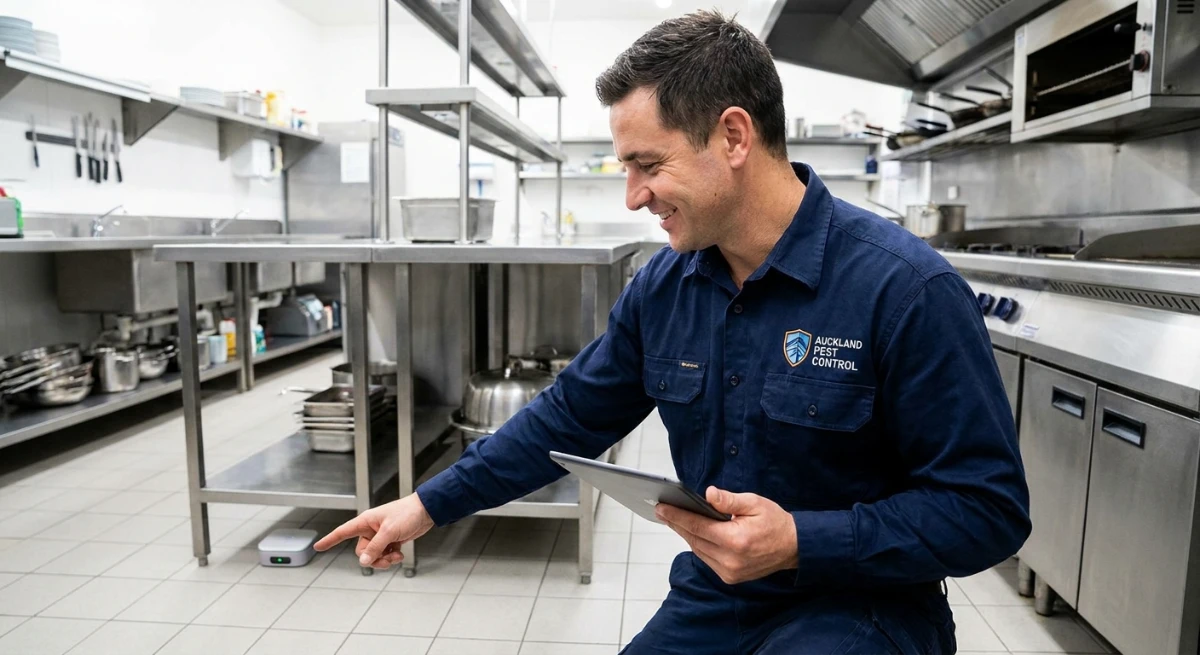
Our “Auckland Winter Defense” plans utilise IPM principles to keep your property protected year-round. We inspect, we monitor, and we adapt to the changing seasons.
Book an annual pest inspection before winter sets in. Identifying and sealing minor structural gaps in autumn prevents major rodent infestations when the temperature drops.
Conclusion: Stop Guessing, Start Preventing
Pests are relentless, but they are also predictable. By understanding their biology, habits, and entry methods, we can stop them in their tracks before they cause expensive damage.
Stop wasting money on hardware store fixes that do not work. Stop risking your family’s health or your business’s reputation. Get a certified professional to inspect your property, find the root cause, and eradicate the problem for good.
When you are ready to fix the problem permanently, give us a call. We will tell you plainly what is going on, and exactly what happens next.
People Also Ask

About the Author: Ronnie
Founder, Pest Control Auckland · Commercial & Residential Pest Expert · Certified Urban Pest Management Specialist
With years of experience handling Auckland’s complex urban pest environment, Ronnie holds the strict New Zealand Certificate in Pest Operations (Level 3). Having consulted for both residential homeowners and strict commercial food sectors under the Food Act 2014, he is the definitive expert to explain the vital role of predictive pest inspections and structural exclusion.