Spotted a bug that looks like it belongs in a sci-fi movie? Maybe it crawled out of a recently imported shipping container out West, or maybe it dropped out of some international luggage. I’ll give it to you straight: when you see something truly exotic, standard pest control isn’t the answer. You don’t squash it, and you don’t ignore it. You need to understand how Biosecurity New Zealand & Pest Incursion Reporting works.
We handle the local rats, roaches, and ants that plague Auckland homes. But when a foreign threat breaches our borders, it puts our entire agricultural economy and native ecosystem at massive risk. If we show up to a job and find an exotic spider or a yellow-legged hornet, our tools stay in the truck. We secure the area and get the government on the line immediately.
Let me tell you exactly what happens when you spot an exotic pest, who to call, and how we handle the everyday invaders while the Ministry for Primary Industries (MPI) handles the border-crashers. Knowing the difference saves time, money, and potentially our native wildlife.
Key Takeaways
Biosecurity New Zealand & Pest Incursion Reporting is the official process for notifying the Ministry for Primary Industries about suspected exotic pests. If you spot an unusual insect, dial 0800 80 99 66 immediately. Do not kill it; take clear photos, contain it safely, and await official instructions.
Exotic Threats vs. Local Pests
Every week, someone in Auckland calls us panicking about a mutant spider or a massive wasp. Most of the time, it is just a well-fed local species that has found a cozy spot in your garage. But occasionally, it is a genuine biosecurity threat that hitched a ride on international freight.
New Zealand’s borders are constantly under pressure. When you are dealing with Biosecurity New Zealand & Pest Incursion Reporting, you are literally dealing with national defense. Our native wildlife and our massive agricultural sectors depend entirely on keeping these exotic bugs out of the ecosystem.
If a pregnant exotic pest escapes into the Waitākere Ranges, the consequences are catastrophic. That is why we draw a hard line between what we treat and what the government treats. We eradicate the established urban pests; MPI hunts down the invaders.
Never crush or spray an exotic pest with hardware store chemicals. You might destroy key identifying features that entomologists need to track its origin. Contain it safely and call the hotline.
The 2026 Auckland Pest Landscape
Auckland is the main gateway for international freight into New Zealand. That makes our industrial zones, especially around West Auckland and South Auckland, prime hotspots for stowaways. As we gear up to host the FAOPMA Pest Summit in July 2026, the global spotlight is on how smartly we manage these risks.
The industry is shifting rapidly away from reactive, toxic spraying toward Predictive Integrated Pest Management (IPM). We are using data to stop pests before they breed. Take the recent yellow-legged hornet scare in the Bay of Plenty, which generated over 17,000 public notifications. That level of extreme public vigilance is exactly what keeps our borders secure.
Meanwhile, our local eradication efforts are seeing unprecedented success. Following the massive late-2025 aerial 1080 drop in the Hūnua Ranges, rat tracking numbers plummeted to a staggering 1.3%. This proves that when we apply scientific, root-cause eradication, we win.
But an autumn surge in urban pests—driven by last year’s mild winter and hot summer—means residential rodents are pushing hard into homes. People are frustrated by the DIY cycle of despair, buying hardware store bombs that just don’t work. You need a professional to find the entry point and block it.
The DIY Cycle of Despair
Most homeowners try to fix a rat or roach problem themselves first. They buy cheap baits, throw them in the roof, and hope for the best. A week later, the scratching comes back. This is the DIY cycle of despair, and it costs you more in the long run.
Surface-level treatments do not work. If you don’t fix the structural entry point, new pests will simply replace the dead ones. We focus on finding exactly how they are getting in and shutting it down permanently.
Who Handles What? A Clear Breakdown
It is easy to get confused about who to call when things get creepy-crawly. If you have rats nesting in your roof cavity, that is a private property issue. It is on you (or your landlord) to hire a qualified professional to clear them out.
But if you open a shipment of imported tiles and a snake slithers out, that is a federal emergency. The Biosecurity New Zealand & Pest Incursion Reporting protocols kick in instantly. MPI takes over jurisdiction of the site.
Here is the plain truth: we handle the established, everyday urban pests. MPI handles the foreign invaders. DOC handles the protected native species. Knowing who to call prevents legal headaches and keeps you compliant with the law.
| Pest Type | Who to Call | Action Required |
|---|---|---|
| Rats, Mice & Roaches | Pest Control Auckland | Structural exclusion, targeted baiting, and nest removal. |
| Yellow-Legged Hornet | MPI (0800 80 99 66) | Do not engage. Photograph safely and report immediately. |
| Exotic Spiders (e.g., Redback) | MPI (0800 80 99 66) | Contain if safe, isolate the area, await instructions. |
| Native Geckos & Skinks | Department of Conservation | Leave alone. Highly protected species under NZ law. |
Commercial Biosecurity & The Food Act 2014
New Zealand’s hospitality sector reached a record $15.99 billion turnover in FY2025. With 30% of these businesses operating right here in Auckland, the pressure to maintain zero-tolerance hygiene standards is immense. A single pest sighting can ruin a restaurant’s reputation overnight.
Under the Food Act 2014, commercial food operators cannot just throw toxic bait around the kitchen. The law prohibits ecotoxic rodenticides in sensitive food prep areas. You must use non-toxic monitoring, mechanical traps, and strict structural exclusion to stay compliant.
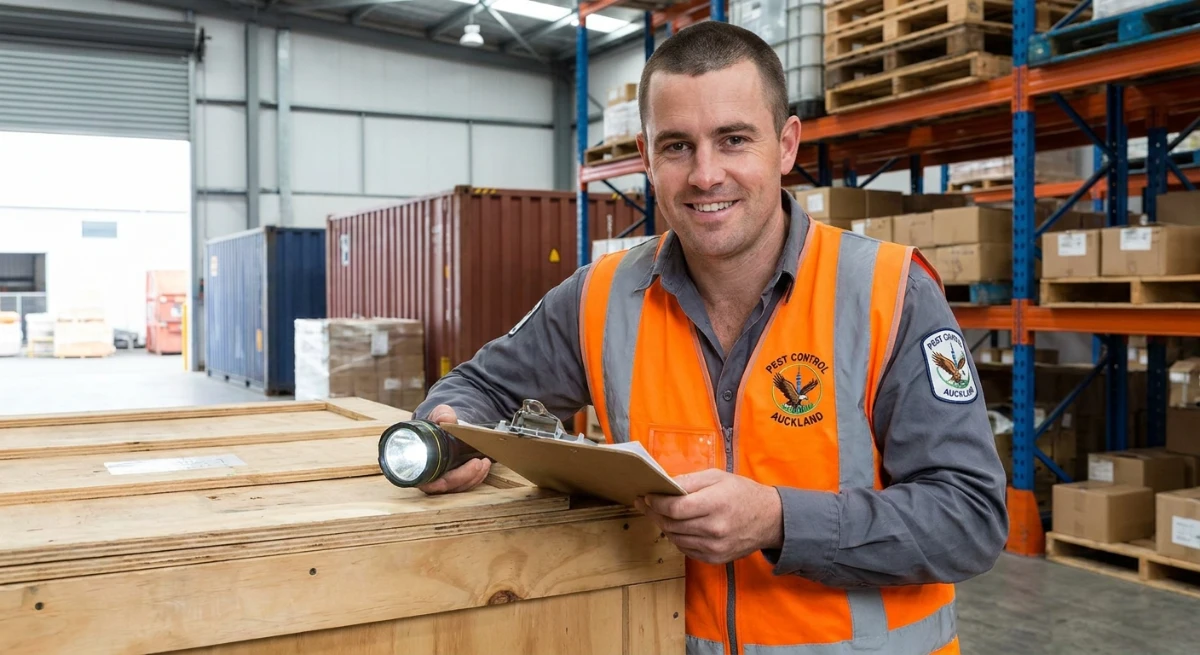
If you run a commercial warehouse receiving international goods, your staff are the frontline of defense. If they spot an unusual insect on a pallet, they must initiate Biosecurity New Zealand & Pest Incursion Reporting immediately. Failing to do so can result in massive fines and site closures.
Inspect all international pallets for soil, egg masses, or live insects before moving them indoors. Train your forklift operators to spot anomalies.
Steps for Pest Incursion Reporting
So, you have found something weird. What happens next? The process is straightforward, but you need to act fast and keep a level head. Panic leads to mistakes, and mistakes destroy evidence.
First, grab your phone and take the clearest photos you possibly can. Lighting matters immensely here. MPI entomologists need to see wing patterns, antennae shapes, and leg joints to make a rapid preliminary ID.
Next, dial the 0800 80 99 66 hotline. The operator will ask for your exact location, how the pest arrived, and its current state. Follow their instructions exactly. Here is the standard protocol you should expect to follow:
- Secure the specimen: If it is safe to do so, trap the insect under a clear glass or plastic container. Do not handle it with bare skin.
- Do not use standard bug spray: Chemical sprays might destroy key identifying features or cause the pest to flee into a hidden crevice.
- Isolate the area: Keep pets, children, and staff away from the immediate vicinity. Close doors and windows if the pest is airborne.
- Wait for instructions: An MPI biosecurity officer will tell you exactly what to do next. They may dispatch a rapid response team to your location.
What Happens After You Report?
Once MPI takes over, they handle the heavy lifting. They will assess the risk level of the specimen. If it is a known high-risk threat, they will set up a localized containment zone.
This might involve setting specific pheromone traps around your property or warehouse to check for a wider breeding population. Your job is done once you hand it over; you have done your part to protect the country.
Our Role in West Auckland
We might not be the government, but local pest technicians are the eyes and ears on the ground. We are Level 3 qualified under the EPA HPC Notice 2017, meaning we know exactly what belongs here and what absolutely does not.
When we conduct standard pest control in West Auckland, we are always scanning for anomalies. A good technician doesn’t just spray chemicals blindly; they investigate the environment like a detective.
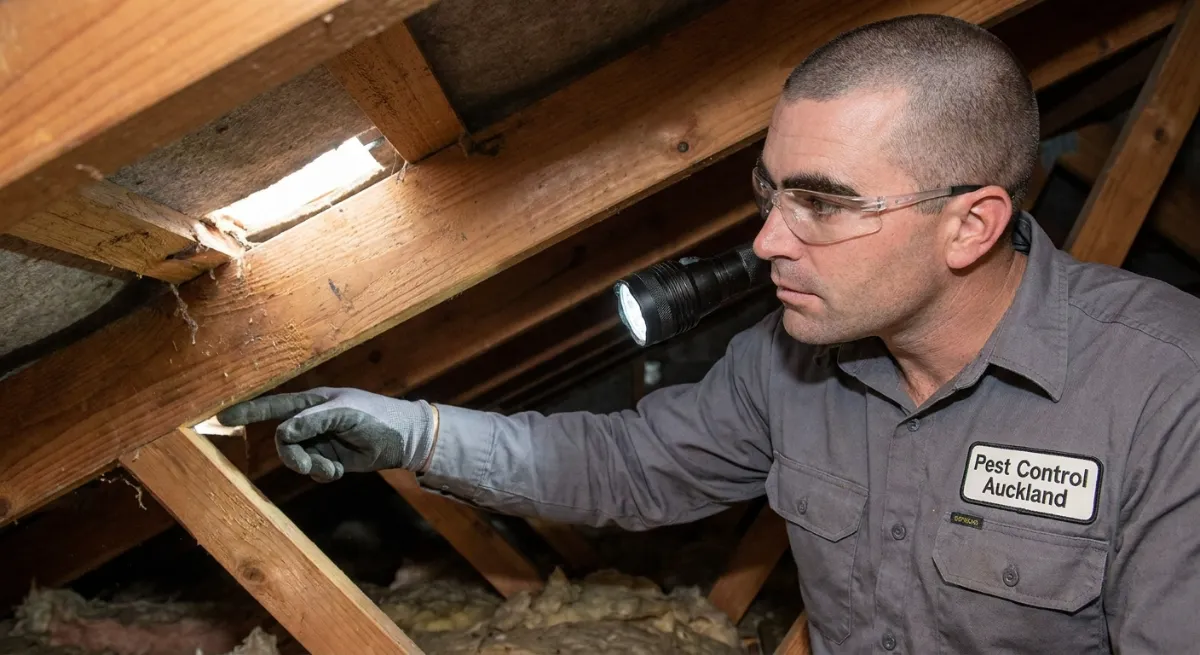
If we find standard rodents or roaches, we apply our Silver Bullet Guarantee. We find the entry point, block it, and clear them out safely using MPI-approved, zero-emission treatments that protect your family and pets.
But if we find something exotic during an inspection, we will immediately guide you through the Biosecurity New Zealand & Pest Incursion Reporting steps so you aren’t left guessing. We secure the site and make the call with you.
Under the Residential Tenancies Act, landlords must provide a clean state. We provide clear, legal documentation after our treatments to keep you compliant with the Tenancy Tribunal.
What We Don’t Do
I’ll give it to you straight: we don’t kill everything that moves. New Zealand has strict animal welfare and conservation laws, and we follow them to the letter. Protected native wildlife, like skinks, geckos, and native birds, are completely off-limits.
If native birds are causing a nuisance in your roof, we can offer advice on habitat modification or structural exclusion once they have moved on, but we do not exterminate them. The same applies to feral rural animals; we assess these case-by-case and refer you to rural contractors if needed.
Our focus is on the scientific, root-cause eradication of urban pests. We protect your home and business, and we let MPI and DOC protect the country.
People Also Ask

About the Author: Ronnie
Founder, Pest Control Auckland · Commercial & Residential Pest Expert · Certified Urban Pest Management Specialist
With years of hands-on experience in the Auckland pest landscape, Ronnie is a Level 3 qualified expert in handling complex urban pest issues. Having consulted extensively on commercial site compliance and structural exclusion, he knows exactly where the line is drawn between standard pest management and Biosecurity New Zealand & Pest Incursion Reporting protocols, ensuring every client stays safe and legally compliant.