Will your New Zealand home insurance pay out when rats chew through your wiring or borer weakens your floorboards? The short answer is no.
Almost every standard house and contents policy in this country explicitly excludes damage caused by insects, rodents, and vermin. If you are trying to make Insurance Claims for Pest Damage in Auckland, you are likely about to receive a polite rejection letter from your provider.
Insurers classify pest infestations as a maintenance issue, not a sudden, unforeseen disaster. They expect you to keep the property secure and manage any infestations proactively.
I have seen homeowners staring at a $4,500 rewiring bill because rats nested in the ceiling cavity during a cold Auckland winter. They assume their comprehensive cover will save them, but it rarely does. You need to stop the pests before they cause the damage, because the financial risk sits entirely on your shoulders.
Key Takeaways
Standard New Zealand home insurance policies explicitly exclude damage caused by insects, rodents, and vermin. Insurers view pest control as routine property maintenance. If pests cause structural or electrical damage, the homeowner bears the full repair cost, making proactive pest management the only true financial protection.
The Hard Truth About Pest Damage and Insurance
When you sign up for home insurance, you are buying protection against sudden, accidental events. Think house fires, severe floods, or a tree crashing through your living room window.
Pest infestations do not fit this category. According to the Insurance Council of New Zealand (ICNZ), damage by insects and vermin is a standard exclusion across the board. This means rats, mice, cockroaches, ants, and borer beetles are entirely your problem.
Insurers operate on the principle of gradual damage. A rat does not destroy your insulation overnight. It happens over weeks or months. Because you had time to notice the issue and fix it, the insurer absorbs none of the liability.
We see this constantly in our line of work. People call us hoping we can write a report that forces their insurer to pay. We tell them the truth: no pest report will override a standard policy exclusion. You are better off spending your energy fixing the root cause of the infestation.
Always read your specific policy wording. Most New Zealand insurers list insects, rodents, and vermin under their absolute exclusions for both house and contents policies.
Why Insurers Decline Pest Claims
Insurance companies expect homeowners to maintain their properties. It is a fundamental condition of your contract.
If you let paint peel and the wood rots, that is on you. If you let rats breed in your garage and they chew through your walls, that is also on you. This is why Insurance Claims for Pest Damage in Auckland fail. The damage is considered a direct result of poor property maintenance.
There is a small caveat regarding resulting damage in some premium policies. If a rat chews through a flexible water pipe and floods your kitchen, the insurer might cover the water damage to the floorboards.
However, they will not pay to fix the chewed pipe, and they certainly will not pay for the pest control required to remove the rats. Even then, getting a payout for resulting damage is incredibly difficult.
If the loss adjuster determines you ignored obvious signs of a rat infestation for months, they can void the claim entirely. The smartest move is to never let it get to that stage.
Booking an annual pest inspection is cheaper than fighting a declined insurance claim. Stop the problem at the entry point before it costs you thousands.
Landlord vs. Tenant: Who Pays the Bill?
Auckland’s rental market is massive, and pest disputes are a common headache. When pests damage a rental property, neither the landlord nor the tenant can usually rely on insurance to fix it.
Under the Residential Tenancies Act 1986, landlords must ensure the property is free of pests at the start of a tenancy. If a tenant moves in and immediately finds fleas or cockroaches, the landlord must pay for the fumigation.
But what happens six months down the line? If the tenant leaves rubbish piling up and attracts a severe rodent infestation, the Tenancy Tribunal will likely hold the tenant liable for the eradication costs.
Conversely, if rats are getting in through a broken vent that the landlord failed to repair, the landlord foots the bill. Property managers often deal with this friction by arguing over who is at fault.
We bypass the arguments. We come in, find the entry point, and tell you exactly how the pests are getting inside. Once the structural weakness is identified, the liability usually becomes obvious.
If tenants keep pets, many tenancy agreements require a professional end-of-tenancy flea treatment. This is a standard preventative measure to protect the incoming tenants.
Common Uninsured Pest Damage in Auckland
Auckland’s climate is perfect for pests. We had a mild winter followed by a hot summer, leading to a massive autumn pest surge in 2026. Because you cannot rely on Auckland home insurance pest damage cover, you need to know what you are risking.
Rodents in the Roof Cavity
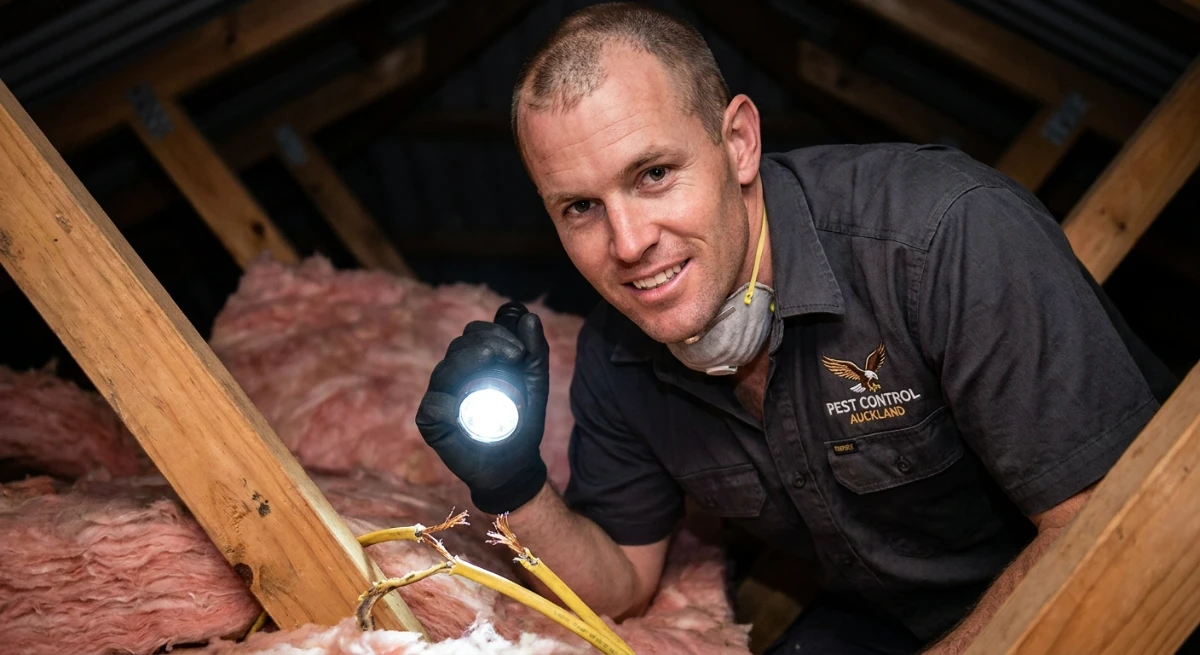
Rats and mice are destructive chewers. They need to gnaw constantly to keep their teeth sharp. In an Auckland ceiling, they target TPS electrical cables and PVC plumbing pipes.
Chewed wires are a leading cause of unexplained house fires. Chewed pipes cause slow leaks that rot your ceiling gib. They also soil your insulation with urine and feces, meaning you have to rip it all out and start again.
Borer Damage in Heritage Homes
Auckland is full of beautiful old villas built from native timber. Borer beetles lay their eggs in bare timber. The larvae hatch and eat their way through your floorboards and joists for years.
By the time you see the exit holes, the structural integrity of the wood is compromised. Because this happens over years, insurers classify it as gradual damage and reject the claim.
Cockroaches in Kitchen Appliances
German cockroaches love warm, dark places. In a modern kitchen, that means the back of your fridge, your dishwasher circuit board, or your microwave.
They nest in the electronics and short out the appliances. Contents insurance will not replace a $2,000 fridge that was destroyed by a roach infestation.
Here is how to spot early signs of pest damage before it costs you:
- Flickering lights or short circuits: Often the first sign that rats are chewing your TPS cables in the roof cavity.
- Fine dust under wooden furniture: A classic indicator of active borer beetles weakening your native timber.
- Unexplained water pressure drops: Rodents gnawing on flexible PVC plumbing pipes can cause slow, hidden leaks behind your walls.
- Droppings behind kitchen appliances: A sure sign that German cockroaches are nesting near the warm motors of your fridge or dishwasher.
| Pest Type | Common Damage | Estimated Repair Cost (NZD) | Insurance Cover? |
|---|---|---|---|
| Rodents (Rats/Mice) | Chewed electrical wires, soiled insulation | $1,200 – $4,500+ | No |
| Borer Beetles | Structural weakening of floorboards and joists | $3,000 – $10,000+ | No (Gradual Damage) |
| Cockroaches | Short-circuiting kitchen appliances | $500 – $2,500 | No |
The Financial Impact: Repair vs. Prevention
If you are staring down the barrel of uninsured pest damage costs, the math is brutal. A professional, targeted pest control treatment is a fraction of the cost of repairing the damage.
Look at the data below. The financial risk of doing nothing far outweighs the cost of proactive management.
We offer the Auckland Winter Defense plan to tackle the seasonal rodent surge. Instead of waiting for rats to move in and chew your wires, we secure the perimeter.
We bait the active areas, block the entry points, and monitor the situation. It is the only way to genuinely protect your property value.
Commercial Properties and Business Interruption
If you run a hospitality business in Auckland, pest damage carries an even higher risk. Under the Food Act 2014, the Ministry for Primary Industries (MPI) enforces strict hygiene standards.
If a health inspector finds a cockroach infestation, they can shut your restaurant down immediately. Will your business interruption insurance cover the lost revenue? Absolutely not.
Pest infestations are considered a compliance failure, voiding any claim for lost income. Commercial operators must use Integrated Pest Management (IPM) systems.
We provide commercial biosecurity compliance auditing and zero-emission treatments that satisfy MPI standards. We keep your doors open and your reputation intact.
Ensure your commercial pest control provider supplies a detailed logbook and Safety Data Sheets (SDS). Health inspectors will ask to see this documentation during an audit.
The Silver Bullet Prevention Strategy
DIY pest control is a cycle of despair. Hardware store bombs and cheap baits rarely solve the problem.
They kill a few stragglers, but the nest remains, and the entry points stay wide open. To avoid footing the bill for uninsured damage, you need a scientific approach.
We provide pest control in Auckland that focuses on root-cause eradication. We do not just spray and walk away.
Certified and Safe
Our technicians hold the New Zealand Certificate in Pest Operations (Level 3). This means we are qualified to handle Class 9 ecotoxic substances safely, in full compliance with the EPA HPC Notice 2017.
We do not just spray toxic chemicals around your property. We use targeted, MPI-approved treatments that are safe for children and pets once dry.
Root-Cause Eradication
Rats in the roof? We do not just throw bait up there and leave. We find out exactly how they are getting in.
Is it a broken vent? A gap in the soffit? Overhanging branches? We advise you on the structural exclusion needed to block them out permanently.
We strictly follow the Animal Welfare Act 1999, ensuring any trapping is humane and legally compliant. We tell you plainly what is going on, what needs to happen next, and we back our work with the Silver Bullet Guarantee.
Stop waiting for an insurance payout that is never going to come. Fix the problem at the source.
Frequently Asked Questions

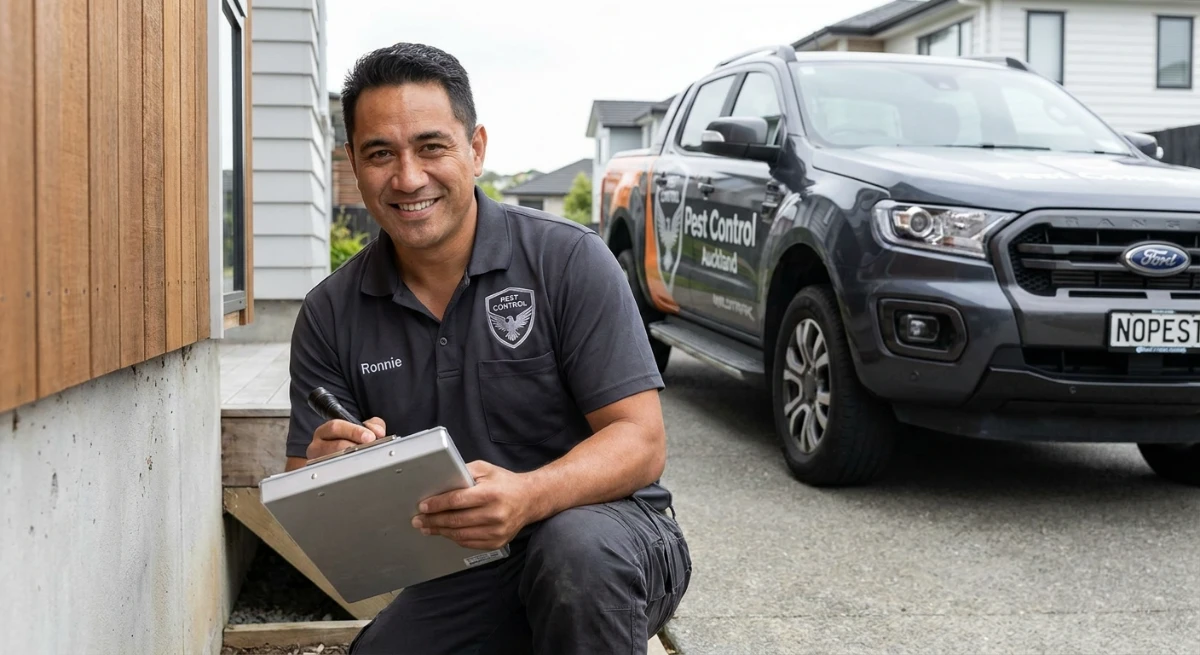
About the Author: Ronnie
Founder, Pest Control Auckland · Commercial & Residential Pest Expert · Certified Urban Pest Management Specialist
With years of experience handling severe residential infestations and consulting on commercial biosecurity compliance under the Food Act 2014, Ronnie understands the brutal financial realities of uninsured pest damage. As a Level 3 Qualified UPM Contractor, he provides Aucklanders with honest, root-cause eradication strategies that protect properties when insurance policies won’t.