You run a commercial kitchen, manage a retail space, or oversee a warehouse in Auckland. You know the drill.
It is May 2026, the autumn chill is setting in, and every rat from here to the Hūnua Ranges is looking for a warm ceiling cavity. You do not have time for a corporate sales pitch or unreliable contractors.
You have an MPI health inspector breathing down your neck. The New Zealand hospitality sector just tipped a record $15.99 billion in turnover for FY2025. With that kind of money on the line, the stakes have never been higher.
If you get a pest sighting on the floor, your ‘A’ Grade rating is gone. We provide the Commercial Pest Control Solutions Auckland Businesses use to stay compliant, open, and profitable. No fear-mongering, just science and structural exclusion.
Key Takeaways
To maintain MPI compliance under the Food Act 2014, commercial operators must use proactive, non-toxic monitoring in sensitive areas. Effective Commercial Pest Control Solutions Auckland Businesses rely on focus on structural exclusion, digital IoT monitoring, and Level 3 certified technicians to permanently stop rodents and cockroaches.
The High Stakes of Auckland’s Hospitality Boom
Auckland’s commercial scene is expanding rapidly. The hospitality sector hit a massive $15.99 billion turnover recently, and with that kind of cash flowing, the council is not messing around with hygiene standards.
The upcoming FAOPMA Pest Summit in July 2026, hosted right here at the NZICC, proves one thing: the industry is changing fast. The theme is “FutureProof,” and that is exactly what you need to do to your commercial premises.
Reactive treatments are dead. If you wait until you see a German cockroach near the prep bench, you are already failing your audit. You need proactive Commercial Pest Control Solutions Auckland Businesses can confidently present to an inspector.
Why May 2026 is a Tipping Point
We had a mild winter last year followed by a scorching summer. This created the perfect breeding storm for urban pests across the Auckland region.
Now that the autumn temperature drop is here, rodent populations are surging indoors. Commercial buildings with poor structural exclusion are taking the brunt of the invasion.
At the same time, Biosecurity New Zealand is on high alert. The ongoing response to the Yellow-Legged Hornet threat means government agencies are hyper-focused on pest pathways. Your business cannot afford to be a weak link.
The Law: Food Act 2014 and MPI Compliance
Let’s talk about the Food Act 2014. It is the absolute baseline for operating a food business in New Zealand. It shifted the industry from reactive inspections to a risk-based sliding scale.
If you run a high-risk commercial kitchen in the CBD, the rules are brutal. You cannot just buy toxic rodenticide from the hardware store and chuck it under the fridge. That is a fast track to a shutdown.
The Food Act 2014 and HACCP guidelines strictly prohibit the use of toxic rodenticide baits in sensitive food preparation areas. You must use mechanical traps and non-toxic monitoring blocks.
What the Inspectors Actually Look For
When an MPI or Auckland Council auditor walks in, they do not care about your excuses. They want to see a paper trail. They want undeniable proof of a proactive pest management plan.
Here is exactly what your compliance file needs to contain to pass an audit without friction:
- A detailed site map showing the location of all bait stations and mechanical traps.
- Safety Data Sheets (SDS) for any chemical applied on site, proving it is MPI-approved.
- A physical or digital logbook of all pest sightings, consistently signed and dated by staff.
- Service reports generated by a Level 3 qualified Urban Pest Management technician.
Core Pests Threatening Auckland Businesses Right Now
Rats and mice are being pushed inside by the cold weather. Cockroaches are breeding in the warm, humid microclimates of commercial dishwashers and coffee machines.
You need to know exactly what you are up against. A generic bug spray will not solve a systemic infestation in a commercial environment.
Rodents in the Roof and Walls
Rats do not care about your business hours. They chew through expensive electrical wiring, contaminate bulk stock, and ruin your hard-earned reputation.
A single rat sighting by a customer will end up on social media before you can even react. The damage to your brand is often more expensive than the physical damage to your property.
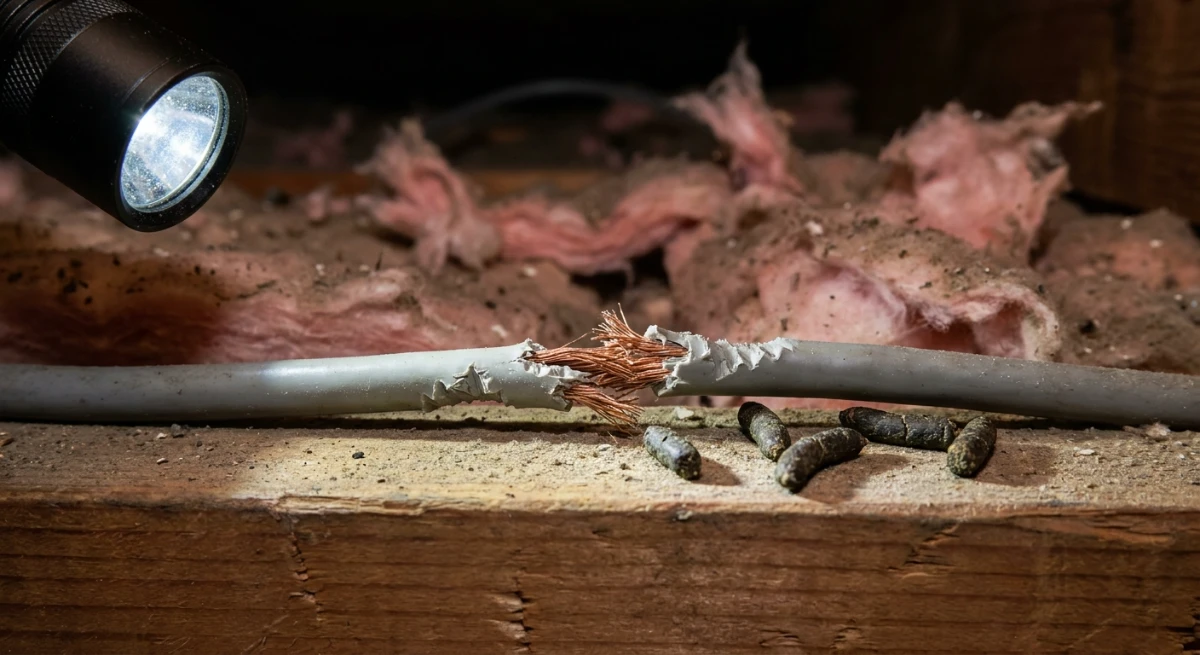
We tackle rodents by finding the physical entry point. We do not just lay traps; we seal the building. This permanent structural exclusion is what makes our Commercial Pest Control Solutions Auckland Businesses so effective.
The Persistent German Cockroach
German cockroaches are the absolute nightmare of the hospitality industry. They hitchhike in on cardboard supply boxes and immediately set up shop in the motors of your commercial fridges.
They breed exponentially. If you see one single roach during the day, you have hundreds hiding deep in the walls. Surface sprays do absolutely nothing to stop a German roach colony.

We use targeted, zero-emission gel baits. The roaches eat the bait, return to the nest, and the colony collapses from the inside out. It is a clean, discreet, and highly effective method.
Moving Beyond Spray and Pray: Predictive IPM
The old way of pest control was turning up once a month and spraying harsh, broad-spectrum chemicals along the skirting boards. That is lazy, and it is terrible for your staff and customers.
Today, the industry standard is Predictive Integrated Pest Management (IPM). This means we use data, environmental controls, and smart monitoring to stop pests before they ever enter the building.
Modern IPM uses IoT-enabled smart traps that alert us the second a rodent is caught. This allows for immediate, targeted responses rather than waiting for a scheduled monthly visit.
Comparing Traditional Methods vs. Modern IPM
If you are still paying a contractor to just walk around with a spray pack, you are wasting your operational budget. You are treating the symptom, not the root cause.
Here is exactly how the modern IPM approach outpaces the outdated methods of the past.
| Feature | Traditional Extermination | Predictive IPM |
|---|---|---|
| Approach | Reactive symptom treatment | Proactive root-cause exclusion |
| Chemical Use | Heavy, broad-spectrum sprays | Targeted, zero-emission gels |
| Compliance | Often fails modern MPI audits | Exceeds Food Act 2014 standards |
| Long-Term Cost | High (constant call-outs) | Low (preventative savings) |
Implementing Reliable Commercial Solutions
We do not mess around when it comes to legal compliance. Our technicians hold the New Zealand Certificate in Pest Operations (Level 3). We know the HSNO Act inside and out.
When you partner with us, you get the absolute best Commercial Pest Control Solutions Auckland Businesses can hire. We start with a full structural audit to find out exactly how the pests are getting in.
We back our work with the Silver Bullet Guarantee. We fix the root cause, provide transparent documentation, and ensure you pass your council health inspections without a hitch.
Then, we set up discreet, tamper-proof monitoring stations. These keep your staff and customers safe while giving us the operational data we need to stay ahead of any infestation.
Do not wait for an inspector to find a problem. Call us today to schedule a comprehensive biosecurity audit for your commercial premises.
The Impact of Hauraki Gulf Biosecurity Rules
Auckland is a unique operational environment. We have incredibly strict pathway management rules under the Regional Pest Management Plan (RPMP).
If your business ships goods or supplies to the Hauraki Gulf Controlled Area, like Waiheke or Aotea Great Barrier, the rules are even tighter. You are legally responsible for ensuring your freight is pest-free.
Failing to secure your supply chain can result in massive fines and reputational damage. We handle the complex compliance paperwork, so you can focus on running your business. That is the definition of reliable Commercial Pest Control Solutions Auckland Businesses depend on.
Frequently Asked Questions

About the Author: Ronnie
Founder, Pest Control Auckland · Commercial & Residential Pest Expert · Certified Urban Pest Management Specialist
With years of experience in structural exclusion and biosecurity compliance, Ronnie is the definitive expert on Commercial Pest Control Solutions Auckland Businesses. Having consulted for top-tier hospitality venues across the region, he ensures commercial clients meet strict MPI and Food Act 2014 standards through predictive, zero-emission Integrated Pest Management.