Got little piles of sawdust appearing under your antique dresser or floorboards? We will identify the borer species, apply a targeted residual treatment, and stop them from eating your home. It usually takes one comprehensive visit to break the cycle.
Borer—or woodworm—is not a loud, aggressive pest. They quietly chew through the structural integrity of your home for years before you ever see a flight hole. In Auckland’s humid climate, untreated sapwood is an all-you-can-eat buffet for these beetles.
If you want to protect your home, you need a professional approach. When it comes to Borer Treatment for Auckland Properties, effective Woodworm Solutions require treating the timber at the source, not just setting off a smoke bomb in the hallway.
Key Takeaways
Professional borer treatment in Auckland involves applying deep-penetrating residual insecticides to exposed timber. This targets the Common House Borer during their October-to-March flight season. Unlike DIY foggers, professional treatments break the 3-to-5-year larval cycle, offering long-term structural protection and full compliance with EPA safety standards.
The Silent Destroyers: Understanding Borer in New Zealand
People often panic when they hear they have borer, thinking their house will collapse in a month. It will not. However, left unchecked over decades, these insects cause severe structural weakness that costs tens of thousands to repair.
We see it constantly in older Auckland villas. The damage is slow, hidden, and entirely preventable if you understand how the pest operates.
Common House Borer vs. Native Longhorn
In New Zealand, we primarily deal with the Common House Borer (Anobium punctatum). They love the untreated sapwood found in many older homes across the region.
Then there is the Two-toothed Longhorn (Ambeodontus tristis). These are larger, native beetles that leave oval flight holes up to 7mm wide. They can attack harder heartwood and cause much faster structural damage if left untreated.
The Lifecycle of the Common House Borer
Understanding the enemy is half the battle. The female beetle lays her eggs in cracks, crevices, or old flight holes of untreated timber. She avoids painted or varnished surfaces because the larvae cannot penetrate them.
Once the eggs hatch, the tiny larvae burrow straight into the wood. They spend the next two to four years eating the cellulose, creating a massive labyrinth of tunnels that you cannot see from the outside.
Finally, they pupate just below the surface. The adult beetle chews a perfectly round exit hole, flies out to mate, and dies within a few weeks. The damage is done entirely by the hidden larvae.
The Borer Flight Season (October to March)
The borer flight season in New Zealand runs from October through March. This is when the adult beetles finally chew their way out of the wood to mate and lay eggs.
You will notice fresh 2mm holes and fine wood dust—called frass—piling up on your floors. Treating the timber right before or during this flight season is the most effective way to kill emerging adults.
It stops them from laying new eggs and breaks the reproductive cycle immediately. If you miss this window, you give them another full year to multiply.
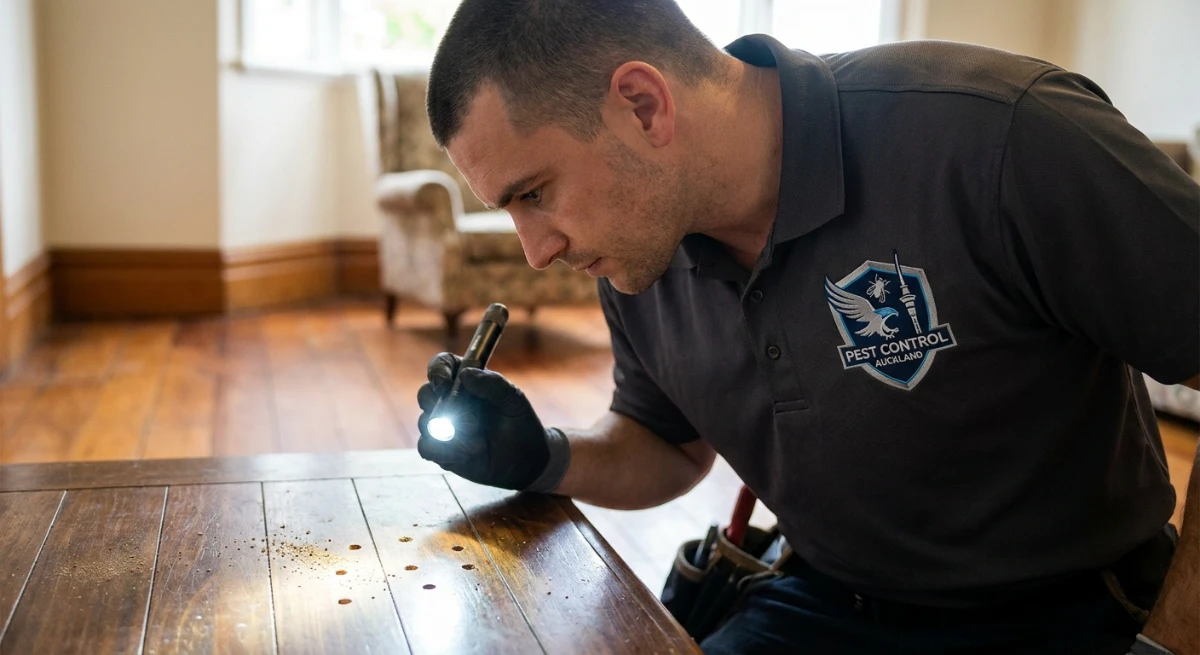
Adult borer beetles emerge between October and March. If you see fresh sawdust (frass) under your furniture or floorboards during these months, the larvae have already spent years eating your timber. Immediate professional treatment is required to stop the next generation.
Why DIY Borer Bombs Fail
Hardware store borer bombs are a classic example of the DIY cycle of despair. They make a lot of smoke and kill any adult beetles that happen to be flying around that exact afternoon.
However, they do absolutely nothing to the larvae hidden deep inside your timber. The structural degradation continues silently behind your walls.
The Cycle of Despair
The larvae inside the wood will just keep eating. When homeowners rely on these foggers, they find themselves repeating the process every single summer.
It is a waste of money and gives a false sense of security while the damage worsens. When we provide Borer Treatment for Auckland Properties, we use professional-grade, deep-penetrating residual sprays to ensure permanent Woodworm Solutions.
The Science of Residual Protection
When the adult beetle tries to chew its way out, or when a new female tries to lay eggs on the surface, our residual insecticide eliminates them. This breaks the lifecycle permanently.
The active ingredients bind to the wood fibers, ensuring they do not wash away easily. This means your sub-floor remains protected for years, not just a few hours.
It is a scientific approach to eradication, focusing on root-cause exclusion rather than surface-level symptom management.
Professional Borer Treatment for Auckland Properties
We do not just spray and walk away. A proper borer eradication requires a comprehensive structural assessment of your sub-floor and roof cavity.
We look for moisture issues, identify the specific beetle species, and map out the exact treatment zones. Every house requires a tailored approach.
Sub-Floor and Cavity Residual Spraying
Most borer infestations start in the damp, dark sub-floor of a property. We use a high-volume, low-pressure application of residual insecticide to coat every exposed joist, bearer, and floorboard.
This ensures the chemical penetrates the wood grain deeply. It provides a toxic barrier that remains active for years, protecting your investment from future generations of woodworm.
We also apply this to exposed roof trusses where applicable, locking down the entire skeletal structure of your home.
Deep Timber Injection Services
For heavily infested structural beams, surface spraying is sometimes not enough. We use targeted timber injections to deliver the treatment exactly where it is needed most.
This involves injecting a concentrated insecticidal fluid directly into the existing flight holes. It travels through the labyrinth of larval tunnels, wiping out the active woodworms deep inside the core of the timber.
| Treatment Method | Penetration Depth | Effective Longevity | Best Use Case |
|---|---|---|---|
| Supermarket Borer Bomb | Surface level only | 1 to 2 days | Killing flying adults in enclosed rooms |
| Professional Residual Spray | Deep into wood grain | Up to 10 years | Exposed sub-floors, roof cavities, and joists |
| Targeted Timber Injection | Core of the timber | 10+ years | Heavily infested structural beams and bearers |
Legal Compliance and Safety Standards
Pest control in New Zealand is heavily regulated, and rightly so. You want the bugs dead, but you want your family, pets, and the local environment kept completely safe.
We operate strictly by the book, ensuring every drop of product is applied exactly where it needs to go without contaminating your living space.
EPA HPC Notice 2017 and HSNO Act 1996
Handling Class 9 ecotoxic substances requires strict compliance. Our technicians hold the New Zealand Certificate in Pest Operations (Level 3).
This certification means we understand the exact dilution rates, application methods, and safety stand-down periods required by law. We do not guess; we follow the science to ensure your property remains a safe sanctuary.
Safe for Families, Lethal to Woodworm
Before any treatment begins, we provide clear preparation and aftercare instructions. You will know exactly how long to stay out of the house and when it is safe for pets to return.
Our MPI-approved treatments are designed to target the nervous systems of insects, not mammals. Once the residual spray has dried and bonded to the timber, it poses no airborne risk to your family.
Under the Residential Tenancies Act, landlords must provide a safe, pest-free home. Our certified borer treatments come with full documentation, ensuring you meet your legal obligations and protect your rental property investment.
Cost vs. Value: Protecting Your Investment
Auckland property prices are no joke. Letting borer chew through your floorboards is literally eating away your equity.
It is a slow-moving disaster that compromises the structural integrity of your biggest asset. A professional borer treatment might cost more upfront than a six-pack of supermarket foggers, but it saves you tens of thousands in structural timber replacement down the line.
When you choose professional intervention over DIY methods, you gain several distinct advantages:
- Root-Cause Eradication: We target the larvae deep inside the timber, not just the flying adults.
- Long-Term Residuals: Our treatments bond to the wood, providing up to a decade of active protection.
- Safety Compliance: All applications are carried out by Level 3 certified technicians in accordance with EPA standards.
- Structural Preservation: We stop the degradation of your home’s equity, saving you massive renovation costs.
When you invest in comprehensive Borer Treatment for Auckland Properties, you are buying guaranteed Woodworm Solutions. You get our Silver Bullet Guarantee, knowing the job is done right the first time by a local, family-owned team.
We provide full service reports and safety data sheets (SDS) after every treatment. This transparency ensures you have a permanent record of the structural protection applied to your home.
The Future of Pest Control: FAOPMA 2026 Summit
The pest control industry is evolving fast, moving away from toxic, reactive measures toward predictive, sustainable solutions.
In July 2026, Auckland is proudly hosting the FAOPMA Pest Summit at the NZICC. The theme is “FutureProof: Smarter Pest Solutions for a Rapidly Changing World”.
We are constantly integrating these global advancements into our local practices. Whether it is zero-emission treatments, smarter diagnostic tools, or advanced residual formulas, we bring the best technology directly to your doorstep.
You do not have to settle for outdated methods. We deliver cutting-edge, scientific pest control that works.
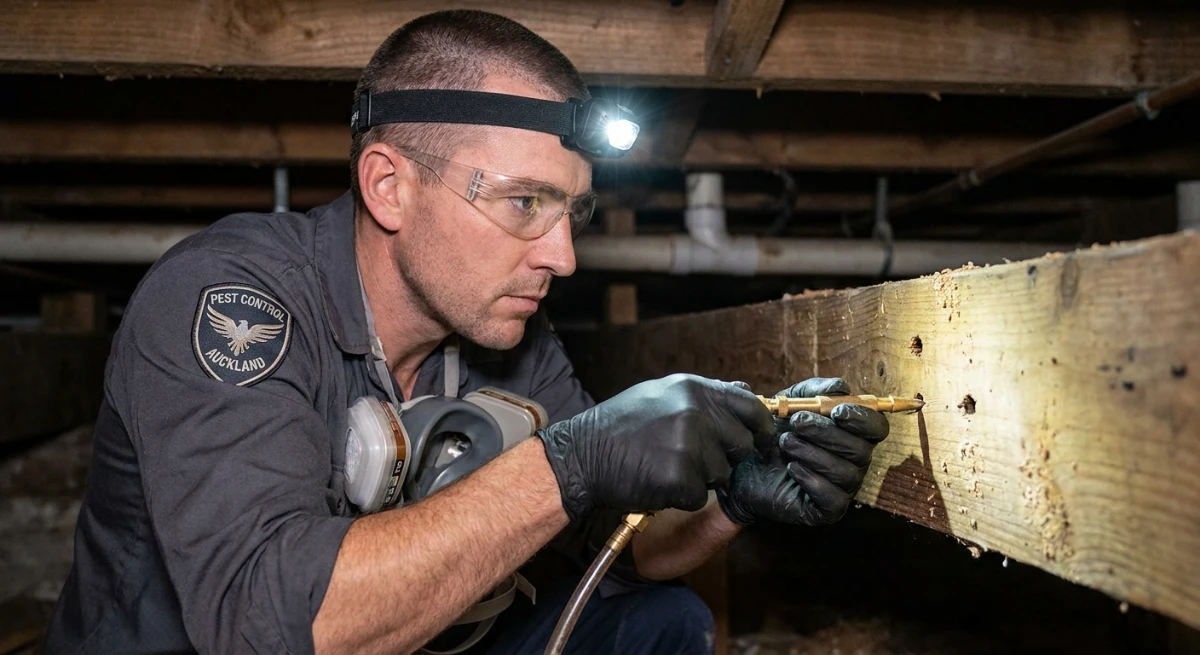
Borer thrive in damp wood. To prevent future infestations, ensure your sub-floor has adequate ventilation and fix any plumbing leaks immediately. Dry timber is much harder for borer larvae to digest.
Frequently Asked Questions

About the Author: Ronnie
Founder, Pest Control Auckland · Commercial & Residential Pest Expert · Certified Urban Pest Management Specialist
With years of experience in structural timber preservation across the Auckland region, Ronnie is the definitive expert on Borer Treatment for Auckland Properties and Woodworm Solutions. Holding a Level 3 NZ Certificate in Pest Operations, his scientific, root-cause approach ensures homes are protected from the inside out, perfectly aligning with EPA and HSNO Act standards.