Got cockroaches in your kitchen? We will find the nest, apply targeted gel baits to wipe out the colony, and block their entry points. It usually takes just one visit to solve the problem.
Auckland’s humid climate makes it a breeding ground for pests, especially after a warm summer. But not all roaches are the same. When dealing with cockroaches in Auckland, species and eradication methods are completely dependent on what exactly is crawling across your floor.
We do not just spray and walk away. We focus on root-cause eradication, structural entry-point exclusion, and long-term prevention. If you need reliable pest control in West Auckland, you need a team that understands the science of pest behavior.
Key Takeaways
To permanently eradicate cockroaches in Auckland, you must identify the species first. German cockroaches require targeted indoor gel baiting, while Gisborne cockroaches need outdoor habitat management. Professional eradication focuses on root-cause exclusion and EPA-approved, pet-safe treatments rather than ineffective hardware store bug bombs.
The 2026 Autumn Cockroach Surge in Auckland
If you have noticed more cockroaches than usual lately, you are not alone. The mild winter and scorching hot summer of the previous year have created a perfect storm for urban pests in May 2026. Cockroaches thrive in high humidity and warm temperatures.
As the autumn weather cools down, these cold-blooded scavengers are aggressively moving indoors. They are looking for warmth, moisture, and food sources in your kitchen and bathroom walls. This seasonal shift is driving a massive spike in calls for pest control in West Auckland and the wider region.
We are currently seeing record numbers of infestations in residential homes and commercial kitchens alike. Hardware store sprays are barely making a dent in these established colonies. To stop the invasion, you need to understand exactly what you are fighting.
Identifying the Enemy: Cockroach Species in Auckland
You cannot defeat a pest if you do not understand its biology. In New Zealand, we primarily deal with three distinct types of cockroaches. Treating a native bush cockroach the same way you treat an invasive German cockroach is a waste of time and money.
When analyzing cockroaches in Auckland: species and eradication strategies must be perfectly matched. Here is a breakdown of the usual suspects you will find scurrying across your floorboards.
1. The German Cockroach (Blattella germanica)
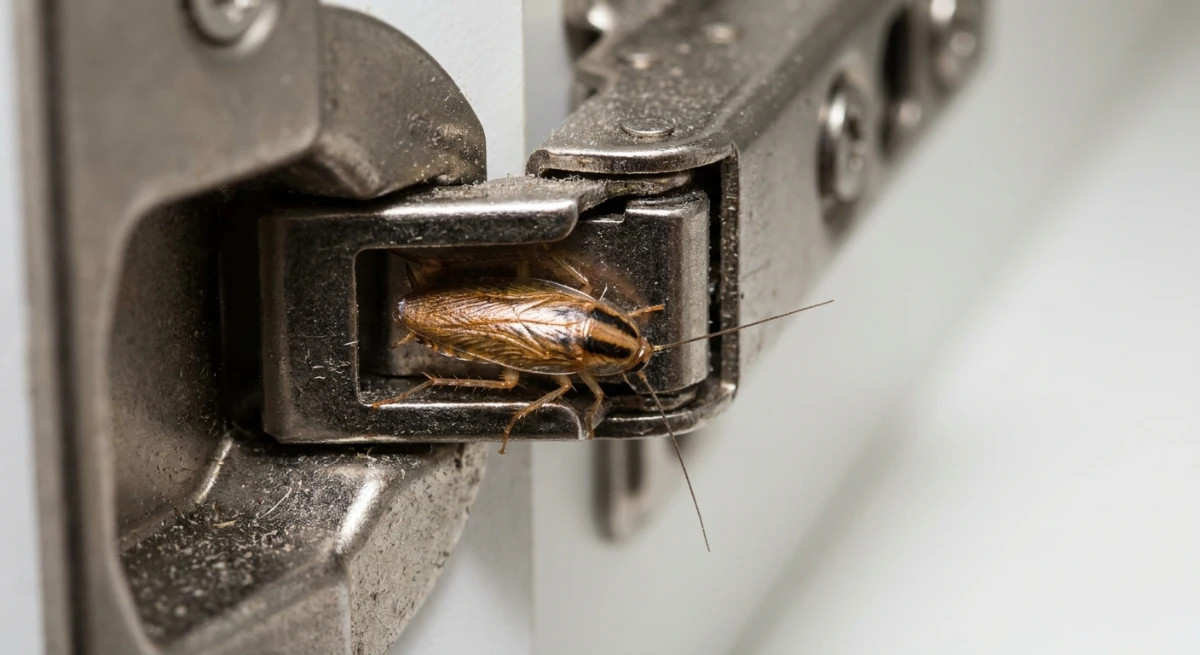
This is the undisputed heavyweight champion of kitchen nightmares. The German cockroach is small, light brown, and easily identified by two dark parallel stripes running down its back. They are an invasive species that relies entirely on human environments to survive [3].
If you turn on the kitchen light at 2 AM and see tiny insects scattering under the fridge, it is almost certainly the German cockroach. They love tight, dark, warm spaces with high humidity. You will find them behind dishwashers, inside microwave hinges, and under sinks.
They breed at an explosive rate. A single female carries an egg capsule (ootheca) containing up to 40 eggs, and she protects it until just before it hatches. This makes them incredibly resilient to standard surface sprays, requiring specialized professional baiting to achieve root-cause eradication.
2. The Gisborne Cockroach (Drymaplaneta semivitta)
Despite their terrifying size, the Gisborne cockroach is largely harmless. Originally introduced from Australia, it is now considered a naturalized part of the New Zealand ecosystem. They are large, dark brown, and have distinct pale white stripes down their sides.
Unlike their German cousins, Gisborne cockroaches do not want to be inside your house. They prefer damp, decaying organic matter outdoors. You will usually find them living under bark, in woodpiles, or hiding in leaf litter around the perimeter of your property.
When they do wander indoors, it is usually by accident. They are fleeing extreme weather or seeking shelter from heavy rain. Eradicating them involves clearing outdoor debris and sealing structural entry points rather than aggressive indoor chemical treatments.
3. The American Cockroach (Periplaneta americana)
The American cockroach is the largest of the pest species found in Auckland, growing up to 40mm in length. They are reddish-brown and have a distinctive yellowish figure-eight pattern on the back of their heads. They are strong fliers in warm weather.
These insects are heavily associated with commercial environments, sewers, and drainage systems. They feed on decaying organic matter and can spread serious diseases like Salmonella and E. coli by tracking bacteria from drains onto food preparation surfaces.
Because they travel through unsanitary environments, their presence in a commercial kitchen is a major red flag for health inspectors. Eradication requires treating the drainage networks and implementing strict Integrated Pest Management (IPM) protocols.
| Species | Size & Appearance | Primary Habitat | Eradication Difficulty |
|---|---|---|---|
| German Cockroach | 10-15mm, light brown, two dark stripes | Indoors (Kitchens, Bathrooms, Appliances) | High (Requires targeted gel baits) |
| Gisborne Cockroach | 20-40mm, dark brown, pale white stripes | Outdoors (Woodpiles, Leaf litter, Bark) | Low (Accidental indoor wanderer) |
| American Cockroach | Up to 40mm, reddish-brown | Sewers, Drains, Commercial buildings | Medium (Requires drain treatments) |
The Lifecycle of a Cockroach Infestation
Cockroaches are masters of survival. Understanding their lifecycle is critical to eradication. A German cockroach ootheca (egg case) can hold up to 40 eggs. The female carries this case until just hours before it hatches.
This is an evolutionary defense mechanism that protects the next generation from environmental hazards and chemical sprays. Once the nymphs hatch, they undergo several molting stages, known as instars, before reaching full adulthood.
In the warm, humid environment of an Auckland kitchen, this entire process can take as little as 30 days. This rapid maturation means a minor problem can explode into a severe infestation in a matter of weeks. Because adult cockroaches can live for nearly a year, overlapping generations create a massive, hidden population behind your walls.
Pull your fridge or dishwasher out slightly and inspect the rubber seals and motor housing with a flashlight. If you see tiny black specks that look like ground black pepper, that is cockroach frass (droppings), indicating a nearby nest.
The “Spray and Pray” Myth: Why Bug Bombs Fail
Most Aucklanders panic at the first sight of a cockroach and rush to the hardware store for a bug bomb. This is what we call the “cycle of despair.” Bug bombs only kill the insects caught out in the open at that exact moment.
They do not penetrate the deep wall voids, appliance motors, or cabinet hinges where the colony actually lives. Worse, the repellent nature of these cheap sprays often fractures the colony. The surviving cockroaches simply scatter and establish new nests in other rooms.
Professional eradication is entirely different. We use non-repellent, highly attractive gel baits. The cockroaches eat the bait, return to their hidden nest, and die. Because cockroaches are cannibalistic, the rest of the colony eats the poisoned dead roach, creating a cascading domino effect that wipes out the entire nest.
Over-the-counter foggers and bug bombs are highly toxic, leave hazardous residues on your food prep surfaces, and rarely reach the deep crevices where German cockroaches actually nest. They often make the infestation worse by scattering the colony.
The True Cost of Cockroach Eradication in Auckland (2026)
Transparency is non-negotiable. We do not believe in hiding our pricing behind high-friction quote forms. For a standard 3-bedroom home in Auckland, professional cockroach eradication currently ranges between $265 and $325.
This price reflects the use of premium, MPI-approved, zero-emission treatments that are rigorously tested for efficacy and safety. It also includes our time spent identifying structural entry points and providing long-term prevention advice.
When comparing cockroaches in Auckland: species and eradication costs, remember that cheap, temporary fixes end up costing more in the long run. Fixing it once with a certified technician is always the smartest financial decision.
Legal Compliance: The EPA and HSNO Act
Pest control in New Zealand is strictly regulated, and for good reason. The chemicals required to eradicate severe infestations must be handled by trained professionals. We operate under strict legal constraints to ensure your family’s safety.
Under the EPA Hazardous Property Controls (HPC) Notice 2017 [1] and the HSNO Act 1996 [2], operators handling Class 9 ecotoxic substances must be highly qualified. Our technicians hold the New Zealand Certificate in Pest Operations (Level 3).
This means we do not guess. We calculate exact dosages, adhere strictly to safety protocols, and use targeted applications that protect children, pets, and the wider environment. Safety is baked into every single job we do.
Under the Residential Tenancies Act, landlords are generally responsible for providing a pest-free property at the start of a tenancy. If an infestation occurs later due to a lack of cleanliness, the tenant may be liable. We provide clear, impartial documentation to satisfy Tenancy Tribunal requirements.
Commercial Compliance: Protecting Auckland’s Hospitality Sector
Auckland’s booming hospitality sector faces immense pressure to maintain zero-tolerance hygiene standards. The Food Act 2014 and the Ministry for Primary Industries (MPI) strictly enforce pest-free environments in commercial kitchens.
A single cockroach sighting can ruin a restaurant’s reputation overnight. We provide commercial biosecurity compliance auditing and tailored Integrated Pest Management (IPM) plans. We use hygienic, zero-emission treatments that will not disrupt your daily operations.
For food preparation businesses, the stakes are incredibly high. You cannot simply spray toxic chemicals around food prep areas. We utilize mechanical traps, pheromone monitors, and highly targeted, non-toxic baiting systems in sensitive zones.
The industry is evolving rapidly. In July 2026, Auckland will host the prestigious FAOPMA Pest Summit at the NZICC. The theme is “FutureProof: Smarter Pest Solutions,” reflecting the shift away from toxic sprays toward predictive, smart monitoring systems.
How We Eradicate Cockroaches: The Silver Bullet Guarantee
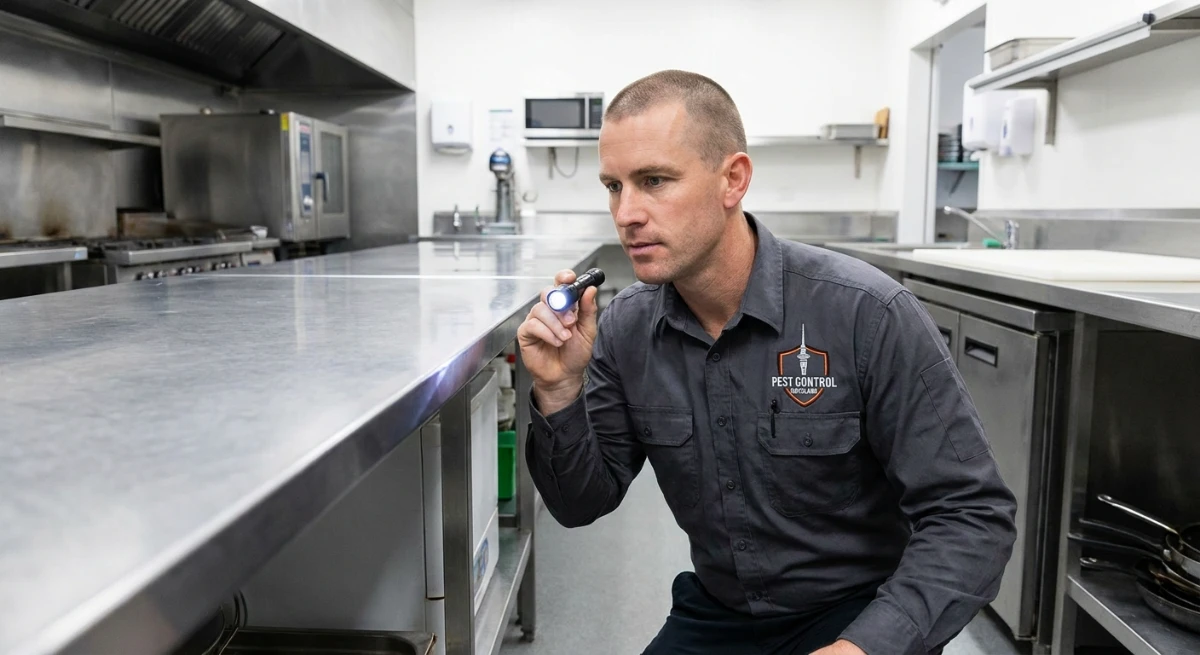
When you call us for pest control in West Auckland, you get a systematic, scientific approach. We do not just spray the skirting boards and hand you a bill. We solve the problem at its source.
- Step 1: Deep Inspection. We identify the specific species, locate the primary nesting sites, and find the structural entry points they are using to get inside.
- Step 2: Targeted Baiting. We apply highly attractive, non-repellent gel baits directly into cracks, crevices, and appliance housings where cockroaches hide.
- Step 3: Insect Growth Regulators (IGRs). We use advanced IGRs to disrupt the reproductive cycle of the colony, ensuring that juvenile roaches never reach maturity.
- Step 4: Structural Exclusion. We provide actionable advice on sealing gaps, fixing leaky pipes, and managing organic debris to prevent future infestations.
We back our work with the “Silver Bullet Guarantee.” It is a commitment to thorough, reliable work that guarantees your peace of mind. You get your home back, safe and pest-free.
Clear all clutter from your kitchen benches, sweep the floors, and pull large appliances slightly away from the walls if possible. Do not use any domestic bug sprays for at least 48 hours before our treatment, as they will contaminate our professional baits.
Frequently Asked Questions

About the Author: Ronnie
Founder, Pest Control Auckland · Commercial & Residential Pest Expert · Certified Urban Pest Management Specialist
With years of experience handling severe urban infestations across West Auckland, Ronnie is the definitive expert to write about Cockroaches in Auckland: Species & Eradication. Holding Level 3 Urban Pest Management qualifications and strictly adhering to EPA and HSNO regulations, he specializes in root-cause exclusion and targeted treatments that eliminate colonies at the source.