Flies in the kitchen? We’ll find what they’re feeding on, eliminate the breeding source, and set up a barrier so they don’t come back — usually in one visit. You don’t need a lecture on how annoying they are; you need them gone. But if you’re running a cafe in Waitakere or just trying to keep your family safe in Henderson, ignoring a fly problem is a gamble you will lose.
Right now, in May 2026, Auckland is dealing with a massive autumn pest surge. A mild winter followed by a scorching summer has created the perfect breeding ground for houseflies and blowflies across the region. These aren’t just nuisance insects. Flies in Auckland: Hygiene & Health Risks are a serious matter, with a single fly capable of carrying over 100 different pathogens. We see the fallout every day in our Pest Control West Auckland operations: failed health inspections, contaminated food, and sick families.
Key Takeaways
Flies in Auckland: Hygiene & Health Risks stem from their ability to transmit over 100 pathogens, including Salmonella and E. coli. Effective eradication requires finding the breeding source, not just surface spraying. For commercial food businesses, professional Level 3 pest management is legally required under the Food Act 2014 to avoid closure.
The 2026 Autumn Fly Surge in Auckland
If you feel like you are seeing more flies this year than ever before, you aren’t imagining things. The mild winter of 2025 rolled right into a brutally hot summer, creating an unbroken breeding cycle. Now, in May 2026, we are dealing with a massive autumn pest surge across the entire region.
Flies breed rapidly in warm, humid conditions. A single female housefly can lay up to 500 eggs in her short lifetime. When the weather stays warm, those eggs turn into adult flies in less than a week. That is why a small annoyance in your kitchen can turn into a full-blown infestation in a matter of days.
As Auckland prepares to host the FAOPMA Pest Summit in July 2026, the industry is hyper-focused on how changing weather patterns are accelerating urban pest problems. The theme of the summit is “FutureProof,” and that is exactly what local property owners need to be thinking about. Reactive measures are no longer enough.
The Real Health Risks: What Are They Carrying?
Let’s get straight to the facts. Flies do not have teeth. They cannot chew solid food. Instead, they vomit digestive enzymes onto your food to dissolve it, then suck it back up. It is a disgusting process, but that isn’t even the worst part.
Before landing on your kitchen counter, that fly was likely feeding on rotting garbage, animal feces, or a dead carcass. Because of this, they pick up massive amounts of bacteria on their legs and bodies. When we talk about Flies in Auckland: Hygiene & Health Risks, we are talking about the mechanical transmission of severe diseases.
Houseflies are known carriers of over 100 different pathogens. This includes Salmonella, E. coli, Shigella, and the bacteria responsible for typhoid fever and cholera. Every time a fly lands on your food prep surface, it leaves behind thousands of microscopic microbes that can cause severe gastrointestinal illness.
Children and the elderly are particularly vulnerable to fly-borne illnesses. A severe case of Salmonella transmitted by a housefly can lead to hospitalization due to rapid dehydration. Do not let flies rest on baby bottles or pacifiers.
The data backs this up. As temperatures rise and fly populations explode, so do reports of foodborne illnesses and hygiene breaches in the local area. We’ve compiled the latest data showing the sharp increase in commercial hygiene warnings related to fly infestations across the region.
Commercial Impact: Food Act 2014 & MPI Audits
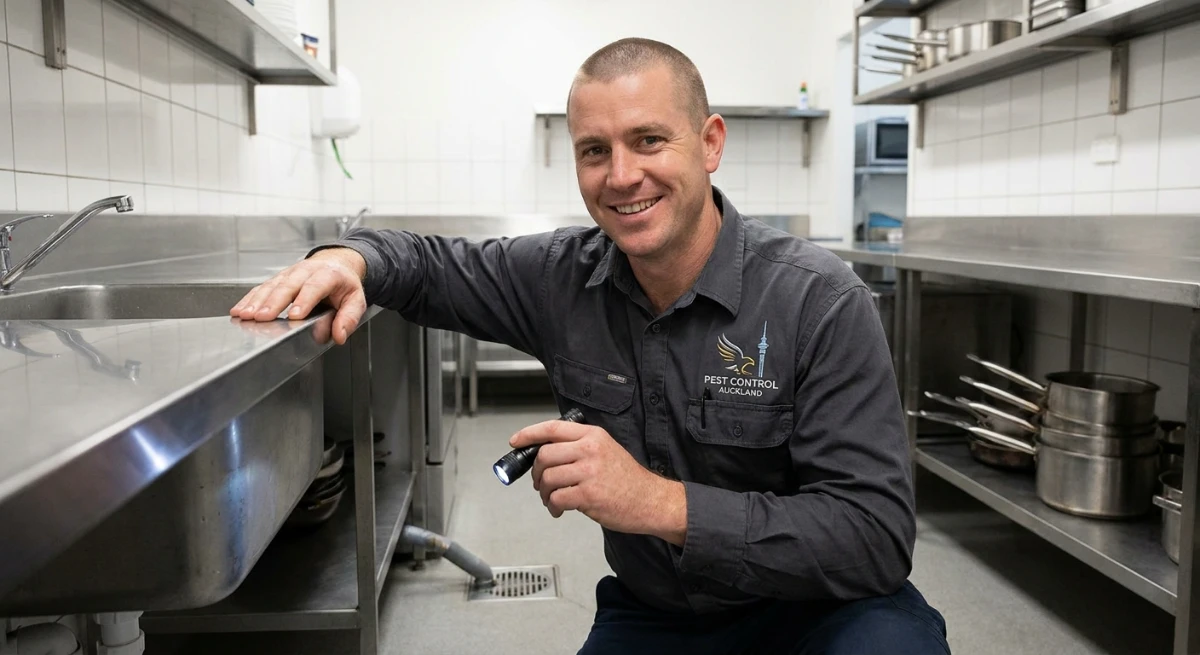
If you operate a cafe, restaurant, or food manufacturing plant, flies are a direct threat to your livelihood. The New Zealand hospitality sector is booming, but the Ministry for Primary Industries (MPI) has zero tolerance for pest-related hygiene failures. One bad audit can shut your doors.
Under the Food Act 2014, commercial operators must implement strict, proactive pest control measures. You cannot just wait until you see flies to act. You are legally required to stop pests from entering and living in your food premises, and this requires a documented Integrated Pest Management (IPM) plan.
This is where many businesses fail. They try to cut corners by setting up cheap UV zappers right above food prep areas—which actually scatters dead insect parts into the food. Or they use off-the-shelf chemical sprays that contaminate surfaces and violate MPI safety standards.
Commercial food sectors must use non-toxic monitoring and approved treatments. All pest management must be handled by a qualified technician with a Level 3 New Zealand Certificate in Pest Operations to ensure full compliance with the EPA and Food Act 2014.
We provide comprehensive commercial pest management across Auckland. We audit your premises, identify structural entry points, and install compliant, zero-emission treatments. We don’t just kill the flies; we provide the exact documentation you need to hand to your health inspector with confidence.
Common Fly Species in Auckland
Not all flies are the same, and treating them requires knowing exactly what you are up against. A spray that works on one species might be completely ignored by another. To solve the problem, we first identify the specific pest invading your property.
In our line of work as the leading Pest Control West Auckland experts, we encounter three main culprits on a daily basis. Each has a different breeding habit and requires a different scientific approach for total eradication.
| Fly Species | Appearance | Breeding Source | Primary Risk |
|---|---|---|---|
| Housefly (Musca domestica) | Grey thorax with four dark stripes. | Household garbage, animal feces, rotting food. | Major carrier of Salmonella and E. coli. High indoor presence. |
| Blowfly (Calliphoridae) | Metallic blue or green body. | Dead animals (rodents in the roof), meat waste. | Indicates a dead animal nearby. Rapid maggot production. |
| Fruit Fly (Drosophila) | Tiny, tan/brown with red eyes. | Fermenting fruit, dirty drains, empty beer bottles. | Contaminates fresh produce and hospitality bar areas. |
If you suddenly have large metallic blowflies buzzing against your windows, spraying them won’t fix the issue. You likely have a dead rat in your roof cavity or wall void. We find the carcass, remove it, and then treat the area to stop the maggot cycle dead in its tracks.
Why DIY Fly Control Fails
We see it all the time. A homeowner gets fed up, goes to the local hardware store, and buys a bunch of chemical “bug bombs.” They set them off, leave the house for a few hours, and come back to a floor full of dead flies. Two days later, the flies are back. We call this the “DIY Cycle of Despair.”
Hardware store sprays are contact killers. They only kill the adult flies that are flying around at that exact moment. They do absolutely nothing to the hundreds of maggots and pupae hidden in your rubbish bins, compost heaps, or drains. You are treating the symptom, not the disease.
- Surface-Level Impact: Aerosol cans don’t penetrate breeding sites or reach the pupal stage of the fly life cycle.
- Chemical Resistance: Overusing weak domestic sprays helps local fly populations build chemical resistance over time.
- Health Hazards: Indiscriminately spraying toxic aerosols around your kitchen benches poses a risk to your family and pets.
If you want to truly eliminate Flies in Auckland: Hygiene & Health Risks, you have to break the breeding cycle. That requires professional-grade, targeted treatments that stop larvae from maturing into adults.
Keep your outdoor rubbish bins tightly sealed and away from direct sunlight. The heat accelerates the rotting process, creating a massive scent beacon for houseflies across the neighborhood.
Our Approach: Scientific, Root-Cause Eradication
At Pest Control Auckland, we don’t just spray and walk away. We use a scientific, root-cause approach to pest management. When we arrive at your property, the first thing we do is a thorough inspection to find exactly where these flies are breeding and how they are getting inside.
We then implement targeted exclusion methods. We advise on structural fixes, seal entry points, and eliminate the organic matter drawing them in. Once the source is neutralized, we apply safe, MPI-approved residual treatments to the resting sites where flies congregate, such as upper walls and eaves.
We back our work. Our treatments are highly certified, safe for kids and pets, and designed for long-term eradication. If the pests come back, so do we.
As we head deeper into the year, we highly recommend our “Auckland Winter Defense” package. This preventative service locks down your home or business against not just flies, but the rodents and spiders that try to move indoors when the weather finally cools down. It’s the smartest way to protect your property year-round.
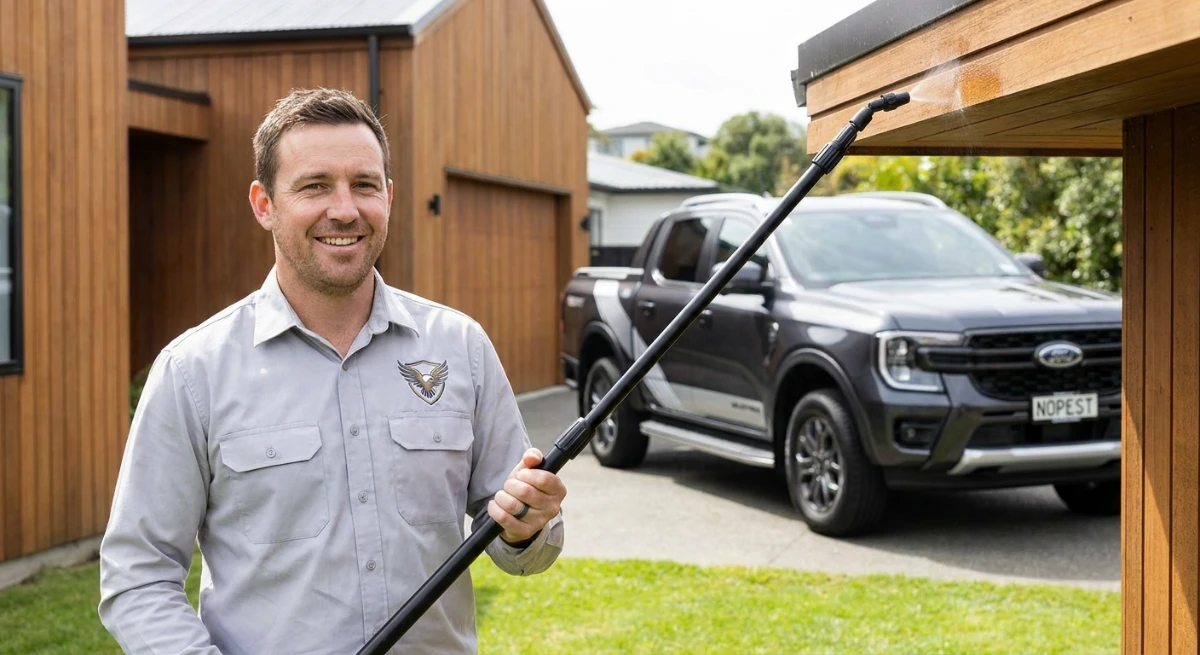
Don’t let a fly problem compromise your family’s health or your business’s reputation. The risks are too high, and the solution is straightforward. Get a certified professional to handle it properly, once and for all.
Frequently Asked Questions

About the Author: Ronnie
Founder, Pest Control Auckland · Commercial & Residential Pest Expert · Certified Urban Pest Management Specialist
With years of experience actively managing complex commercial infestations across the Auckland hospitality sector, Ronnie understands the severe legal and health implications of pest breaches. Having consulted for numerous West Auckland businesses to ensure Food Act 2014 compliance, he is the definitive expert on mitigating the hygiene risks posed by flies.