You are waking up with itchy welts, or you have noticed tiny black specks on your mattress seams. I have seen this a thousand times across Auckland. You do not need a science lesson; you need the problem gone so you can sleep again.
After a scorcher of a summer and a remarkably mild winter last year, Auckland is currently facing a massive autumn pest surge in 2026. Insects that normally die off in the cold are thriving, multiplying, and moving indoors to escape the sudden chill.
Whether you are a homeowner in Orewa or managing a bustling hotel in the CBD, dealing with biting insects is exhausting and stressful. We provide reliable Flea and Bed Bug Treatment in Auckland that targets the root cause, rather than just spraying chemicals and hoping for the best.
Key Takeaways
Effective Flea and Bed Bug Treatment in Auckland requires targeting the entire lifecycle, not just adult insects. Professional treatments cost between $175 and $345 depending on the pest and room count. DIY bombs often fail, driving bugs deeper into walls. Always use certified Level 3 technicians for guaranteed eradication.
The Autumn 2026 Pest Surge: Why Auckland is Crawling
If you feel like you are seeing more pests this year, you are not imagining it. The climate data backs it up. New Zealand experienced an unusually warm winter last year, followed by a humid summer, creating the perfect breeding ground for urban pests.
Now that the autumn chill has set in, these massive populations are seeking warmth, shelter, and food. They are finding all three inside your home. Fleas are hatching in untouched carpets, and bed bugs are hitching rides on public transport and luggage.
This surge is putting immense pressure on both residential homes and commercial businesses. With Auckland hosting the massive FAOPMA Pest Summit in July 2026, the global spotlight is on our local biosecurity standards. There has never been a more critical time to get your property professionally secured.
Diagnosing the Enemy: Fleas vs. Bed Bugs
The first step in any successful eradication is knowing exactly what we are up against. Fleas and bed bugs require entirely different treatment protocols. Treating a bed bug infestation like a flea problem is a guaranteed recipe for failure.
Many clients call us in a panic, unsure of what is actually biting them. While both leave itchy red welts, their habits, habitats, and lifecycles are distinct. Here is how we tell them apart during an inspection.
| Feature | Fleas | Bed Bugs |
|---|---|---|
| Primary Habitat | Carpets, pet bedding, floorboards | Mattress seams, bed frames, headboards |
| Bite Pattern | Random clusters, mostly on ankles and lower legs | Straight lines or zig-zags on exposed upper body |
| Physical Evidence | Flea dirt (looks like black pepper) on pets or floors | Tiny blood spots on sheets, shed exoskeletons |
| Entry Method | Carried in by cats, dogs, or rodents | Hitchhikers on luggage, clothing, or used furniture |
The Flea “Cycle of Despair”
Fleas are relentless. An adult female can lay up to 50 eggs a day, which fall off your pet and deep into your carpet fibers. Within weeks, you have a multi-generational infestation on your hands.
The real problem is the pupal stage. Flea pupae spin a protective cocoon that is virtually impenetrable to standard insecticides. They can lay dormant in your floorboards for months, waiting for the vibration of a footstep to hatch and immediately look for a blood meal.
This is why you get stuck in the “cycle of despair.” You bomb the house, kill the adults, and feel relieved. Two weeks later, the pupae hatch, and you are right back where you started.
Bed Bugs: The Silent Hitchhikers
Bed bugs do not care if your house is spotless or messy. They are strictly hitchhikers. You pick them up from a hotel, a bus seat, or a piece of second-hand furniture, and bring them straight into your sanctuary.
They are nocturnal and incredibly flat, allowing them to squeeze into the tightest crevices of your bed frame and mattress seams. They wait until you are asleep, tracking the carbon dioxide you exhale, before moving in to feed.
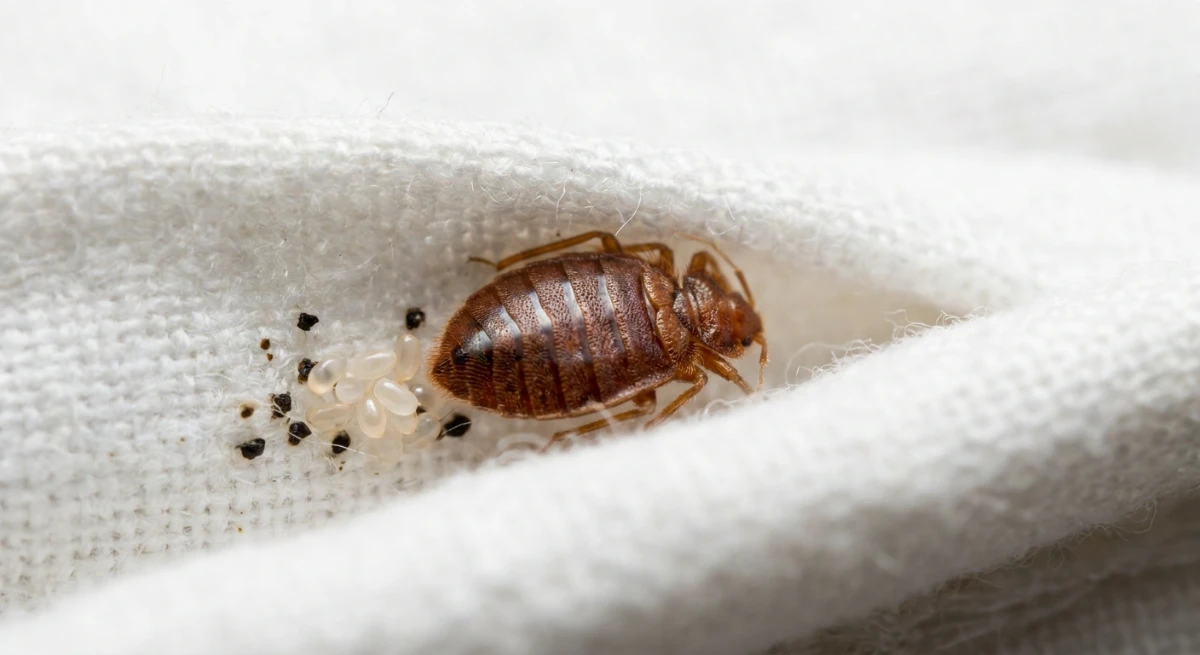
Supermarket bug bombs are highly repellent. Instead of killing a bed bug infestation, they often agitate the insects, driving them deeper into your wall cavities and spreading them to adjacent rooms. This turns a single-room problem into a whole-house nightmare.
The Real Cost of Flea and Bed Bug Treatment in Auckland
Let’s talk numbers. We believe in absolute transparency because hidden pricing helps no one. The cost of eradication depends entirely on the pest, the size of the property, and the severity of the infestation.
In 2026, standard Auckland pricing for a professional flea treatment on an average 3-bedroom home ranges from $175 to $310. Bed bugs are significantly harder to eradicate, requiring intensive labor and specialized chemicals. You can expect to pay between $215 and $345 per room for bed bug eradication.
While dropping $120 on DIY sprays at Mitre 10 might seem cheaper today, it almost always fails. You end up buying more sprays, throwing out expensive mattresses, and eventually calling us anyway. Booking a professional Flea and Bed Bug Treatment in Auckland upfront saves you money, time, and sanity.
Our “Silver Bullet” Eradication Process
We do not just spray and walk away. That is a rookie move. At Pest Control Auckland, our technicians are Level 3 Qualified under the EPA HPC Notice 2017. We use a scientific, multi-step approach to break the breeding cycle permanently.
Every treatment plan is customized. We assess the environment, identify the exact species, and deploy targeted interventions that are tough on pests but safe for your family.
Step 1: Deep Inspection and Structural Exclusion
First, we find the source. If you have a recurring flea problem, we check the sub-floor for stray cats or rodents that might be dropping eggs. If it is bed bugs, we dismantle bed frames and inspect every crack and crevice.
Eradication without exclusion is pointless. We provide actionable advice on sealing entry points and managing pet treatments so the pests cannot re-enter your home once we leave.
Step 2: Scientific, Zero-Emission Treatments
We utilize MPI-approved, Class 9 Urban Pest Management pesticides. For fleas, this includes an Insect Growth Regulator (IGR) mixed with an adulticide. The adulticide kills the active biters, while the IGR sterilizes the eggs and pupae, breaking the cycle.
Our treatments are highly targeted. Once the application is completely dry, the treated areas are entirely safe for children and pets to resume normal activities.
Vacuum all carpets thoroughly to stimulate pupae hatching. Wash all bedding at 60 degrees Celsius. Clear all items off the floor to ensure our technicians can apply a seamless residual barrier.
Step 3: The Silver Bullet Guarantee
We stand by our work. Bed bugs and fleas are notoriously stubborn, but our protocols are designed to win. If you follow our preparation and aftercare instructions, we guarantee the results.
If the pests survive the residual lifecycle window, we come back and fix it. No arguments, no hidden call-out fees. Just honest, reliable Auckland pest control.
Commercial Pest Control: Protecting Auckland’s Hospitality Sector
New Zealand’s hospitality sector generated a massive $21.4 billion in revenue leading into 2025. With a huge portion of that centered in Auckland, hotels, motels, and Airbnbs are under immense pressure to maintain pristine environments.
A single online review mentioning bed bugs can destroy a hotel’s reputation overnight. Furthermore, commercial operators must comply strictly with the Food Act 2014 and MPI hygiene standards, meaning pest control must be proactive, not reactive.

With the FAOPMA Pest Summit arriving at the NZICC in July 2026, the industry is shifting toward Predictive Integrated Pest Management (IPM). We help commercial clients transition away from toxic spray-and-pray methods toward smart monitoring and zero-emission treatments.
We understand that optics matter. Our commercial pest management team operates with absolute discretion, ensuring your guests never have to see a pest control truck parked out front during peak hours.
Landlord vs. Tenant: Who Pays for Pest Control in NZ?
This is the most common question we get from property managers across Auckland. Under the Residential Tenancies Act, liability comes down to how the infestation started.
If a tenant brings a pet into the home that introduces fleas, or returns from a holiday with bed bugs in their luggage, the tenant is financially responsible for the eradication. End-of-tenancy flea treatments are standard practice and often written into lease agreements for pet owners.
However, if the pests are entering due to a structural defect—such as a hole in the sub-floor allowing stray animals to nest—the landlord must cover the costs to ensure the property meets Healthy Homes standards. We provide clear, unbiased documentation to help resolve these Tenancy Tribunal disputes quickly.
Frequently Asked Questions

About the Author: Ronnie
Founder, Pest Control Auckland · Commercial & Residential Pest Expert · Certified Urban Pest Management Specialist
With over a decade of hands-on experience in urban pest management, Ronnie is a Level 3 Certified expert in handling complex infestations. Having consulted for major hospitality groups across the region, he is the definitive authority on Flea and Bed Bug Treatment in Auckland, ensuring safe, root-cause eradication that complies with strict New Zealand biosecurity and health standards.