Mate, let’s be honest. When you hear that unmistakable scratching in the ceiling at two in the morning, your first thought is usually about the sheer nuisance of it all. You think about the noise keeping you awake, the potentially chewed wires, and the massive hassle of dealing with an infestation. But as a certified urban pest management specialist, I need to tell you that the noise is the absolute least of your worries. The real issue is what these pests leave behind on your kitchen benches, inside your insulation, and in the air you breathe.
Understanding the Health Risks of Rats and Mice: Protecting Your Family in Auckland is our absolute top priority. We are currently seeing an unprecedented autumn pest surge across the region in 2026. A remarkably mild winter last year, followed by a scorching hot summer, has created the perfect breeding storm for rodents. Now that the weather is finally cooling down, those booming populations are looking for a warm place to crash, and unfortunately, that place is your home.
We don’t just chuck a bit of bait in the roof and hope for the best. At Pest Control Auckland, we focus on scientific, root-cause eradication to ensure your home remains a safe sanctuary. Let’s break down exactly what you are up against this season and how we fix it for good.
Key Takeaways
Rats and mice carry severe diseases like Leptospirosis and Salmonella, directly threatening your household. With Auckland experiencing a massive 2026 rodent surge, structural exclusion is vital. Skip the failing DIY baits; secure your home with our certified, root-cause eradication methods for long-term, family-safe protection.
The 2026 Auckland Rodent Surge: Why They Are Moving Indoors
If you feel like you are seeing more rats this year, you are definitely not imagining things. The climate data and our daily callout logs tell the exact same story. Following the extremely mild winter of 2025 and a scorching summer, Auckland’s rodent population has skyrocketed. Without the usual winter frost to trigger a natural die-off, these pests bred continuously for months.
Now, as we move deep into the autumn of 2026, the chill is forcing these massive populations indoors. They are aggressively seeking warmth, shelter, and reliable food sources to survive the winter. Your roof cavity, wall voids, and subfloors provide the perfect five-star accommodation for them. It is a textbook urban pest migration, and it is hitting Auckland suburbs incredibly hard.
Interestingly, while our urban areas are under siege, our regional parks are seeing massive wins. Following a highly successful aerial 1080 drop in late 2025, rat tracking in the Hšnua Ranges plummeted to just 1.3 percent. This proves that aggressive, scientifically backed interventions work wonders. However, you cannot drop agricultural baits in an urban Auckland suburb; you need a targeted, structural approach to keep them out of your house.
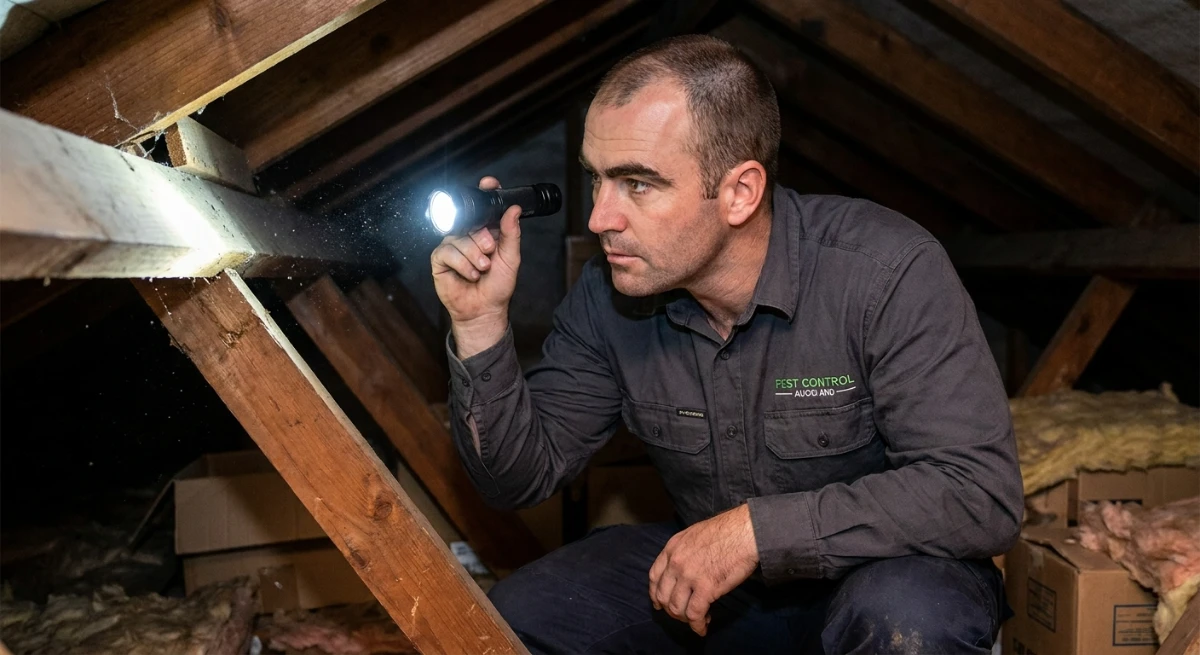
The Core Health Risks of Rats and Mice
Let’s get straight to the facts. Rodents are not just a structural nuisance; they are highly mobile biological hazards. When they breach your home’s perimeter, they bring a host of dangerous pathogens right into your living spaces. When discussing the Health Risks of Rats and Mice, we have to look closely at the science and the local data.
Leptospirosis: A Growing Urban Threat
Leptospirosis is arguably the most severe bacterial infection spread by rodents in New Zealand. Historically viewed as a rural or farming disease, it is increasingly becoming a serious urban problem. The bacteria are transmitted primarily through the urine of infected rats and mice.
In 2023, New Zealand saw a massive spike to 164 notified cases, largely driven by extreme weather and flooding. As climate patterns continue to shift in 2026, urban flooding and damp environments allow Leptospira bacteria to survive longer in soil and water. If a rat urinates in your roof or on a kitchen surface, the bacteria can easily infect a human through minor skin cuts or mucous membranes.
Symptoms range from severe flu-like aches to life-threatening kidney and liver damage. You do not even need to physically see the rat to get sick. Simply cleaning up dried rodent urine without proper protective equipment can expose you to the bacteria.
Never sweep or vacuum dried rodent droppings without proper ventilation and an N95 mask. This can instantly aerosolize harmful bacteria and viruses, allowing them to be inhaled directly into your lungs.
Salmonellosis and Food Contamination
Salmonella is another major risk when rodents invade your home. Rats and mice constantly scavenge for food, moving from rubbish bins and sewers directly to your family’s pantry. As they travel across your home, they leave a continuous trail of droppings, urine, and grease marks behind them.
If a mouse scampers across your kitchen bench or chews into a bag of flour, they leave behind active Salmonella bacteria. If your family consumes that contaminated food or uses that benchtop without thorough sanitation, severe food poisoning is the likely result. It is a fast track to severe stomach cramps, fever, and dehydration.
This is exactly why the Food Act 2014 enforces such strict zero-tolerance policies for commercial hospitality businesses. We strongly believe that your home kitchen deserves that exact same level of professional protection and hygiene.
Store all pantry staples in thick, airtight glass or heavy-duty plastic containers. Mice can easily chew through cardboard cereal boxes and thin plastic bags overnight.
Respiratory Issues and Asthma Triggers
We often talk about bites and bacteria, but the airborne risks are just as severe. Rodent droppings, urine, and shedding hair dry out over time and break down into microscopic particles. When these particles become airborne, they are easily inhaled by anyone living in the house.
For children, the elderly, or anyone with pre-existing respiratory conditions, this is an absolute nightmare. These airborne allergens are scientifically known to trigger severe asthma attacks and allergic reactions. If you have rats nesting in your HVAC ducts or ceiling cavity, your home’s ventilation system could be actively circulating these allergens straight into your bedrooms.
Structural Damage: When Pests Become a Fire Hazard
The physical damage caused by rodents is staggering. Rats have continuously growing incisors, meaning they must constantly gnaw on hard materials to file their teeth down. Unfortunately, your home’s expensive infrastructure is their favorite chew toy.
They will chew through retaining walls, PVC plumbing pipes, and structural timber without hesitation. We have seen instances where rats have caused thousands of dollars in water damage simply by chewing through a dishwasher hose overnight. But the most terrifying risk is strictly electrical.
Rats frequently gnaw on electrical wiring inside wall voids and roof cavities. Stripping the insulation off these wires leaves exposed, live copper running through your dry timber framing. This is a massive fire hazard, and a significant number of unexplained house fires in New Zealand are suspected to be caused by rodent damage to electrical systems.

Why DIY Fails: The Cycle of Despair
When Aucklanders spot a rat, the first instinct is usually a quick trip to the local hardware store. You buy some cheap bait, chuck it in the roof, and hope the problem goes away. We call this the ‘Cycle of Despair.’ It rarely works, and it often makes things significantly worse.
Hardware store baits are often surface-level fixes. They might kill one or two rodents, but they do absolutely nothing to stop the rest of the colony from getting inside. Furthermore, if a rat eats a slow-acting bait and dies inside your wall cavity, you are left with a horrific smell and a massive blowfly infestation that can last for weeks.
At Pest Control Auckland, we do not just treat the symptom. We focus entirely on root-cause eradication. We conduct thorough structural inspections to find the exact entry points, block them permanently, and provide long-term prevention advice.
| Feature | DIY Hardware Baits | Pest Control Auckland (Certified Pro) |
|---|---|---|
| Root Cause Addressed | No (Only treats symptoms) | Yes (Structural exclusion & entry point sealing) |
| Safety for Pets/Kids | Low (Often placed loosely) | High (Tamper-proof stations & zero-emission options) |
| Legal Compliance | None | Full (Level 3 UPM & Animal Welfare Act compliant) |
| Long-Term Prevention | Poor | Excellent (Backed by the Silver Bullet Guarantee) |
The Law: Landlord and Commercial Responsibilities
If you are a landlord or a business owner in Auckland, pest control is not just a good idea; it is a strict legal requirement. Navigating the legalities of pest management is crucial for protecting your tenants, your customers, and your bottom line from severe penalties.
Under the Residential Tenancies Act, landlords must provide a clean and habitable property. If a structural issue allows rats to enter, the landlord is entirely responsible for the eradication costs. Failing to act quickly can result in heavy fines from the Tenancy Tribunal.
For commercial businesses, especially in hospitality, the Food Act 2014 dictates strict Integrated Pest Management (IPM) protocols. You cannot use toxic rodenticide baits in food preparation areas. You must rely on non-toxic monitoring and mechanical traps, and any pest control operator you hire must be fully certified.
Under the Residential Tenancies Act, if a structural defect allows rodents to enter, the landlord is legally and financially responsible for professional pest eradication.
Our Approach: Predictive Integrated Pest Management
The era of the toxic ‘spray and pray’ is officially over. At Pest Control Auckland, we employ Predictive Integrated Pest Management (IPM). We use our deep understanding of rodent biology, local Auckland weather patterns, and structural engineering to outsmart the pests before they take hold.
Our technicians hold the New Zealand Certificate in Pest Operations (Level 3). This means we are Qualified UPM Contractors, legally certified by the EPA to handle advanced, highly effective treatments that the general public cannot access. We also strictly adhere to the Animal Welfare Act 1999, ensuring all live traps are inspected within 12 hours of sunrise.
Our core mission is Protecting Your Family in Auckland from these invasive threats. We back our work with the ‘Silver Bullet Guarantee.’ We identify the structural entry points, eradicate the nesting populations, and give you the tools to keep your home permanently pest-free. That is the standard of care your family deserves.
We back our structural exclusion work with a comprehensive guarantee. We find the root cause, seal the entry points, and ensure your home remains a safe sanctuary.
People Also Ask (FAQ)

About the Author: Ronnie
Founder, Pest Control Auckland · Commercial & Residential Pest Expert · Certified Urban Pest Management Specialist
With years of hands-on experience eradicating severe rodent infestations across the region, Ronnie is Auckland’s definitive expert on the Health Risks of Rats and Mice: Protecting Your Family in Auckland. Having consulted for both high-compliance commercial food sectors and everyday homeowners, he combines Level 3 EPA-certified scientific methods with practical, honest Kiwi advice to keep homes permanently safe and pest-free.