Got mice in the roof or scratching in the walls? We will find exactly how they are getting in, block the entry point, and clear the nest out—usually in just one visit. You do not need a biology lesson on rodents; you just need them gone. That is the plain, straight-talking approach we take across West Auckland.
The mild winter we had back in 2025 created a massive breeding boom. Now that the chill of May 2026 has hit, those outdoor populations are aggressively moving indoors seeking warmth and food. We bypass the weak hardware store baits and get straight to the root cause of the invasion.
Key Takeaways
Professional mouse removal services focus on structural exclusion to find and block entry points, stopping the infestation at its source. Under New Zealand law, live traps must be checked within 12 hours of sunrise, and glue boards are strictly prohibited. Certified technicians ensure safe, permanent, and legally compliant eradication.
The Autumn 2026 Mouse Surge in West Auckland
If you feel like you are seeing more mice this year than ever before, you are not imagining things. The intense heat of the 2025 summer allowed rodent populations to breed unchecked in the Waitakere ranges and local reserves. Now, the sudden temperature drop has triggered a mass migration indoors.
Mice do not want to freeze outside any more than you do. They are actively seeking out the warmth of your sub-floors, wall cavities, and roof voids. Once inside, they gnaw on electrical wiring, contaminate insulation with urine, and keep you awake with incessant scratching at 2 AM.
The data above highlights exactly what we are seeing on the ground. Callouts have skyrocketed as the autumn weather sets in. This is why reactive trapping is failing; the sheer volume of mice means that if your house is not structurally sealed, new mice will simply replace the ones you catch.
Auckland is actually preparing to host the FAOPMA Pest Summit in July 2026, where global experts will discuss “FutureProof” pest solutions. We are already applying these advanced, predictive strategies right here in West Auckland. We don’t just treat the symptom; we future-proof your home.
The Legal Side of Rodent Control (DIY vs Pro)
Many homeowners try to tackle a mouse problem themselves to save a few dollars. They head to the local hardware store, buy a few live-capture traps, and throw them in the ceiling. What most people do not realize is that DIY pest control is heavily regulated in New Zealand.
Under Section 36 of the Animal Welfare Act 1999, if you set a live-capture trap, you are legally required to manually inspect it within 12 hours after sunrise every single day. If you set a trap, go away for the weekend, and leave an animal to suffer, you are committing a prosecutable offense.
The sale and use of glue board traps for rodents is strictly prohibited in New Zealand due to severe animal welfare concerns. Using them can result in massive fines under the Animal Welfare Act 1999.
Beyond the legal risks of trapping, store-bought toxic baits pose a massive danger to your pets and children if applied incorrectly. Our technicians hold the New Zealand Certificate in Pest Operations (Level 3). This certification allows us to safely handle and deploy Class 9 ecotoxic substances in tamper-proof stations.
How Our Mouse Removal Services Actually Work
A mouse can squeeze through a gap the width of a standard ballpoint pen. If you do not find that gap, you will be fighting a losing battle forever. This is the core difference between a cheap “spray and pray” exterminator and our scientific approach.
Our mouse removal services begin with a rigorous structural audit of your property. We get into the sub-floor, inspect the roof line, check the weeping holes in your brickwork, and locate the exact entry pathways. Once we find the root cause, we block it.

After the property is sealed, we strategically deploy MPI-approved, zero-emission treatments to clear out the remaining nest. We use secure bait stations that are completely inaccessible to dogs, cats, and toddlers. The result is a fast, safe, and permanent eradication.
We back our structural exclusion work completely. If we assess and seal your home, and mice manage to breach our specific exclusion work, we will return and fix it at no extra cost. You get total peace of mind.
Commercial Mouse Control: Protecting Auckland’s Hospitality
New Zealand’s hospitality sector reached a record $15.99 billion turnover in FY2025. With that kind of revenue on the line, local cafes, restaurants, and food storage facilities cannot afford a single pest sighting. A mouse running across a dining room floor will ruin a brand’s reputation overnight.
Commercial environments require an entirely different approach. The Food Act 2014 strictly prohibits the haphazard use of toxic rodenticides in food preparation areas. If an MPI auditor finds non-compliant baiting systems or rodent droppings during an inspection, your business could be shut down immediately.
We provide full Integrated Pest Management (IPM) documentation, logbooks, and trending reports that satisfy all MPI and Auckland Council health inspection requirements.
Our commercial mouse removal services utilize non-toxic monitoring blocks, highly sensitive mechanical traps, and digital reporting. We map out the entire facility, identifying high-risk zones near loading docks and refuse areas, ensuring pests are stopped before they ever reach the kitchen.
| Feature | DIY Hardware Store Methods | Our Certified IPM Services |
|---|---|---|
| Root Cause Addressed? | No (Treats symptoms only) | Yes (Structural exclusion) |
| MPI / Food Act Compliant? | No (Fails health audits) | Yes (Full documentation provided) |
| Child & Pet Safety | High Risk (Loose baits) | Zero Risk (Tamper-proof stations) |
| Legal Liability | High (If traps aren’t checked daily) | None (We manage all compliance) |
Landlords vs Tenants: Who Pays?
One of the most common disputes we see in Auckland is between landlords and tenants over who is footing the bill for pest control. The Residential Tenancies Act is quite clear, but it often requires a professional assessment to determine fault.
If the mice are entering because of a structural defect—like a broken vent, rotting weatherboards, or gaps around plumbing pipes—the landlord is entirely responsible for the eradication costs. Landlords must provide a clean, secure, and pest-free home at the start of any tenancy.
We provide clear, unbiased, written reports detailing exactly how the pests entered. This documentation cuts through the arguments and satisfies Tenancy Tribunal requirements instantly.
However, if our inspection reveals that the property is structurally sound, but the tenant has been leaving rubbish bags outside the back door or failing to clean up food spills, the liability shifts. In these cases, the tenant’s lifestyle choices are the attractant, and they may be required to pay for the treatment.
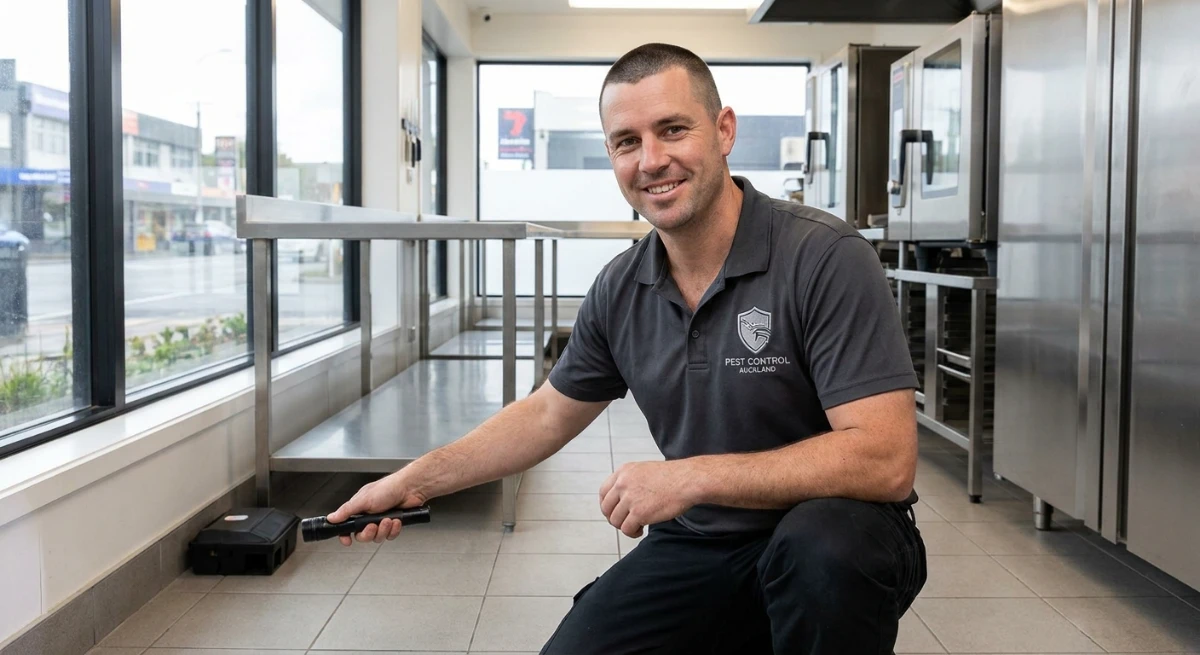
Our process is entirely transparent. We assess the situation, document the entry points, and give you the straight facts. No corporate hedging, no guessing. Just a clear path to a pest-free property.
If you are dealing with an infestation, do not wait for the mice to chew through your wiring or fail your next health audit. Reach out to us today, and let our certified technicians secure your property for good.
Frequently Asked Questions

About the Author: Ronnie
Founder, Pest Control Auckland · Commercial & Residential Pest Expert · Certified Urban Pest Management Specialist
With years of experience tracking and sealing complex rodent entry points across West Auckland’s diverse housing styles, Ronnie is the definitive expert on structural Mouse Removal Services. Having consulted for numerous commercial hospitality venues, he ensures every eradication meets strict Food Act 2014 and MPI compliance standards.