Finding irregular holes in your favourite linen shirt or yellow stains across old family photographs? You are likely dealing with a humidity-driven pest problem. When it comes to Silverfish & Booklice Auckland: Damage to belongings is usually the first sign you have an active infestation.
These insects do not bite, carry diseases, or keep you awake at night. Instead, they silently strip the value from your home by feeding on the starches, glues, and microscopic moulds attached to your most prized possessions.
I have spent years in Auckland roof cavities and wardrobes tracking these pests down. I will tell you plainly: hardware store bug bombs will not fix this. To stop them from turning your archives and wardrobe into a buffet, you have to cut off their moisture supply and treat the hidden nesting areas.
Key Takeaways
Silverfish and booklice destroy belongings by feeding on starches, paper glues, and microscopic mould. In Auckland’s highly humid climate, these pests thrive in dark, damp wardrobes and storage boxes. To stop the damage, you must lower indoor humidity below 50%, remove cardboard storage, and apply targeted professional treatments.
The Anatomy of the Damage: What Are They Actually Eating?
People often group silverfish and booklice together because they show up in the exact same damp, undisturbed environments. However, their biology and feeding habits are entirely different.
Understanding what these pests are looking for is the first step in protecting your home. If you do not remove their food sources, they will continue to breed in the dark corners of your property.
Silverfish: The Starch and Glue Addicts
Silverfish (Lepisma saccharinum) are nocturnal, wingless insects with a metallic sheen and three distinct tail appendages. They are incredibly resilient, boasting a lifespan of up to six to eight years. This means a single insect can do a massive amount of damage over its lifetime.
They are biologically driven to consume carbohydrates, proteins, and starches. This means the glue binding your books, the paste behind your wallpaper, and the natural fibres in your clothing are all on the menu.
When silverfish feed, they do not just take a clean bite. They scrape across the surface, leaving irregular, shaved holes in paper and fabrics. You will also notice distinct yellowish stains or tiny black pepper-like faecal pellets left behind on your ruined items.

Booklice (Psocids): The Micro-Mould Grazers
Booklice, scientifically known as Psocids, are tiny, pale insects usually measuring between 1 to 2 millimetres. Despite their unfortunate name, they are not actually lice, and they do not bite humans, pets, or spread disease.
Unlike silverfish, booklice do not eat your books or clothes directly. Instead, they feed on the microscopic fungi and mould that grow on paper and cardboard when humidity levels spike.
Because they graze on the mould attached to the paper, they end up degrading the material over time. A major issue with booklice is their rapid reproduction. Females can reproduce through parthenogenesis (without mating), meaning a damp cardboard box can quickly become a moving carpet of thousands of insects.
Never store important documents or sentimental clothing in cardboard boxes. Cardboard absorbs atmospheric moisture, creating the perfect breeding ground and food source for both silverfish and booklice. Always use airtight plastic containers.
Why Auckland Homes Are a Breeding Ground in 2026
Auckland homes have always battled moisture, but recent weather patterns have escalated the issue. Following last year’s mild winter and hot summer, the autumn of 2026 has brought a massive surge in urban pests.
Both of these insects require high relative humidity to survive and reproduce. Common silverfish need humidity levels above 75% for their eggs to hatch successfully. Booklice populations absolutely explode when moisture allows mould spores to bloom on indoor surfaces.
In West Auckland, areas like Titirangi and the Waitakere Ranges are particularly vulnerable. The damp bush environment combined with older, poorly ventilated homes creates absolute sanctuaries for these destructive pests.
As the industry prepares for the FAOPMA Pest Summit in Auckland this July, local experts are heavily focused on Predictive Integrated Pest Management (IPM). This means treating the environmental conditions that cause the pests, rather than just reacting to the damage.
Identifying the Culprit: Silverfish vs. Booklice vs. Moths
If you pull a winter coat out of storage and find it damaged, you need to know exactly what you are dealing with. Treating for the wrong pest is a waste of time and money.
Many homeowners confuse silverfish damage with clothes moths. While both destroy fabrics, their habits and the evidence they leave behind are distinct.
When assessing Silverfish & Booklice Auckland: Damage to belongings, use this breakdown to identify the true culprit hiding in your wardrobe.
| Pest Type | Appearance | Primary Diet | Damage Left Behind |
|---|---|---|---|
| Silverfish | 12-19mm, metallic silver, wingless, 3 tails. | Starches, glue, paper, linen, cotton. | Irregular scraped holes, yellow stains, black faecal specks. |
| Booklice | 1-2mm, pale brown/white, wingless. | Microscopic mould and fungi on damp surfaces. | Degraded paper surfaces, dusty residue, swarming numbers. |
| Clothes Moths | Small flying adults; white larvae (caterpillars). | Animal fibres (wool, silk, fur, leather). | Clean holes in wool, silken webbing tubes left by larvae. |
The Real Cost of DIY vs. Professional Root-Cause Eradication
When Aucklanders discover damaged belongings, the first reaction is usually a trip to the local hardware store for a bug bomb. I see this fail every single week.
Aerosol bombs only kill the insects caught out in the open at that exact moment. Silverfish and booklice live deep inside wall cavities, under floorboards, and inside the spines of books. The chemical mist never reaches their nesting sites.
Furthermore, DIY treatments completely ignore the root cause: structural dampness. Until you fix the environmental conditions, the surviving eggs will simply hatch, and the cycle of damage will continue.
Overusing commercial bug bombs in enclosed spaces like wardrobes can leave toxic residues on your clothing and bedding. Professional treatments use targeted, zero-emission applications that are safe for your family and pets.
The Scientific Approach to Eradication
As a certified Level 3 Urban Pest Management contractor, my approach to stopping the damage to your belongings is entirely different from a standard “spray and pray” job. We focus on root-cause eradication.
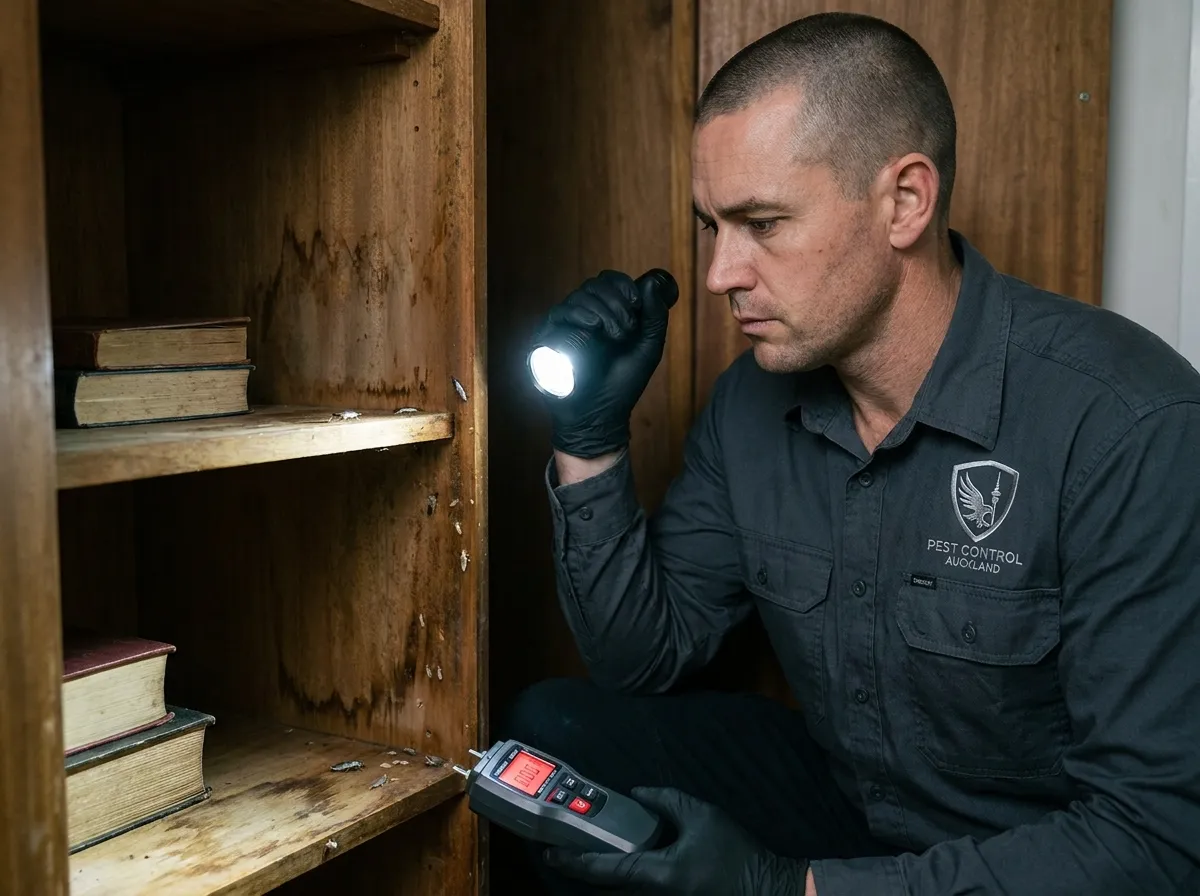
First, we conduct a thorough environmental audit. We use moisture meters to locate the damp micro-climates in your home that are sustaining the infestation. If we do not find the source of the humidity, the pests will eventually return.
Next, we apply highly targeted, MPI-approved residual treatments to the specific crevices, skirting boards, and roof voids where these insects hide. We do not blanket-spray your living areas.
Finally, we provide actionable structural advice. This might involve improving sub-floor ventilation, installing a dehumidifier, or identifying a slow plumbing leak that is feeding a hidden mould problem.
Tenant vs. Landlord: Who Pays for the Damage?
In the Auckland rental market, pest infestations frequently cause disputes between tenants and landlords. When a tenant’s expensive clothing or books are ruined, the question of liability arises immediately.
Under the Residential Tenancies Act, landlords are generally responsible for maintaining a habitable, pest-free property. If the silverfish infestation is caused by structural issues—like a leaking roof, poor sub-floor ventilation, or lack of extractor fans—the landlord is usually liable for the pest control costs.
However, if the tenant is creating the damp environment by drying clothes indoors without ventilation, or bringing infested second-hand furniture into the house, the Tenancy Tribunal may rule against the tenant.
This is why getting a professional pest control report is critical. A certified technician will identify the root cause of the moisture, providing the necessary documentation to resolve liability disputes quickly and fairly.
Immediate Actions to Protect Your Valuables
You do not have to wait for a professional to start protecting your most prized possessions. There are several immediate steps you can take today to disrupt their breeding cycle.
When investigating Silverfish & Booklice Auckland: Damage to belongings, we always recommend homeowners take control of their indoor climate first.
- Ditch the Cardboard: Transfer all photos, important documents, and seasonal clothing into heavy-duty, airtight plastic bins.
- Lower the Humidity: Run a dehumidifier in your storage rooms or wardrobes. Getting the relative humidity below 50% will stop silverfish eggs from hatching.
- Declutter: Silverfish thrive in undisturbed environments. Regularly moving items, vacuuming the bottom of wardrobes, and letting light in will disrupt their habitat.
- Check Second-Hand Furniture: Always inspect antique books, vintage clothing, and second-hand furniture for yellow stains or tiny insects before bringing them into your home.
Empty your wardrobe completely this weekend. Vacuum the corners, wipe down the shelves, and check the bindings of any stored books. If you see tiny, darting silver insects or pale specks moving on the wood, call a professional immediately.
Ignoring a few silverfish in the bathroom might seem harmless, but they will eventually find their way into your storage spaces. Protect your investments and sentimental items by addressing the moisture and calling in certified local expertise.
Frequently Asked Questions

About the Author: Ronnie
Founder, Pest Control Auckland · Commercial & Residential Pest Expert · Certified Urban Pest Management Specialist
With years of hands-on experience navigating Auckland’s damp roof cavities and sub-floors, Ronnie is the definitive expert on Silverfish & Booklice Auckland: Damage to belongings. Having consulted for numerous property managers and homeowners facing severe humidity-driven infestations, he understands exactly how to eradicate these pests at the root cause using scientifically backed, Level 3 certified methods.