I’ve spent years pulling rats out of Manukau warehouse ceilings and treating roach infestations in Papatoetoe kitchens. The reality of South Auckland pest control isn’t about indiscriminately spraying chemicals and hoping for the best. It is about understanding the structural biology of your building and the specific environmental pressures of this region.
The autumn of 2026 has brought a massive surge in urban pests across the Auckland region. A remarkably mild winter followed by a scorching summer created the perfect breeding storm for rodents and insects. For homeowners, it is a stressful nuisance, but for local businesses, it is an existential threat.
New Zealand’s hospitality sector just hit a record $15.99 billion turnover, with a massive chunk of that revenue flowing through South Auckland. If you run a commercial kitchen or manage a rental property here, you cannot afford to rely on cheap hardware store bombs. You need certified, scientific eradication that stands up to rigorous audits.
Key Takeaways
Effective South Auckland pest control requires strict compliance with the Food Act 2014, especially for the booming hospitality sector. We utilize predictive Integrated Pest Management (IPM), non-toxic monitoring, and structural exclusion to eradicate pests at their root cause, ensuring your premises remain safe, compliant, and permanently pest-free.
1. The 2026 South Auckland Pest Reality
The pest control landscape in Auckland has fundamentally shifted. We are no longer dealing with isolated incidents of a few mice in a garage. The explosive growth of commercial zones in Manukau, Wiri, and East Tamaki has created massive interconnected food and shelter networks for urban pests.
Furthermore, the industry is preparing for the FAOPMA Pest Summit 2026, hosted right here in Auckland at the NZICC. The theme is “FutureProof: Smarter Pest Solutions for a Rapidly Changing World.” This global spotlight highlights why outdated, reactive extermination methods are dead.
Modern South Auckland pest control demands predictive data, zero-emission treatments, and highly qualified technicians. If a provider cannot produce a Level 3 New Zealand Certificate in Pest Operations, they have no business treating your property.
2. Commercial Hospitality & Food Act 2014 Compliance
Operating a food business in 2026 means facing a zero-tolerance policy for hygiene breaches. An MPI audit failure due to a pest infestation can result in immediate closure and irreparable brand damage. The Food Act 2014 fundamentally shifted how commercial kitchens must operate.
Instead of merely reacting to a cockroach sighting, you must prove you have proactive preventative measures in place. Securing your compliance certificate from a certified operator is no longer optional. It is a foundational requirement for keeping your doors open.
Using toxic rodenticide baits inside commercial food preparation zones is strictly prohibited. MPI audits require non-toxic monitoring stations, mechanical traps, and detailed service reports from certified technicians.
We specialize in commercial biosecurity compliance auditing for the hospitality sector. Our technicians set up approved monitoring stations and provide the detailed reporting required to safeguard your ‘A’ Grade rating. We handle the compliance, so you can focus on running your restaurant.
3. Core Pests Plaguing the Region
South Auckland’s unique mix of dense residential housing and sprawling industrial parks creates distinct pest pressures. Rodents are the primary offenders during the autumn and winter months. Roof rats and Norway rats aggressively seek shelter in wall voids and roof cavities as temperatures drop.
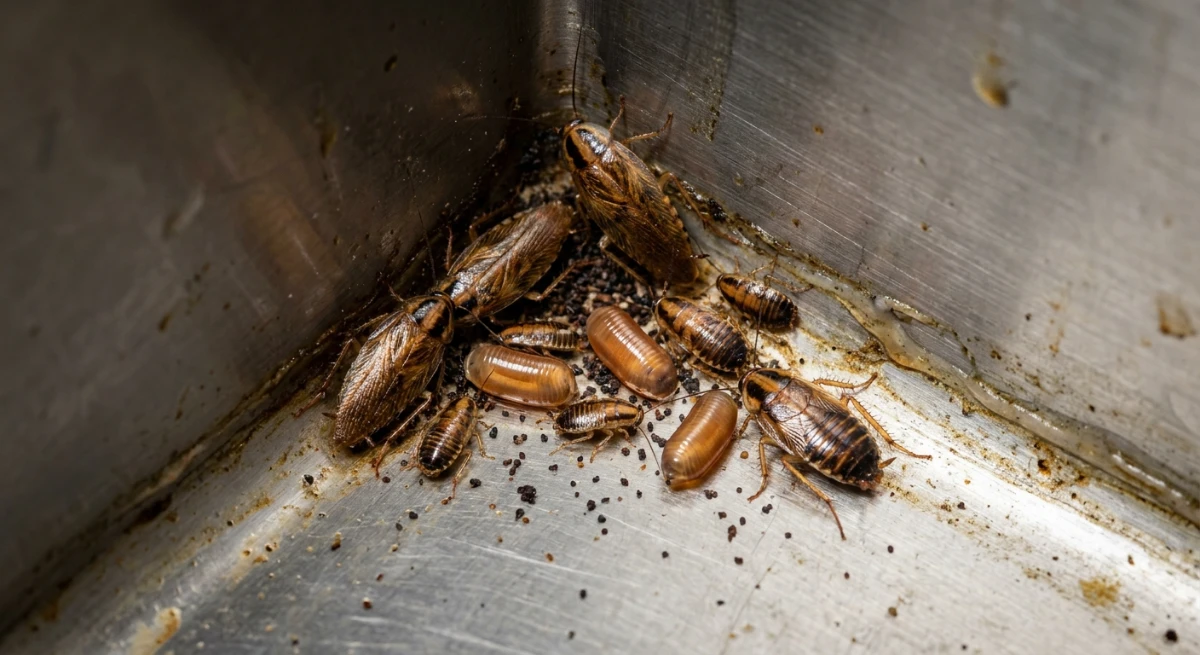
Crawling insects, particularly German cockroaches, are a year-round nightmare for the hospitality sector. They breed rapidly inside warm appliances and stainless steel crevices. A single egg casing can spawn dozens of nymphs, turning a minor issue into a full-blown infestation in weeks.
Argentine ants are another massive issue, forming super-colonies that span multiple properties. Standard hardware store sprays only scatter these colonies, making the problem worse. True eradication requires targeted, non-repellent transfer baits that the worker ants carry back to the queen.
4. Our Predictive IPM Approach
We do not just spray and walk away. That outdated model is exactly why so many homeowners get stuck in the “cycle of despair,” constantly battling returning pests. Our approach to South Auckland pest control is rooted in scientific Integrated Pest Management (IPM).
We focus on structural entry-point exclusion. If you have rats in your ceiling, baiting them is only half the job. We find exactly where they chewed through the eaves or climbed the plumbing, and we tell you how to seal it permanently.
Don’t just kill the rats you see. Find how they got in. Sealing entry points in the roof cavity or subfloor is the only way to break the cycle of infestation.
Every treatment we perform utilizes MPI-approved, zero-emission products. This ensures absolute safety for your family, pets, and staff. We back our work with the “Silver Bullet Guarantee,” providing unmatched peace of mind.
| Feature | Traditional “Spray & Pray” | Our Predictive IPM |
|---|---|---|
| Root Cause Analysis | Ignored completely | Comprehensive structural audit |
| Chemical Usage | Heavy, blanket application | Targeted, zero-emission micro-dosing |
| Long-Term Results | Poor (Pests return in weeks) | Excellent (Backed by Guarantee) |
| Commercial Compliance | Fails MPI Audits | Full Food Act 2014 Certification |
5. Legal Traps for Landlords and Property Managers
Navigating pest issues in rental properties requires a clear understanding of the law. Under the Residential Tenancies Act, landlords must provide a clean, pest-free home at the start of a tenancy. If you fail to do this, you open yourself up to costly Tenancy Tribunal disputes.
Furthermore, DIY trapping can easily lead to criminal liability. The Animal Welfare Act 1999 dictates strict mandates for pest control. Live-capture traps must be physically inspected within 12 hours after sunrise every single day. Glue boards for rodents are heavily restricted and generally illegal for public use.
Always book a professional end-of-tenancy flea treatment if pets were on the property. We provide the exact documentation required to satisfy property managers and protect your bond.
We partner with property managers across the region to provide zero-hassle, reliable service. When a tenant reports an issue, we respond fast, assess the root cause honestly, and provide transparent invoicing that clearly defines liability based on structural vs. lifestyle factors.

6. Pricing Benchmarks for 2026
We believe in absolute pricing transparency. You should never have to jump through hoops just to find out what a standard treatment costs. For a typical 3-bedroom home in Auckland, professional eradication prices reflect the complexity and chemical safety required for the job.
Currently, standard ant treatments range from $160 to $200. Cockroach eradications, which require intensive baiting and growth regulators, sit between $265 and $325. Rodent control, encompassing baiting and exclusion advice, ranges from $155 to $325 depending on the infestation severity.
- Ants: $160–$200 (Includes advanced non-repellent transfer baits).
- Cockroaches: $265–$325 (Targets nesting areas with insect growth regulators).
- Rodents: $155–$325 (Includes roof void baiting and structural exclusion reports).
- Bed Bugs: $215–$265 per room (Requires intensive multi-stage eradication).
We back our eradication work completely. If the target pests return within the specified warranty period, we return to fix it at no extra cost. No arguments, just results.
7. Frequently Asked Questions

About the Author: Ronnie
Founder, Pest Control Auckland · Commercial & Residential Pest Expert · Certified Urban Pest Management Specialist
With over a decade of hands-on experience navigating the strict compliance requirements of the Food Act 2014, Ronnie is the definitive expert on South Auckland pest control. Having consulted for major hospitality groups across Manukau and Pukekohe, he specializes in predictive Integrated Pest Management and zero-emission eradication strategies.