Auckland’s weather has always been a bit all over the place, but the mild winter of 2025 followed by a scorching summer has created a perfect storm for pests. Right now, in May 2026, we are seeing an unprecedented autumn surge in rodent and insect activity across the region. If you are relying on a quick spray from the local hardware store, you are likely stuck in the frustrating DIY cycle of despair.
True seasonal pest prevention in Auckland requires a highly scientific, proactive approach. We do not just spray chemicals and walk away hoping for the best; we focus on root-cause eradication and structural exclusion. When you understand the biology of these invaders, you stop reacting to infestations and start predicting them. Let’s break down exactly what you need to do to protect your property year-round.
Key Takeaways
Effective seasonal pest prevention in Auckland requires predictive, year-round strategies rather than reactive DIY sprays. By sealing entry points in autumn, managing moisture in winter, and disrupting breeding cycles in spring, homeowners can achieve permanent, root-cause eradication of rodents and insects.
Auckland Climate & Pest Biology: Understanding the Lifecycle
The local climate here is incredibly forgiving to pests. High humidity and relatively warm winters mean that insects and rodents rarely experience a true die-off. Instead, they just adapt and move indoors when the weather turns rough. Understanding this relentless cycle is the foundation of effective pest control in Auckland.
When you understand the biology of these invaders, you stop reacting blindly and start predicting their next move. For example, roof rats do not just randomly appear in your ceiling space; they are driven there by dropping temperatures and shrinking outdoor food sources. The Auckland Regional Pest Management Plan (RPMP) 2020-2030 highlights how critical pathway management is to stopping these cycles before they start.
A sudden drop in temperature after a long, humid summer is the trigger for rodents to seek shelter. Booking an inspection right as autumn hits is the smartest move you can make.
Spring: Proactive Exclusion and Breeding Cycle Disruption
Spring in Auckland is when dormant queens wake up and start building their empires. Wasps and ants are the primary culprits during this season. If you wait until you see a massive nest hanging from your eaves, you have already lost the upper hand.
The key here is breeding cycle disruption. We look for the early signs of nesting in retaining walls, roof eaves, and garden beds. By applying targeted, zero-emission treatments early, we stop the colony from expanding and splintering into multiple super-colonies.
Argentine ants are especially notorious in Auckland during spring. Spraying the worker ants with a supermarket aerosol just causes the colony to panic and bud into smaller, harder-to-find nests. Proper seasonal pest prevention in Auckland means using slow-acting, non-repellent baits that the workers carry straight back to the queen.
Summer: Integrated Management of Flying Insects and External Attractants
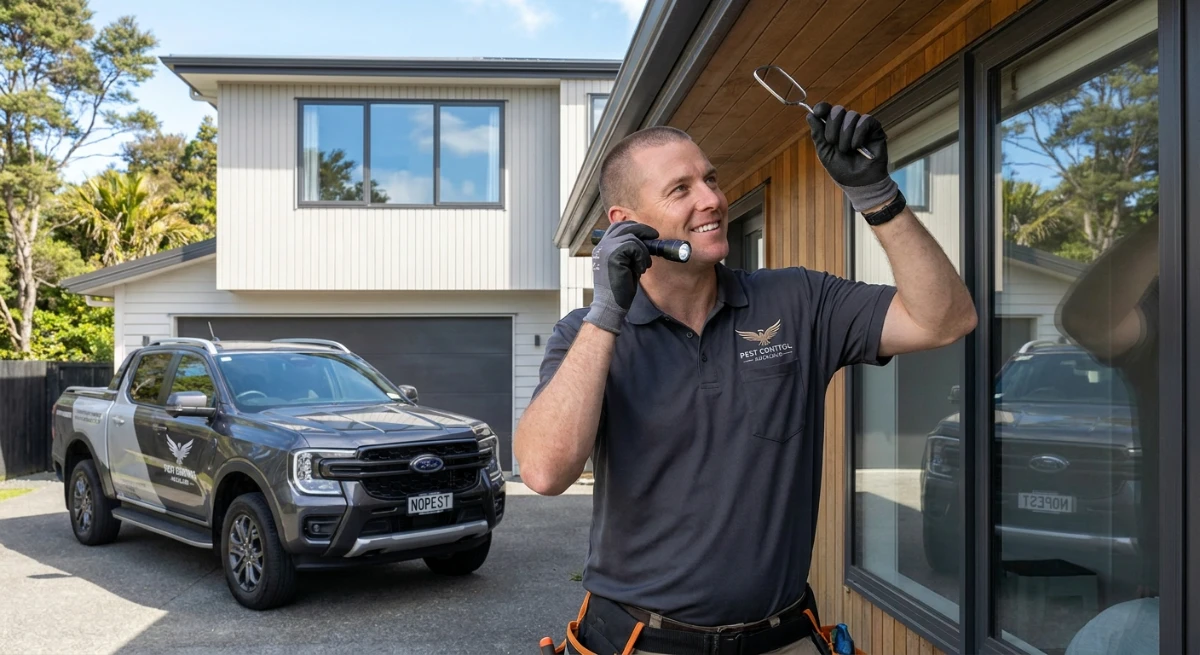
Summer brings the heat, the backyard barbecues, and an absolute army of flying insects. Flies, mosquitoes, and cockroaches thrive in the humid Auckland summer. This is also when our commercial hospitality sector feels the most pressure to maintain pristine environments.
With New Zealand’s hospitality sector hitting a massive $15.99 billion turnover in FY2025, the Food Act 2014 enforces zero-tolerance hygiene standards. Commercial operators simply cannot afford a single pest sighting. Residential homes face similar pressures; leaving pet food out or having poor drainage can turn your backyard into a massive breeding ground.
Hardware store bug bombs might make you feel productive, but they only kill what is on the surface. Worse, they push surviving cockroaches deeper into your wall cavities, making professional eradication much harder later on.
Autumn: Fortifying the Perimeter Against Rodent Ingress
As the leaves drop and the nights get cooler, rodents start looking for a cozy winter retreat. Your warm, insulated roof cavity is basically their five-star hotel. This is the absolute most critical time to implement our Auckland winter defense strategies.
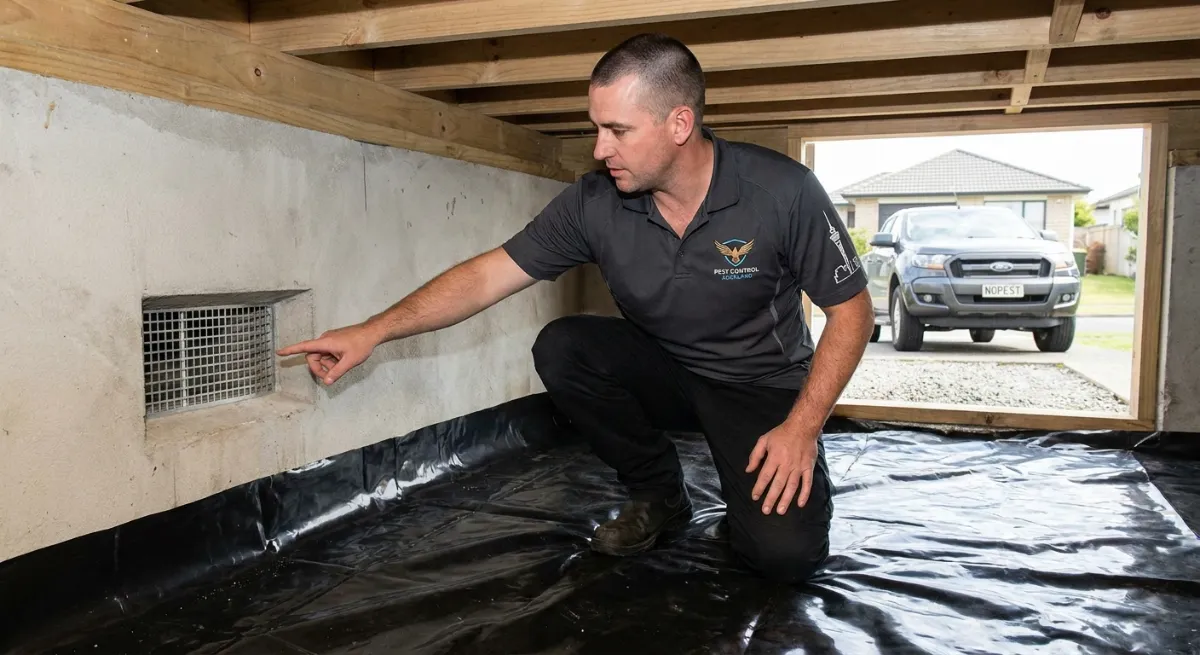
We focus heavily on structural exclusion during autumn. That means doing the hard yakka to find the exact entry points—whether it is a cracked sub-floor vent, an overgrown tree branch touching the roof, or a gap in the eaves. It is never enough to just throw bait in the ceiling and hope for the best.
We also closely follow regional biosecurity successes. Following a massive late-2025 aerial 1080 drop, rat tracking in the Hūnua Ranges plummeted to just 1.3%. While we do not use those extreme methods in urban homes, it proves that coordinated, scientific eradication works far better than piecemeal DIY attempts.
Under the Animal Welfare Act 1999, any live-capture traps must be physically inspected within 12 hours after sunrise every single day. Neglecting this is a serious offence, which is why professional monitoring is highly recommended.
Winter: Moisture Control and Internal Monitoring Strategies
Winter in Auckland is notoriously damp and dreary. Moisture is a massive attractant for pests like spiders, silverfish, and internal rodents. If your home has poor ventilation or weeping pipes, you are essentially rolling out the red carpet for these unwanted guests.
This is where internal monitoring and moisture control become vital. Checking sub-floors for hidden leaks, ensuring your bathroom extractor fans are working, and keeping firewood stacked well away from the exterior walls are simple but highly effective steps.
For landlords, winter is often when Tenancy Tribunal disputes flare up over pest issues. A proactive seasonal pest prevention in Auckland plan ensures that the property remains compliant with Healthy Homes standards, saving property managers from massive headaches down the line.
Clear all gutters of autumn leaves, trim back foliage touching the house, and install weather stripping on exterior doors to block ground-level insect entry.
Scientific Prevention vs. DIY: The Value of Certified Structural Audits
The days of buying a highly toxic spray from the supermarket and hoping for the best are long over. The entire industry is shifting toward Predictive Integrated Pest Management (IPM), a topic that will headline the FAOPMA Pest Summit hosted right here in Auckland in July 2026.
Handling serious infestations requires genuine expertise. Under the EPA HPC Notice 2017 and HSNO Act 1996, handling Class 9 ecotoxic substances requires a Level 3 Qualified UPM Contractor. We bring that elite level of certified pest management to every single residential job.
This is why we offer our Silver Bullet Guarantee. We back our scientific methods because we know that fixing the structural root cause is the only way to keep your family safe and your home pest-free.
| Comparison Factor | DIY Hardware Store Solutions | Certified IPM Strategy |
|---|---|---|
| Approach | Reactive surface spraying | Root-cause structural exclusion |
| Safety Profile | High risk of misapplication | Zero-emission, MPI-approved safety |
| Long-Term Value | Low (requires constant re-purchasing) | High (permanent eradication guarantees) |
Seasonal Checklist Summary for Auckland Homeowners
Keeping your property secure is a year-round commitment. By staying ahead of the breeding cycles and weather changes, you can avoid the stress of a full-blown infestation. Here is your quick summary checklist for the year:
- Spring: Inspect retaining walls and eaves for early wasp nests; bait for ants before they enter the kitchen.
- Summer: Manage outdoor rubbish bins tightly; ensure no standing water is left to breed mosquitoes.
- Autumn: Seal all sub-floor vents and roof gaps; book a professional rodent exclusion audit.
- Winter: Improve sub-floor ventilation; run dehumidifiers to deter moisture-loving insects.
If things get out of hand, remember that a family-owned, certified local expert is always the best call. We know the local landscape, we know the laws, and we know exactly how to protect your home.
Frequently Asked Questions

About the Author: Ronnie
Founder, Pest Control Auckland · Commercial & Residential Pest Expert · Certified Urban Pest Management Specialist
With years of experience in structural pest exclusion and holding top-tier Class 9 certifications, Ronnie is Auckland’s definitive expert on urban pest lifecycles. Having consulted for both high-compliance commercial food premises and everyday Kiwi homeowners, he is uniquely qualified to design a Seasonal Pest Prevention Checklist for Auckland Residents. He understands exactly how our local climate drives infestations—and how to stop them permanently using certified, science-backed methods.