G’day, Auckland. If there is one thing we have learned after years of crawling under villas in Ponsonby and inspecting commercial kitchens out West, it is that pests do not care about the rules. But the council? They absolutely do.
Following the mild winter and hot summer we had last year, this autumn 2026 pest surge has caught a lot of folks off guard. We are seeing a massive spike in rodents looking for a warm roof and Argentine ants invading pantries.
When panic sets in, the first instinct is often to rush to the hardware store for a cheap bug bomb. But navigating the legal landscape of urban biosecurity is not that simple.
Whether you are a landlord dealing with a Tenancy Tribunal dispute, or a cafe owner trying to pass an MPI health inspection, understanding the reality of eco-friendly pest control is non-negotiable. Ignorance of the law will not stop a hefty fine, and a failed DIY job just leads to an endless cycle of despair.
Key Takeaways
Eco-friendly pest control in Auckland focuses on Predictive Integrated Pest Management (IPM) and structural exclusion rather than toxic sprays. For commercial hospitality, compliance with the Food Act 2014 requires non-toxic monitoring and zero-emission methods to guarantee safety, pass MPI audits, and secure long-term eradication.
The Autumn 2026 Pest Surge in Auckland
Why the Weather is Driving Pests Indoors
We are seeing a massive shift in pest behaviour right across the Auckland region. The mild winter of 2025 followed by a scorching summer created the perfect breeding storm. Now, as temperatures drop rapidly in May 2026, those booming populations are forcing their way indoors.
Rats and mice are not just looking for a quick snack; they are looking for a permanent winter residence. They are chewing through structural timber, nesting in roof cavities, and contaminating commercial preparation areas. We are fielding non-stop calls from property managers dealing with this exact nightmare.
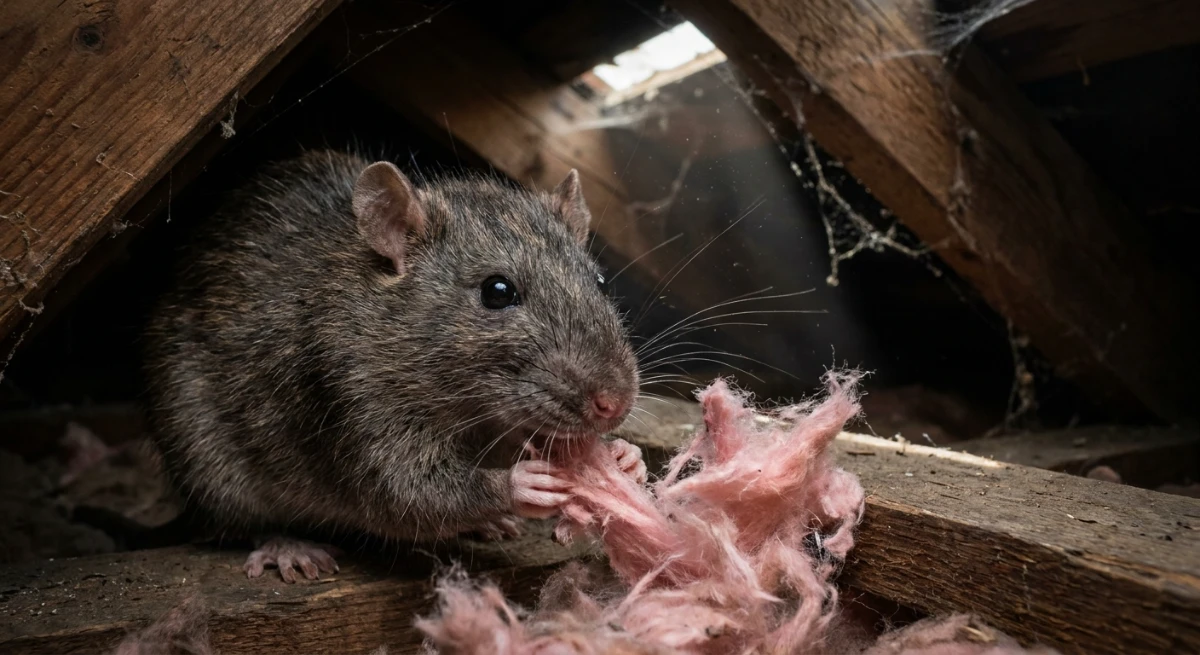
This is not a problem you can solve with a cheap supermarket spray. The DIY cycle of despair usually ends up costing you more money and driving the infestation deeper into your walls. True eco-friendly pest control requires an entomological approach—understanding the pest’s biology to cut off their resources permanently.
The Hospitality Sector’s $15.99 Billion Problem
New Zealand’s hospitality sector is booming, recently hitting a staggering $15.99 billion turnover in FY2025. With roughly 30% of these businesses located right here in Auckland, the stakes for food safety have never been higher. A single pest sighting can destroy a restaurant’s reputation overnight.
When you operate a commercial kitchen, you are under the microscope of the Ministry for Primary Industries (MPI). Health inspectors enforce a zero-tolerance policy for pests. If you fail an audit because of rodent droppings or cockroach activity, your doors get shut immediately.
Commercial food premises are legally prohibited from using toxic rodenticide baits in sensitive food prep areas. Relying on old-school toxic baits will result in an immediate audit failure.
What Does Eco-Friendly Pest Control Actually Mean?
Moving Beyond Spray and Pray
There is a lot of greenwashing out there right now. Many companies slap a green leaf on their van and call themselves eco-friendly while still pumping the same harsh chemicals into your living room. That is simply not how we operate.
Instead of blanket-spraying your skirting boards, we find out exactly how the pests are getting in. If you have a rat problem, we find the entry point in your subfloor or roofline and physically seal it. Fixing the root cause is the only way to guarantee they do not come back.
Predictive Integrated Pest Management (IPM)
Genuine eco-friendly pest control is based entirely on Predictive Integrated Pest Management (IPM). This scientific framework prioritizes long-term prevention over reactive, toxic spraying. We focus heavily on structural entry-point exclusion, habitat modification, and targeted treatments.
We utilize MPI-approved, zero-emission treatments that are rigorously tested for efficacy. This ensures absolute safety for your children, pets, staff, and food environments.
The Silver Bullet Guarantee
Customers are tired of paying for temporary fixes. That is why we stand by our Silver Bullet Guarantee. We do not just suppress the current population; we eradicate the nest and alter the environment so future generations cannot survive.
This level of precision requires deep local knowledge. Auckland’s damp subfloors and aging villas present unique challenges that generic pest franchises often overlook. We tackle these structural realities head-on to deliver permanent peace of mind.
The Legal Reality: Food Act 2014 and Council Bylaws
MPI Requirements for Commercial Kitchens
The regulatory landscape in New Zealand is strict, and ignorance of the law will not save you from a fine. The Food Act 2014 revolutionized commercial food safety by moving from a reactive model to a proactive, risk-based system. You must prove you have preventative pest measures actively in place.
Under the EPA HPC Notice 2017 and the HSNO Act 1996, handling Class 9 ecotoxic substances requires serious credentials. Our technicians hold the New Zealand Certificate in Pest Operations (Level 3), meaning they are fully qualified Urban Pest Management (UPM) contractors. We do not guess; we follow the science.
Auckland Regional Pest Management Plan (RPMP) 2020-2030
Furthermore, the Auckland Regional Pest Management Plan (RPMP) 2020-2030 dictates strict pathway management for controlled areas. This includes the Hauraki Gulf islands like Waiheke and Aotea. The council is actively cracking down on invasive species spread.
Property owners must comply with these biosecurity mandates. Failing to manage pests on your property can result in direct council intervention. Utilizing a certified eco-friendly pest control provider ensures you remain entirely compliant with regional bylaws.
Tenancy Tribunal and Landlord Obligations
The Auckland housing market is notoriously tight, and disputes over pest control are common. Under the Residential Tenancies Act, landlords are legally obligated to provide a pest-free property at the start of any new tenancy.
If you are a landlord, using a certified professional provides the exact documentation you need to protect yourself in a Tenancy Tribunal dispute. Always keep your service reports on file.
Core Methods of Zero-Emission Eradication
Structural Exclusion (The Root Cause)
When we deploy an eco-friendly pest control strategy, we rely on a multi-tiered approach. The first and most critical step is structural exclusion. We conduct a rigorous inspection of your property to identify every crack, gap, and weep hole that pests use as a highway.
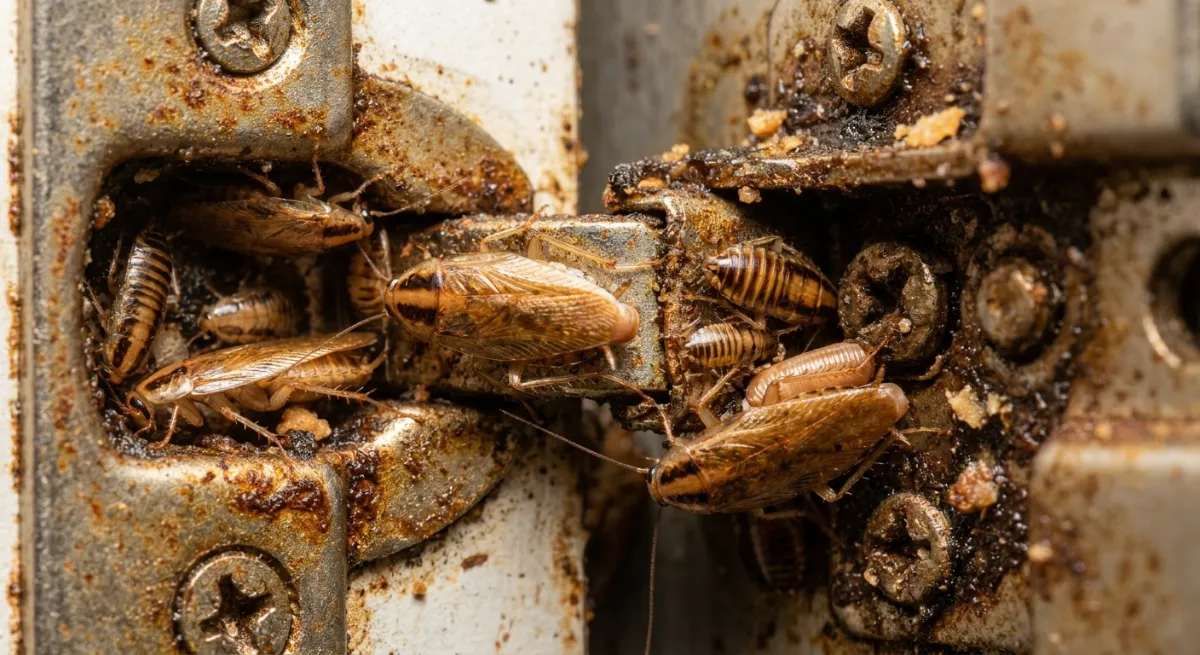
By physically blocking these entry points with specialized mesh and sealants, we cut off the supply line. This stops the current infestation from reinforcing its numbers and prevents future generations from ever gaining a foothold in your building.
Non-Toxic Monitoring and Mechanical Trapping
Once the perimeter is secure, we implement non-toxic monitoring and mechanical trapping. This is especially crucial for our commercial hospitality clients. We set up discrete, highly effective monitoring stations that track pest activity without introducing a single drop of poison into your environment.
- Root-Cause Eradication: Sealing structural entry points to permanently lock pests out.
- Smart Monitoring: Using non-toxic bait stations to track and measure activity levels accurately.
- Targeted Application: Only applying safe, MPI-approved treatments exactly where nests are located.
- Environmental Compliance: Ensuring all trapping methods align strictly with the Animal Welfare Act 1999.
Safe Handling of Ecotoxic Substances
Speaking of the Animal Welfare Act 1999, the laws around trapping are uncompromising. If you use a live-capture trap, you are legally required to physically inspect it within 12 hours after sunrise every single day. Glue boards for rodents are heavily restricted and illegal for general public use.
Always ask your pest control provider for their Safety Data Sheets (SDS) and their Level 3 certification. If they cannot provide these instantly, do not let them treat your property.
Comparing Pest Control Approaches
To truly understand the value of our approach, you need to see how it stacks up against the old methods. We have built our reputation on doing the job right the first time, eliminating the hidden costs of recurring callouts.
| Feature | Eco-Friendly IPM | Traditional Spray & Pray |
|---|---|---|
| Primary Focus | Root-cause exclusion and prevention | Surface-level symptom treatment |
| Safety Profile | Child, pet, and food safe (Zero-emission) | High toxicity, requires evacuation |
| Commercial Compliance | Exceeds Food Act 2014 & MPI standards | Often fails modern health audits |
| Long-Term Value | High (Stops recurring infestations) | Low (Pests return when spray degrades) |
The Future of Urban Biosecurity
Local Eradication Successes
The pest control industry is evolving rapidly, and Auckland is at the forefront of this shift. Following the massive late-2025 aerial 1080 drop, rat tracking in the Hūnua Ranges plummeted to an incredible 1.3%. We are seeing similar localized eradication successes on Kawau Island right now.
These large-scale conservation efforts prove that highly targeted, scientific approaches work. We apply these exact same principles on a micro-scale to protect your urban home or commercial business.
FAOPMA Pest Summit 2026 in Auckland
This momentum is building toward a major industry event. Auckland is preparing to host the FAOPMA Pest Summit from July 15-17, 2026, at the New Zealand International Convention Centre (NZICC). The theme is “FutureProof: Smarter Pest Solutions for a Rapidly Changing World.”
This summit perfectly aligns with our commitment to advanced, sustainable biosecurity. The days of uncertified operators spraying toxic chemicals are coming to an end. The industry is moving toward data, accountability, and environmental stewardship.
Smart Monitoring and Data-Driven Defense
We are already integrating the future of pest management into our daily operations. For commercial clients, we offer subscription-based Auckland Winter Defense plans. These proactive eco-friendly pest control programs provide continuous digital monitoring.
By staying ahead of the curve, we ensure you never have to panic before a health inspection again. We manage the risk, document the compliance, and keep your premises entirely pest-free.
Frequently Asked Questions

About the Author: Ronnie
Founder, Pest Control Auckland · Commercial & Residential Pest Expert · Certified Urban Pest Management Specialist
With years of experience navigating Auckland’s strict biosecurity bylaws and the Food Act 2014, Ronnie is a leading authority on Eco-Friendly Pest Control. Having consulted for top-tier hospitality venues and managed complex residential eradications, he champions science-backed Integrated Pest Management (IPM) to deliver zero-emission, permanent solutions.