G’day, Aucklanders. If you have spent any time out in the yard this May, you have probably noticed that the bugs are putting up a serious fight.
The unusually mild winter we had last year, followed by a scorcher of a summer, has created the perfect storm for an autumn pest surge across the region.
Look, I will shoot straight with you. Grabbing a cheap aerosol can from the local hardware store and blasting your retaining walls is not going to cut it anymore.
That spray-and-pray approach usually just fractures colonies and traps you in a frustrating cycle of despair. The pest control landscape is shifting rapidly, especially with Auckland gearing up to host the FAOPMA Pest Summit in July 2026.
The focus is no longer on toxic blanket sprays, but on highly targeted, scientific eradication. If you want to reclaim your backyard, you need to understand the modern Garden Pest Prevention Strategies for Auckland Homeowners.
Key Takeaways
Effective Garden Pest Prevention Strategies for Auckland Homeowners require shifting from reactive DIY sprays to predictive Integrated Pest Management (IPM). Focus on structural exclusion, removing nesting habitats, and strictly adhering to local biosecurity laws to achieve permanent, root-cause eradication before pests migrate indoors.
The Reality of Auckland’s 2026 Autumn Pest Surge
Why the Mild Winter Changed Everything
This year, Auckland is experiencing a massive influx of garden pests pushing toward residential dwellings. As the temperatures drop, insects and rodents that spent the summer multiplying in the bush are now seeking shelter and food sources closer to your home.
We are seeing unprecedented call-outs across West Auckland and the North Shore. The data backs up what we are seeing in the trenches. While massive conservation efforts like the Hūnua Ranges 1080 drop successfully knocked back rural rat populations, urban areas are a different story.
Urban pests do not experience a true winter die-off here; they just adapt and move indoors. If your garden is overgrown, it serves as a five-star staging ground for these invaders.
Core Garden Pest Prevention Strategies for Auckland Homeowners
Predictive Integrated Pest Management (IPM)
The industry standard has moved far beyond reactive treatments. We use Predictive Integrated Pest Management (IPM). This means we anticipate pest movements based on seasonal changes and environmental factors.
Instead of waiting for rats to chew through your wiring, we identify the exact garden conditions drawing them in. We look for the root cause. This is what separates a professional eradication from a temporary fix.
Eliminating the Cycle of Despair
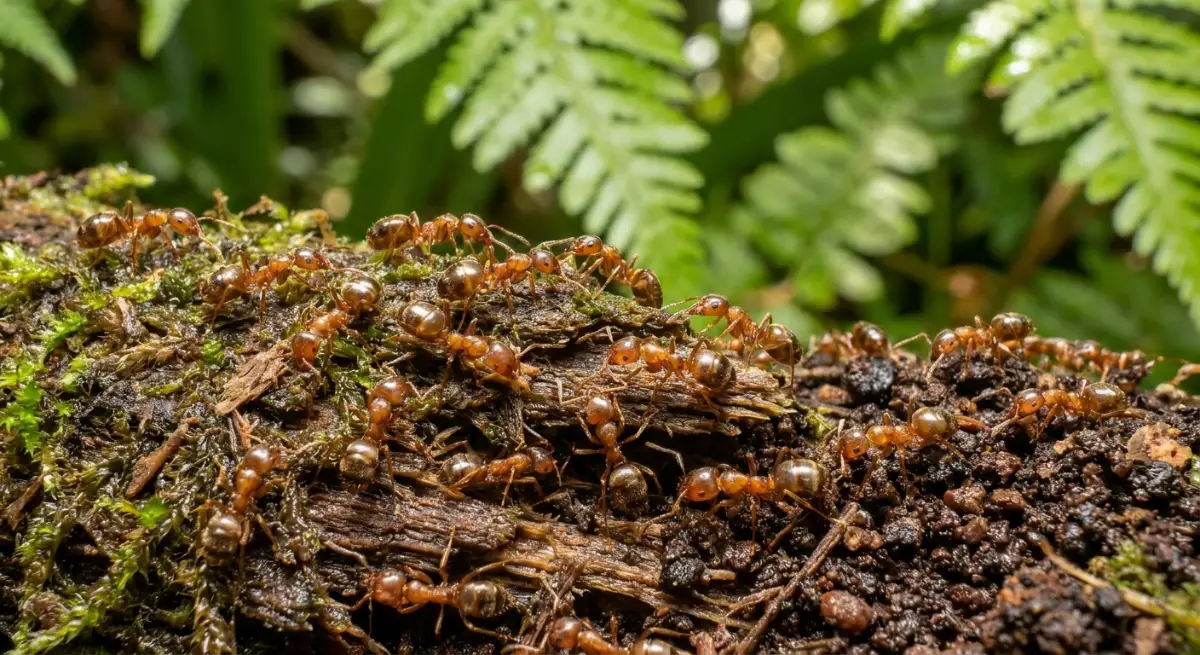
Most homeowners get trapped in the DIY cycle of despair. You see ants on the patio, you spray them, they disappear for a week, and then they come back twice as bad.
This happens because surface sprays only kill the foragers. The main colony senses the threat, fractures into multiple new colonies, and digs deeper into your garden beds. Real prevention means targeting the nest directly.
Targeting the Root Cause: Structural Exclusion and Habitat Removal
Complying with the Auckland Regional Pest Management Plan (RPMP)
Your garden is an ecosystem, and it is heavily regulated. The Auckland Regional Pest Management Plan (RPMP) 2020-2030 dictates strict rules on invasive plant species.
Why does this matter for bug control? Because pest plants like moth plant and wild ginger create perfect, dense microclimates for rodents and insects to breed. Weed control is pest control.
Managing Overgrowth and Pest Plants
If you have thick, unmanaged ivy crawling up your fence line, you are essentially providing a protected highway for roof rats. They use these vines to bypass ground traps and access your roof cavity.
Clear the overgrowth. Keep vegetation at least a meter away from your exterior walls. It removes their cover and forces them out into the open, where our targeted baits and traps can do their job.
If you use live-capture traps in your garden, New Zealand law requires you to physically inspect them within 12 hours after sunrise every single day. Failure to do so is a prosecutable offense. Glue boards are also heavily restricted.
Professional Interventions vs. DIY Methods
Why Hardware Store Sprays Fail
I see it every week. A client spends hundreds of dollars on generic hardware store chemicals, only to make the problem worse. These off-the-shelf products are heavily diluted for consumer safety.
They act as repellents rather than eradicators. When you spray the perimeter of your house with them, you often just trap the pests that are already inside, or you force garden pests to find alternative, hidden entry points.
| Approach | Methodology | Cost Efficiency | Long-Term Result |
|---|---|---|---|
| DIY Hardware Sprays | Surface-level repellent application. | Low upfront, high recurring cost. | Fractures colonies; pests return rapidly. |
| Standard Exterminator | Toxic blanket spraying of the property. | Medium upfront cost. | Kills current pests, but ignores future entry points. |
| Predictive IPM (Our Approach) | Root-cause exclusion, targeted baiting, habitat removal. | Highly cost-effective over a 12-month period. | Permanent eradication and structural defense. |
Fix those leaky outdoor taps and clear blocked drainage grates. Pests like Argentine ants and German cockroaches are drawn to moisture even more than they are drawn to food. A dry perimeter is a defensible perimeter.
Defending Your Perimeter: A Step-by-Step Guide
The Silver Bullet Exclusion Tactics
We call our approach the Silver Bullet Guarantee because we do not guess; we know exactly how pests operate. When we design Garden Pest Prevention Strategies for Auckland Homeowners, we look at the structural integrity of the property.
You can start defending your home today by implementing a few critical changes in your backyard. These steps eliminate the exact conditions pests look for when choosing a place to nest.
- Move the Firewood: Store firewood at least five meters away from the foundation of your house. Stack it off the ground to prevent rodents from building nests underneath.
- Secure Compost Bins: Open compost is a buffet for neighborhood pests. Ensure your bins have tight-fitting lids and a solid base so rodents cannot burrow up from underneath.
- Seal Retaining Walls: Inspect timber retaining walls for rot and gaps. These cavities are prime real estate for wasp nests and ant super-colonies.
- Manage Mulch: Keep organic mulch at least 30 centimeters away from your exterior cladding. Mulch holds moisture and provides perfect cover for crawling insects.
Grab your loppers and trim all tree branches so they are at least 1.5 meters away from your roofline. Roof rats are incredible jumpers, and branches touching your gutters are essentially a red carpet into your ceiling cavity.

Landlord and Tenant Responsibilities in Auckland
The Residential Tenancies Act
One of the most common issues we deal with is the dispute between landlords and tenants over who pays for pest control. Under the Residential Tenancies Act, landlords are required to provide a property in a clean and habitable state.
However, if the tenant’s lifestyle—like leaving rubbish bags outside or poorly managing a vegetable garden—causes the infestation, the financial burden can shift to them. Fast, professional intervention stops these minor complaints from escalating to the Tenancy Tribunal.
If your residential garden borders a commercial hospitality venue, you face higher risks. Restaurants must adhere to the Food Act 2014, which prohibits toxic baits in sensitive areas. Pests often migrate from these commercial zones into neighboring residential gardens seeking easier food sources.
Frequently Asked Questions

About the Author: Ronnie
Founder, Pest Control Auckland · Commercial & Residential Pest Expert · Certified Urban Pest Management Specialist
With over a decade of experience in urban pest management and deep knowledge of local biosecurity laws, Ronnie is the definitive expert on Garden Pest Prevention Strategies for Auckland Homeowners. Having consulted for both residential and commercial clients across the region, he specializes in root-cause eradication and structural exclusion.