Effective pest prevention and post-service care in Auckland isn’t about crossing your fingers after a quick chemical spray. It requires sealing structural entry points, maintaining strict environmental hygiene, and following a certified technician’s specific aftercare instructions to stop the breeding cycle permanently. If you are dealing with rats in the roof or cockroaches in the kitchen, we will find exactly how they are getting in, block the access, and clear them out—usually in a single visit.
At Pest Control Auckland, we have seen it all. The autumn 2026 pest surge has pushed rodents and insects indoors, creating chaos for West Auckland homeowners and hospitality businesses alike. We do not just treat the symptoms of an infestation. We focus on root-cause eradication using scientifically backed, zero-emission methods that prioritize your family’s safety.
The era of reactive, toxic “spray and pray” applications is dead. Today, securing your property requires a predictive approach. From understanding local biosecurity laws to implementing long-term physical exclusion tactics, true pest management is a partnership between your technician and your ongoing property maintenance.
Key Takeaways
Proper Pest Prevention & Post-Service Care Auckland involves structural exclusion, maintaining zero-emission hygiene standards, and strict adherence to a Level 3 qualified technician’s aftercare protocols. Proper post-treatment ventilation and avoiding DIY chemical interference guarantees long-term eradication and protects your property from seasonal re-infestation.
The Reality of Auckland’s Autumn 2026 Pest Surge
Auckland’s climate creates the perfect storm for urban pest populations. Following a mild winter and an intensely hot summer, the autumn of 2026 has driven a massive surge of rodents and insects indoors. When temperatures drop, rats, mice, and Argentine ants immediately seek the warmth and food sources found inside residential wall cavities and commercial kitchens.
While rural conservation efforts are seeing massive wins—such as the recent drop to a 1.3% rat tracking rate in the Hūnua Ranges—urban areas are experiencing the opposite effect. Pests are highly adaptable and are spilling over into West Auckland suburbs at alarming rates. This makes proactive pest prevention and post-service care in Auckland absolutely critical for maintaining a sanitary home.
Furthermore, property owners must comply with the strict guidelines outlined in the Auckland Council Regional Pest Management Plan 2020-2030. This plan enforces stringent pathway management rules to prevent the spread of invasive species. Ignoring these environmental pressures leads to recurring infestations that DIY methods simply cannot resolve.
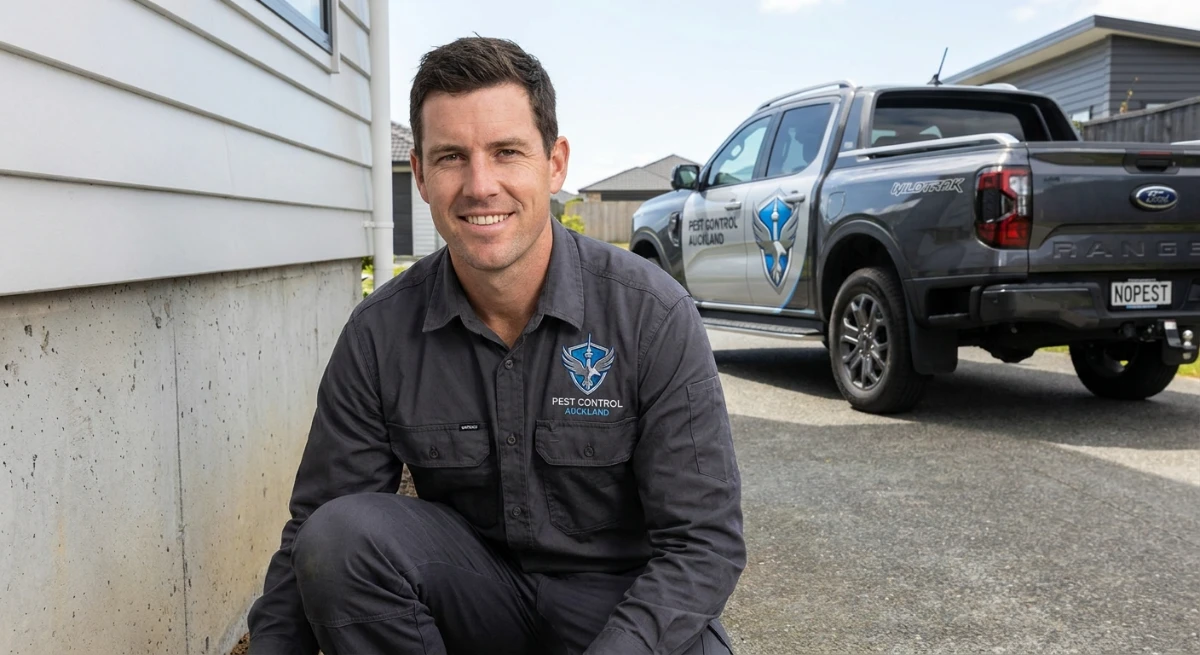
The DIY Cycle of Despair vs. Root-Cause Eradication
Most homeowners trapped in a pest infestation fall into what we call the “DIY Cycle of Despair.” You spot a cockroach, buy a hardware store bug bomb, and set it off. The visible bugs die, but the nest deep inside your wall cavity remains entirely unaffected. Three weeks later, the eggs hatch, and the problem returns worse than before.
At Pest Control Auckland, we break this cycle through root-cause eradication. Our technicians hold the New Zealand Certificate in Pest Operations (Level 3), meaning we are legally qualified to handle advanced, highly targeted treatments that the public cannot access. We do not just spray baseboards; we track the infestation back to its source, eliminate the breeding ground, and permanently seal the entry points.
Under the Animal Welfare Act 1999, if you attempt DIY rodent control using live-capture traps, you are legally required to physically inspect those traps within 12 hours after sunrise every single day. Failure to do so can result in severe fines. Professional, compliant baiting is far safer and legally secure.
Over time, the financial cost of failed DIY attempts far exceeds the price of a professional intervention. Between buying endless cans of spray, replacing chewed wiring, and throwing away contaminated pantry food, the hidden costs add up rapidly. Investing in professional pest prevention and post-service care in Auckland is the only way to protect your property value.
Essential Post-Service Care Instructions
The success of any extermination relies heavily on what happens after the technician drives away. Proper Pest Prevention & Post-Service Care Auckland ensures that the specialized treatments have time to bond to surfaces and take full effect. If you interfere with the treated areas too soon, you risk breaking the protective barrier we just laid down.
First and foremost, do not mop the edges of your floors for at least two weeks. We apply non-repellent transfer treatments along the perimeter of your rooms. When insects walk across these invisible barriers, they carry the active ingredient back to their nest, wiping out the entire colony. Mopping washes this critical barrier away.
- Ventilation: Open all windows and doors for at least 30 minutes upon returning to your property to ensure optimal airflow.
- Avoid DIY Sprays: Never use supermarket fly sprays near our treated zones. They contain repellents that will drive pests away from our targeted transfer zones.
- Monitor Activity: It is completely normal to see an increase in sluggish or dying bugs for up to 14 days post-treatment as the colony collapses.
- Seal Food: Keep all pantry items in airtight hard plastic or glass containers to remove competing food sources.
Trim back all tree branches and heavy foliage so they are at least one meter away from your roofline and exterior walls. This removes the natural “bridges” that rodents and ants use to bypass ground-level perimeter treatments.
Commercial Pest Prevention in West Auckland
For small-to-medium businesses, particularly in the hospitality sector, pest control is not optional—it is a strict legal requirement. New Zealand’s hospitality sector reached a record $15.99 billion turnover in FY2025, and public tolerance for poor hygiene is zero. A single pest sighting can trigger a failed council inspection and ruin a brand’s reputation overnight.
Under the Food Act 2014 and HACCP guidelines, commercial food environments face intense regulatory scrutiny. Toxic rodenticide bait is strictly prohibited in sensitive food preparation areas. Instead, we must utilize non-toxic monitoring stations, mechanical traps, and advanced Integrated Pest Management (IPM) systems to maintain compliance.
We utilize MPI-approved, zero-emission treatments for our commercial clients. This ensures your staff and patrons remain safe, your stock is uncontaminated, and your business passes health audits with flying colors.
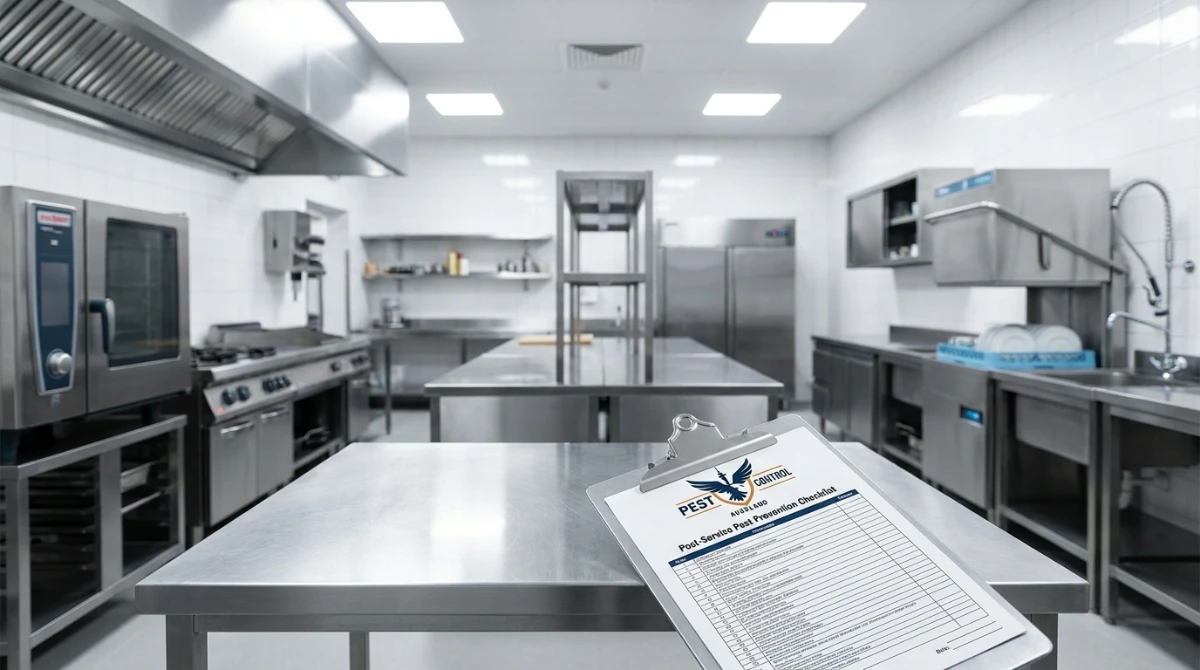
Commercial pest prevention and post-service care in Auckland requires an ongoing partnership. We provide comprehensive biosecurity compliance auditing, ensuring your staff knows exactly how to manage waste, seal deliveries, and report early warning signs before a full-blown infestation takes hold.
Landlord vs. Tenant: Navigating Pest Liability
One of the most common disputes in the Auckland rental market is deciding who pays the pest control bill. Under the Residential Tenancies Act, liability generally comes down to the root cause of the infestation. If the property has structural gaps that allow pests to enter, it is the landlord’s responsibility to fix it.
Conversely, if an infestation is caused by the tenant’s lifestyle—such as leaving rubbish piled against the house or failing to treat a pet for fleas—the tenant is liable for the eradication costs. Clear communication and fast, professional intervention are the best ways to prevent these minor disputes from escalating to the Tenancy Tribunal.
| Scenario / Pest Issue | Likely Responsible Party | Reasoning under Tenancy Laws |
|---|---|---|
| Rats entering through broken roof tiles | Landlord | Structural maintenance failure allowing exterior ingress. |
| Flea infestation at end of tenancy | Tenant | Directly caused by the tenant’s pets; requires specialized exit treatment. |
| Cockroaches due to accumulated indoor garbage | Tenant | Failure to maintain reasonable cleanliness and hygiene standards. |
| Pre-existing ant nest in wall cavity upon move-in | Landlord | Property was not provided in a clean, pest-free state at the start of tenancy. |
We provide fully documented service reports and transparent invoices that clearly detail the source of the infestation. This documentation is invaluable for property managers and landlords who need to prove compliance and resolve liability disputes quickly and fairly.
The Future of Pest Management: FAOPMA 2026
The pest control industry is evolving rapidly, moving away from harsh chemicals toward smart, predictive technologies. This shift will be highlighted when Auckland hosts the prestigious FAOPMA Pest Summit from July 15-17, 2026, at the New Zealand International Convention Centre (NZICC). The theme, “FutureProof: Smarter Pest Solutions for a Rapidly Changing World,” perfectly aligns with our operational philosophy.
At Pest Control Auckland, we are already implementing these future-proof strategies. By focusing on root-cause exclusion, utilizing zero-emission treatments, and empowering our clients with robust pest prevention and post-service care in Auckland, we ensure your home remains a safe sanctuary long after the initial treatment is complete.
Don’t wait for the autumn surge to overrun your home. Enrolling in an annual “Auckland Winter Defense” subscription plan is the most cost-effective way to lock out rodents and insects before they establish a nest.
Frequently Asked Questions

About the Author: Ronnie
Founder, Pest Control Auckland · Commercial & Residential Pest Expert · Certified Urban Pest Management Specialist
With years of hands-on experience in Auckland’s unique climate, Ronnie specializes in root-cause eradication and structural exclusion. Having consulted for major commercial hospitality venues under strict Food Act 2014 regulations, he is the definitive expert to write about Pest Prevention & Post-Service Care Auckland, ensuring families and businesses receive scientifically backed, honest advice.