Rats in the roof or roaches in the kitchen? We will find how they are getting in, block the entry points, and clear them out for good. That is the core of Integrated Pest Management (IPM) for Urban Environments, and it is the only way to actually solve a pest problem instead of just putting a band-aid on it.
Auckland is dealing with a massive autumn pest surge right now in May 2026, driven by last year’s mild winter and scorching summer. If you just spray poison and hope for the best, those pests will be back next month. You need a targeted, scientific approach to protect your property long-term.
Key Takeaways
Integrated Pest Management (IPM) for Urban Environments focuses on root-cause eradication, structural exclusion, and non-toxic monitoring rather than blanket chemical spraying. In New Zealand, IPM ensures strict compliance with the Animal Welfare Act 1999 and Food Act 2014 while providing long-term, child-safe pest prevention.
What Actually is Integrated Pest Management (IPM)?
Forget the guy who rocks up with a pump bottle, sprays your skirting boards, and hands you a bill. Integrated Pest Management (IPM) for Urban Environments is a scientific, methodical approach to keeping pests out of your property. We look at the biology of the pest, its life cycle, and exactly why it chose your house in the first place.
Instead of relying solely on toxic chemicals, we focus on structural exclusion and habitat modification. If rats are in your Waitakere home, we find the exact gap in the eaves they are using and seal it up. We remove their food sources, disrupt their breeding grounds, and use targeted, zero-emission treatments only when absolutely necessary.
This method isn’t just a nice idea; it is the new standard. With the FAOPMA Pest Summit coming to Auckland in July 2026, the global pest control industry is moving entirely toward predictive, smart solutions. The old “spray and pray” days are officially dead.
The Science vs. The “Spray and Pray” Approach
There is a massive difference between a qualified technician and someone who bought a cheap spray rig online. To handle Class 9 ecotoxic substances in New Zealand, operators must hold the New Zealand Certificate in Pest Operations (Level 3). This qualification means we understand entomology, toxicology, and environmental safety.
When we implement Integrated Pest Management (IPM) for Urban Environments, we aren’t guessing. We use tracking powders, thermal imaging, and smart monitoring stations to see exactly what the pests are doing behind your walls. This allows us to strike with precision, protecting your family, your pets, and the local native wildlife.
| Feature | Traditional “Spray & Pray” | Urban IPM Approach |
|---|---|---|
| Primary Focus | Reactive chemical application | Root-cause exclusion & prevention |
| Safety Profile | High chemical exposure risk | Targeted, pet and child-safe |
| Long-Term Result | Pests return when spray washes away | Permanent structural defense |
Why West Auckland Needs a Smarter Defense Right Now
Right now, in May 2026, West Auckland is experiencing one of the worst autumn pest surges we have seen in years. A mild winter followed by a hot summer allowed rodent and insect populations to breed out of control. Now that the weather is cooling down, they are all pushing indoors looking for warmth and food.
If you live near the Waitakere Ranges or the surrounding bush reserves, your home is on the frontline. Standard barrier sprays wash away in the heavy Auckland rain, which is why structural exclusion is so critical. We have seen the success of smart eradication in the Hūnua Ranges, where rat tracking plummeted to 1.3% after intensive, strategic drops in late 2025.
The same highly strategic principles apply to your residential property. By sealing entry points and managing the immediate environment, we stop the invasion before it starts. This proactive approach saves you money and stress in the long run.
Targeting West Auckland’s Worst Offenders
Different pests require completely different strategies. You cannot treat an Argentine ant invasion the same way you treat a German cockroach infestation. Here is how we tackle the most common issues in the local area.
- Rodents (Rats and Mice): We focus heavily on roof, wall, and garage extraction. We identify the structural entry points, set strategic traps, and use secure baiting stations that are completely inaccessible to your pets.
- Cockroaches: Surface sprays only kill the roaches you see. We use advanced insect growth regulators (IGRs) and targeted gel baits that the roaches take back to the nest, wiping out the entire colony from the inside.
- Ants: West Auckland deals with aggressive invasive ant species. We track the pheromone trails back to the source and apply slow-acting non-repellent treatments that destroy the queen.
By understanding the specific biology of these pests, our treatments are far more effective. It is about working smarter, not just dumping more chemicals into your living space.
The Legal Reality: You Can’t Just Do What You Want
Pest control in New Zealand is heavily regulated, and for good reason. The DIY hardware store bombs and cheap traps often lead homeowners into serious legal trouble without them even realizing it. You cannot simply throw poison around or set up traps indiscriminately.
Under the Animal Welfare Act 1999, if you set a live-capture trap, you are legally required to physically inspect it within 12 hours after sunrise every single day. Furthermore, glue boards for rodents are heavily restricted and essentially illegal for general public use. Failing to adhere to these laws can result in massive fines.
Setting a live trap and going away for the weekend is a criminal offense under the Animal Welfare Act 1999. Traps must be checked daily. If you cannot commit to this, hire a certified professional.
We also operate under the strict guidelines of the EPA HPC Notice 2017 and the HSNO Act 1996. This means any chemical we use is meticulously recorded, applied safely, and kept far away from your children and pets. We never cut corners when it comes to compliance.
Commercial IPM: Survival in the Hospitality Sector
For cafes, restaurants, and warehouses, Integrated Pest Management (IPM) for Urban Environments isn’t just about keeping up appearances; it is about keeping your doors open. The New Zealand hospitality sector is booming, but Ministry for Primary Industries (MPI) audits are more rigorous than ever.
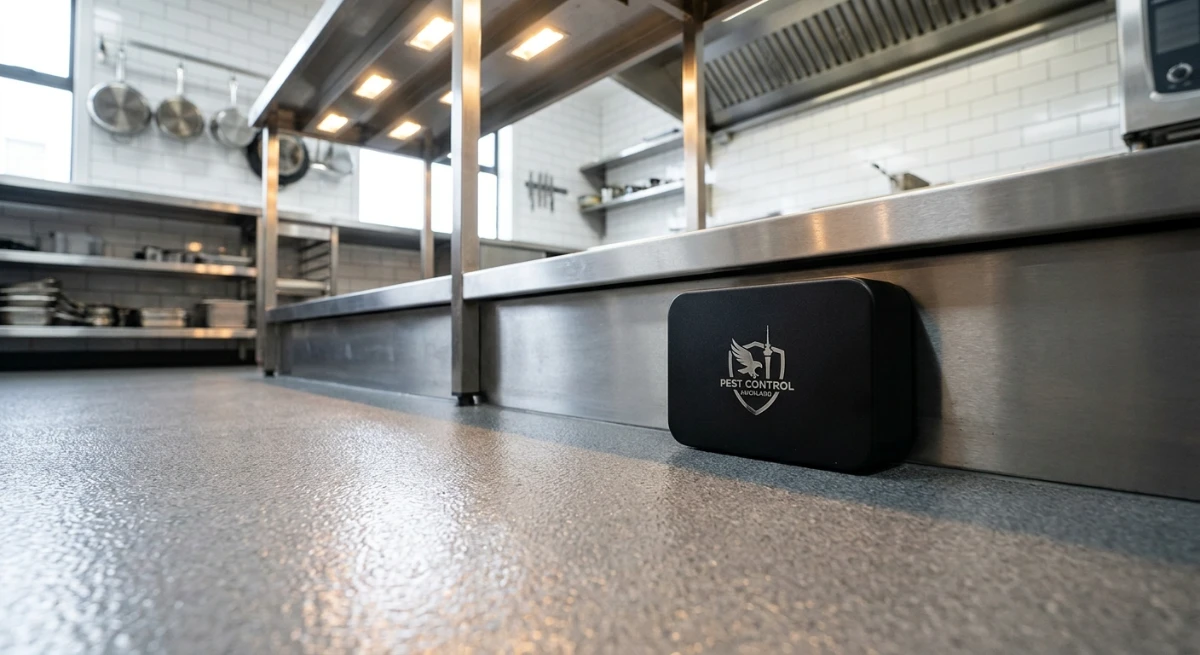
Under the Food Act 2014 and HACCP guidelines, you cannot use toxic rodenticide baits in sensitive food preparation areas. If an auditor spots a cheap block of rat bait near your prep benches, you will fail your inspection immediately. Commercial pest control requires non-toxic monitoring, mechanical traps, and meticulous digital reporting.
Keep a dedicated “Pest Sighting Log” for your staff. The moment a roach or mouse is spotted, log the time and location. This data is vital for our technicians to pinpoint the nest and maintain your MPI compliance.
We provide commercial biosecurity compliance auditing for the hospitality sector across Auckland. We install smart monitoring stations that alert us the moment a pest is detected, allowing us to eradicate the threat before your customers—or the health inspector—ever see a thing.
The Landlord vs. Tenant Dilemma: Who Pays for Pest Control?
One of the most common disputes we see in the Auckland housing market revolves around rental properties. Under the Residential Tenancies Act, landlords are generally responsible for providing a pest-free home at the start of a tenancy. However, if the tenant’s lifestyle—such as leaving rubbish out or keeping dirty dishes—attracts pests, the financial burden can shift.
This is where professional documentation saves the day. When we conduct an IPM assessment, we provide a detailed report outlining the root cause of the infestation. If structural gaps are letting rats in, it is clearly the landlord’s responsibility to fix it.
We work directly with property managers across West Auckland to streamline this process. Our transparent reporting satisfies the Tenancy Tribunal requirements, ensuring disputes are resolved quickly and fairly without unnecessary friction.
How We Apply IPM in Your Home
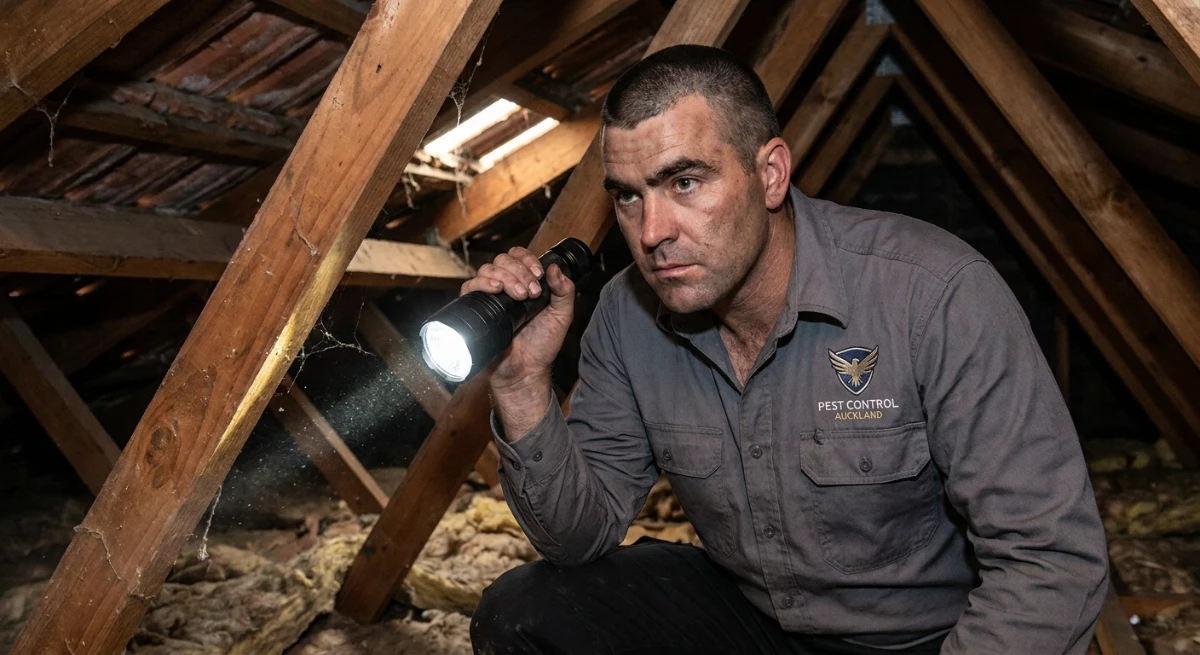
When you call us for pest control in West Auckland, we don’t just show up and start spraying. We follow a strict, four-step IPM protocol to ensure the problem is solved permanently. First, we conduct a comprehensive inspection to identify the exact species and locate their nesting sites.
Next, we focus on structural exclusion. If mice are getting in through a weeping hole in the brickwork, we install specialized mesh to block them. We advise you on trimming back tree branches from the roofline and managing compost bins to remove their food and shelter.
We stand by our work. Because we focus on root-cause eradication rather than temporary fixes, we offer a guarantee that actually means something. If the pests come back, so do we.
Finally, we apply targeted, zero-emission treatments directly to the source. This might include insect growth regulators (IGRs) that stop cockroaches from reproducing, or secure bait stations placed safely out of reach of pets. We then monitor the situation to ensure total eradication.
Clear items away from the skirting boards, put all pet food in sealed containers, and make sure we have clear access to the manhole for roof cavity inspections.
The Future of Pest Control: FAOPMA 2026 and Beyond
The industry is evolving rapidly. With the upcoming FAOPMA Pest Summit 2026 in Auckland themed “FutureProof: Smarter Pest Solutions for a Rapidly Changing World,” the focus is entirely on sustainability and technology. We are already utilizing thermal imaging and digital monitoring to stay ahead of the curve.
By choosing Integrated Pest Management (IPM) for Urban Environments, you are choosing a safer, smarter, and more effective way to protect your property. You avoid the cycle of despair that comes with failed DIY treatments and get the job done right the first time.
Frequently Asked Questions

About the Author: Ronnie
Founder, Pest Control Auckland · Commercial & Residential Pest Expert · Certified Urban Pest Management Specialist
With years of experience handling severe commercial and residential infestations across Auckland, Ronnie is the definitive expert on Integrated Pest Management (IPM) for Urban Environments. Holding the New Zealand Certificate in Pest Operations (Level 3), his deep understanding of the Food Act 2014 and Animal Welfare Act 1999 ensures every strategy is both highly effective and strictly compliant.