Rats in the roof? We will find how they are getting in, block the hole, and clear them out — usually in one visit.
That is the difference between a temporary fix and a permanent solution. If you are dealing with the autumn 2026 pest surge in Auckland, you are probably tired of hardware store bombs that simply do not work.
You want the problem gone, you want it handled safely, and you do not want to remortgage the house to get it done. Let us look at what real pest eradication looks like.
Key Takeaways
Affordable Pest Management Auckland focuses on root-cause eradication rather than temporary sprays. Expect to pay $155–$325 for standard residential treatments. Always ensure your technician holds a Level 3 Urban Pest Management certificate to guarantee safe, legal, and effective results for your family and pets.
Why Spray and Walk Away Fails in Auckland
Auckland weather is a breeding ground for pests. The mild winter and hot summer we just experienced created the perfect storm for our current autumn surge.
When the temperature drops, rodents and insects look for somewhere warm. Your roof cavity, subfloor, and kitchen are prime real estate.
Most people reach for a can of bug spray or a hardware store bomb. That is what we call the DIY cycle of despair.
You might kill the few cockroaches you see on the surface, but you are not touching the nest hidden in the wall voids. In fact, bug bombs often just push the colony deeper into your home’s structure.
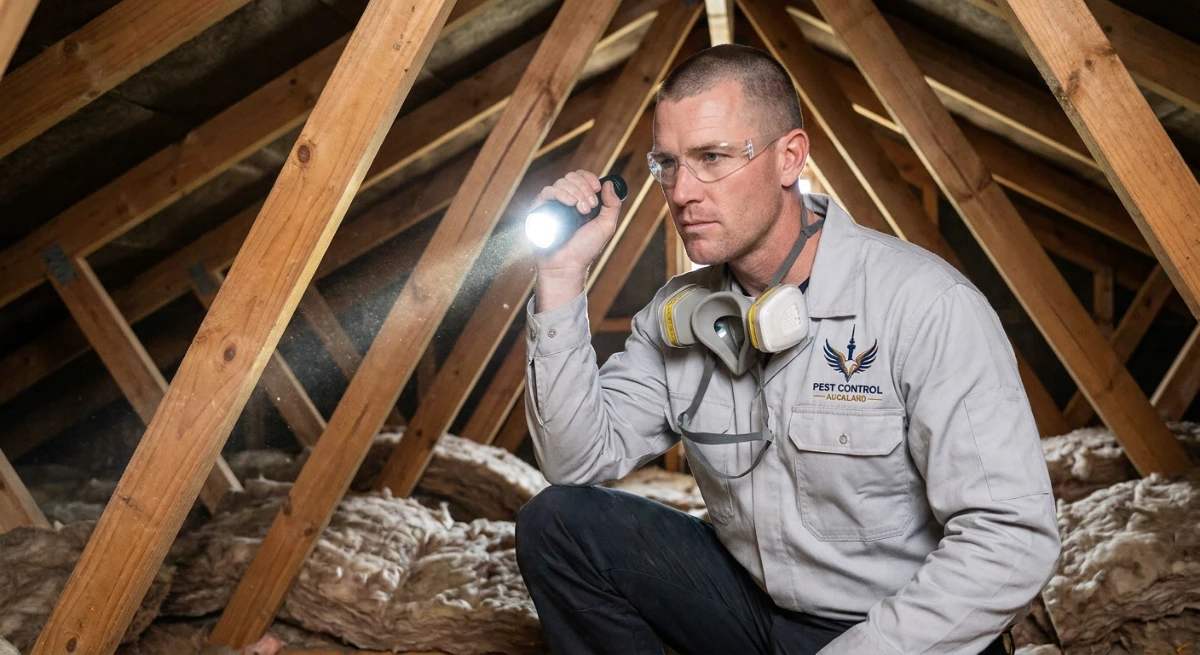
True pest control is about exclusion. Finding the entry point and sealing it is always the first step before any treatment is applied.
The True Cost of Affordable Pest Management
I do not believe in hiding prices behind a vague contact form. You deserve to know what you are paying upfront.
When you search for affordable pest management in Auckland, you need to weigh the upfront cost against the long-term value. Paying $50 for a cheap spray that lasts two weeks is not affordable; it is a waste of money.
Here is the current market benchmark for professional, root-cause eradication in a standard 3-bedroom Auckland home as of May 2026.
| Pest Type | Standard Pricing (NZD) | Treatment Approach |
|---|---|---|
| Ants (e.g., Argentine Ants) | $160 – $200 | Non-repellent baiting and perimeter barrier. |
| Cockroaches | $265 – $325 | Gel baits in kitchen/wet areas, crack and crevice treatment. |
| Rodents (Rats/Mice) | $155 – $325 | Entry-point exclusion, secure bait stations, roof cavity trapping. |
| Bed Bugs | $215 – $265 (per room) | Deep chemical treatment, mattress encasement advice. |
Our approach to affordable pest management in Auckland is simple: do it right the first time so we do not have to keep coming back.
The Law, Safety, and the Silver Bullet Guarantee
If someone turns up to your house with a spray tank and no qualifications, send them packing immediately.
Under the EPA Hazardous Property Controls Notice 2017, anyone handling Class 9 ecotoxic substances must be a qualified contractor.
That means they must hold the New Zealand Certificate in Pest Operations (Level 3). This is a strict legal requirement, and it is non-negotiable for your family’s safety.
Never hire a contractor who leaves live-capture traps unchecked. Under the Animal Welfare Act 1999, live traps must be physically inspected within 12 hours of sunrise every single day.
We operate on what we call the Silver Bullet Guarantee. We use MPI-approved, zero-emission treatments that are rigorously tested.
We find the entry point, we exclude the pest, and we use targeted applications that are entirely safe for children and pets once dry.
Predictive Integrated Pest Management (IPM)
The pest control industry is shifting rapidly away from reactive treatments. In July 2026, Auckland is hosting the FAOPMA Pest Summit at the NZICC.
The theme is FutureProof: Smarter Pest Solutions, and it is entirely focused on Predictive Integrated Pest Management (IPM). IPM is about understanding the environment, not just dropping poison.
We look at local weather patterns, structural weaknesses, and sanitation habits to predict where pests will strike next.
Take the recent conservation efforts in the Hūnua Ranges as proof of targeted methodology. Following a highly controlled aerial 1080 drop in late 2025, rat tracking indexes plummeted to an incredible 1.3%.
When you apply that same scientific, targeted mindset to residential homes, you get permanent results. That is the core of affordable pest management in Auckland.
Landlords vs. Tenants: Solving the Liability Dispute
This is the most common argument we see in the Auckland rental market. Who pays for the pest control bill?
Under the Residential Tenancies Act, it can seem like a grey area, but the general rule is actually quite simple if you look at the root cause.
- If the property had pests before the tenant moved in, the landlord pays.
- If the infestation is due to a structural flaw, like a hole in the roof or rotting subfloor boards, the landlord pays.
- If the tenant caused the issue by leaving rubbish piled up or bringing infested furniture into the home, the tenant pays.
We provide clear, unbiased documentation after every visit. This paperwork clearly states the root cause of the infestation, which easily satisfies Tenancy Tribunal requirements.
Commercial Pest Control: Keeping the Doors Open
Auckland’s hospitality sector hit record turnover numbers recently, but with that growth comes intense scrutiny from the Ministry for Primary Industries (MPI).
The Food Act 2014 enforces strict, zero-tolerance policies for pests in commercial food preparation areas.
You cannot just throw toxic rodenticide bait under a commercial stove. The law prohibits it due to contamination risks.

Commercial operators require non-toxic monitoring, secure mechanical traps, and rigorous compliance auditing. Failing a health inspection will cost you far more than a reliable, ongoing pest management plan.
Ensure all exterior doors have weather stripping, seal all pipe penetrations under sinks, and schedule a professional IPM compliance audit before your next council inspection.
Frequently Asked Questions

About the Author: Ronnie
Founder, Pest Control Auckland · Commercial & Residential Pest Expert · Certified Urban Pest Management Specialist
With years of experience in Auckland’s unique climate and strict biosecurity landscape, Ronnie is the definitive expert on affordable pest management. Having consulted for both residential homeowners and top-tier commercial hospitality venues, he specializes in root-cause eradication, structural exclusion, and delivering safe, MPI-compliant solutions.