Wasp nest removal in Auckland is a critical service aimed at safely eliminating dangerous wasp infestations from residential properties, ensuring the well-being of families and pets. Professionals in Auckland utilize specialized techniques and equipment to locate, treat, and remove nests efficiently, mitigating the significant health risks and property damage associated with these aggressive pests.
Understanding Wasps in Auckland: A Local Perspective
Auckland’s temperate climate and lush residential gardens provide an ideal habitat for various wasp species, making wasp nest removal a common and urgent concern for homeowners. Understanding the types of wasps prevalent in the region and why they pose a threat is the first step towards effective pest management and ensuring safety within your property.
Common Wasp Species in Auckland
While several species might visit Auckland gardens, the most problematic for residential areas are typically introduced species known for their aggressive nature and large nests. The two primary culprits are often the German Wasp (Vespula germanica) and the Common Wasp (Vespula vulgaris). Both are highly adaptable, forming substantial nests in various locations, including underground, in wall cavities, sheds, trees, and dense hedges. These species are social wasps, meaning they live in colonies that can number in the thousands by the end of the summer season, greatly increasing the risk of multiple stings.
Why Wasps are a Problem in Residential Areas
In residential settings, wasps are more than just a nuisance; they represent a significant health and safety hazard. Their attraction to sweet foods and proteins means they frequently forage around outdoor dining areas, bins, and fruit trees, bringing them into direct contact with people and pets. Unlike bees, wasps can sting repeatedly without dying, making encounters particularly dangerous. For individuals with allergies, a single sting can trigger a severe anaphylactic reaction, requiring immediate medical attention. Beyond the health risks, large nests can cause structural damage to properties if built within wall cavities or roof spaces, leading to costly repairs. The presence of a wasp nest can also severely limit the use of outdoor spaces, diminishing the enjoyment of your home.
The Immediate Dangers of DIY Wasp Nest Removal
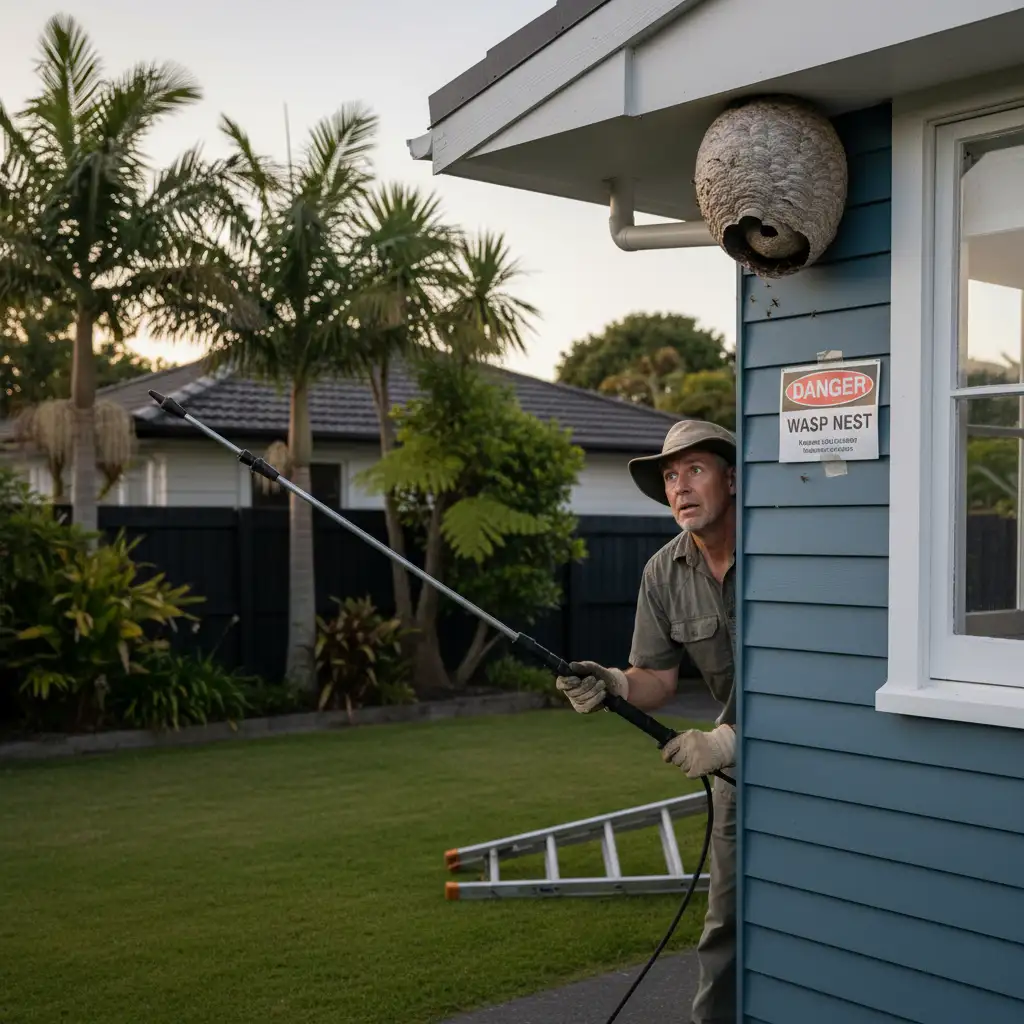
Many homeowners, upon discovering a wasp nest, might be tempted to handle the problem themselves to save costs or for immediate relief. However, attempting DIY wasp nest removal in Auckland residential areas is fraught with significant risks that often outweigh any perceived benefits. Professional pest control technicians undergo extensive training and possess specialized equipment precisely because wasp nest removal is a hazardous undertaking.
Health Risks and Allergic Reactions
The most immediate danger is the risk of multiple stings. Wasps are highly defensive of their nests, and any disturbance will provoke an aggressive swarm. Even if you haven’t reacted to a wasp sting before, repeated stings can potentially sensitize your immune system, leading to a severe allergic reaction (anaphylaxis) on subsequent stings. Symptoms can range from localized pain and swelling to more systemic reactions like difficulty breathing, dizziness, rapid heart rate, and loss of consciousness. Without immediate medical intervention, anaphylaxis can be life-threatening. Relying on store-bought sprays or improvised methods without proper protective gear exposes you to this grave danger.
Aggressive Wasp Behavior
Wasp colonies are highly organised and fiercely protective. When their nest is threatened, wasps release alarm pheromones, signaling other wasps in the colony to join the attack. This can quickly escalate a single wasp encounter into an overwhelming assault by hundreds or even thousands of agitated wasps. Their ability to sting multiple times means you could be subjected to numerous painful stings within seconds, making escape difficult and dangerous, especially if you are on a ladder or in an confined space.
Ineffective Home Remedies and Their Consequences
The internet is rife with home remedies for wasp removal, from smoke to soapy water to various homemade traps. While some might appear to have minor effects on individual wasps, they are rarely effective at eliminating an entire nest, especially a large, established one. In fact, attempting these methods often just agitates the colony further, making the wasps more aggressive and the nest harder for professionals to treat later. Furthermore, some DIY methods, like using fire or highly toxic, non-approved chemicals, can pose fire hazards or environmental risks, endangering your property and the surrounding ecosystem.
Safety Precautions and Personal Protective Equipment (PPE)
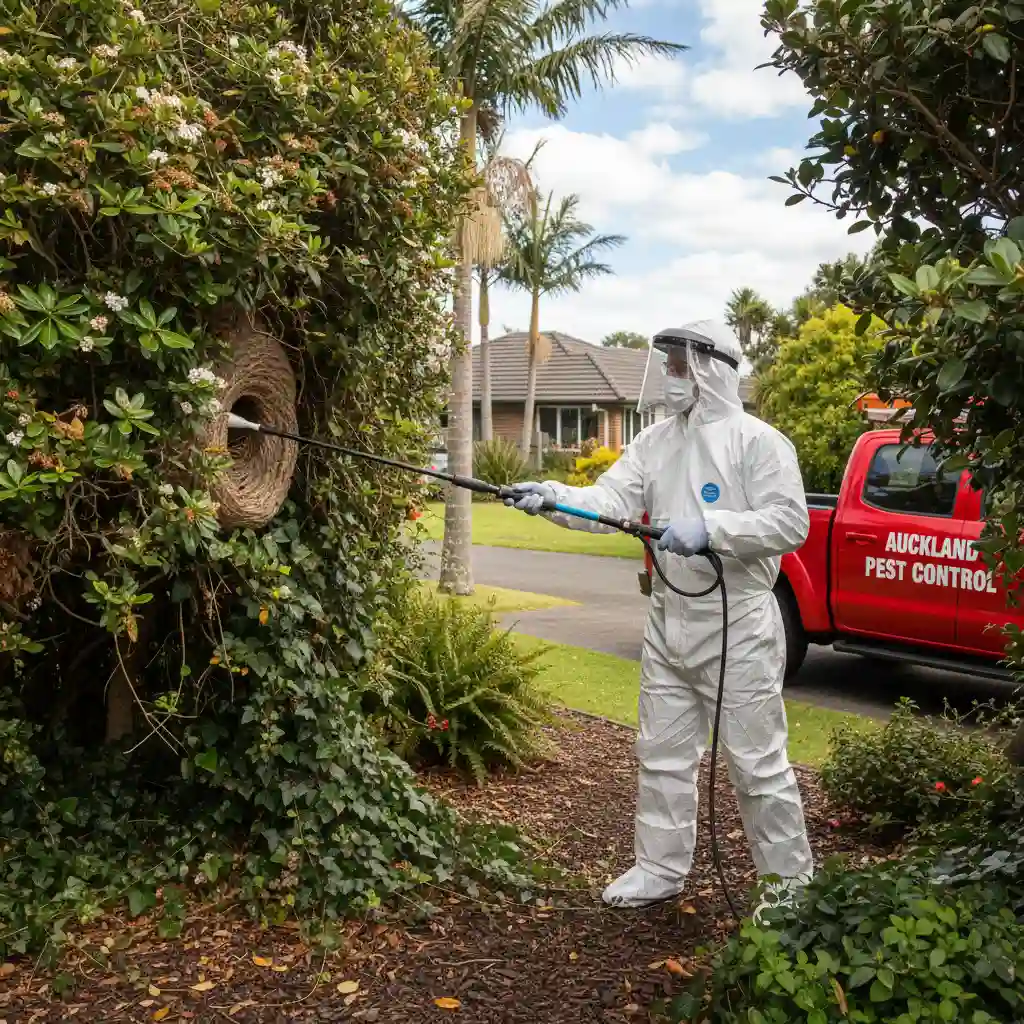
Professional wasp removal requires specialized Personal Protective Equipment (PPE), including thick, sting-proof suits, gloves, and face veils. These are designed to offer comprehensive protection against stings. Most homeowners do not possess such equipment, nor is it practical for them to acquire it for a one-time use. Attempting removal without adequate protection leaves you vulnerable to potentially hundreds of stings, making professional intervention the only truly safe and effective option.
Our Professional and Effective Wasp Nest Treatment in Auckland
When facing a wasp infestation in your Auckland home, opting for professional removal services is the safest and most effective course of action. Our team of experienced technicians employs a methodical, safe, and highly effective approach to ensure complete eradication of wasp nests, minimizing risk to your family and property.
Initial Assessment and Identification
The first crucial step involves a thorough inspection of your property to accurately locate all wasp nests. Wasps can build nests in diverse and often hidden locations, such as underground burrows, within wall cavities, under eaves, in attics, sheds, or dense shrubs. Our technicians are trained to identify the specific species of wasp, assess the size and activity level of the nest, and determine the most appropriate and safest treatment strategy. This initial assessment also includes identifying potential entry points and factors attracting wasps to your property.
Targeted Treatment Methods
Once the nest is located and assessed, we apply targeted treatment methods designed to be highly effective while ensuring safety. We primarily use professional-grade insecticides that are not available to the general public. These treatments are applied directly to the nest opening or into the nest structure itself. The active ingredients are formulated to be fast-acting, quickly neutralizing the wasp colony. For nests in difficult-to-reach locations, such as wall cavities or high attics, specialized dusting or foaming agents are employed, which workers then carry throughout the nest, ensuring complete eradication. The effectiveness of these treatments means the entire colony, including the queen, is eliminated, preventing future resurgence from that specific nest. You can learn more about general wasp behavior and control on reputable resources like Wikipedia’s Wasp entry.
Safe Removal and Disposal
After the treatment has taken effect and the wasps are incapacitated, the next step involves the safe removal of the nest, if accessible. For nests located within structures, complete removal may not always be necessary or feasible, as the treated nest will no longer pose a threat. In such cases, we may advise on sealing entry points. However, for accessible nests, particularly those outdoors, safe removal and disposal are crucial to prevent secondary pest issues and ensure a clean, wasp-free environment. All removed nests are disposed of responsibly, adhering to local Auckland environmental guidelines.
Guaranteed Results and Follow-Up
Our commitment extends beyond just treatment. We stand by the effectiveness of our wasp nest removal services in Auckland. In the rare event that wasp activity persists after our initial treatment, we offer a follow-up service to re-assess and re-treat the area at no additional cost within a specified period. We also provide expert advice on preventative measures homeowners can take to reduce the likelihood of future infestations, empowering you with long-term pest control solutions. Our goal is to provide peace of mind and a truly wasp-free home environment.
Choosing the Right Wasp Control Service in Auckland
When searching for a wasp nest removal service in Auckland, it’s essential to select a provider that offers not only effective solutions but also peace of mind. The choice of pest control company can significantly impact the safety, efficiency, and long-term success of your wasp eradication efforts. Look for key attributes that indicate a reliable and reputable service.
Experience and Local Knowledge
An experienced pest control company with specific local knowledge of Auckland’s environment and common wasp species is invaluable. They understand the seasonal patterns of wasp activity, typical nesting sites in Auckland’s residential architecture, and the most effective treatments for the local species. Technicians with years of experience can quickly assess situations, even complex ones, and apply the most appropriate and efficient solutions, saving you time and potential aggravation. Our team has extensive experience serving Auckland homes, making us adept at handling any wasp challenge.
Safety Protocols and Eco-Friendly Options
Safety should be paramount. Ensure the service provider adheres to strict safety protocols for both their technicians and your household. This includes the proper use of Personal Protective Equipment (PPE), careful application of insecticides to minimize exposure to non-target organisms, and clear communication about post-treatment precautions. Furthermore, inquire about their commitment to environmentally responsible practices. Many modern pest control companies offer eco-friendly or low-impact solutions that are effective against wasps while being safer for pets, children, and the broader Auckland ecosystem. Our methods prioritise both efficacy and environmental responsibility, aligning with guidelines from reputable sources like the U.S. Environmental Protection Agency (EPA) for pesticide safety.
Customer Testimonials and Reputation
A company’s reputation often speaks volumes about its service quality. Look for customer testimonials, online reviews, and ask for local references. Positive feedback regarding professionalism, effectiveness, responsiveness, and customer service is a strong indicator of a trustworthy provider. A company with a solid track record of satisfied customers in Auckland’s residential areas is more likely to deliver the results you expect and deserve. We pride ourselves on our positive customer feedback and dedication to service excellence.
Emergency Response and Availability
Wasp infestations can escalate quickly, especially during peak summer months. An immediate response is often crucial to prevent further spread or dangerous encounters. Choose a service that offers prompt scheduling and, ideally, emergency response options. Knowing that help is readily available when you discover a potentially dangerous nest provides significant reassurance. Our Auckland team is geared for fast response times, understanding the urgent nature of wasp nest removal.
Preventing Future Wasp Infestations Around Your Auckland Home
While professional wasp nest removal effectively deals with existing infestations, proactive prevention is key to long-term protection for your Auckland home. By implementing a few simple yet effective strategies, you can significantly reduce the likelihood of wasps establishing nests on your property and minimize future encounters.
Sealing Entry Points
Wasps frequently seek sheltered, secluded spots to build nests, and residential homes offer numerous attractive locations. Inspect your property regularly for potential entry points. Seal cracks and crevices in foundations, walls, and around windows and doors. Repair any damaged screens on windows and vents. Check for gaps around utility pipes and wires entering your home and seal them. Pay particular attention to eaves, soffits, and roof spaces where wasps often gain access to wall cavities and attics. By denying them easy access to these protected areas, you can deter them from nesting inside your home’s structure.
Proper Waste Management
Wasps are opportunists and are highly attracted to food sources, especially sweet substances and proteins. Ensure all outdoor rubbish bins have tight-fitting lids and are emptied regularly. Rinse recyclable containers, particularly drink bottles and cans, before placing them in recycling bins. Avoid leaving pet food bowls or uncovered food outdoors for extended periods. When dining outdoors, keep food covered and clear tables promptly after meals. Composting bins should also be securely covered to prevent attracting foraging wasps.
Gardening and Landscaping Practices
Your garden can either attract or deter wasps. Overripe fallen fruit from trees is a major draw for wasps. Regularly pick up any fruit that has dropped to the ground. If you have flowering plants that attract a lot of insects, consider their proximity to high-traffic areas like patios or doorways. Keep hedges and shrubs well-maintained; dense, overgrown vegetation can provide ideal, undisturbed locations for wasps to build nests. Regularly check sheds, carports, and outdoor storage areas for any signs of early nest construction.
Regular Property Inspections
Early detection is vital in preventing a small wasp problem from escalating into a major infestation. Conduct routine inspections of your property, especially during spring and early summer when queens are beginning to establish new colonies. Look for small, golf-ball-sized nests in sheltered spots. The earlier a nest is detected, the easier and safer it is to treat. Pay attention to increased wasp activity around specific areas of your home, as this can indicate a hidden nest nearby.
Seasonal Prevention Strategies
As seasons change, so does wasp behavior. In spring, focus on sealing entry points and early nest detection. In summer, concentrate on waste management and fruit cleanup. Consider using wasp traps, particularly around outdoor entertaining areas, to reduce foraging worker wasps. However, remember that traps are a deterrent for foraging wasps, not a solution for an established nest. During autumn, be vigilant as wasp colonies reach their peak size and wasps become more aggressive due to dwindling food sources. Continued vigilance and proactive measures throughout the year are the best defense against wasp infestations in your Auckland home.
When to Call the Professionals: Emergency Scenarios
While preventative measures can significantly reduce the risk of wasp infestations, certain situations unequivocally demand the immediate intervention of professional pest control services. Recognizing these emergency scenarios is crucial for ensuring the safety of your household and avoiding dangerous encounters.
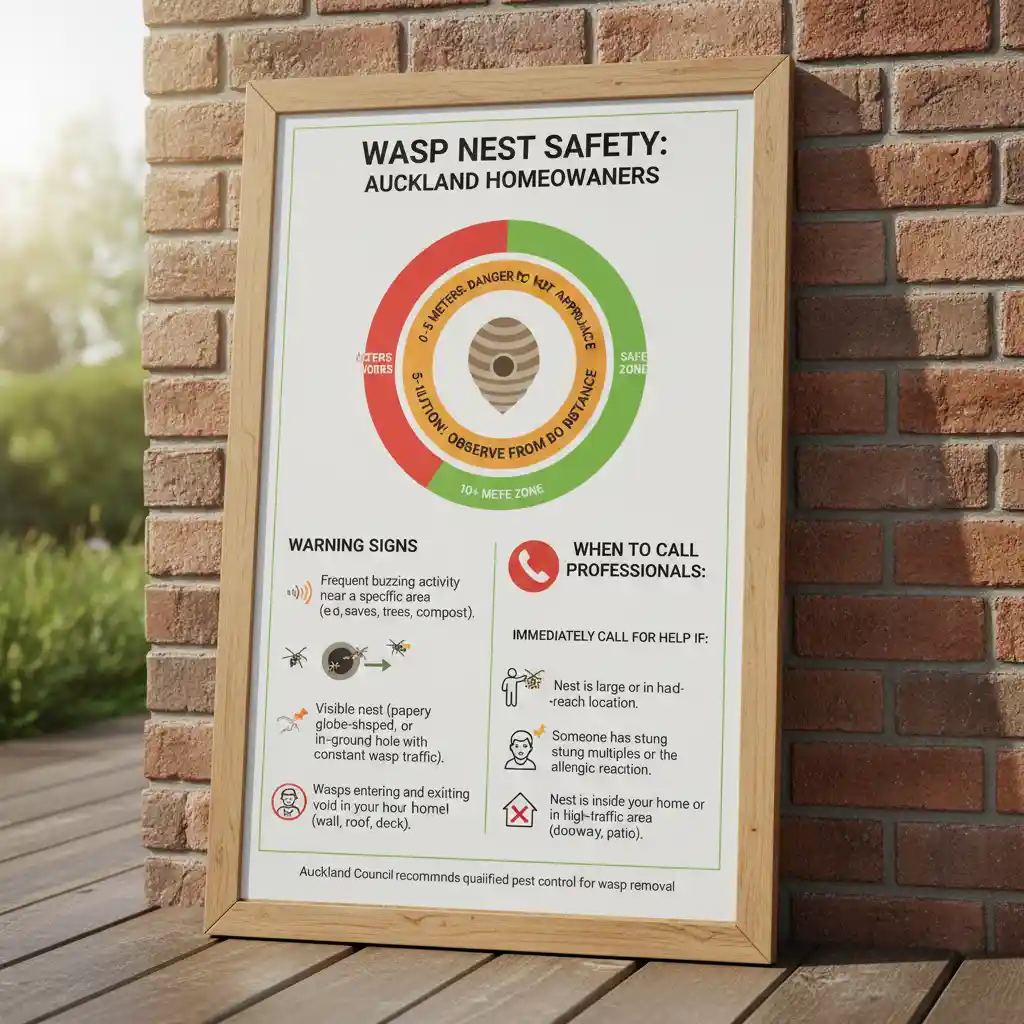
- Large, Active Nests: If you discover a nest that is visibly large, with hundreds or thousands of wasps buzzing around, it is far too dangerous for DIY removal. These mature colonies are highly aggressive and will launch a mass attack if disturbed.
- Nests in High-Traffic Areas: Nests located near doorways, windows, patios, play areas for children, or pet zones pose an immediate and constant threat. The risk of accidental disturbance and subsequent stings is extremely high in these locations.
- Nests Inside Your Home’s Structure: Wasps nesting within wall cavities, attics, or under floorboards present a unique challenge. Attempting to access these nests without specialized equipment can lead to wasps entering your living spaces, causing significant distress and danger. Such situations require precise treatment and, sometimes, structural considerations best handled by experts.
- Allergy Concerns: If anyone in your household has a known allergy to wasp stings, even a small nest requires immediate professional attention. The risk of anaphylaxis makes any close proximity to wasps a life-threatening situation.
- Multiple Nests: Sometimes, a property might host more than one wasp nest. Identifying and treating multiple nests effectively requires a comprehensive approach that only professionals can consistently deliver.
- Inaccessible Locations: Nests located high up in trees, under roof eaves, or in other hard-to-reach places necessitate the use of specialized equipment (like tall ladders or extension poles) and techniques that a typical homeowner does not possess. Attempting to reach these without proper safety gear is extremely dangerous.
In any of these scenarios, your immediate action should be to keep a safe distance from the nest and contact a reputable Auckland wasp nest removal service. Professional technicians have the training, experience, and equipment to safely and effectively eliminate the threat, providing you with peace of mind and a secure home environment.
Conclusion
Wasp nest removal in Auckland residential areas is a critical service that prioritizes the safety and well-being of homeowners and their families. While preventative measures can help mitigate risks, the discovery of an active wasp nest demands immediate, professional intervention. The dangers associated with DIY removal, from severe allergic reactions to aggressive swarms, far outweigh any perceived benefits. By choosing an experienced, locally knowledgeable pest control service, you ensure that nests are identified, treated, and removed safely and effectively, providing lasting peace of mind. Investing in professional wasp control not only eliminates an immediate threat but also contributes to a safer, more enjoyable home environment for everyone in Auckland. Don’t risk it; contact the experts for fast, safe, and professional wasp nest removal.
People Also Ask (PAA)
How much does wasp nest removal cost in Auckland?
The cost of wasp nest removal in Auckland can vary depending on several factors, including the size and location of the nest, the species of wasp, and the accessibility. Nests that are difficult to reach (e.g., inside wall cavities, high in trees) may incur higher costs. Most professional services provide quotes after an initial assessment, but you can typically expect to pay a competitive rate for a safe and guaranteed service. It’s always best to get a specific quote from a reputable local provider.
How long does it take to get rid of a wasp nest?
Once a professional pest controller applies treatment to a wasp nest, the colony typically becomes inactive within a few hours to a day. The treatment works by incapacitating the wasps, and foraging wasps that return to the nest will also be affected. For complete eradication and to ensure all wasps, including the queen, are neutralized, it might take up to 24-48 hours. After this period, the nest is generally considered inactive and no longer a threat.
Can wasps return to an old nest?
Generally, wasps do not reuse old nests. Wasp colonies are annual; the queen will die off in winter, and the new queens that emerge will seek out a new location to build their own nests in the spring. However, the presence of an old nest indicates that the location was suitable for wasp activity. Therefore, while the exact same nest won’t be reoccupied, a new queen might build a new nest very close to or in the same spot as an old one if the conditions remain favorable. Professional removal and preventative measures help reduce this likelihood.
Is it safe to remove a wasp nest at night?
While wasps are generally less active at night, attempting DIY removal at any time, including night, is not recommended for safety reasons. Wasps are still capable of stinging in the dark, and your visibility and ability to react or escape are significantly reduced. Professional pest controllers are equipped with specialized gear and lighting for safe night-time operations if required, but it is always best to leave it to the experts to minimize risks.
What are the signs of a wasp nest?
Key signs of a wasp nest include a high volume of wasp activity in a specific area, especially wasps repeatedly entering and exiting a single point (like a hole in the ground, a gap in a wall, or under eaves). You might also hear a buzzing or scratching sound if the nest is within a wall cavity or attic. Visible nests can appear as papery, grey structures, often spherical or teardrop-shaped, attached to surfaces or suspended from branches. Pay attention to consistent wasp flight paths around your property.
What kind of wasps are common in Auckland?
The most common and problematic wasp species found in Auckland are the German Wasp (Vespula germanica) and the Common Wasp (Vespula vulgaris). Both are introduced species known for their aggressive nature and tendency to build large, populous nests in various locations, including underground, in wall cavities, sheds, and trees. These social wasps pose a significant threat due to their ability to sting repeatedly and their attraction to human food sources.