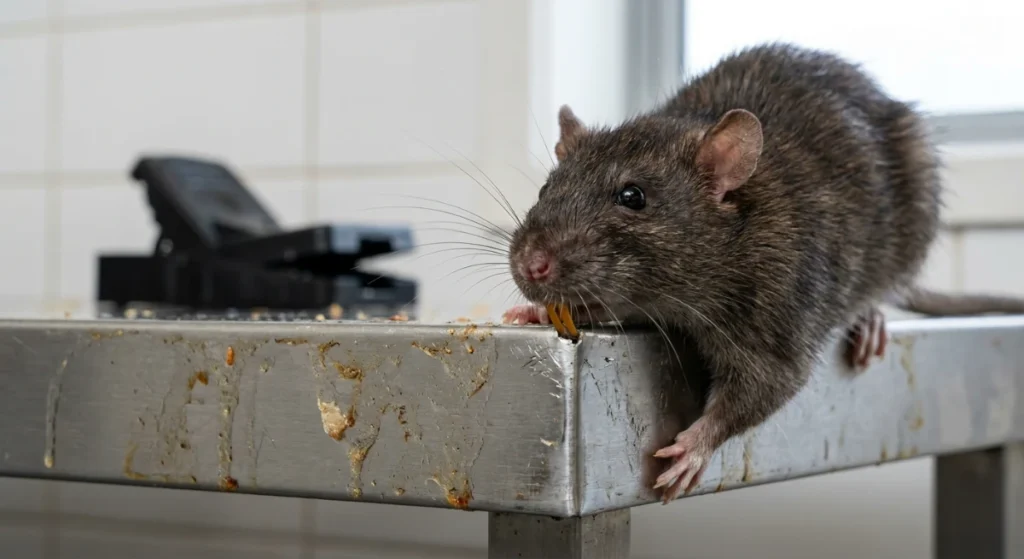
Running a commercial kitchen in Auckland right now is a high-stakes game. New Zealand’s hospitality sector just smashed a record $15.99 billion turnover in FY2025, but that massive financial success brings an intense level of regulatory scrutiny. With the severe autumn 2026 pest surge driving rats, mice, and cockroaches indoors, your food prep areas are under constant siege.
A single sighting does not just gross out a customer; it triggers an immediate MPI audit failure. You simply cannot afford to rely on a cheap spray-and-walk-away service anymore. The days of blasting toxic chemicals around food zones are over, heavily penalized under the strict mandates of the Food Act 2014.
You need a scientific, highly compliant approach to protect your staff, your patrons, and your operating license. That is where certified, zero-emission strategies come into play. We focus on stopping infestations at the structural level before they start.
By implementing eco-friendly commercial kitchen pest management, you secure your A-grade rating and eliminate the stress of surprise health inspections. We tell you plainly what is going on, fix the root cause, and ensure you remain fully compliant.
Key Takeaways
Eco-friendly commercial kitchen pest management relies on preventative structural exclusion and zero-emission treatments. To meet MPI and Food Act 2014 requirements, Auckland food businesses must avoid toxic rodenticides in prep zones. Certified Level 3 technicians use non-toxic monitoring and mechanical traps to ensure compliance and eradicate pests safely.
The Science of Green Pest Control in Kitchens
When we talk about green pest control, we are not talking about sprinkling peppermint oil and hoping for the best. We are talking about Predictive Integrated Pest Management (IPM). This is a highly scientific framework focused on structural exclusion, biological monitoring, and zero-emission interventions.
It is about outsmarting the pest, not just indiscriminately poisoning it. The global pest control industry is rapidly shifting toward these smarter methodologies. In fact, Auckland is gearing up to host the prestigious FAOPMA Pest Summit in July 2026 at the NZICC.
The theme for this massive industry event is FutureProof: Smarter Pest Solutions for a Rapidly Changing World. The global consensus is clear: the heavy reliance on broad-spectrum, toxic pesticides in commercial food environments is no longer viable or legal.
In a high-heat, high-moisture environment like a bustling commercial kitchen, pests thrive rapidly. The mild winter and scorching summer of the previous year have created a perfect storm for the May 2026 pest surge. German cockroaches and roof rats are drawn to the constant food supply, grease build-up, and structural warmth.
To combat this effectively, our Level 3 certified technicians use data-driven monitoring systems. We track pest movements, identify moisture anomalies, and pinpoint exactly how these intruders are breaching your perimeter. By understanding the behavioral patterns of these pests, we can deploy highly targeted interventions.
We do not need to blanket your kitchen in chemicals. Instead, we use precision applications that hit the pests exactly where they live and breed. This scientific rigor is the backbone of reliable eco-friendly commercial kitchen pest management.
Entomological Approaches to Pest Exclusion
To truly eradicate an infestation, you have to think like a bug. This is the entomological approach to pest exclusion. We do not just look at where the pests are currently feeding; we trace them back to their nesting sites and structural entry points.
If you do not seal the breach, you will be paying for reactive surface sprays for the rest of your life. We call this endless frustration the DIY Cycle of Despair. Hospitality managers often try to save money by setting off hardware store bug bombs after hours.
These domestic-grade products do nothing to penetrate the deep structural voids where the breeding populations hide. They only scatter the pests, making the infestation harder to control in the long run. Real eradication requires a deep understanding of pest biology.
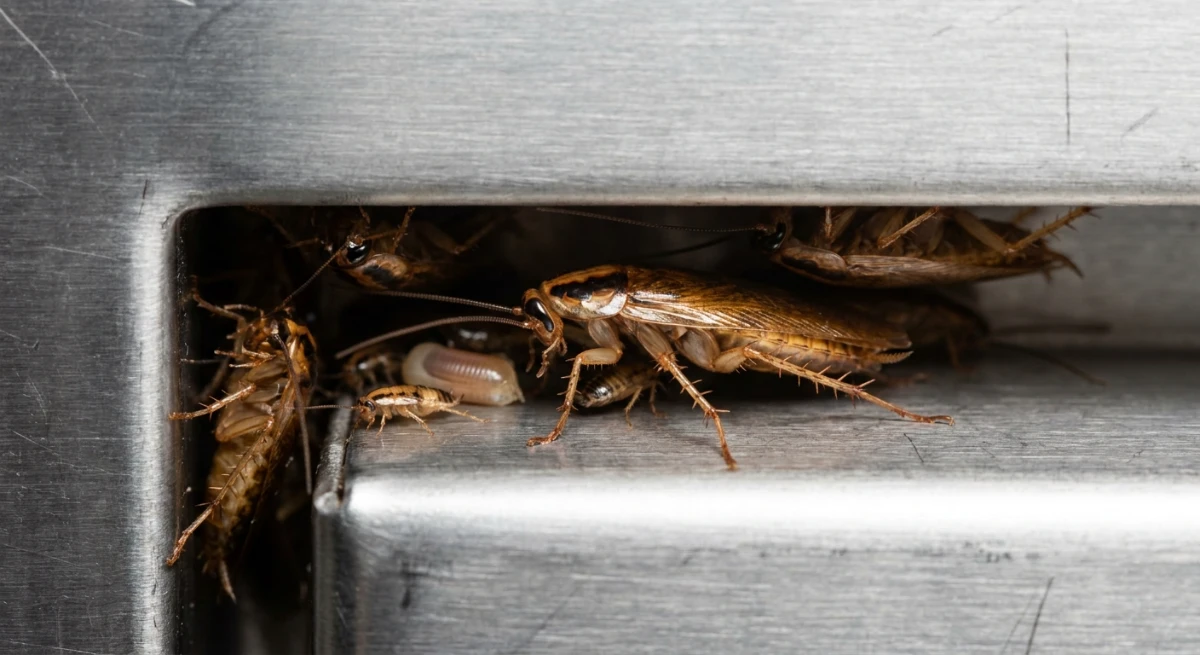
For example, German cockroaches reproduce at an astonishing rate, with a single female producing hundreds of offspring in a matter of months. They love the warm micro-climates behind commercial dishwashers and inside the motor housings of refrigeration units. Spraying the floor does absolutely nothing to the thousands of nymphs hidden inside the machinery.
We use specialized, non-toxic insect monitors and targeted gel baits that the cockroaches consume and carry back to the nest. This creates a cascading eradication effect without ever contaminating your stainless steel food prep surfaces.
Rodents require an equally structural mindset. Rats can squeeze through a gap the size of a thumb, often entering through poorly sealed plumbing penetrations or compromised roof cavities. Our primary focus is on physical exclusion. We use chew-proof meshes, specialized industrial sealants, and heavy-duty door sweeps to lock them out permanently.
Avoiding Greenwashing in Pest Control
The term eco-friendly gets thrown around a lot by slick corporate marketing teams. In the Auckland pest control scene, greenwashing is a massive and deceptive problem. You will frequently see companies slapping a green leaf logo on their vans while still pumping outdated, toxic aerosols into sensitive environments.
As a hospitality operator, falling for this deception can cost you your health rating. True eco-friendly commercial kitchen pest management is backed by hard science and rigorous MPI compliance. It means using zero-emission products, non-toxic mechanical trapping, and highly targeted applications only when absolutely necessary.
| Feature | True Eco-Friendly IPM | Greenwashing (Fake Eco) |
|---|---|---|
| Primary Method | Structural exclusion & monitoring | Broad-spectrum surface spraying |
| Chemical Use | Zero-emission, highly targeted gels | Toxic aerosols with a natural label |
| MPI Compliance | Fully documented, strict adherence | Rarely provides comprehensive SDS |
| Technician Skill | Level 3 Certified Entomological approach | Uncertified spray jockeys |
If a technician cannot explain the exact mode of action of their treatment, they are likely cutting corners. You have the right to demand proof of certification and product efficacy. A legitimate pest control partner will openly discuss their methodologies and why they selected a specific product for your kitchen.
We pride ourselves on this straightforward transparency. We tell you exactly what we are doing, why we are doing it, and how it keeps your business safe. There is no corporate hedging or hype, just honest, scientific pest management.
Safety Data Sheets (SDS) and Full Transparency
Transparency is non-negotiable when dealing with commercial food environments. Under the HSNO Act 1996 and the EPA HPC Notice 2017, any operator handling Class 9 ecotoxic substances must be fully qualified. Our team holds the New Zealand Certificate in Pest Operations (Level 3).
This strict certification means we understand the exact chemical breakdown and environmental impact of every single tool we deploy. We know how to apply treatments without causing chemical drift into HVAC systems or food prep zones. Before we apply any treatment in your kitchen, we provide comprehensive Safety Data Sheets (SDS).
You need to know exactly what is being used, the active ingredients involved, and the safety protocols required. This documentation is critical not just for your peace of mind, but for your official MPI audit logbook. Health inspectors expect to see a fully documented, transparent pest management plan.
Under the Animal Welfare Act 1999, the use of glue boards for rodents is heavily restricted. Furthermore, any live-capture traps must be physically inspected within 12 hours after sunrise every day. Failing to meet these standards can result in severe legal penalties for your business.
Inspectors want to see site maps detailing the exact locations of every bait station and monitor. They want proof that you are actively managing your pest risk, rather than just reacting to sightings. We provide all of this documentation in a streamlined, easy-to-access digital format.
We also ensure strict adherence to the Auckland Regional Pest Management Plan (RPMP). Our methods are designed to protect the local environment, ensuring no secondary poisoning risks to native wildlife. The recent massive pest eradication success in the Hūnua Ranges proves that targeted, responsible pest control works. Your commercial kitchen does not exist in a vacuum; our practices protect the wider Auckland ecosystem.
Protecting Staff and Food from Ecotoxic Substances
The Food Act 2014 completely revolutionized how commercial kitchens must operate in New Zealand. It shifted the regulatory focus from reactive symptom-treatment to proactive, risk-based prevention. For a high-risk commercial kitchen in the Auckland CBD, the rules are ironclad and strictly enforced.
You absolutely cannot use toxic rodenticide baits in any sensitive food preparation or storage zones. If an auditor finds poison pellets near your prep benches, you will be shut down immediately. Instead, eco-friendly commercial kitchen pest management demands smarter alternatives.
Instead of relying on toxic baits, use UV-tracker dust and non-toxic monitoring blocks. These allow you to identify exactly where rodents are entering your kitchen without introducing any harmful chemicals into your food preparation environment.
We deploy highly effective non-toxic monitoring blocks and mechanical traps. These advanced systems allow us to track rodent activity without introducing any poison into the human food chain. If a mechanical trap is triggered, it contains the pest safely and hygienically until our technicians remove it.
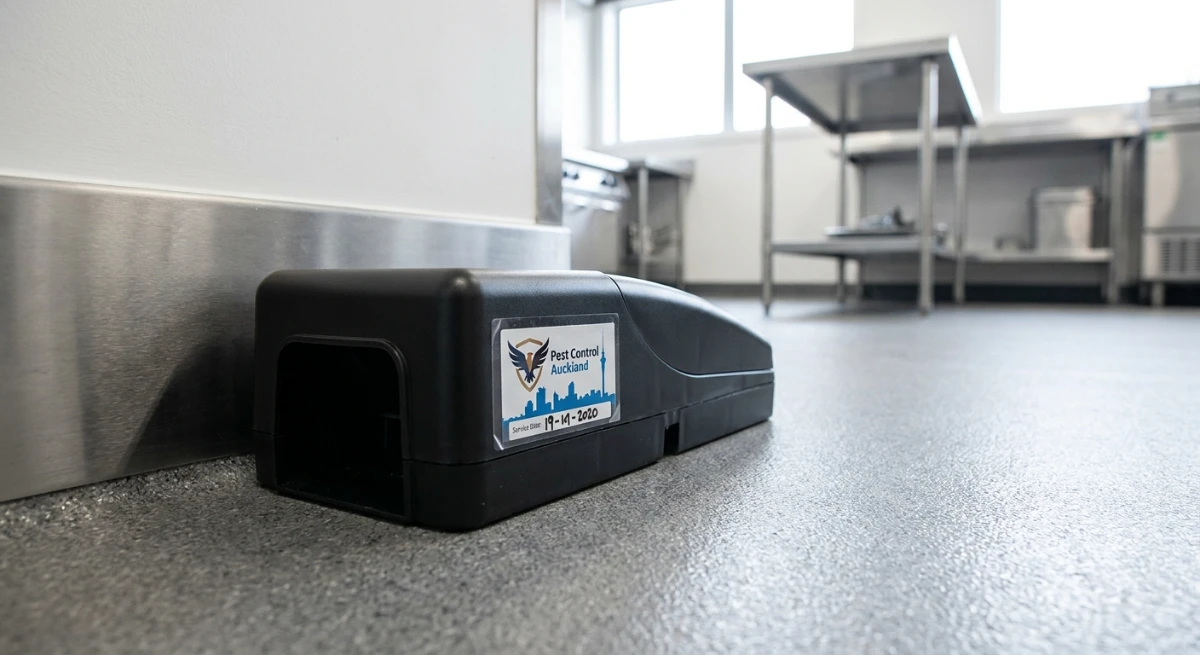
This completely eliminates the risk of a poisoned rat dying and decaying inside a wall cavity near your prep benches. Protecting your hardworking staff is just as critical as protecting your food. Traditional broad-spectrum sprays can leave airborne residues that irritate respiratory systems and cause allergic reactions.
If a staff member falls ill due to improper pesticide application, the business owner is liable under the Health and Safety at Work Act 2015. Our zero-emission treatments and localized gel applications ensure your kitchen remains a safe, breathable environment for your chefs and waitstaff.
We work around your operational hours, ensuring zero downtime and zero contamination risk. Our goal is to be invisible to your customers while providing an impenetrable shield against pests. You get to focus on running a profitable hospitality business, and we handle the structural biosecurity.
Book an Eco-Friendly Kitchen Assessment
Ignoring a minor pest issue in May 2026 is a guaranteed recipe for disaster. The current autumn surge is already pushing urban pest populations to the brink, and a single customer complaint can trigger a devastating health inspection. You need a robust, compliant, and environmentally responsible defense system in place right now.
Our comprehensive commercial assessments identify your structural vulnerabilities before they become headline news. We audit your building integrity, review your current sanitation protocols, and design a custom Integrated Pest Management plan that aligns perfectly with MPI standards.
We do not just spray and walk away. We guarantee our root-cause eradication methods. If the pests return because of a failure in our structural exclusion or treatment protocol, we return and fix it at no extra cost.
We do not just treat the immediate problem; we future-proof your business against it. Stop relying on outdated, toxic methods that put your license and reputation at risk. Partner with a certified, family-owned local expert who understands the exact pressures of the Auckland hospitality sector.
Contact us today to schedule your compliance assessment, and let us lock down your kitchen with our proven, scientific approach. We stand by our work with the Silver Bullet Guarantee, fixing it right the first time so you can get back to business.
- German Cockroaches: Drawn to the motor housings of commercial dishwashers and refrigeration units.
- Roof Rats: Exploit poorly sealed plumbing penetrations and compromised ceiling cavities to access food storage.
- Argentine Ants: Form super-colonies that invade prep benches, requiring targeted, non-repellent baiting strategies.
People Also Ask

About the Author: Ronnie
Founder, Pest Control Auckland · Commercial & Residential Pest Expert · Certified Urban Pest Management Specialist
With years of experience in high-stakes commercial biosecurity and Level 3 Urban Pest Management certification, Ronnie is the definitive expert on Eco-Friendly Commercial Kitchen Pest Management in New Zealand. Having consulted for top-tier Auckland hospitality venues, he specializes in MPI-compliant, zero-emission eradication strategies that protect both food safety and business reputation.