You want a straight answer on pricing. You have heard scratching in the ceiling or found roaches behind the fridge, and you are tired of companies hiding their rates behind a “call us” button. I get it. I am going to tell you exactly what it costs to fix the problem.
More importantly, I am going to tell you what you are actually paying for. There is a massive difference between a guy who shows up to blast your skirting boards with cheap chemicals and a certified technician who finds the entry point and seals it. One is a temporary band-aid; the other is root-cause eradication.
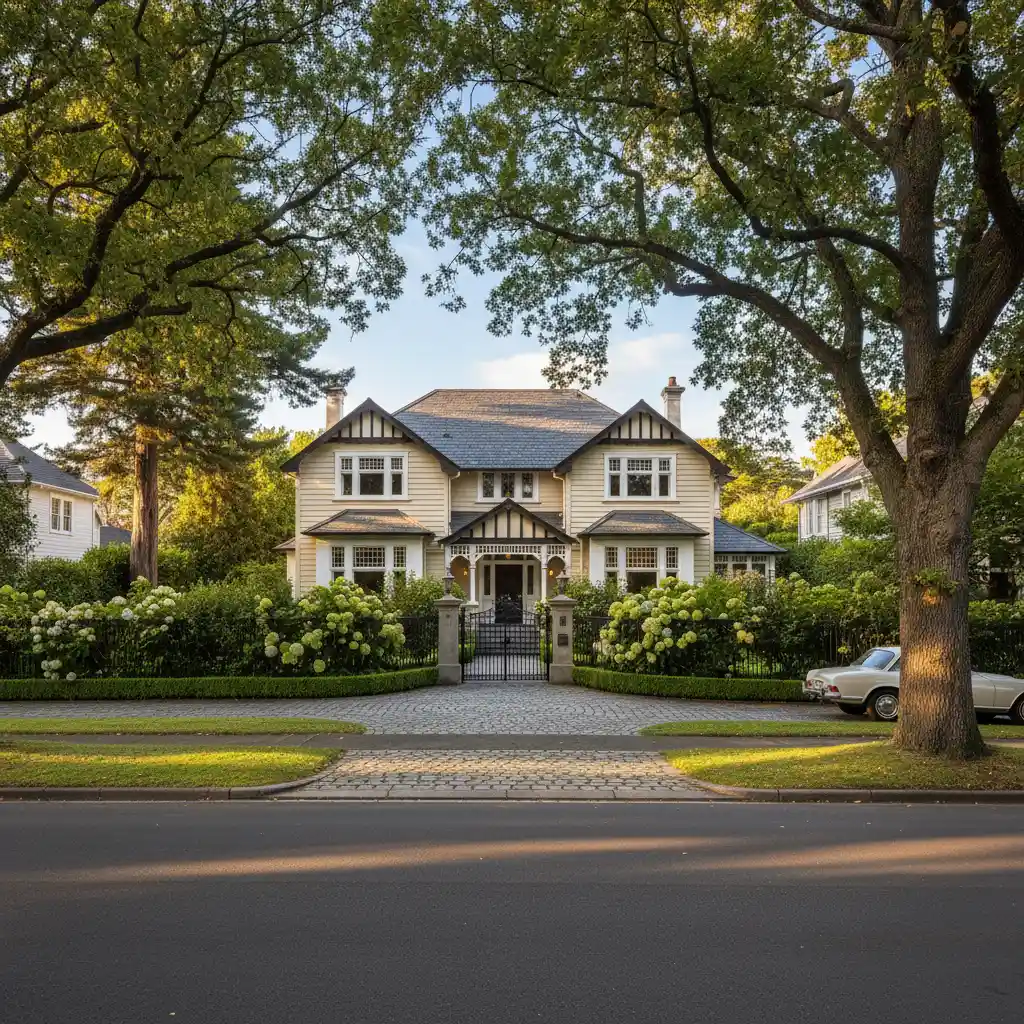
We service the entire Auckland region (see our Hyper-Local Suburb Pages). So whether you are managing a busy cafe out West, looking for Top Rated Pest Control Mt Eden, or you are looking for a Pest Control Parnell quote for a heritage home, the standard of our work does not change. We fix the problem at the source, and we do it by the book.
Key Takeaways
A transparent Parnell pest control quote ranges from $155 to $325 for a standard home. We prioritize root-cause eradication and structural exclusion over temporary chemical sprays. All treatments are performed by Level 3 NZ-certified technicians using MPI-approved, zero-emission methods to ensure long-term safety.
Current Auckland Pricing Benchmarks
Let us cut to the chase. In May 2026, properly treating a standard three-bedroom home in Auckland costs between $155 and $325. If someone is offering to do it for fifty bucks, they are cutting corners that will cost you heavily later.
Prices fluctuate based on the specific pest you are dealing with. Ant treatments usually sit between $160 and $200. Roaches and rodents will run you anywhere from $155 up to $325, depending on the severity of the infestation and how hard it is to access your roof cavity or subfloor.
Bed bugs are a different beast entirely. They generally start around $215 to $265 per room because of the intensive heat and steam sanitation required. When you request a Parnell pest control quote from us, the price we give you is the price you pay. No hidden travel fees, and absolutely no bait-and-switch tactics.
The Cycle of Despair vs. Root-Cause Eradication
Most people try to fix the problem themselves first. They go to the local hardware store, buy a couple of bug bombs, and set them off in the lounge. Two weeks later, the pests are back, and the cycle starts again.
We call this the cycle of despair. Hardware store sprays are mostly repellents. They do not kill the nest; they just panic the colony and push them deeper into your wall cavities. You end up spending more money on failed DIY fixes than you would have on a professional Parnell pest control quote in the first place.
We do not just spray and walk away. We use Predictive Integrated Pest Management (IPM). That means we find out how they are getting in, where they are nesting, and what they are eating. If you do not close the structural door, the pests will just keep walking through it.
Hardware store bug bombs do not fix the nest. They simply push pests deeper into your wall cavities, starting an expensive cycle of despair.
Data-Driven Eradication
Look at the recent success in the Hūnua Ranges. Following targeted 1080 drops in late 2025, rat tracking plummeted to just 1.3%. We apply that same level of systematic, data-driven eradication to your home.
Urban areas require a targeted approach, not just random baiting. We track the pest pathways, identify the food sources, and disrupt their breeding cycle permanently.
Strict Legal Requirements for Technicians
You cannot just let anyone walk into your home and start spraying chemicals. The New Zealand pest control industry is heavily regulated to protect public health and the environment.
Under the EPA HPC Notice 2017 and the Hazardous Substances and New Organisms (HSNO) Act 1996, anyone handling Class 9 ecotoxic substances must be a “Qualified UPM Contractor”. That means holding the New Zealand Certificate in Pest Operations (Level 3).
Every single one of our technicians holds this certification. If you get a cheap quote from a guy operating out of the back of his van, ask to see his Level 3 certificate. If he cannot produce it, he is operating illegally and putting your family at risk.
Always ask to see your technician’s New Zealand Certificate in Pest Operations (Level 3). It is a strict legal requirement for handling Class 9 substances safely.
Biosecurity and the Animal Welfare Act
We also strictly adhere to the Animal Welfare Act 1999. If your treatment plan involves live-capture traps for rodents, the law mandates that these traps must be physically inspected within 12 hours after sunrise every single day.
Furthermore, our operations align with the Auckland Regional Pest Management Plan (RPMP) 2020-2030. We follow strict pathway management protocols to ensure we do not accidentally introduce pests to sensitive areas like the Hauraki Gulf.
If your quote includes live-capture traps, ensure the company physically inspects them within 12 hours of sunrise daily, as required by NZ law.
Commercial Quotes and Hospitality Compliance
Auckland’s hospitality sector is booming, hitting a record $15.99 billion turnover in FY2025. But with that massive growth comes intense scrutiny from the Ministry for Primary Industries (MPI) and local council health inspectors.
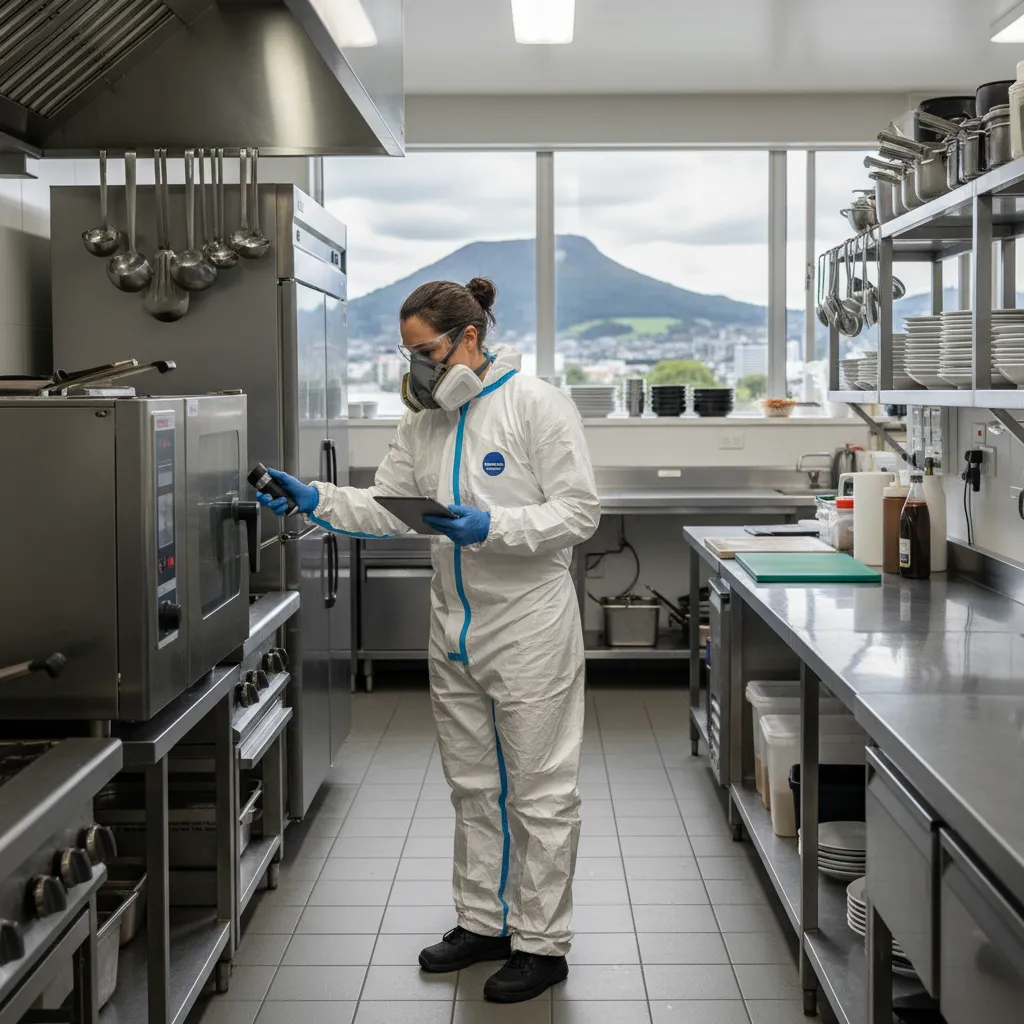
If you run a cafe or restaurant, you know the Food Act 2014 enforces zero-tolerance hygiene standards. You absolutely cannot use toxic rodenticide baits in sensitive food preparation areas. If an auditor finds toxic bait near your prep benches, you will fail your inspection immediately.
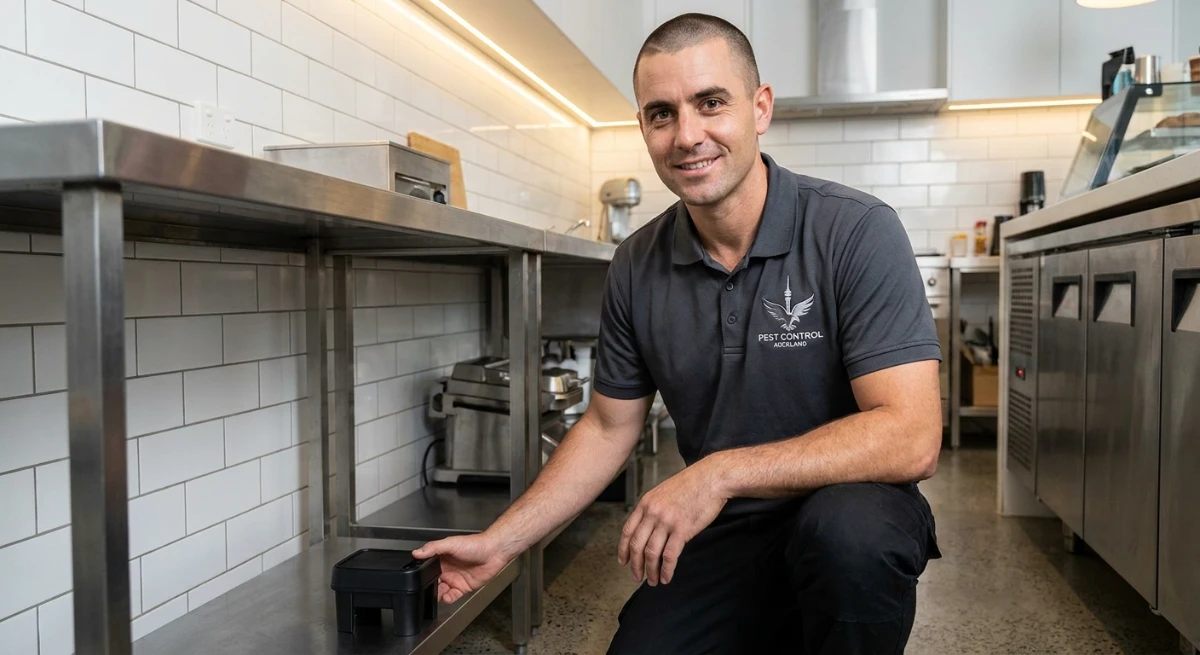
Our commercial quotes focus entirely on compliance and discretion. We use advanced non-toxic monitoring blocks and mechanical multi-catch systems to secure your premises. When we finish, we hand you a bulletproof, HACCP-compliant treatment report that keeps the auditors happy.
The food sector has a zero-tolerance policy under the Food Act 2014. Toxic bait cannot be used in food prep zones. We use non-toxic monitoring exclusively in these areas.
Leading the Industry at FAOPMA 2026
Auckland is gearing up to host the FAOPMA Pest Summit from July 15-17, 2026. Themed ‘FutureProof: Smarter Pest Solutions for a Rapidly Changing World’, this event highlights exactly where the industry is heading.
The old days of indiscriminate chemical spraying are over. The future of commercial pest control relies on digital monitoring, zero-emission treatments, and predictive exclusion. We are already delivering this standard to our Auckland clients today.
Landlord vs. Tenant: Who Foots the Bill?
This is the most common question we get when people call for a quote. Under the Residential Tenancies Act, financial responsibility comes down to timing and cause.
If a tenant moves into a property and finds fleas or rats within the first few weeks, it is generally the landlord’s responsibility to pay for the eradication. The property must be provided in a clean, habitable state from day one.
However, if the tenant has been living there for a year, leaves rubbish piled against the back door, and attracts rodents, the liability shifts entirely. The tenant is responsible for the cost. We provide clear, impartial documentation detailing the likely cause and entry points, which helps resolve Tenancy Tribunal disputes quickly.
| Feature | Standard Exterminator | Pest Control Auckland |
|---|---|---|
| Pricing Model | Hidden until arrival | Transparent, upfront quotes |
| Technician Certification | Often uncertified | Level 3 NZ Certificate (HSNO Compliant) |
| Treatment Approach | Reactive surface spraying | Root-cause structural exclusion (IPM) |
| Documentation provided | Basic invoice | HACCP-compliant treatment reports |
What Happens After You Approve the Quote
Once you accept our Parnell pest control quote, we get straight to work. There is no guesswork involved in our process.
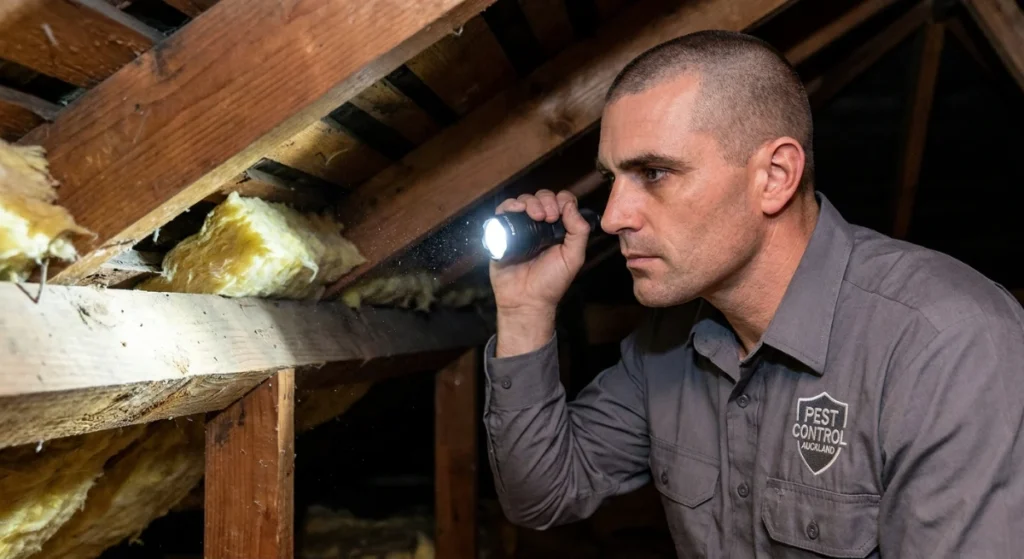
First, we conduct a full perimeter sweep of your property. We check the subfloor, the roof cavity, and every potential entry point. We identify the exact species of pest and the full extent of the infestation before we even open a tool bag.
Next, we apply targeted, zero-emission treatments. We do not blanket-spray your entire house. We treat the specific harborage areas where the pests live and breed. This minimizes chemical use while maximizing effectiveness.
- Inspection: Full structural audit to find the entry points.
- Targeted Treatment: MPI-approved, zero-emission applications applied strictly to harborage zones.
- Exclusion Advice: Clear instructions on which gaps to seal and branches to trim.
- Documentation: Full written reports for landlords or commercial health auditors.
Finally, we give you a clear prevention plan. We tell you exactly which branches need trimming and which gaps need sealing to keep them out for good. We fix the problem once, so you do not have to keep calling us back.
People Also Ask

About the Author: Ronnie
Founder, Pest Control Auckland · Commercial & Residential Pest Expert · Certified Urban Pest Management Specialist.
With years of experience in structural pest exclusion and commercial HACCP compliance, Ronnie is the definitive expert to write about securing a reliable Parnell Pest Control Quote. Having consulted for major Auckland hospitality venues and navigated complex Tenancy Tribunal pest disputes, he provides straight-talking, legally accurate advice you can trust.