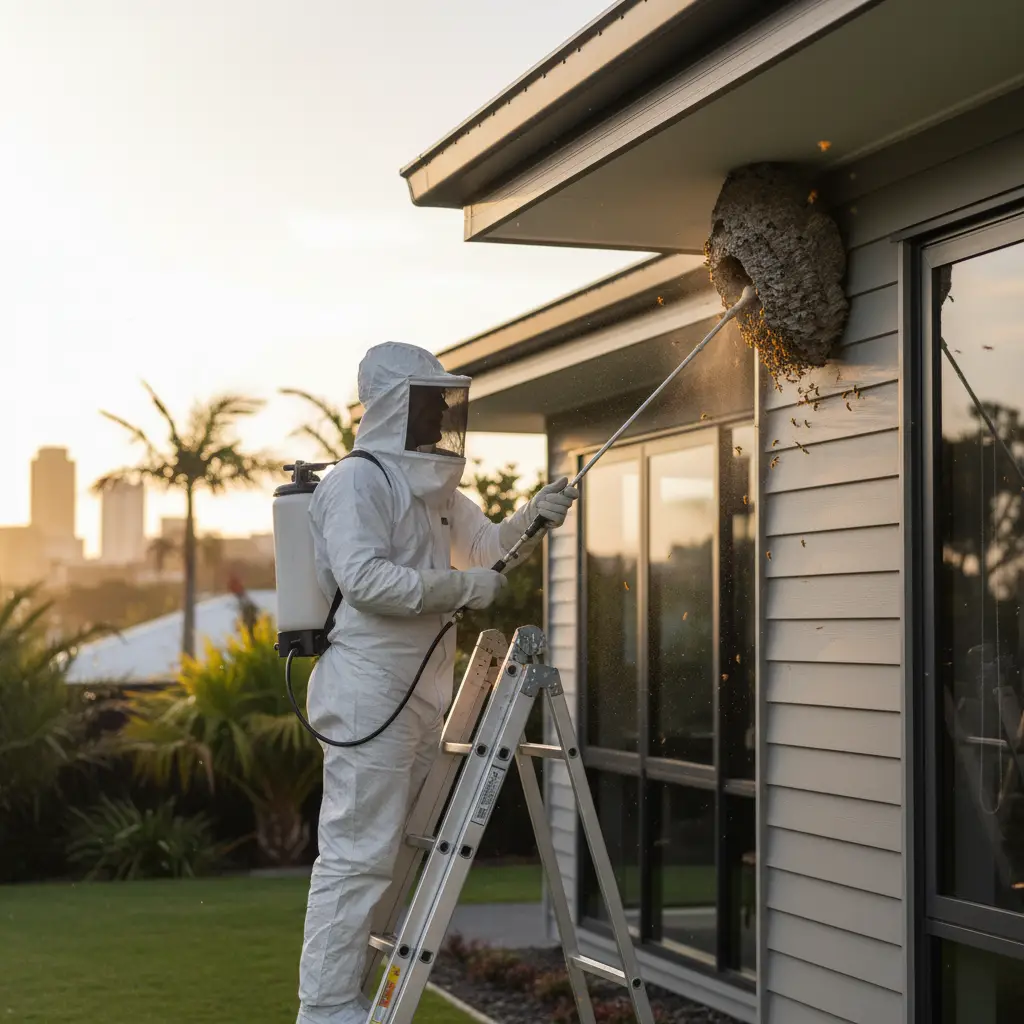
Wasp control in Rodney requires a strategic approach combining nest identification, targeted insecticidal dusting, and area-wide baiting to eliminate aggressive German and Common wasp colonies. To effectively manage these pests in residential and rural environments, professional exterminators utilize specialized equipment to treat nests located in wall cavities, ground voids, and dense vegetation without provoking dangerous swarms.
The Rodney District, with its unique blend of coastal residential hubs and sprawling rural landscapes, presents a specific set of challenges when it comes to pest control. Unlike the dense urban environment of central Auckland, Rodney provides the perfect breeding ground for invasive wasp species due to the abundance of native bush, agricultural land, and lifestyle blocks. The presence of these pests is not merely a nuisance; it poses a significant health and safety risk to residents, livestock, and the local ecosystem.
As summer peaks and transitions into autumn, wasp biomass reaches its highest levels. In the Rodney area, this often manifests as massive colonies of German and Common wasps competing for food sources. Whether you are situated in the suburban streets of Orewa or managing a lifestyle block in Dairy Flat, understanding the behavior of these pests is the first step toward effective eradication. This guide serves as the definitive resource for wasp control in the region, offering professional insights into safe removal and long-term management.
Understanding the Wasp Threat in the Rodney District
New Zealand has some of the highest densities of wasp populations in the world, and the Rodney District is a microcosm of this national issue. The two primary culprits causing distress for homeowners and farmers are the German Wasp (Vespula germanica) and the Common Wasp (Vespula vulgaris). Both species are aggressive, carnivorous, and capable of stinging repeatedly, unlike honeybees which die after a single sting.
In the micro-climate of the Rodney District, mild winters often allow wasp colonies to survive longer than usual, sometimes leading to “overwintering” nests. These nests can grow to gargantuan sizes, housing tens of thousands of worker wasps. The mix of residential gardens in Whangaparaoa and the agricultural expanse of Kumeu provides an endless supply of carbohydrates (fruit, nectar) and protein (insects, carrion), fueling rapid colony expansion.

It is crucial to distinguish these pests from bees and Paper Wasps. Paper Wasps are generally less aggressive and build small, umbrella-shaped nests hanging from eaves or vegetation. While they can sting, they do not swarm with the same ferocity as Vespula species. German and Common wasps, however, will vigorously defend their nests if disturbed, releasing alarm pheromones that trigger a mass attack. For authoritative information on the impact of these invasive species on New Zealand’s biodiversity, you can refer to the Department of Conservation (DOC).
Identifying Wasp Nests: Ground vs. Tree vs. Structural
Locating the nest is the most critical part of the extermination process, yet it is also the most dangerous. In Rodney, nest locations vary significantly based on the terrain.
Ground Nests
Ground nests are particularly common in rural and semi-rural areas like Silverdale and Wainui. German wasps frequently utilize abandoned rodent burrows or hollows in tree roots to build their colonies. These nests are notoriously difficult to spot, often revealed only by a stream of wasps entering and exiting a small hole in the earth. The danger of ground nests lies in vibration; walking heavily or mowing the lawn near an entrance can trigger an immediate swarm.
Structural Nests (Wall Cavities and Roof Voids)
In residential areas such as Orewa and Red Beach, wasps often exploit gaps in cladding, weep holes, or eaves to build nests inside wall cavities or roof spaces. These are among the most difficult to treat for homeowners because blocking the entrance hole—a common DIY mistake—often forces the wasps to chew through the interior drywall, entering the living space of the home. Professional treatment involves injecting insecticidal dust into the entry point, allowing the returning workers to carry the poison into the heart of the nest.
Tree and Bush Nests
While less common for German wasps, Common wasps and Asian Paper Wasps will build nests in dense vegetation, hedges, or hollow trees. In the lifestyle blocks of Rodney, overgrown gorse or blackberry bushes often conceal large nests. Trimming hedges without checking for wasp activity first is a frequent cause of stinging incidents in the district.
Managing Large Wasp Populations in Rural Areas
Rural wasp control differs vastly from residential extermination. In areas like Helensville, Coatesville, and Kaukapakapa, the sheer volume of land makes finding every individual nest impossible. Here, the strategy shifts from “search and destroy” to area-wide management.
Large wasp populations on rural land deplete food sources for native birds and bees. They attack beehives, robbing honey and killing larvae, which is a significant concern for local apiarists. Managing these populations often requires a collaborative approach among neighbors.
One of the most effective tools for rural control is the use of targeted bait stations. Unlike spraying, which kills only the wasps it touches, baiting relies on the social behavior of wasps. Foragers carry protein-based toxic bait back to the colony to feed the larvae. The larvae then secrete a sugary substance consumed by the queen and workers, effectively poisoning the entire colony from the inside out. This method is highly effective in reducing wasp biomass across large acreages where nests are hidden in deep bush.
Farm and Lifestyle Block Pest Control Strategies
Owners of lifestyle blocks and farms in the Rodney District face unique liabilities regarding wasp infestations. Wasps pose a severe threat to livestock; horses and cattle can be stung in the mouth or throat while grazing, leading to swelling and potential asphyxiation. Furthermore, health and safety regulations require landowners to provide a safe environment for workers and contractors.
Integrated Pest Management (IPM) for Farms:
- Spring Trapping: The most proactive measure is trapping queen wasps in early spring (September/October) as they emerge from hibernation. Every queen caught represents a potential nest of thousands prevented.
- Rubbish Management: Open compost heaps and fallen fruit in orchards are magnets for wasps. Regular clearing of fallen fruit and sealing off waste reduces the attractiveness of the property.
- Regular Monitoring: Establishing a routine of walking fence lines and checking banks for flight paths during early summer can help identify nests before they reach peak size in autumn.

Professional Removal Methods: Dusting, Spraying, and Baiting
Professional pest control technicians in Rodney employ three main methods to ensure complete eradication of wasp infestations. The choice of method depends entirely on the location and accessibility of the nest.
Insecticidal Dusting
This is the gold standard for nests located in wall voids, roof spaces, or underground burrows. A specialized powder, often containing Permethrin or Carbaryl, is injected into the nest entrance using a dusting lance. The dust is not an instant contact killer; instead, it adheres to the bodies of the wasps. As they enter the nest, they contaminate the interior galleries. The agitation causes the wasps to frenzy, spreading the dust further until the queen and the colony collapse. This method is preferred because it does not require the nest to be physically removed, which is often impossible in building voids.
Targeted Spraying
Liquid insecticides are used primarily for hanging nests or exposed nests where immediate knockdown is required. This is often necessary if a nest is in a high-traffic area where waiting for dust to work (which can take 24 hours) is not an option. However, spraying is generally less effective for hidden nests as the liquid may not penetrate deep enough into a complex underground burrow.
Vespex Baiting
Vespex is a specialized bait designed specifically for wasps in New Zealand. It is not available to the general public without a license. Approved handlers can deploy bait stations that attract wasps but are not attractive to bees, ensuring pollinator safety. This is the premier solution for lifestyle blocks in Rodney with heavy infestations where locating individual nests is unfeasible.
Service Areas: Orewa, Whangaparaoa, Silverdale & Beyond
Effective wasp control requires local knowledge of terrain and housing types. The Rodney District encompasses diverse environments, each with specific pest pressures.
Orewa and Red Beach: These coastal suburbs feature older homes with timber joinery and weatherboards, offering ample gaps for wasps to enter wall cavities. The proximity to the beach and public parks also means high interactions between humans and scavenging wasps.
Whangaparaoa Peninsula: The peninsula’s microclimate is often slightly warmer, encouraging longer wasp seasons. The dense residential nature means that a nest in one property often impacts several neighbors. Quick, decisive treatment is necessary to prevent neighborhood disputes and safety hazards.
Silverdale and Millwater: The rapid development in these areas involves significant earthworks. Disturbed soil often attracts queens looking for easy burrowing sites. New builds are not immune; wasps frequently nest in retaining walls and weep holes of modern brick homes.
Kumeu, Huapai, and Waimauku: These areas are characterized by vineyards, orchards, and lifestyle blocks. The abundance of fruit and sugary crops makes wasp control essential for economic reasons, not just safety. High sugar availability leads to hyper-aggressive behavior in late summer.
Safety First: The Risks of DIY Wasp Control
Many homeowners in Rodney attempt to treat wasp nests themselves using store-bought aerosol cans or, worse, petrol and fire. These methods are strongly discouraged by safety experts.
The Dangers of Petrol: Pouring petrol down a nest hole is an environmental hazard that contaminates groundwater. Furthermore, it is a fire risk and often fails to kill the pupae deep in the nest, leading to re-emergence.
The Aerosol Fallacy: Supermarket sprays are effective on individual insects but lack the pressure and residual toxicity to destroy a mature nest of 5,000+ wasps. Spraying a nest entrance often results in the user being swarmed before the chemical takes effect.
Anaphylaxis: Wasp venom is a potent allergen. Even if you have never had a reaction before, sensitization can occur. Multiple stings can induce anaphylactic shock, a life-threatening condition requiring immediate medical attention. Given the semi-rural nature of Rodney, ambulance response times can vary, making the risk of DIY removal unacceptable.
Preventative Measures for Future Seasons
Once a nest has been treated and removed, preventing recurrence is the next goal. While you cannot completely stop wasps from flying onto your property, you can make your home less inviting.
- Seal Entry Points: Inspect your home in winter for cracks in mortar, gaps around pipe penetrations, and loose weatherboards. Seal these with silicone or caulk.
- Cover Food Sources: Ensure outdoor rubbish bins have tight-fitting lids. If you have fruit trees, pick up fallen fruit daily.
- Wasps Hate Peppermint? While often touted as a natural deterrent, planting peppermint or using essential oils has limited efficacy against established colonies but may help deter scouting queens in early spring.
For more information on identifying pests and understanding their lifecycle, Te Ara – The Encyclopedia of New Zealand offers comprehensive historical and biological context.
In the Rodney District, professional intervention is the safest and most effective route. Whether you have a massive ground nest in a paddock or a hidden colony in your Orewa home’s ceiling, expert controllers have the protective gear and industrial-grade products to neutralize the threat instantly.
People Also Ask
How much does wasp removal cost in Rodney?
The cost for professional wasp removal in Rodney typically ranges from $180 to $350 NZD, depending on the accessibility of the nest and the method required (dusting vs. spraying). Rural properties requiring extensive baiting or multiple nest treatments may incur higher fees.
What is the best time of day to treat a wasp nest?
The best time to treat a wasp nest is late evening or very early morning. At these times, the majority of the worker wasps have returned to the colony, and their activity levels are lower due to cooler temperatures, ensuring a more complete eradication.
Do wasps return to a treated nest?
No, wasps will not return to a nest that has been successfully treated with professional insecticidal dust. However, if the nest was not fully destroyed, survivors may attempt to rebuild nearby. New queens will not reuse an old nest the following season; they always build a new one.
How do I get rid of a wasp nest in the ground?
Getting rid of a ground nest requires injecting insecticidal dust directly into the entrance. Do not pour petrol or water into the hole, as this is dangerous and ineffective. It is highly recommended to hire a professional, as ground vibrations can trigger an aggressive swarm attack.
Are wasps protected in New Zealand?
No, introduced wasp species such as German, Common, and Paper wasps are not protected in New Zealand. They are considered invasive pests that threaten native biodiversity and agriculture, and there are no restrictions on their control or removal.
What is the difference between a bee and a wasp?
Bees are generally hairier, rounder, and feed on pollen and nectar, playing a crucial role in pollination. Wasps are smoother, more slender with a distinct waist, and are often carnivorous scavengers. Unlike honeybees, wasps can sting multiple times without dying.