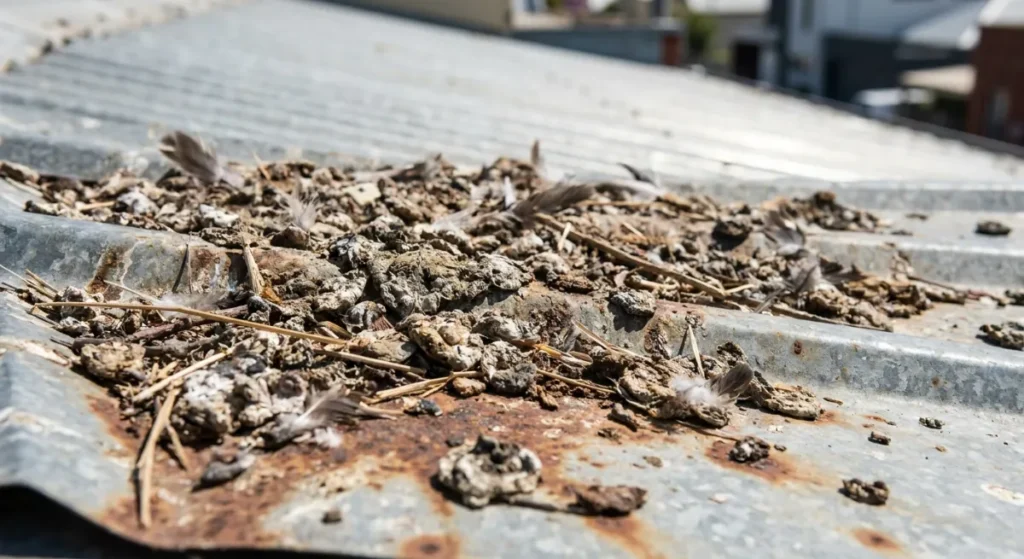
You hear it before you see it. That frantic, heavy scratching and low cooing echoing through your roof cavity at 4 AM. By the time you spot the acidic white streaks ruining your gutters and weatherboards, a flock of feral pigeons has already decided your Auckland home is their new permanent residence.
I am Ronnie, founder of Pest Control Auckland. As a certified urban pest management specialist, I spend my days fixing the structural vulnerabilities that let pests inside. When it comes to birds, I have seen every botched DIY job in the city. Homeowners waste hundreds of dollars on cheap plastic owls and shiny CDs, only to watch pigeons build nests right on top of them.
Right now, in May 2026, we are dealing with a massive autumn pest surge. The temperature is dropping, and urban birds are aggressively seeking warmth. If you want to actually solve this, you need to stop messing around with temporary harassment and focus on structural exclusion. Here is exactly how we get rid of pigeons on roof structures permanently, safely, and legally.
Key Takeaways
To effectively get rid of pigeons on roof surfaces, you must abandon DIY visual deterrents and install permanent structural exclusion. Use commercial-grade bird spikes, heavy-duty netting, and seal all entry points. Feral pigeons are unprotected in NZ, but professional guano removal prevents toxic exposure and secondary mite infestations.
The DIY Cycle of Despair: Why Fake Owls and Plastic Snakes Fail
The first thing most homeowners do when they hear scratching in the roof is head to the local hardware store. They buy plastic owls, rubber snakes, and ultra-sonic noise emitters. I call this the “Cycle of Despair.”
These products rely entirely on fear and novelty. The problem is that feral pigeons (Rock Doves) are incredibly adaptable urban survivors. They have lived alongside humans for centuries and are not easily spooked for long.
If you want to get rid of pigeons on your roof, you have to accept that visual scare tactics have a shelf life of about 48 hours. After that, the birds realise the threat is entirely hollow.
The Science of Bird Habituation
Habituation is a biological process where an animal learns to ignore a stimulus after repeated exposure without any negative consequence. A plastic owl sitting on your chimney does not move, does not make noise, and does not attack.
Within a few days, pigeons will literally perch on the plastic owl’s head. They figure out the game quickly. The same goes for ultrasonic devices; birds simply adjust to the frequency or move slightly out of its narrow range.
Unlike the native Kererū (New Zealand Pigeon), feral pigeons are an introduced species and are listed as unprotected under Schedule 5 of the Wildlife Act 1953. This means we can legally exclude, trap, and manage them. However, the Animal Welfare Act 1999 dictates that all pest control must be humane.
Professional, Root-Cause Solutions for Roof Pigeons
At Pest Control Auckland, we do not waste time trying to scare birds. We use an entomological and structural approach to physically lock them out. If they cannot land, they cannot nest. It is that simple.
This is what we call our “Silver Bullet Guarantee.” We focus entirely on root-cause eradication. That means identifying exactly where they are getting in and installing heavy-duty barriers to stop them.
Identifying the Primary Roosting and Entry Points
Pigeons are lazy. They want high, flat, sheltered areas that require minimal effort to access. The first step to get rid of pigeons on roof areas is a comprehensive structural audit.
- Solar Panels: The gap between the panel and the roof tile is the ultimate pigeon penthouse. It provides warmth and protection from the rain.
- Roof Valleys and Gutters: These areas collect debris naturally, providing a solid foundation for nesting materials.
- Soffit Gaps and Broken Eaves: A missing piece of timber is an open invitation straight into your dry, insulated roof cavity.
Installing Permanent Structural Deterrents
Once we find the entry points, we deploy commercial-grade exclusion hardware. This is not the cheap plastic stuff you find in domestic hardware aisles.
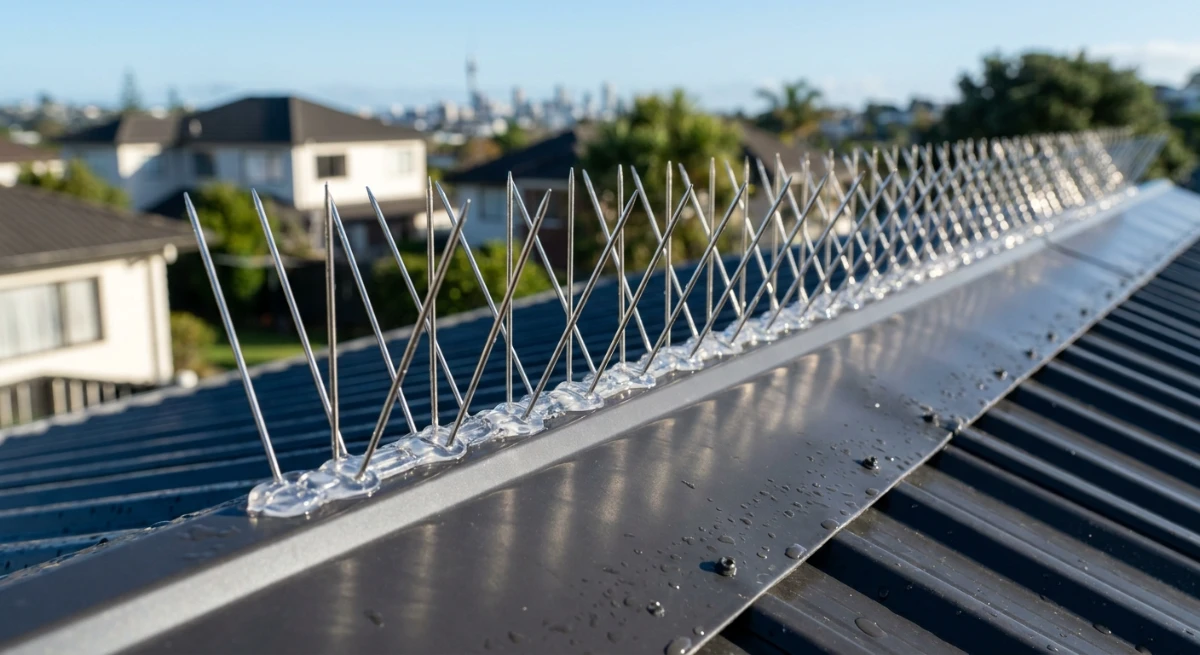
We use marine-grade stainless steel bird spikes on ledges and ridge caps. For solar panels, we install UV-stabilised exclusion mesh that wraps around the entire array, physically blocking the birds from getting underneath.
If you have solar panels, check underneath them immediately. If you see twigs, droppings, or hear scratching, you need professional exclusion mesh installed before the acidic guano damages your roof membrane and wiring.
Autumn Roof Protection: Stopping Pigeons Seeking Shelter
As we sit here in May 2026, Auckland is experiencing a harsh autumn pest surge. The previous mild winter allowed urban bird populations to swell, and now they are desperately seeking shelter from the cold.
Under the Auckland Council Animal Management Bylaw 2015, property owners must ensure animals do not cause a nuisance or risk to public health. Ignoring a pigeon infestation on your roof is not just a noise issue; it is a compliance failure.
This is why our “Auckland Winter Defense” preventative plans are so crucial. We seal the roof cavities before the temperature drops further, ensuring your home remains a fortress against nesting birds and rodents.
| Method | Effectiveness | Lifespan | Best Use Case |
|---|---|---|---|
| Plastic Owls / Fake Snakes | Very Low | 48 Hours | Wasting money at the hardware store |
| Ultrasonic Devices | Low | 1-2 Weeks | Small, enclosed, unoccupied sheds |
| Stainless Steel Spikes | High | 10+ Years | Roof ridges, commercial ledges, gutters |
| Solar Panel Exclusion Mesh | Maximum | Permanent | Sealing underneath solar arrays |
When to Call a Level 3 Qualified UPM Contractor
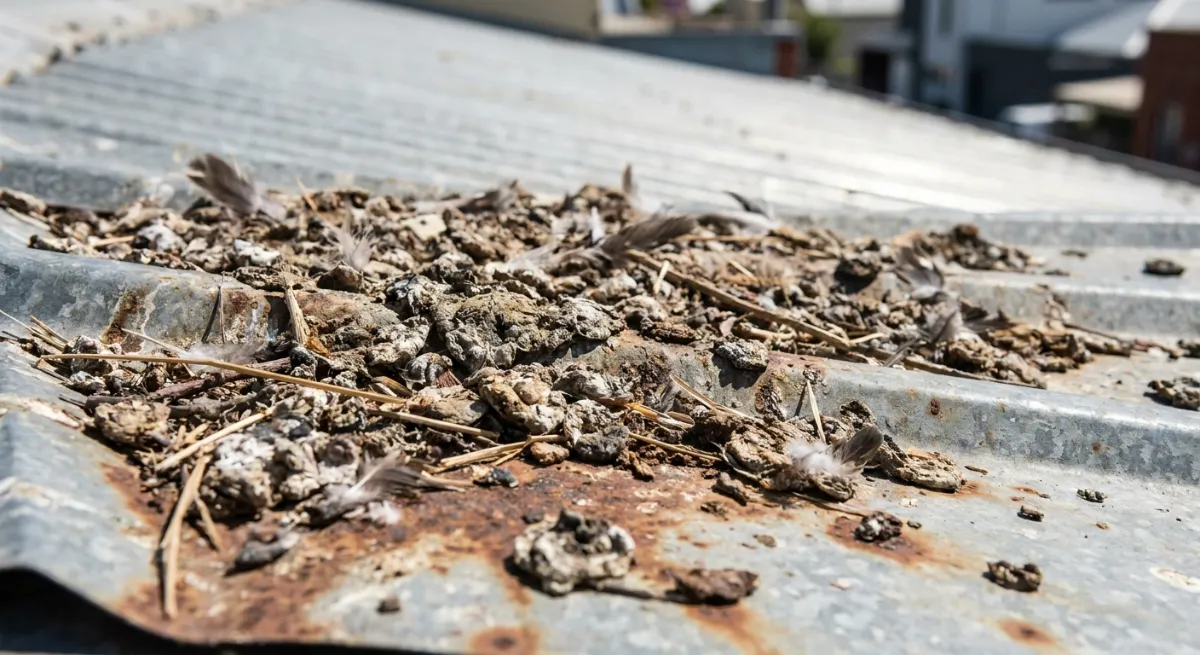
Excluding the birds is only half the job. The mess they leave behind is highly toxic and structurally damaging. Pigeon guano has a pH level of 3.0 to 4.5, making it acidic enough to etch concrete and corrode metal roofing over time.
Attempting to clean dry pigeon guano yourself without a respirator is incredibly dangerous. This is where a Level 3 Qualified Urban Pest Management (UPM) contractor steps in.
We carry the correct safety gear, HEPA-filtered vacuums, and MPI-approved sanitisation chemicals to neutralise the biohazard safely. If you try to sweep it up with a kitchen broom, you are just launching toxic spores straight into your lungs.
Dry pigeon droppings carry airborne fungal spores that cause Histoplasmosis and Cryptococcosis. Inhaling these spores can lead to severe respiratory infections. Never dry-sweep bird guano in an enclosed roof cavity.
Safe Guano Removal and Mite Eradication
Wherever there are pigeons, there are bird mites. These microscopic parasites live on the birds and in their nesting materials. When we get rid of pigeons on roof structures, the primary food source for these mites vanishes.
Desperate for a meal, the mites will migrate down through your ceiling cracks and light fittings, straight into your living areas and bedrooms. They bite humans, causing intense itching and skin irritation.
At Pest Control Auckland, our service does not stop at the roofline. After physically excluding the birds and removing the guano, we apply a targeted, zero-emission insecticidal treatment to the roof void to eradicate the secondary mite infestation before it reaches your family.
Frequently Asked Questions

About the Author: Ronnie
Founder, Pest Control Auckland · Commercial & Residential Pest Expert · Certified Urban Pest Management Specialist
With years of hands-on experience in Auckland’s unique urban environment, Ronnie is the definitive expert to write about how to get rid of pigeons on roof structures. Having consulted for major commercial properties and successfully excluded thousands of pest birds, his scientific, structural approach guarantees long-term results over temporary DIY failures.