Waking up to the sound of rats scurrying in your roof cavity is a fast way to ruin your morning. But the argument that inevitably follows over who pays the professional pest control bill usually causes an even bigger headache.
Right now, in the middle of a massive May 2026 autumn pest surge across the region, the standoff between renters and property owners is happening daily. I will tell you plainly what is going on. The law does not care about your feelings, and it certainly does not care who noticed the bugs first.
It cares entirely about timing, daily hygiene, and the structural integrity of the house. If you are looking for the absolute truth on Tenant’s Rights & Obligations Regarding Pests in Auckland, you are in the right place. We are going to look at exactly who is legally liable, how to prove it, and how to get the bugs gone permanently without wasting money on cheap hardware store sprays.
Key Takeaways
Under New Zealand law, landlords must provide a pest-free home at move-in and seal structural entry points. Tenants are financially liable if their poor hygiene or pets cause the infestation. When an infestation occurs mid-tenancy with no clear fault, costs are typically shared or covered by the landlord.
The Harsh Reality of Auckland’s 2026 Pest Surge
Let us look at the facts on the ground. Right now, Auckland is experiencing a massive shift in urban pest behaviour. A mild winter last year followed by a scorching summer has created an absolute explosion in rodent and insect numbers.
While regional biosecurity efforts are working in the wild—like the recent success in the Hūnua Ranges where rat tracking plummeted to just 1.3%—urban areas are taking a massive hit. Rodents are getting pushed out of natural reserves and are actively looking for warmth inside your sub-floors and wall cavities.
This influx is exactly why disputes over Tenant’s Rights & Obligations Regarding Pests in Auckland are currently flooding the Tenancy Tribunal. When the temperature drops, rats stop foraging outside and treat your rental property like a warm, dry hotel.
With Auckland preparing to host the FAOPMA Pest Summit in July 2026, the industry focus has shifted entirely toward predictive Integrated Pest Management (IPM). The days of reactive, toxic spraying are over. We now focus on stopping pests before they breach your walls.
The Law: Residential Tenancies Act 1986
New Zealand’s tenancy laws are crystal clear when it comes to the baseline condition of a rental property. The Residential Tenancies Act 1986 (RTA) governs every single rental agreement in the country.
It dictates that landlords must provide a safe, habitable, and pest-free environment from day one. Furthermore, the Healthy Homes Standards mandate specific draught-stopping measures, which incidentally act as a first line of defence against pest exclusion.
However, the RTA also places strict obligations on the people living inside the home. You cannot live in filth and expect the property owner to bail you out when the cockroaches arrive.
Understanding your Tenant’s Rights & Obligations Regarding Pests in Auckland means recognizing that liability is almost always determined by the root cause of the infestation. We do not just spray chemicals; we investigate exactly how and why the pests got inside in the first place.
Never withhold your rent payment in retaliation for a landlord refusing to pay for pest control. This is a direct breach of the RTA and gives the landlord legal grounds to evict you, regardless of the pest issue.
When the Landlord is Legally Liable
If you move into a new rental and spot a German cockroach scurrying across the kitchen counter within the first week, the landlord pays. The law states the property must be handed over in a clean, pest-free condition.
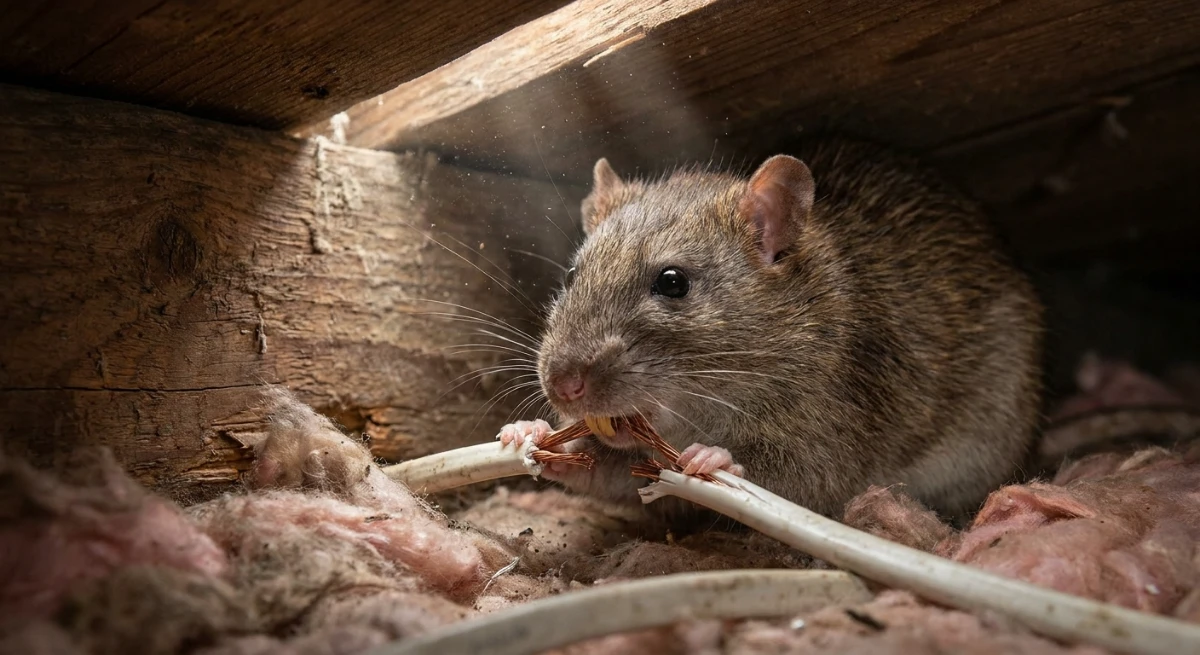
Landlords are also entirely responsible for structural maintenance. If a rat chews its way through a rotten piece of timber in the eaves, or mice are entering through a broken sub-floor vent, the landlord must cover the eradication costs.
They failed to secure the building envelope. When we inspect a property, we look for these exact structural failures. If the building itself invited the pests inside, we document it clearly for your records.
This documentation makes it very easy to prove landlord liability under the current guidelines for Tenant’s Rights & Obligations Regarding Pests in Auckland. Property investors must protect their assets by fixing these vulnerabilities immediately.
When the Tenant is Forced to Pay
Let us be completely honest. Not every infestation is the landlord’s fault. If you have been living in the property for over a year and suddenly develop a massive ant problem, you need to look at your own habits first.
Leaving food scraps on the bench, letting rubbish bags pile up against the back door, or failing to clean up pet waste will attract pests immediately. If our technicians trace the root cause of an infestation back to poor hygiene or lifestyle choices, the tenant is legally required to foot the bill.
There are three incredibly common ways tenants accidentally cause infestations in Auckland rentals:
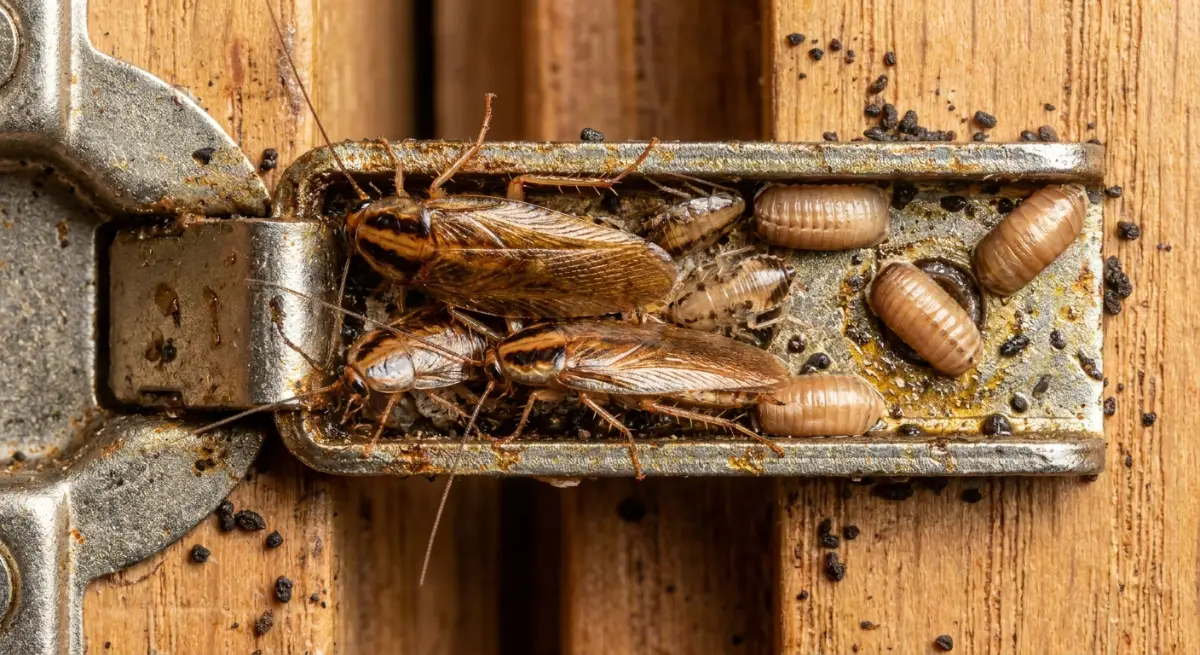
- Second-hand appliances: Buying a used fridge or microwave online is the number one way tenants introduce German cockroaches into a clean rental.
- Pet ownership: Failing to maintain regular flea treatments for your cats or dogs will quickly result in a carpet infestation.
- Improper waste storage: Leaving open rubbish bags outside instead of using a sealed council bin is an open invitation for rodents.
If you own a pet, most tenancy agreements in Auckland explicitly state that you must pay for a professional end-of-tenancy flea treatment when you move out.
If your lease requires a flea spray upon moving out, ensure you hire a Level 3 UPM certified technician. DIY hardware store bombs will not satisfy the property manager’s requirements and you will end up paying twice.
The Mid-Tenancy Grey Area: Who Blinks First?
This is where the vast majority of arguments happen. You have lived in the house for two years, the place is reasonably clean, there are no obvious structural holes, but you still have rats in the ceiling.
Under the RTA, if an infestation occurs mid-tenancy and neither party is clearly at fault, it is a legal grey area. In these situations, landlords and tenants usually agree to split the cost of the exterminator to get the problem resolved quickly.
Smart property managers know that ignoring the problem will only lead to severe property damage. Rats will chew through electrical wiring, destroy insulation, and ruin gib board.
It is always cheaper for a landlord to pay for a preventative pest treatment than to replace a switchboard that caught fire due to chewed wires.
| Infestation Scenario | Who Pays? | Legal Reasoning |
|---|---|---|
| Pests present on move-in day | Landlord | Property must be habitable and pest-free at the start of tenancy. |
| Rats entering through broken roof tiles | Landlord | Failure to maintain the structural envelope of the building. |
| Cockroaches from a second-hand fridge | Tenant | Tenant introduced the pests into the property. |
| Flea infestation from a pet dog | Tenant | Directly caused by the tenant’s lifestyle and pet ownership. |
| Mid-tenancy ants with no clear cause | Shared / Negotiated | Grey area under the RTA; costs are typically split to resolve quickly. |
The Real Cost of Pest Control in Auckland
When people ask me about pricing, I give it to them straight. You are looking at roughly $155 to $325 for a standard three-bedroom home in Auckland. The exact price depends entirely on the type of pest and the severity of the infestation.
Rodent extraction and baiting usually sits at the lower end of that scale, while complex German cockroach eradications will push closer to the $325 mark. Bed bugs are an entirely different beast and are usually priced per room because of the intense labour required.
Do not waste your time hunting for the absolute cheapest quote online. Cheap spray jockeys will walk in, spray a generic chemical around your skirting boards, and leave ten minutes later. They never find the nest, and they never seal the entry points.
By hiring a certified Urban Pest Management specialist, you are paying for root-cause eradication. We fix the problem once, saving you from the ongoing cost of repeated, failed treatments.
If you are a tenant running a registered home-based food business, your pest control requirements are significantly stricter. You cannot use toxic rodenticide bait in food prep areas, requiring professional non-toxic monitoring systems.
Escaping the DIY Cycle of Despair
Most renters try to solve the problem on the cheap first. You head to the local hardware store, buy a few aerosol bug bombs, and hope for the best. I call this the DIY Cycle of Despair, and it rarely works.
Those store-bought cans only kill the bugs that are out in the open. They do absolutely nothing to the breeding nests hidden deep inside your wall cavities or sub-floors. A few weeks later, the eggs hatch, and the problem is back.
Furthermore, if you try to handle rodents yourself, you must adhere to the Animal Welfare Act 1999. If you set a live-capture trap, you are legally required to inspect it within 12 hours after sunrise every single day.
If you fail to check your traps and an animal suffers, you can face severe fines. It is simply not worth the risk when a professional can manage the exclusion legally and humanely.
Action Plan: What to Do Today
If you see a rat, mouse, or a trail of ants in your rental today, stop what you are doing and take a photo. Evidence is everything when it comes to determining Tenant’s Rights & Obligations Regarding Pests in Auckland.
Next, send that photo directly to your landlord or property manager in writing. Do not just call them; you need a paper trail. Ask them politely to arrange a professional pest inspection to determine the root cause of the intrusion.
Follow these exact steps to protect yourself:
- Document everything: Take clear, date-stamped photos of the pests, droppings, or property damage.
- Notify immediately: Email your property manager the exact details. Phone calls leave no legal paper trail.
- Request an inspection: Ask for a certified UPM technician to assess the property and determine the root cause.
- Issue a Notice to Remedy: If the landlord ignores a clear structural defect, use the official Tenancy Services form to demand action.
If they refuse to act, and you believe a structural fault is to blame, you can issue a 14-day Notice to Remedy. This is a formal legal document that forces the landlord to address the maintenance issue or face the Tenancy Tribunal.
Always insist on a certified Urban Pest Management (UPM) technician. We do not just treat the symptoms; we find the entry points, seal them up, and provide a written report that satisfies both the landlord and the Tenancy Tribunal.
Frequently Asked Questions

About the Author: Ronnie
Founder, Pest Control Auckland · Commercial & Residential Pest Expert · Certified Urban Pest Management Specialist
With years of experience inspecting thousands of properties across the region, Ronnie is the definitive expert on Tenant’s Rights & Obligations Regarding Pests in Auckland. Having consulted for both major property management firms and private tenants, he understands exactly how the Residential Tenancies Act applies to real-world structural and hygiene-based infestations.