G’day. If you run a business in this city right now, you already know the pressure is on. New Zealand’s hospitality sector just hit a record $15.99 billion turnover, and with a huge chunk of that money moving through local cafes, restaurants, and warehouses, the Ministry for Primary Industries (MPI) is not messing around.
We recently had a ridiculously mild winter followed by a scorching summer, and now this autumn 2026 pest surge is pushing rodents and roaches straight indoors. I see it every single day on the job. Business owners panic, buy some cheap spray from the hardware store, and think they have solved the problem.
Let me be clear: that outdated nonsense will get your doors shut. When it comes to commercial pest management in Auckland, the old “spray and pray” method is completely dead. Today, staying open requires a highly scientific, root-cause approach that guarantees strict legal compliance.
Key Takeaways
Effective commercial pest management in Auckland requires Predictive Integrated Pest Management (IPM) to ensure strict compliance with the Food Act 2014 and MPI standards. We focus on root-cause structural exclusion, non-toxic monitoring, and zero-emission treatments to protect your business reputation and keep you legally compliant.
The Legal Reality: Food Act 2014 & MPI Compliance
Running a commercial site in New Zealand means navigating a minefield of legislation. The Food Act 2014 dictates a zero-tolerance policy for pests in any area where food is prepared, stored, or served. If a health inspector finds a single cockroach casing behind your deep fryer, you are in serious trouble.
You cannot just handle this internally with toxic baits. Under the EPA HPC Notice 2017 and the HSNO Act 1996, anyone applying Class 9 ecotoxic substances in a commercial setting must be a Qualified UPM Contractor. That means holding a New Zealand Certificate in Pest Operations (Level 3).
If your current pest controller does not have this qualification, they are putting your business at massive legal risk. We carry full certification, ensuring every treatment we apply is rigorously tested, zero-emission, and entirely legally compliant.
Failing an MPI health inspection under the Food Act 2014 does not just mean a fine; it can shut your doors immediately. Toxic rodenticide baits are strictly prohibited in active food preparation areas.
Why the “Spray and Pray” Era is Dead
For decades, the industry standard was reactive. A business owner saw a rat, called a technician, and the tech laid down poison before handing over an invoice. That is treating the symptom, not the disease.
Today, the gold standard for commercial pest management in Auckland is Predictive Integrated Pest Management (IPM). We do not wait for the pests to show up. We conduct thorough structural audits to find out exactly how they are getting in, and we lock down those entry points.
This entomological approach focuses on long-term prevention. We use smart monitoring, mechanical exclusion, and environmental management to ensure your site remains a fortress. It is cleaner, safer, and ultimately much cheaper than dealing with recurring infestations.
| Feature | Traditional “Spray & Pray” | Predictive IPM (Our Approach) |
|---|---|---|
| Primary Focus | Reactive chemical application | Root-cause structural exclusion |
| MPI Compliance | High risk of food contamination | 100% compliant, zero-emission |
| Long-Term Value | Poor (Pests return quickly) | Excellent (Prevents future entry) |
The data proves this shift is already happening. Across the commercial sector, businesses are abandoning toxic baiting in favor of smart, predictive systems that provide real-time peace of mind.
High-Risk Commercial Pests in Auckland
While regional efforts like the late-2025 aerial 1080 drop in the Hūnua Ranges successfully plummeted rat tracking down to 1.3%, the urban pressure in the CBD and industrial zones remains intense. Rodents are the number one threat to commercial warehousing and hospitality.
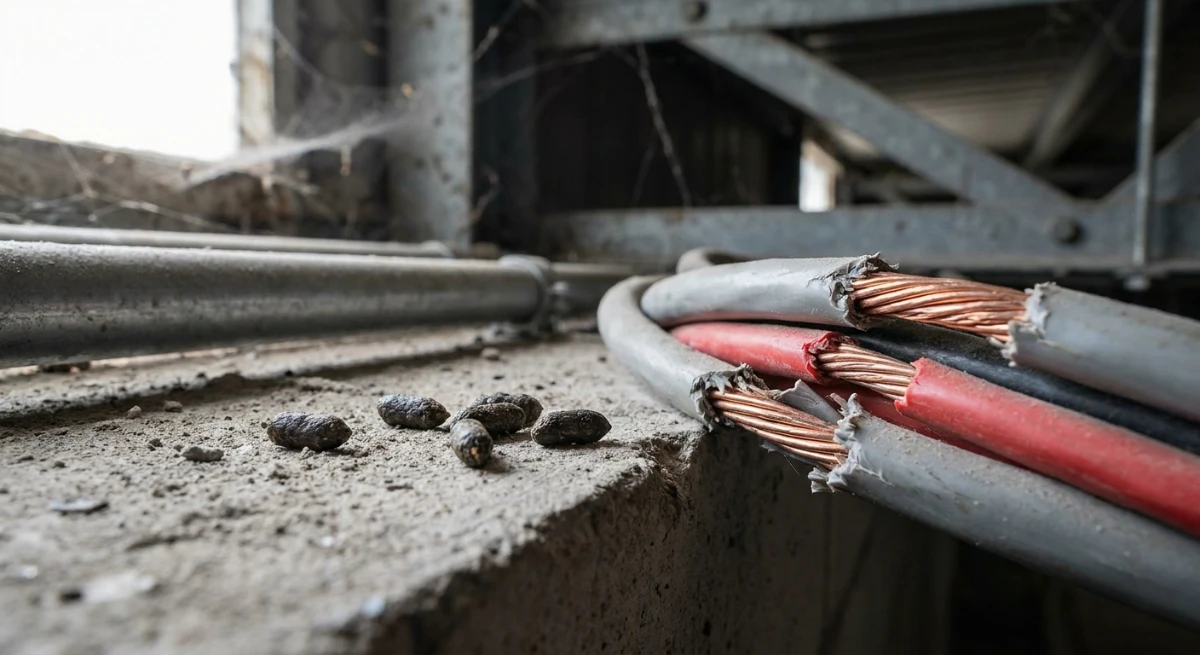
Rats do not just eat your stock; they chew through electrical wiring, creating massive fire hazards. When dealing with them, we must adhere strictly to the Animal Welfare Act 1999. This law mandates that any live-capture traps must be physically inspected within 12 hours of sunrise every single day.
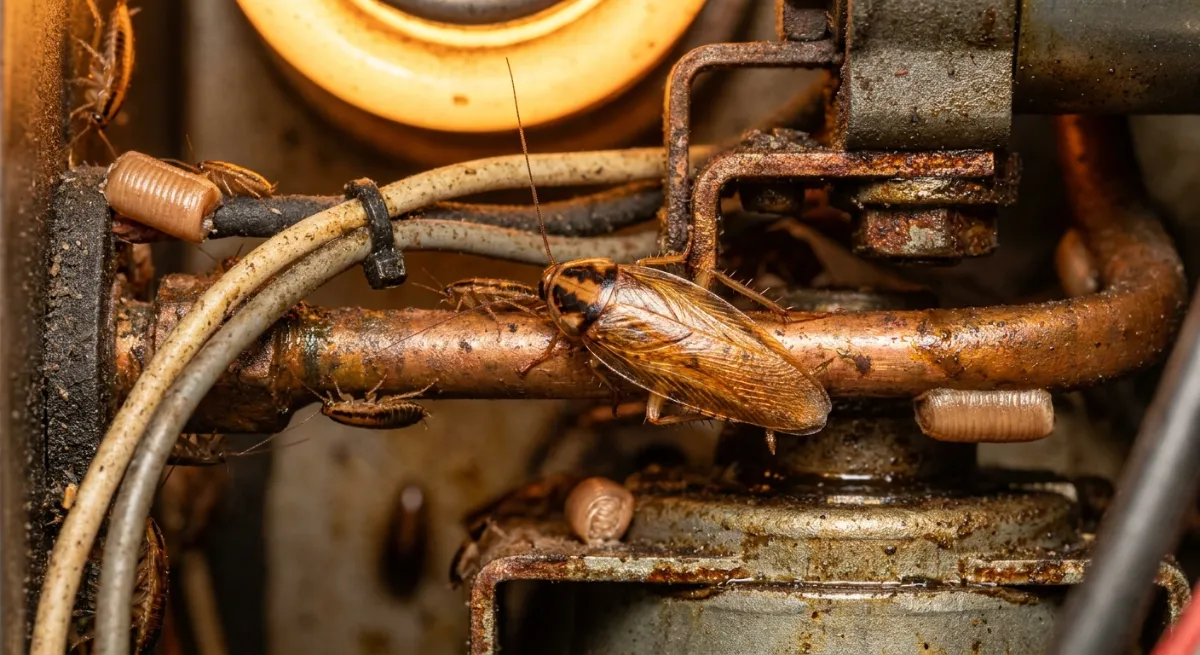
Then you have the German cockroach, the absolute bane of the hospitality industry. These insects thrive in the warm, humid environments of commercial kitchens. They nest inside the motor housings of espresso machines, dishwashers, and deep fryers.
You cannot just surface-spray a German cockroach infestation. They breed too fast, and their egg casings are highly resistant to standard chemicals. We use targeted, non-toxic gel baits and Insect Growth Regulators (IGRs) to break their breeding cycle at the source.
Under the Animal Welfare Act 1999, glue boards for rodents are heavily restricted, and live traps require daily physical checks. We automate compliance with mechanical exclusion so you do not have to worry about it.
Pricing, Value, and Subscription Models
One of the biggest frustrations I hear from property managers and business owners is the bait-and-switch pricing model used by corporate giants. You get quoted a low initial fee, and then the emergency call-out charges start piling up.
We do things differently. We believe commercial pest management in Auckland should be entirely transparent. Instead of reactive invoicing, we shift our commercial clients onto subscription-based Integrated Pest Management plans, like our Auckland Winter Defense program.
This model provides you with ongoing monitoring, routine compliance auditing, and preventative structural advice all for a flat, predictable rate. It protects your cash flow and ensures you are never caught off guard by an MPI inspection.
Moving to a predictive IPM subscription model eliminates emergency call-out fees. It keeps your business compliant year-round without the sudden budget shocks of a reactive infestation.
Future-Proofing: FAOPMA 2026 & Beyond
The pest control industry is evolving at breakneck speed. In July 2026, Auckland is hosting the FAOPMA Pest Summit at the NZICC, themed “FutureProof: Smarter Pest Solutions for a Rapidly Changing World.” This highlights exactly where the smart money is going.
We are already integrating these future-proof strategies into our daily operations. From IoT-enabled smart monitoring systems that alert us the moment a trap is triggered, to advanced thermal tracking for complex warehouse audits, we are staying ahead of the curve.
By partnering with a local, highly certified team, you get the benefit of this cutting-edge technology without dealing with a faceless corporate franchise. We back our work with the “Silver Bullet Guarantee”—if we say the entry point is sealed, it stays sealed.
Check your current pest controller’s credentials today. If they do not hold a New Zealand Certificate in Pest Operations (Level 3), they legally cannot handle Class 9 ecotoxic substances on your premises.
People Also Ask (FAQ)

About the Author: Ronnie
Founder, Pest Control Auckland · Commercial & Residential Pest Expert · Certified Urban Pest Management Specialist
With over a decade of hands-on experience navigating MPI compliance and the Food Act 2014, Ronnie is the definitive expert on commercial pest management in Auckland. Having consulted for hundreds of hospitality venues and warehouses across the region, he specializes in predictive IPM and structural exclusion to keep businesses open, compliant, and pest-free.