It is May 2026, and Auckland is currently dealing with a massive autumn pest surge [1].
Thanks to a ridiculously mild winter and a scorching summer last year, insect populations have exploded across the region. Now that the temperature is dropping rapidly, those pests are not dying off. They are simply moving indoors to find warmth and a free meal.
When it comes to winter German cockroach clustering in commercial kitchens, hospitality businesses are on the front lines. These insects do not care about your Food Control Plan. They just want the heat radiating from your blast chillers, dishwashers, and coffee machines.
I have seen countless Auckland cafes and restaurants risk their operating licenses because they tried to solve a structural pest issue with a can of hardware store bug spray. It never works. You need a scientific, root-cause approach to shut them out for good.
Key Takeaways
To stop winter German cockroach clustering in commercial kitchens, operators must abandon toxic aerosol sprays and adopt predictive Integrated Pest Management (IPM). Because cockroaches mature in just 38 to 54 days at 30°C behind warm kitchen appliances, root-cause eradication requires precision gel baiting and strict structural exclusion.
Why German Cockroaches Thrive in Winter
When the Auckland weather turns cold, German cockroaches (Blattella germanica) go looking for a microclimate that mimics their ideal breeding conditions. They are an invasive species that relies entirely on human environments to survive.
If you want to understand the mechanics of winter German cockroach clustering in commercial kitchens, you just have to look at the environment. A standard restaurant kitchen offers a constant supply of moisture, food waste, and—most importantly—relentless heat.
New Zealand’s hospitality sector reached a record $15.99 billion turnover in FY2025. With that volume of food moving through Auckland kitchens, the sheer amount of organic waste creates a paradise for urban pests.
Seeking Heat in Commercial Ovens, Fridges, and Dishwashers
You will rarely find German cockroaches sitting out in the open during the day. They are cryptic insects that prefer tight, dark spaces where their bodies can touch both the floor and the ceiling of the gap.
The compressor motor of a commercial fridge or the electrical housing of an industrial dishwasher is a five-star hotel for these pests. These appliances maintain a steady ambient temperature of around 30°C, regardless of how cold it is outside in Manukau or the North Shore.
Always inspect the magnetic rubber seals on your commercial fridges. Cockroaches love to hide inside the folds of the gasket, feeding on the condensation and organic buildup that accumulates there.
Rapid Breeding Cycles in Warm Environments
Temperature dictates everything in the insect world. At a standard room temperature, a German cockroach takes months to reach maturity. But behind a hot commercial oven? That timeline shrinks drastically.
Research shows that German cockroaches mature in just 38 to 54 days at 30°C [2]. This rapid breeding cycle is exactly why infestations spiral out of control so quickly. One pregnant female carrying an ootheca (egg case) can spawn a massive colony in a matter of weeks.
Identifying Early Signs of a German Cockroach Infestation
You need to catch the problem before health inspectors cite you. The Food Act 2014 mandates strict zero-tolerance hygiene standards, and a visible cockroach infestation is a guaranteed failure [3].
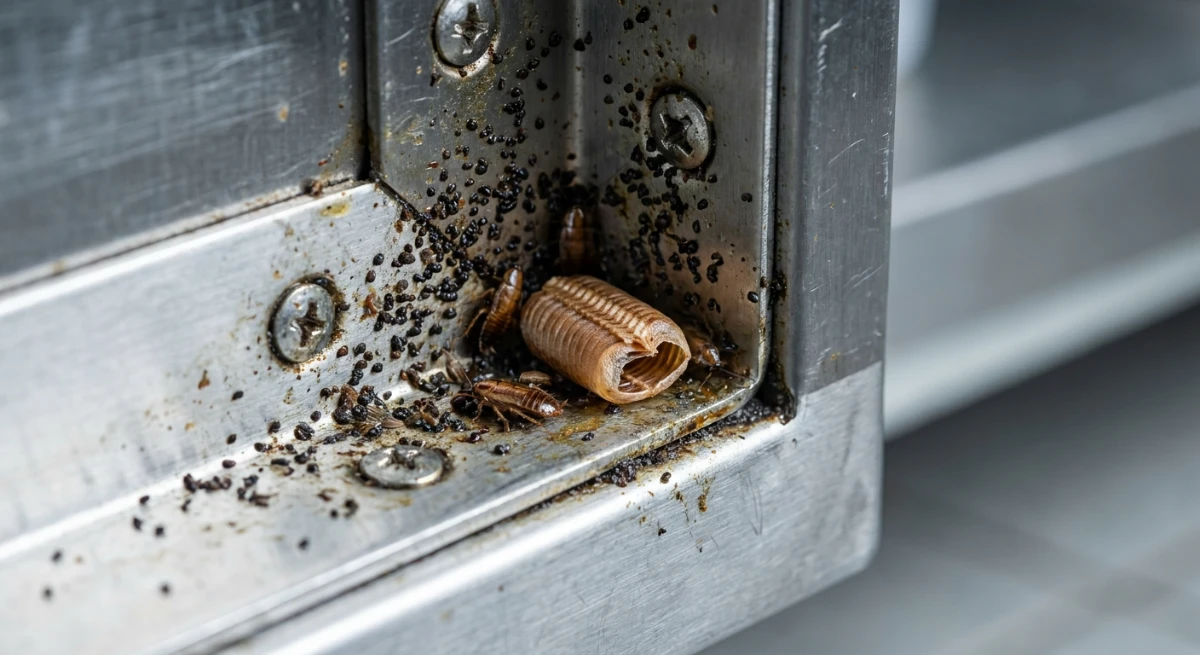
Look for pepper-like droppings in the corners of cabinets, along door hinges, or under the rubber seals on fridges. You might also notice a musty, oily smell in the kitchen when you open it up first thing in the morning.
If you turn on the lights at 5 AM to prep for the breakfast rush and see tiny insects scattering under the prep tables, you already have an established nest.
Eradication Strategies for Sensitive Equipment
The days of spray and pray are dead. You cannot just blast a commercial food prep area with toxic chemicals and hope for the best. It is both illegal and ineffective.
German cockroach nymphs possess hydrophobic cuticles. This means their outer shell literally repels certain water-based sprays. The females also carry their egg cases attached to their abdomen, shielding the next generation from contact insecticides.
Before letting anyone apply treatments near your food prep areas, verify they hold the New Zealand Certificate in Pest Operations (Level 3). This is a legal requirement under the HSNO Act 1996 for handling Class 9 substances.
Precision Gel Baiting in Electrical Housings
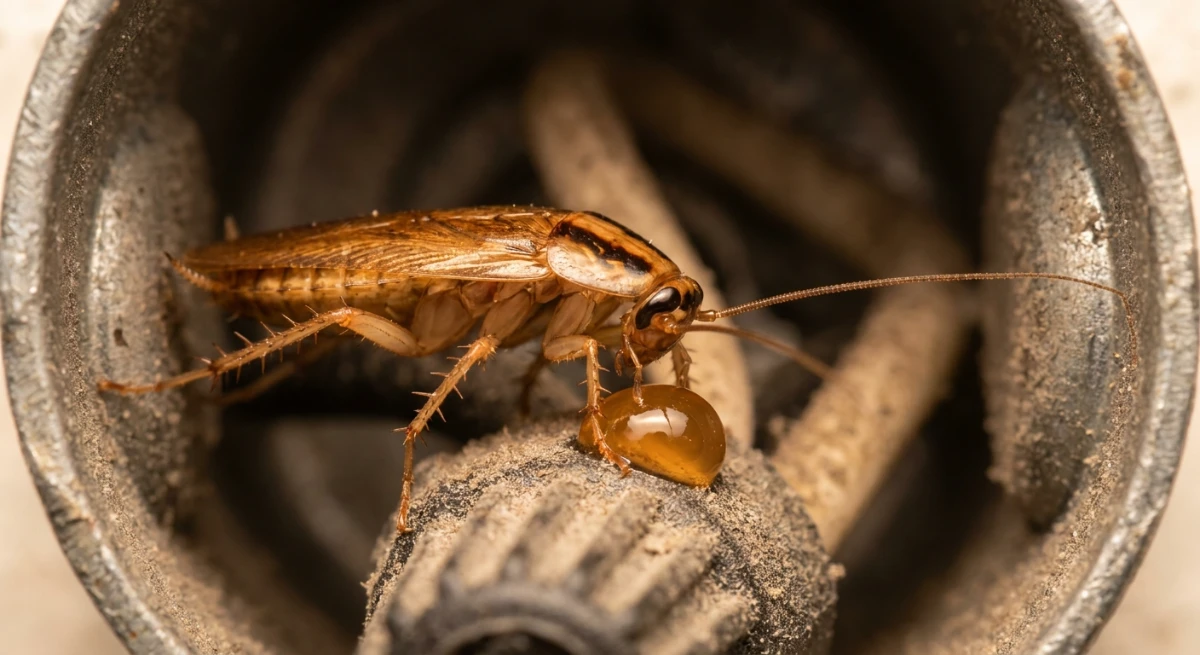
We use a targeted entomological approach. Because cockroaches nest inside sensitive electrical conduits—sometimes only 1.6 mm wide—we apply precision gel baits directly into these harborages.
The roaches consume the bait, return to the cluster, and die. Because they are cannibalistic, the remaining roaches eat the dead ones, creating a cascading domino effect that wipes out the entire nest from the inside out.
Why DIY Aerosols Backfire and Spread the Infestation
When dealing with winter German cockroach clustering in commercial kitchens, operators often make the mistake of using DIY aerosol bombs. This is the absolute worst thing you can do.
Aerosols contain repellent chemicals. When you spray them, the cockroaches panic and scatter deeper into the walls, fracturing the main nest into several smaller satellite nests. You have not killed them; you have just spread the problem to the front-of-house dining area.
Using hardware store bug bombs in a commercial kitchen will not kill a German cockroach nest. It will simply contaminate your food preparation surfaces and force the surviving insects deeper into your expensive appliances.
| Treatment Method | Eradication Effectiveness | Food Act 2014 Compliance | Risk of Infestation Spread |
|---|---|---|---|
| DIY Aerosol Bombs | Very Low (Misses hidden nests) | Fail (Contaminates surfaces) | Extremely High |
| Standard Surface Sprays | Low (Blocked by hydrophobic cuticles) | Borderline (Requires strict downtime) | High |
| Professional Gel Baiting (IPM) | 100% (Destroys nest via cannibalism) | Pass (Highly targeted, zero drift) | Zero |
Preventative Maintenance for the Winter Season
Eradication is only half the job. If you do not fix the structural issues that invited them in, the next batch of pests will just take their place.
This is where Predictive Integrated Pest Management (IPM) comes in. We focus on sealing structural entry points, fixing leaky plumbing that provides water sources, and installing non-toxic monitoring traps.
We offer a Silver Bullet Guarantee for our commercial clients. We do not just treat the symptom; we map the kitchen, identify the heat and moisture zones, and lock the pests out permanently.
With the FAOPMA Pest Summit arriving in Auckland in July 2026, the industry is pivoting hard toward zero-emission, predictive Integrated Pest Management (IPM). Reactive spraying is rapidly becoming obsolete.
People Also Ask (FAQ)

About the Author: Ronnie
Founder, Pest Control Auckland · Commercial & Residential Pest Expert · Certified Urban Pest Management Specialist
With years of experience in Auckland’s commercial hospitality sector, Ronnie is a definitive expert on winter German cockroach clustering in commercial kitchens. Having consulted for numerous high-volume restaurants and cafes, he specializes in Food Act 2014 compliance, ensuring businesses achieve root-cause eradication without relying on disruptive, toxic aerosol treatments.