I’ve crawled under more Auckland commercial kitchens and warehouse floors than I care to count. When you have rats nesting behind a commercial oven or German cockroaches breeding in the dry store, you don’t want a slick sales pitch. You want the problem gone, and you want to know it won’t come back.
You also want to know exactly what it’s going to cost. No smoke, no mirrors. The hospitality scene here is massive, and keeping a clean sheet with the council health inspectors is non-negotiable. If you run a business, you need to understand exactly how commercial pest control pricing NZ works today.
Let me give it to you straight. The days of paying a guy in a ute fifty bucks to spray toxic chemicals around your prep benches are dead. It’s illegal, it’s dangerous, and frankly, pests have adapted to it. Let’s break down the real costs of keeping your business compliant and pest-free.
Key Takeaways
Average commercial pest control pricing NZ ranges from $120 to $400+ per month, depending on site size and risk level. Food Act 2014 compliance requires non-toxic monitoring and mechanical traps in food prep areas. Investing in predictive Integrated Pest Management (IPM) prevents costly closures and failed health inspections.
Breaking Down the Costs for Auckland Businesses
Right now, the New Zealand hospitality sector is turning over roughly $15.99 billion annually. A massive chunk of that revenue is generated right here in Auckland. With that kind of money on the line, maintaining your ‘A’ grade food safety certificate is your most valuable asset.
But keeping that grade means you have to keep the pests out, permanently. So, what are you actually paying for when you hire a professional? The cost isn’t just about the chemicals in the technician’s tank.
You’re paying for our time, our Level 3 Urban Pest Management certification, and the structural exclusion work required to keep pests out for good. We assess every site differently because a cookie-cutter approach simply doesn’t work in commercial environments.
Average Costs for Cafes vs. Large Restaurants
A small espresso bar in Ponsonby has very different risk factors compared to a massive commercial kitchen in the CBD. When we price a small cafe, we focus heavily on the espresso machines, under-counter fridges, and pastry display cabinets.
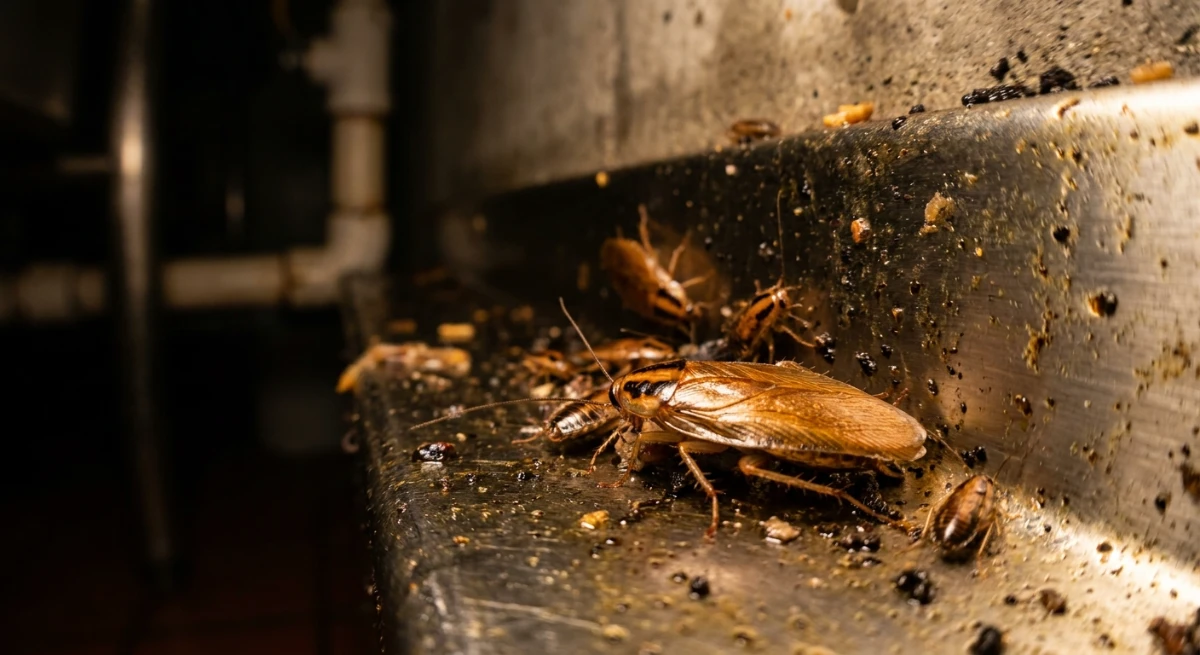
These are prime real estate for German cockroaches because they provide heat, moisture, and food. A basic monthly monitoring package for a site like this is highly affordable, often costing less than a single emergency plumbing callout.
For a large restaurant or a multi-site hospitality group, the strategy shifts entirely. We are dealing with massive loading docks, grease traps, extensive dry stores, and staff locker rooms. These environments require a robust Integrated Pest Management (IPM) system.
| Business Type | Estimated Monthly Cost | Typical Service Inclusion |
|---|---|---|
| Small Café / Espresso Bar | $120 – $180 | Rodent monitoring, basic crawling insect barrier, compliance logging. |
| Medium Restaurant / Bar | $200 – $350 | Non-toxic traps, German cockroach gel baits, drain treatments, bi-monthly audits. |
| Large Commercial Kitchen / Warehouse | $400+ | Full IPM program, zero-emission treatments, digital reporting for MPI verifiers. |
The Price of Food Act 2014 Compliance Audits
The Food Act 2014 completely shifted the landscape of commercial food preparation in New Zealand. You can’t just throw toxic rodenticide bait inside a food preparation area anymore. It’s highly illegal, and a Ministry for Primary Industries (MPI) auditor will shut you down on the spot.
Compliance means using mechanical traps, non-toxic monitoring blocks, and maintaining a rigorous pest sighting logbook. When you look at commercial pest control pricing NZ, you’re paying for this essential documentation as much as the physical treatment.
Buying a few bait stations from the hardware store and throwing them under the sink won’t pass an audit. You must have a site map detailing every monitoring station, a log of all pest activity, and Safety Data Sheets (SDS) for any products used.
Auditors require documented proof of an ongoing Integrated Pest Management (IPM) plan. A single invoice for a reactive spray will not satisfy Food Act 2014 requirements.
Why Cheap Pest Control Costs More in the Long Run
I see it happen every single week across Auckland. A business owner tries to save fifty bucks by hiring a fly-by-night operator who blasts the skirting boards with generic spray and leaves. Three weeks later, the German cockroaches are back in full force.
The Asia-Pacific pest control market is projected to hit $5.47 billion in 2026 for a reason. Smart businesses are realizing that cheap, reactive treatments are a massive false economy. You end up paying for the same failed service multiple times.
The Danger of Ineffective ‘Spray and Walk Away’ Services
Pests adapt incredibly fast. If a technician uses the same cheap chemical every time, cockroaches build genetic resistance to it. Furthermore, surface sprays do absolutely nothing to solve the root cause of your infestation.
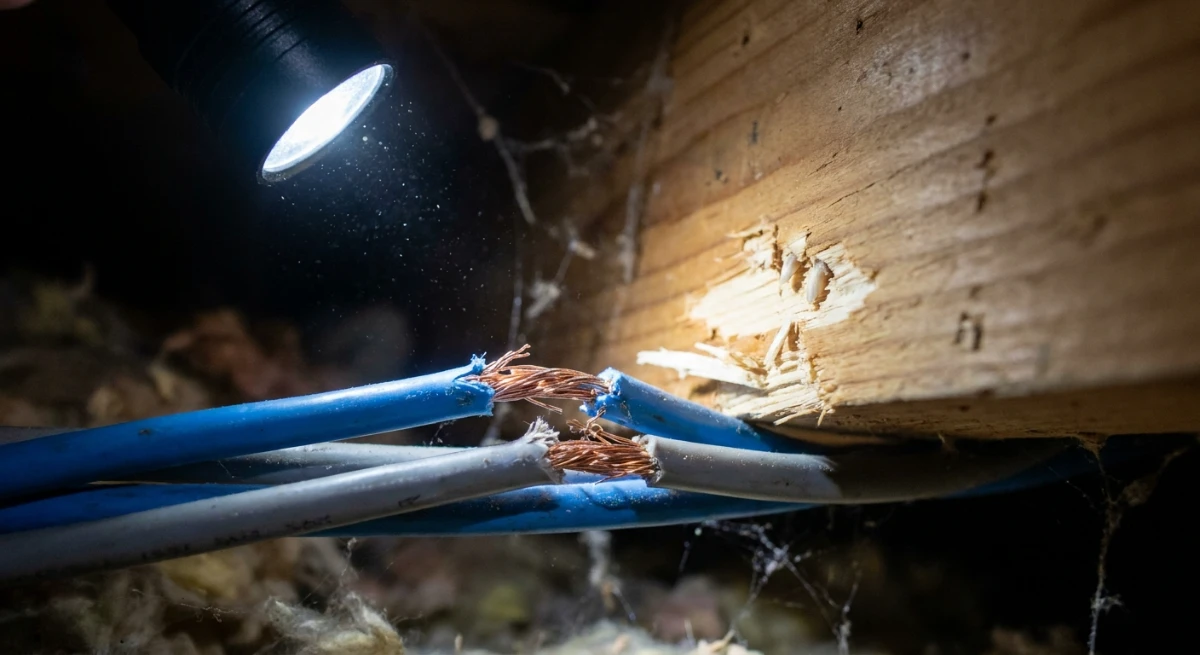
If you have rats in your roof void or mice chewing through your point-of-sale wiring, spraying the floor won’t help. We find the structural entry point. We seal it up, and we stop the problem before it compromises your stock.
We take an entomological approach to pest control. That means we study the biology and behavior of the target pest to eliminate it at the source. It requires patience and scientific knowledge, but it actually solves the problem.
Investing in Long-Term Structural Exclusion
You can’t spray your way out of a structural problem. If your building has gaping holes around the plumbing pipes or missing vent covers, rodents will continue to enter regardless of how much bait you put down.
This is why our service includes a comprehensive structural audit. We physically inspect your premises to identify exactly how pests are getting inside. We provide you with a detailed report highlighting these vulnerabilities.
If a rat can fit its skull through a gap, the rest of its body is coming through immediately. By investing slightly more upfront in a comprehensive structural assessment, you save thousands in ruined stock down the track.
Check the weather stripping on your rear loading doors. If you can see daylight underneath the door, a mouse can easily walk right into your dry store.
Commercial Leases: Who Pays for Pest Control?
One of the most common questions we get from commercial clients in Auckland is about liability. If you lease a commercial space, who is responsible for the pest control bill—the landlord or the tenant?
Under most standard commercial leases, the tenant is responsible for the day-to-day internal maintenance of the premises. If your business operations, such as food preparation or waste storage, attract pests, the cost of eradication falls on your shoulders.
However, if the infestation is caused by a structural defect in the building—such as a damaged roof letting in rats—the landlord may be liable for the repairs. We provide detailed, independent reports that clearly identify the root cause of the infestation to help you navigate these conversations.
The True Cost of a Failed Health Inspection
Let’s put the monthly cost of pest control into perspective. A standard IPM subscription might cost your restaurant $250 a month. What is the cost of failing an Auckland Council health inspection due to pest activity?
First, there’s the immediate loss of revenue if you are forced to close your doors. Then, there’s the cost of emergency, reactive pest control, which is always billed at a premium rate. Add in the cost of replacing contaminated stock and paying staff while closed.
But the most devastating cost is the hit to your brand’s reputation. When you view commercial pest control pricing NZ through this lens, professional IPM isn’t an expense; it’s the cheapest insurance policy you’ll ever buy.
Our Commitment to Upfront, Transparent Pricing
We despise hidden fees and bait-and-switch tactics just as much as you do. When we provide a quote for commercial pest control pricing NZ, the number on the paper is the exact number you pay.
We include the cost of all digital reporting, monitoring stations, and the follow-up visits required to secure your site. We back our work with the “Silver Bullet Guarantee” because we know our methods are scientifically sound and proven to work.
Our technicians are straight-talkers. If your hygiene practices are attracting pests, we’ll tell you directly. We aren’t here to sugarcoat the situation; we’re here to protect your business.
Many competitors use the term “eco-friendly” loosely. Always ask to see the Safety Data Sheets (SDS) to ensure the products used around your food are genuinely zero-emission and MPI-approved.
Compare Our Value: Get a Detailed Breakdown
You are running a busy commercial operation, and you need hard numbers to balance your budget. We offer tailored Integrated Pest Management (IPM) subscriptions that lock in your costs for the entire year.
This means you get no surprise bills when autumn hits and the rodent populations try to move indoors. It means total peace of mind for you, your staff, and your customers, knowing your brand reputation is protected.
- Predictable Cash Flow: Fixed monthly costs with no emergency callout fees.
- Audit Readiness: Digital logbooks updated in real-time for health inspectors.
- Zero Downtime: Discreet, after-hours servicing so your business never stops.
Stop relying on reactive sprays. Contact us for a free commercial site audit and get a transparent pricing breakdown tailored to your specific business needs.
Frequently Asked Questions

About the Author: Ronnie
Founder, Pest Control Auckland · Commercial & Residential Pest Expert · Certified Urban Pest Management Specialist.
With years of experience auditing high-risk hospitality sites across Auckland, Ronnie is the definitive expert on commercial pest control pricing NZ. Having consulted for major restaurant groups and navigated complex Food Act 2014 compliance audits, he provides transparent, science-backed strategies that protect both your bottom line and your brand’s reputation.