Pigeons causing property damage on an Auckland roof

Bird Control Auckland

Bird control in Auckland involves the professional implementation of humane deterrents—such as netting, spikes, and laser systems—to manage pest bird populations like pigeons and seagulls. These solutions protect commercial and residential properties from structural damage, eliminate severe health risks from droppings, and ensure compliance with New Zealand’s animal welfare regulations.

As we move through 2025, Auckland’s rapidly expanding urban density and unique coastal geography continue to create ideal habitats for various pest birds. From the bustling commercial hubs of the CBD to the sprawling residential suburbs, property owners are increasingly facing the costly and hazardous consequences of unmanaged bird populations. Effective bird control in Auckland is no longer just about aesthetics; it is a critical component of property maintenance, health and safety compliance, and asset protection. This comprehensive guide explores the most advanced, humane, and legally compliant bird control strategies available in the Auckland region today.

Table of Contents

Why Bird Control is Critical in Auckland?

Understanding the immediate and long-term impacts of pest birds is the first step in recognizing the necessity of professional bird control. Birds naturally seek shelter, food, and breeding grounds, and human-made structures provide all three in abundance. However, their presence brings significant negative consequences that compound rapidly if left unaddressed.

Severe Health Risks and Disease Transmission

Pest birds, particularly feral pigeons and seagulls, are notorious vectors for disease. Their droppings (guano), feathers, and nesting materials harbor a variety of dangerous pathogens. In 2025, health and safety regulations in New Zealand mandate strict management of these biological hazards, especially in commercial and food-processing environments. Dried bird guano can become airborne, leading to the inhalation of spores that cause Histoplasmosis and Cryptococcosis—serious respiratory illnesses. Furthermore, birds often carry secondary pests such as bird mites, ticks, and fleas, which can easily migrate into building interiors and infest human living or working spaces.

Extensive Property and Infrastructure Damage

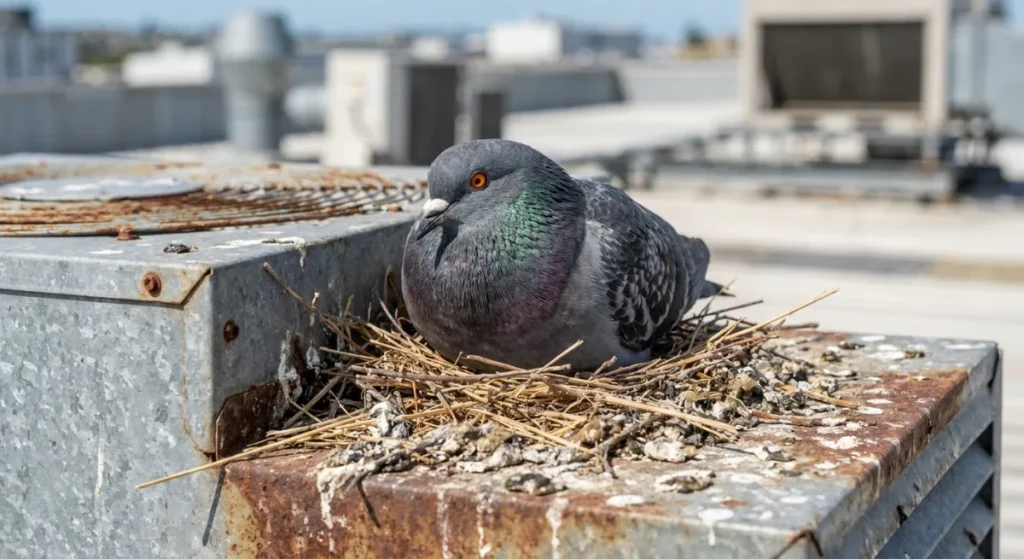
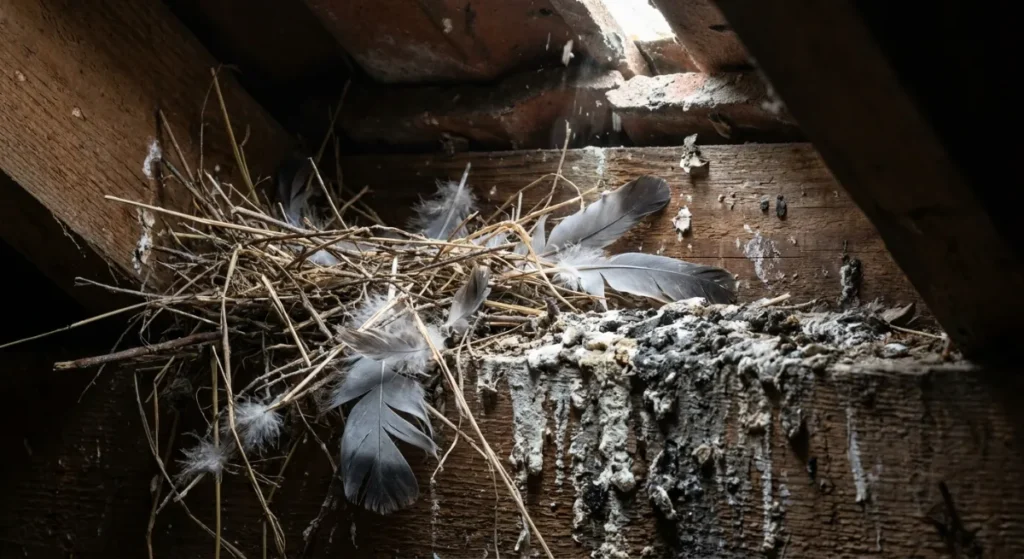
Beyond health concerns, the financial toll of bird-related property damage is staggering. Bird guano is highly acidic; over time, it eats through paint, corrodes metal roofing, and degrades stonework. For commercial buildings in Auckland, this means accelerated depreciation of exterior facades and increased maintenance costs. Additionally, birds habitually build nests in gutters, downspouts, and HVAC systems. This leads to severe water blockages, localized flooding during Auckland’s heavy winter downpours, and potential fire hazards when dry nesting materials are placed near electrical components or heating units.

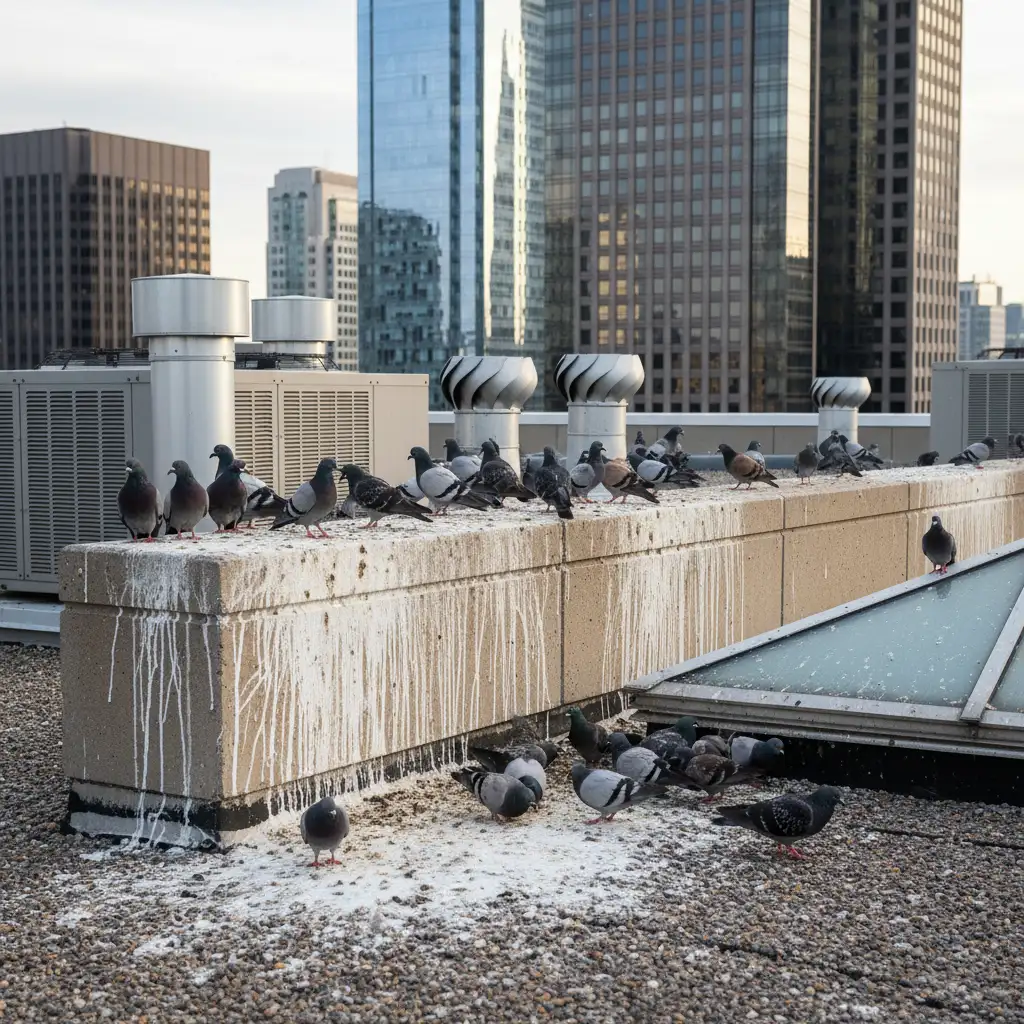
Pigeons causing property damage on an Auckland roof

Common Pest Birds in the Auckland Region

To effectively manage bird populations, one must understand the specific species causing the issues. Auckland’s climate supports several bird species that frequently conflict with human activities.

Feral Pigeons (Columba livia domestica)

Often referred to colloquially as “rats with wings,” feral pigeons are the most pervasive pest bird in the Auckland CBD and industrial sectors. They breed year-round, meaning a small flock can exponentially increase in size within a few months. Pigeons prefer flat roofs, ledges, and sheltered alcoves. Their flocking behavior results in concentrated areas of highly toxic guano accumulation, making them the primary target for commercial bird proofing efforts.

Seagulls: Red-Billed and Black-Backed Gulls

Given Auckland’s coastal nature, seagulls are an unavoidable part of the urban ecosystem. While the Southern Black-backed Gull is common and often a nuisance around waste management facilities and outdoor dining areas, the Red-billed Gull presents a unique challenge. Despite their abundance in urban spaces, Red-billed Gulls are considered a “Declining” species nationally. This protected status means that any bird control measures directed at them must be strictly non-lethal and highly specialized, focusing purely on exclusion and humane deterrence rather than eradication.

Indian Mynas and Starlings

Introduced species like the Indian Myna and the Common Starling are aggressive cavity nesters. In residential Auckland, they are notorious for infiltrating roof voids, eaves, and gaps in weatherboarding. Mynas are highly territorial, often driving away native New Zealand birds like the Tui and Piwakawaka (Fantail). Starlings, on the other hand, form massive flocks (murmurations) that can overwhelm residential properties and agricultural assets, leaving behind significant droppings and noise pollution.

Stainless steel bird spikes installed on an Auckland building

What Are the Most Effective Bird Control Methods in 2025?

The bird control industry has evolved significantly. By 2025, the focus has shifted entirely away from outdated, harmful methods toward high-tech, humane, and long-lasting exclusion systems. An effective bird control strategy often utilizes a multi-faceted approach tailored to the specific bird species and the architecture of the building.

Professional Bird Netting Solutions

Bird netting remains the gold standard for achieving 100% exclusion. High-density polyethylene (HDPE) UV-stabilized netting is stretched across vulnerable areas such as loading docks, warehouse ceilings, plant rooms, and architectural alcoves. When installed correctly by professionals, the netting is virtually invisible from the ground and can last upwards of 10 years, even under the harsh New Zealand sun. Netting physically prevents birds from accessing their preferred roosting and nesting sites, forcing them to relocate without causing them any harm.

Bird Spikes and Wire Systems

For building ledges, parapets, signage, and CCTV cameras, bird spikes are highly effective. Contrary to their aggressive appearance, professional bird spikes are blunt. They do not impale the birds; rather, they create an uneven surface that makes it physically impossible for birds to land and gain a foothold. For areas where aesthetics are paramount, such as heritage buildings in Auckland’s downtown, post-and-wire systems provide a lower-profile alternative. These consist of thin, spring-tensioned stainless steel wires that destabilize the bird when it attempts to land.

Laser Deterrents and Acoustic Devices

One of the biggest advancements in bird control for 2024 and 2025 is the widespread adoption of automated laser deterrents. These systems project a moving green laser beam across a designated area. Birds perceive the moving light as a physical predator or threat and flee the area. This technology is particularly effective in large open spaces such as Auckland’s agricultural fringes, vineyards, and massive industrial warehouses. Acoustic deterrents, which broadcast predatory bird calls or distress signals, are also used, though they are most effective when combined with visual deterrents to prevent the birds from becoming habituated to the noise.

Solar Panel Bird Proofing: A 2025 Necessity

With the massive surge in residential and commercial solar energy adoption across Auckland, solar panels have inadvertently created thousands of perfect nesting habitats. The gap between the roof and the solar panel provides warmth, shelter from rain, and protection from predators. Pigeons and mynas frequently nest underneath panels, leading to reduced solar efficiency, damaged wiring, and roof leaks. Specialized solar panel mesh exclusion systems are now a mandatory consideration for any solar installation, utilizing non-penetrating clips to secure mesh around the perimeter of the array without voiding the panel warranties.

Commercial bird netting installation in Auckland

Commercial vs. Residential Bird Control in Auckland

The approach to bird control varies dramatically depending on whether the property is a commercial facility or a private residence. Each presents unique challenges requiring specialized solutions.

Protecting Auckland’s Commercial Buildings

Commercial bird control is typically large-scale and high-stakes. Factories, food processing plants, hospitality venues, and retail centers face stringent health and safety audits. A bird infestation can result in failed health inspections, contaminated inventory, and severe reputational damage. Commercial solutions often require heavy machinery, such as scissor lifts or abseiling technicians, to install extensive netting systems, shock tracks (which deliver a mild, harmless static pulse to deter landing), and comprehensive ledge protection. Ongoing maintenance contracts are standard to ensure the deterrents remain effective year-round.

Residential Bird Proofing Solutions

For Auckland homeowners, the focus is usually on localized issues: birds nesting in the roof space, fouling on driveways and patios, or living under solar panels. Residential bird control requires a delicate touch to maintain the aesthetic appeal of the home. Solutions include installing chimney cowls, sealing eaves and soffits with specialized mesh, and applying discrete spikes to vulnerable roof peaks. Because residential infestations often involve native birds accidentally entering spaces, pest controllers must be highly knowledgeable about safe extraction and exclusion methods.

Bird control in New Zealand is strictly governed by animal welfare laws and environmental protection acts. The Wildlife Act 1953 dictates that most native species are fully protected. While invasive species like feral pigeons, mynas, and starlings are generally unprotected and can be managed as pests, the methods used must still comply with the Animal Welfare Act 1999, which prohibits unnecessary cruelty.

A critical issue in Auckland is the management of seagulls. As mentioned, the Red-billed Gull is a protected species. It is illegal to kill them, destroy their active nests, or harm their eggs without specific permits from the Department of Conservation (DOC). Professional bird control experts in Auckland must navigate these legalities carefully, ensuring that all interventions are proactive, preventative, and purely focused on humane exclusion.

Pest control expert inspecting an Auckland roof for birds

How to Choose a Bird Control Auckland Specialist?

With the complexities involved in modern bird management, selecting the right professional is crucial. Not all general pest controllers have the specialized training or equipment required for effective bird proofing at heights. When choosing a bird control specialist in Auckland in 2025, look for the following credentials:

  • PMANZ Registration: Ensure the company is a registered member of the Pest Management Association of New Zealand. This guarantees they adhere to the latest industry standards and ethical guidelines.
  • Height Safety Certification: Because most bird control work occurs on roofs and ledges, technicians must hold current Site Safe and elevated work platform (EWP) certifications.
  • Humane Focus: The provider should explicitly state their commitment to humane, non-lethal exclusion methods rather than relying on toxic baits or culling.
  • Warranties and Guarantees: High-quality installations, like HDPE netting and stainless steel spikes, should come with multi-year warranties on both materials and workmanship.

By investing in professional, high-quality bird control, Auckland property owners can permanently resolve avian pest issues, safeguarding their health, their assets, and the local environment.

People Also Ask (FAQ)

What is the most effective bird control method?

The most effective method is physical exclusion, primarily professional bird netting. Netting provides a 100% barrier that prevents birds from accessing roosting and nesting sites, forcing them to relocate humanely. It is highly durable and suitable for both commercial and residential properties.

How do I get rid of pigeons on my roof in Auckland?

To get rid of pigeons permanently, you need to remove their incentive to stay. This involves cleaning up existing guano and nests, followed by the installation of physical deterrents like bird spikes on the roof peaks or solar panel mesh if they are nesting underneath panels. Hiring a professional is recommended for safety and effectiveness.

Are seagulls protected in New Zealand?

Yes, many native gull species, including the common Red-billed Gull found throughout Auckland, are protected under the Wildlife Act 1953 due to declining national populations. It is illegal to harm them, cull them, or destroy their active nests without a permit. Only humane exclusion methods can be used.

How much does bird proofing cost in Auckland?

The cost varies significantly based on the size of the property, the severity of the infestation, and the methods required. A simple residential solar panel mesh installation might cost between $500 to $1,200, whereas large-scale commercial netting can cost several thousand dollars. A site inspection is necessary for an accurate quote.

Do fake owls or visual deterrents actually work?

Visual deterrents like fake owls, rubber snakes, or reflective tape only provide a very short-term solution. Birds are highly intelligent and will quickly realize these objects pose no real threat. For long-term success, visual deterrents must be combined with physical barriers or moving laser systems.

Who is responsible for bird control in a rental property?

In New Zealand, landlords are generally responsible for ensuring a rental property is free from pests, including birds, at the start of a tenancy and maintaining the structural integrity of the home to prevent ingress. However, if the tenant’s actions (like leaving food out) caused the infestation, the tenant may bear some responsibility.

Leave a Comment

Your email address will not be published. Required fields are marked *

Scroll to Top