Running a restaurant in Auckland is stressful enough without a rat sprinting across the pass during a busy Friday night service. You are managing staff, balancing food costs, and fighting for margins in a fiercely competitive market. The absolute last thing you need is a failed health inspection or a viral social media post about a cockroach in the dining room.
New Zealand’s hospitality sector hit a record $15.99 billion turnover in FY2025. With a third of those businesses based right here in Auckland, the stakes are incredibly high. The era of cheap, reactive “spray and pray” pest control is completely dead.
If you are just blasting chemicals around your prep areas and hoping for the best, you are putting your entire livelihood at risk. As the autumn 2026 pest surge drives rodents and insects indoors, commercial kitchens are firmly in the crosshairs. Effective Pest Management for Auckland Restaurants requires a highly scientific, root-cause approach. We do not just spray and walk away; we lock pests out for good so you can focus on the food.
Key Takeaways
Effective Pest Management for Auckland Restaurants requires predictive Integrated Pest Management (IPM) rather than reactive toxic sprays. To comply with the Food Act 2014 and MPI standards, hospitality venues must partner with Level 3 certified experts for zero-emission treatments, non-toxic monitoring, and structural exclusion.
The High-Stakes Reality of Auckland Hospitality
Operating a commercial kitchen means you are constantly under the microscope. The Ministry for Primary Industries (MPI) and Auckland Council health inspectors do not mess around when it comes to hygiene. A single customer spotting a pest can trigger an immediate, unannounced audit.
From the bustling eateries in Ponsonby to the high-volume kitchens in the CBD, the pressure to maintain an immaculate environment is relentless. Pests are not just a nuisance; they are a direct threat to your operating license. You cannot hide a pest problem from a trained inspector.
The Cost of a Failed Inspection
Food outlets that fail to prove they produce safe kai are named and shamed on the Auckland Council website. Your food grade certificate gives customers assurance, and dropping from an “A” to a “D” or “E” grade is a death knell for foot traffic. Word travels fast in this city.
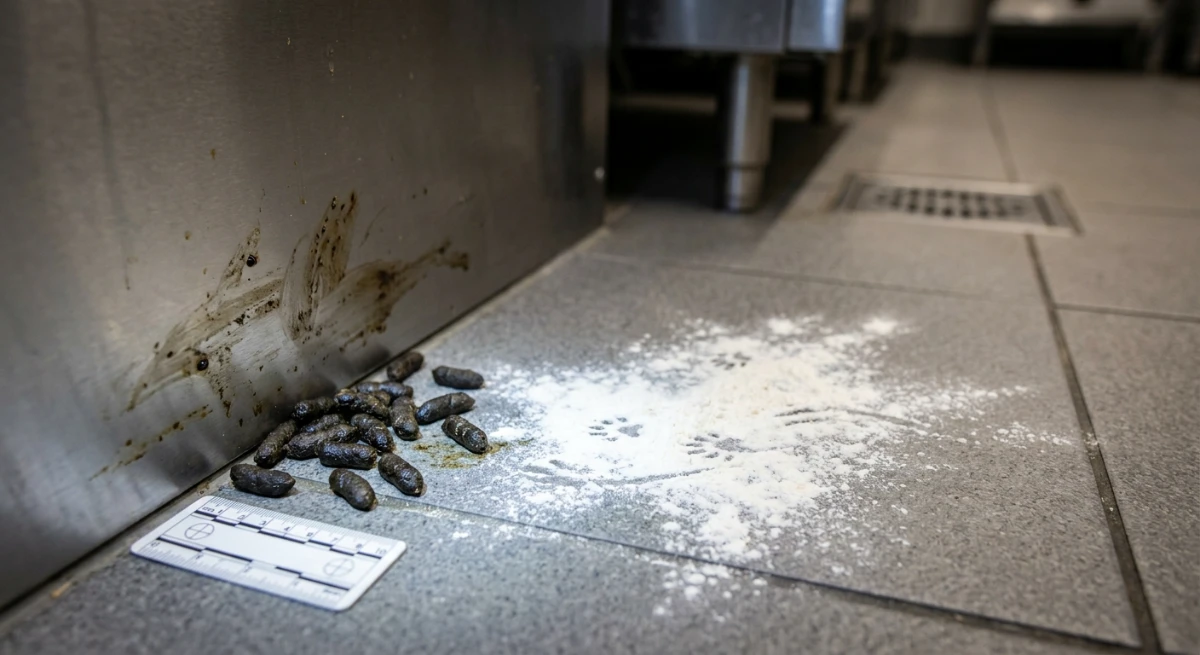
Inspectors know exactly where to look for rodent grease marks, cockroach frass, and fly breeding zones. This is why Pest Management for Auckland Restaurants must be proactive, not reactive. You need a system that stops the problem before the inspector even walks through the door.
Navigating the Food Act 2014 and MPI Regulations
The Food Act 2014 fundamentally shifted how commercial kitchens must operate in New Zealand. It moved the industry away from a rigid, outdated inspection model to a dynamic, risk-based approach. If you run a high-risk food prep environment, your compliance requirements are exceptionally strict.
You are legally required to have a robust pest management plan as part of your Food Control Plan (FCP). This is not a suggestion; it is a mandate. Failing to document your pest monitoring activities is a guaranteed way to fail your verification audit.
Strict Chemical Constraints in Kitchens
Under these regulations, you cannot just throw toxic rodenticide bait blocks under your prep benches. The law strictly prohibits the use of toxic baits in sensitive food preparation areas to prevent accidental contamination. You have to use smarter, safer methods.
Compliance requires non-toxic monitoring stations and mechanical traps in specific zones. Any chemical applications must be zero-emission and explicitly approved for use in food premises. This requires the expertise of a Level 3 qualified technician.
Using hardware store bug bombs in a commercial kitchen is a massive health code violation. These aerosols leave toxic residues on food contact surfaces and will result in an immediate fail during an MPI audit.
The Core Pests Threatening Commercial Kitchens
Different pests require completely different eradication strategies. In Auckland, the mild winters and humid summers create the perfect breeding ground for urban pests. When the temperature drops in autumn, these pests aggressively seek the warmth and food sources inside your restaurant.
Understanding the biology and behavior of these invaders is the first step in keeping them out. We do not guess; we use entomological science to target their specific nesting habits.
Rodents (Rats and Mice)
Rats and mice are structural invaders. They chew through wiring, contaminate dry goods, and spread diseases like Salmonella. They usually enter through loading docks, poorly sealed back doors, or compromised rooflines.
We focus heavily on structural entry-point exclusion. If you do not seal the hole they are coming through, trapping them is just a temporary band-aid. We find the breach, recommend the fix, and monitor the perimeter.
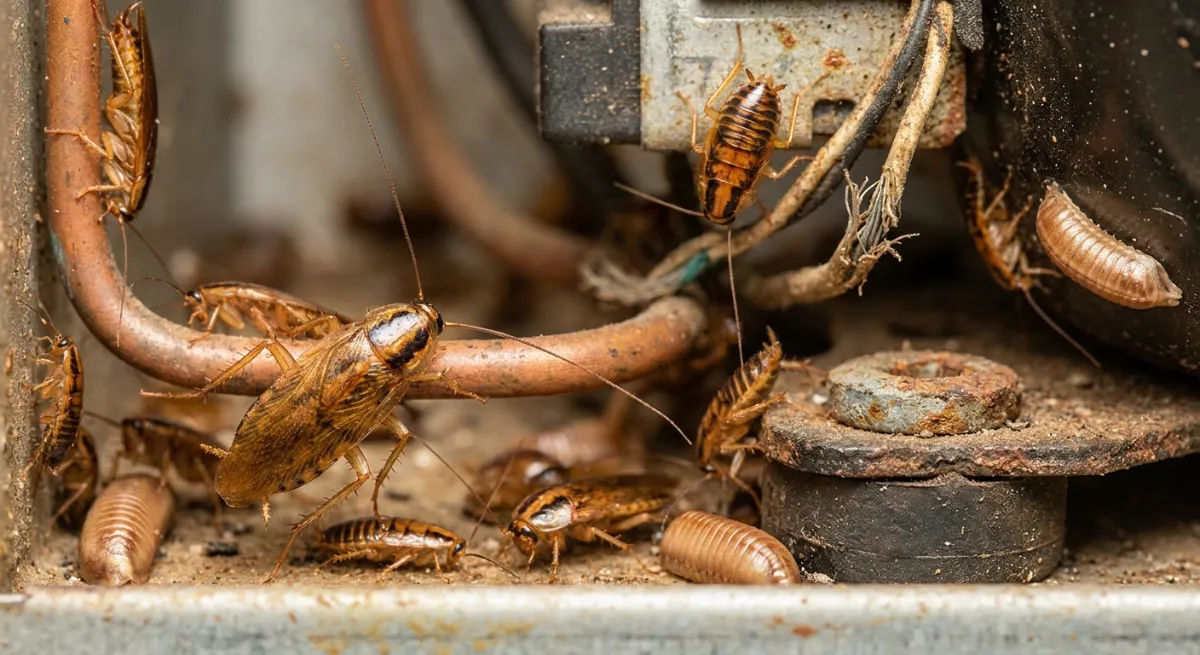
German Cockroaches
German cockroaches are the absolute bane of the hospitality industry. They thrive in warm, humid environments and breed at a terrifying rate. A minor issue can become a full-blown infestation in just a few weeks.
You will almost always find them nesting in the compressor motors of commercial fridges, under espresso machines, or behind dishwashers. Eradicating them requires targeted, non-repellent gel baits and insect growth regulators (IGRs) that disrupt their breeding cycle.
Inspect the rubber gaskets on your commercial fridges weekly. Torn or food-crusted seals provide the perfect harborage for German cockroaches to hide and breed right next to your fresh ingredients.
Drain Flies and Fruit Flies
Flies are a constant battle for bars and restaurants. Fruit flies are drawn to fermenting sugars in beer taps and garnish stations. Drain flies breed in the organic sludge lining your grease traps and floor drains.
Surface spraying does absolutely nothing for these pests. You have to eliminate the breeding source using bioremediation foams that break down the organic matter in your drains.
The Shift to Predictive Integrated Pest Management (IPM)
The future of commercial pest control is predictive, not reactive. Integrated Pest Management (IPM) is a scientific framework that focuses on long-term prevention rather than just chemical application.
Instead of waiting for an infestation to explode, we monitor activity levels using advanced bait stations and trend analysis. We identify the root causes—like a leaky pipe or a gap under a delivery door—and fix them before pests exploit them.
Compliance with the Animal Welfare Act 1999
When dealing with rodents, we must also navigate strict animal welfare laws. The Animal Welfare Act 1999 dictates that live-capture traps must be physically inspected within 12 hours after sunrise every single day.
Furthermore, glue boards are heavily restricted and generally frowned upon in modern pest management. We utilize highly efficient, humane mechanical traps and digital monitoring systems that ensure full legal compliance without sacrificing effectiveness.
| Feature | Traditional Pest Control | Predictive IPM |
|---|---|---|
| Approach | Reactive (Wait for a problem) | Proactive (Monitor and prevent) |
| Chemical Use | High volume, broad-spectrum sprays | Minimal, targeted zero-emission gels |
| Audit Compliance | Poor (Lacks documentation) | Excellent (Full reporting for MPI) |
| Long-Term Cost | High (Constant emergency callouts) | Predictable (Fixed subscription value) |
Analyzing the Financial Impact of Pest Control
Many restaurant owners view pest control as an annoying operational expense. In reality, it is a critical insurance policy for your brand’s reputation and your financial continuity. Cutting corners here will eventually cost you dearly.
Consider the cost of throwing out contaminated dry stock, replacing chewed electrical wiring, or being forced to close your doors for three days to deal with an extreme fumigation. The financial hit of a reactive emergency far outweighs the cost of a routine maintenance plan.
The True Cost of Infestations
When you factor in lost revenue, emergency callout fees, and the potential for regulatory fines, a proactive approach is the only logical choice for Pest Management for Auckland Restaurants. You need predictable costs, not nasty surprises.
By investing in a structured IPM subscription, you lock in your overheads. You get consistent monitoring, immediate action on minor anomalies, and comprehensive reporting that keeps the health inspectors happy.
Looking Ahead: The FAOPMA Pest Summit 2026
The pest control industry is evolving rapidly, and Auckland is at the center of it. We are proud that our city is hosting the prestigious FAOPMA Pest Summit from July 15-17, 2026, at the New Zealand International Convention Centre (NZICC).
Themed “FutureProof: Smarter Pest Solutions for a Rapidly Changing World,” this summit highlights the global shift toward digital monitoring and eco-friendly interventions. The days of indiscriminate spraying are over.
Staying at the Forefront of Science
We stay at the absolute forefront of these innovations. By keeping our Level 3 Urban Pest Management qualifications sharp and engaging with global experts, we ensure our clients receive the most advanced treatments available.
This means your restaurant benefits directly from the latest advancements in non-toxic pest exclusion. We bring world-class, scientifically backed strategies straight to your Auckland kitchen.
Our technicians actively participate in industry summits like FAOPMA 2026. This guarantees your business is protected by the latest global advancements in predictive, zero-emission pest control.
Why Partner With Pest Control Auckland?
You do not need a faceless corporate franchise treating your restaurant like just another number on a spreadsheet. You need a highly certified, local partner who understands the specific pressures of the Auckland hospitality scene.
We are a technician-led, family-owned business. We hold the New Zealand Certificate in Pest Operations (Level 3), meaning we are fully qualified to handle Class 9 ecotoxic substances safely and legally.
The Silver Bullet Guarantee
We back our work with the “Silver Bullet Guarantee.” We do not just suppress the problem temporarily; we identify the root cause, implement structural exclusion, and ensure your kitchen remains audit-ready year-round.
When you partner with us for Pest Management for Auckland Restaurants, you get direct access to expert advice. We tell you plainly what is going on, what needs fixing, and exactly what happens next.
Do not wait for a health inspector to find a problem. Contact Pest Control Auckland today to schedule a comprehensive, zero-obligation pest compliance audit for your commercial kitchen.
Frequently Asked Questions

About the Author: Ronnie
Founder, Pest Control Auckland · Commercial & Residential Pest Expert · Certified Urban Pest Management Specialist
With years of experience in commercial biosecurity and strict MPI compliance, Ronnie is the definitive expert on Pest Management for Auckland Restaurants. Having consulted for top-tier hospitality venues across the Auckland CBD and Ponsonby, he specializes in zero-emission Integrated Pest Management (IPM) systems that keep commercial kitchens audit-ready and completely pest-free.