Effective ant control strategies in Auckland involve a dual approach, combining diligent DIY methods for minor infestations with professional pest management for pervasive or recurring ant problems. Understanding the specific ant species and their habits is crucial for successful eradication, ensuring homes and businesses remain pest-free and protected from the challenges these common pests present.
The Ant Problem in Auckland
Auckland’s temperate climate and lush environment, while beautiful, also provide an ideal habitat for numerous ant species, making ant infestations a common nuisance for residents and businesses alike. From the bustling city center to the sprawling suburbs, these tiny invaders can quickly establish themselves, seeking food, water, and shelter within structures. The challenge lies not just in their numbers, but in their resilience and adaptability.
Common Ant Species in Auckland
Auckland is home to several ant species, each with distinct characteristics and behaviors that influence effective control strategies. The most prevalent include:
- Argentine Ants: Highly invasive, forming massive supercolonies that can span vast areas. They are highly aggressive, displacing native ant species, and are known for rapidly overwhelming food sources. Their nests are often found in moist soil, under pavements, or within wall voids.
- Black House Ants: Small, shiny black ants commonly found both indoors and outdoors. They are attracted to sweet foods and can often be seen trailing along walls, benchtops, and in pantries. Nests are typically in decaying timber, under bark, or in soil.
- Pharaoh Ants: Tiny, yellowish-brown ants that can be a significant problem, particularly in commercial food establishments or hospitals, due to their ability to spread pathogens. They create multiple small nests throughout a structure, making them notoriously difficult to eradicate.
- White-Footed House Ants: Characterized by their dark bodies and pale-coloured feet, these ants are also common invaders, often found in gardens and making their way indoors. They are attracted to honeydew from aphids and sugary substances.
Identifying the specific species is a critical first step in devising an effective control plan, as different ants respond to different bait types and treatments.
Why Ants Invade Auckland Homes and Businesses
Ants primarily invade human dwellings in search of three things: food, water, and shelter. Auckland properties often provide an abundance of these resources:
- Food Scraps: Crumbs, spills, uncovered food, and pet food are irresistible attractants.
- Water Sources: Leaky pipes, condensation, pet water bowls, and even damp areas in bathrooms or kitchens provide essential hydration.
- Shelter: Cracks in foundations, gaps around windows and doors, utility entry points, and even potted plants offer easy access and nesting sites.
- Environmental Factors: Heavy rainfall or extended dry periods can drive ants indoors as they seek refuge from harsh outdoor conditions.
Risks Associated with Ant Infestations
Beyond being a mere nuisance, ant infestations can pose several problems:
- Food Contamination: Ants can carry bacteria and other pathogens from contaminated areas (like garbage bins) directly onto food preparation surfaces and stored food items, posing health risks.
- Structural Damage: While not as destructive as termites, some ant species, like carpenter ants (though less common in Auckland, still a consideration), can excavate tunnels in damp or decaying wood, compromising structural integrity over time.
- Allergic Reactions: Though rare, certain ant bites can cause minor allergic reactions in sensitive individuals.
- Nuisance and Annoyance: The sheer presence of hundreds or thousands of ants can be incredibly unsettling and disruptive to daily life.
Understanding Ant Colonies and Behavior
To effectively combat an ant infestation, it is paramount to understand the intricate social structure and behavioral patterns of these insects. Ants are eusocial insects, meaning they live in highly organized colonies with distinct castes, each performing specific roles for the survival and propagation of the entire group.
The Social Structure of an Ant Colony
An ant colony typically consists of three main castes:
- Queen(s): The primary reproductive member(s) of the colony, responsible for laying all the eggs. A colony’s size and lifespan are largely determined by its queen(s). Some species have multiple queens (polygyny), leading to much larger and more resilient colonies.
- Workers: Sterile female ants that perform all the colony’s labour. This includes foraging for food, caring for the queen and young, defending the nest, and constructing/maintaining tunnels. These are the ants most commonly seen by humans.
- Males: Winged ants whose sole purpose is to mate with new queens. They typically die shortly after mating.
Understanding this structure is key; simply killing visible worker ants will not solve an infestation if the queen and the nest remain intact.
Foraging Habits and Trail Pheromones
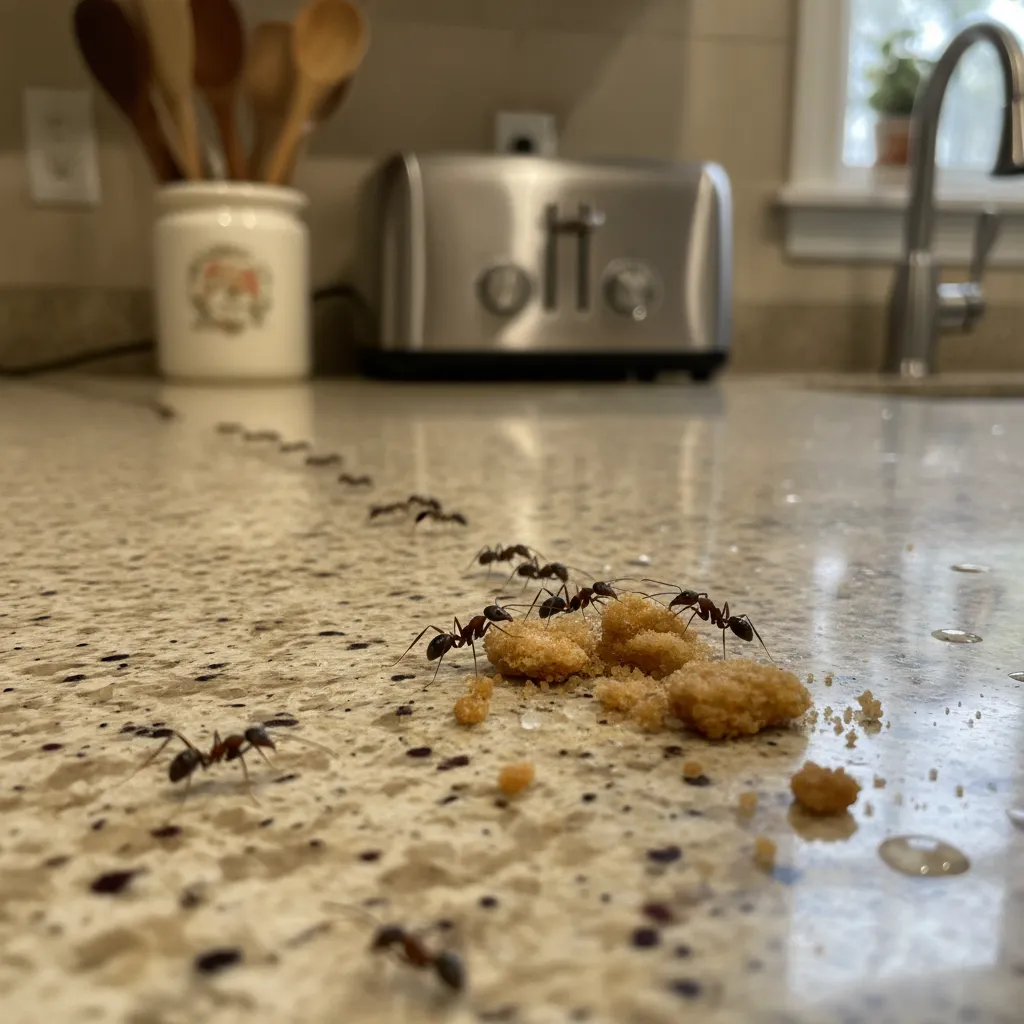
Ants are expert foragers. Worker ants venture out from the nest in search of food and water. When a food source is found, the ant returns to the nest, laying down a chemical trail of pheromones. Other worker ants follow this trail, creating the familiar lines of ants often observed on benchtops or floors. This chemical communication is incredibly efficient, allowing a colony to quickly exploit new resources.
Disrupting these pheromone trails is a tactical part of ant control. Cleaning surfaces with strong detergents can help erase these trails, confusing foraging ants and making it harder for them to find food or return to their nest.
Identifying Entry Points and Nests
A successful ant control strategy always begins with thorough inspection. Identifying where ants are entering your property and, more importantly, locating their nests, is crucial. Common entry points include:
- Cracks in foundations or walls
- Gaps around windows and door frames
- Utility lines (pipes, electrical conduits) entering the building
- Beneath loose siding or roofing materials
- Tree branches touching the house
Nests can be incredibly elusive, often located outdoors under paving stones, logs, leaf litter, or indoors within wall voids, under floors, or behind appliances. Observing ant trails can often lead you directly to their entry points and provide clues to the general vicinity of their nest.
Effective DIY Ant Remedies: First Line of Defense
For minor ant incursions or as a preventative measure, several DIY strategies can be highly effective. These methods focus on sanitation, exclusion, and simple treatments.
Maintaining Household Cleanliness
The simplest and most fundamental step in ant control is impeccable hygiene. Without readily available food and water, ants have little reason to invade:
- Wipe Up Spills Immediately: Especially sugary drinks or food residues.
- Store Food Properly: Use airtight containers for all food, including pet food.
- Clean Food Preparation Areas: Regularly wipe down counters, sinks, and stovetops.
- Empty Bins Frequently: Ensure rubbish bins have tight-fitting lids.
- Vacuum and Mop Regularly: Especially in areas where food is consumed.
- Fix Leaks: Repair any leaky taps, pipes, or appliances to eliminate water sources.
Sealing Entry Points
Physical exclusion is a powerful preventative measure. By blocking access, you prevent ants from entering your home in the first place:
- Caulk Cracks and Gaps: Seal any visible cracks in foundations, walls, or along baseboards.
- Weatherstrip Doors and Windows: Ensure a tight seal to prevent ants from crawling underneath or through gaps.
- Repair Screens: Mend any tears in window or door screens.
- Trim Vegetation: Keep tree branches and shrubs trimmed away from the house, as they can serve as bridges for ants.
Natural Repellents and Barriers
While not always a complete solution, certain natural substances can deter ants or disrupt their trails:
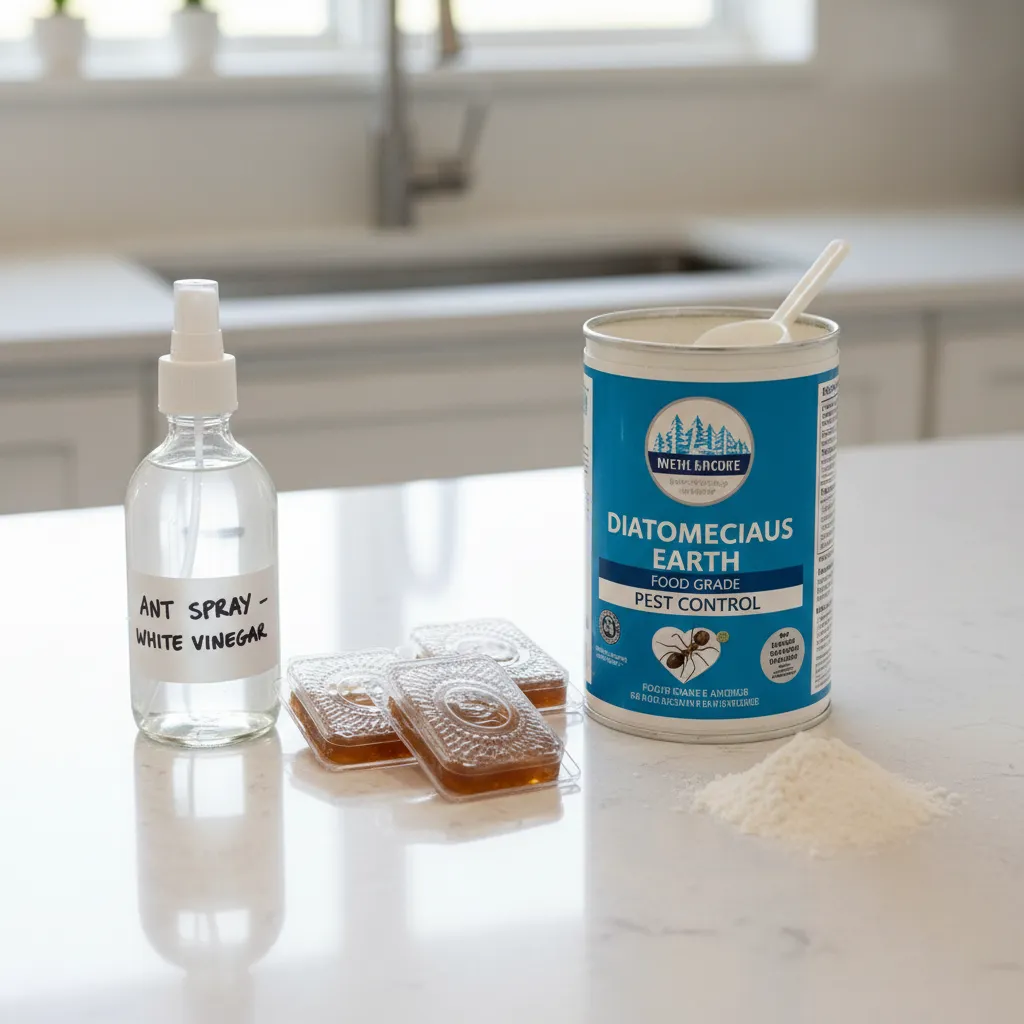
- Vinegar: A mixture of white vinegar and water (50/50) can be sprayed directly on ants or used to wipe down surfaces. It kills ants on contact and erases pheromone trails.
- Peppermint Oil: Ants dislike the strong smell of peppermint. Dilute a few drops in water and spray around entry points.
- Diatomaceous Earth (DE): A natural powder made from fossilized algae. When ants walk over it, the sharp particles abrade their exoskeletons, leading to dehydration and death. Apply a thin layer in areas where ants are observed, but use food-grade DE indoors and wear a mask during application.
- Chalk or Talcum Powder: Drawing a line with chalk can sometimes act as a temporary barrier, as ants are reluctant to cross it.
Over-the-Counter Baits and Sprays
For more persistent infestations, commercial products can be effective, but must be used carefully:
- Ant Baits: These are often the most effective DIY solution. Baits contain a slow-acting insecticide mixed with an attractive food source (sugar or protein). Worker ants take the bait back to the colony, feeding it to the queen and other ants, eventually eliminating the entire nest. Place baits near ant trails but out of reach of children and pets.
- Insecticide Sprays: Contact sprays kill visible ants but do not address the source of the infestation. They can also deter ants from taking baits, making them counterproductive for long-term control. Use sparingly and only for direct kills.
When Professional Ant Control is Needed
While DIY methods offer a good first line of defense, there are clear indicators that a professional pest control service in Auckland is not just beneficial, but necessary. Recognizing these signs can save homeowners time, money, and frustration in the long run.
Signs of a Severe Infestation
Several clues suggest your ant problem has escalated beyond simple DIY solutions:
- Persistent Trails: If ants continue to appear in large numbers, day after day, despite your best cleaning and DIY efforts.
- Multiple Entry Points: Ants entering from various locations around your home, indicating a widespread foraging effort.
- Presence of Swarmers: The appearance of winged ants (swarmers) inside your home usually indicates a mature, well-established colony nearby or even within your structure, ready to reproduce. This is a critical sign of a serious issue.
- Nests Indoors: Discovering actual ant nests (piles of sawdust-like material, or ants congregating in wall voids) inside your home.
- Ants in Unusual Places: Finding ants in areas typically free of food or water, such as bedrooms, bathrooms, or even electrical outlets, suggests a significant and exploratory colony.
Limitations of DIY Methods
DIY solutions, by their nature, have limitations when confronting large or deeply entrenched ant colonies:
- Difficulty in Locating Nests: Many ant nests are hidden deep within wall voids, under concrete slabs, or in inaccessible outdoor locations. Homeowners often treat symptoms (the visible ants) rather than the source (the nest and queen).
- Species Misidentification: Different ant species respond to different baits and treatments. Incorrect identification can lead to ineffective or even counterproductive efforts. For instance, some ants prefer sweet baits, while others prefer protein or grease.
- Supercolony Resilience: Invasive species like Argentine ants form vast supercolonies with multiple queens and nests, making them incredibly difficult to eliminate without professional, widespread treatment.
- Incomplete Eradication: DIY methods rarely achieve complete colony elimination. Even if many worker ants are killed, if the queen survives, the colony will quickly rebound.
- Safety Concerns: Improper use of potent insecticides can pose risks to human health, pets, and the environment.
The Expertise of Professional Pest Controllers
Professional pest control services bring a level of expertise, tools, and treatments that are typically unavailable to the average homeowner:
- Accurate Species Identification: Professionals can correctly identify the ant species, which is fundamental to choosing the most effective treatment.
- Thorough Inspection: They conduct comprehensive inspections to locate nests, entry points, and contributing factors that homeowners might overlook.
- Targeted Treatments: Access to professional-grade baits, non-repellent insecticides, and barrier treatments designed to eliminate entire colonies, not just visible ants.
- Safety Protocols: Professionals are trained in the safe and compliant application of pesticides, minimizing risks to occupants and the environment.
- Integrated Pest Management (IPM): They often employ an IPM approach, combining chemical treatments with preventative strategies and ongoing monitoring for long-term control.
For persistent or severe ant problems in Auckland, consulting a reputable pest control service is often the most efficient and effective path to a lasting solution.
Advanced Professional Ant Control Techniques in Auckland
Professional pest controllers in Auckland employ a suite of sophisticated techniques and products to tackle even the most challenging ant infestations. Their approach is rooted in scientific understanding of ant biology and behavior, aiming for comprehensive colony elimination rather than superficial treatment.
Thorough Inspection and Species Identification
The cornerstone of professional ant control is a meticulous inspection. Technicians will:
- Survey Property: Examine both interior and exterior areas, including foundations, gardens, utility entry points, wall voids, attics, and subfloors.
- Locate Ant Activity: Identify active trails, foraging areas, and potential nesting sites.
- Identify Species: Collect samples if necessary to accurately identify the ant species. This is crucial as different species respond best to specific types of bait or treatment strategies. For instance, Argentine ants often require a different approach than Pharaoh ants.
Targeted Baiting Systems
Professional-grade baits are significantly more potent and attractive than most over-the-counter options. They are formulated to be irresistible to specific ant species and contain slow-acting insecticides that allow worker ants to carry the poison back to the nest, sharing it with the queen and larvae through trophallaxis (food exchange). This method targets the entire colony at its source.
- Gel Baits: Often applied in cracks, crevices, and other hidden areas where ants forage.
- Granular Baits: Used outdoors around the perimeter of the property.
- Liquid Baits: Specifically designed for certain ant species that prefer liquid food sources.
Barrier Treatments and Residual Sprays
Professionals often apply non-repellent insecticides around the perimeter of the building. Unlike older repellent sprays that merely push ants elsewhere, modern non-repellent treatments are undetectable to ants. When ants walk over these treated surfaces, they pick up the insecticide, unknowingly carrying it back to the colony and spreading it through contact, leading to a domino effect of elimination. These treatments create a long-lasting protective barrier.
Colony Elimination Strategies
Beyond perimeter treatments, technicians may employ direct nest treatments where possible, injecting insecticides directly into identified nests within wall voids, under slabs, or in landscape features. For complex cases involving supercolonies or hard-to-reach nests, multiple treatment methods are often combined to ensure maximum efficacy.
Integrated Pest Management (IPM) Approach
A leading pest control approach is Integrated Pest Management (IPM), which is a holistic strategy. It involves:
- Monitoring: Ongoing observation to track ant activity and assess treatment effectiveness.
- Identification: Accurate species identification.
- Sanitation Recommendations: Advising clients on improving hygiene and reducing attractants.
- Exclusion Advice: Recommending structural modifications to seal entry points.
- Targeted Treatments: Applying the least toxic yet most effective treatments precisely where needed.
- Follow-Up: Scheduled follow-up visits to ensure the infestation is fully eradicated and to implement preventative measures.
This comprehensive approach ensures not only the elimination of current ant problems but also aims to prevent future infestations, providing long-term relief for Auckland property owners. For more information on local pest management practices, resources like the Auckland Council’s pest control information can be valuable.

Preventative Measures for Long-Term Ant Control
Achieving successful ant control is not just about eradicating existing colonies; it’s about implementing ongoing preventative measures to deter future infestations. Long-term prevention is a combination of consistent vigilance and smart property management.
Ongoing Sanitation Practices
Maintaining a high standard of cleanliness remains the most critical preventative step:
- Daily Kitchen Cleaning: Wipe down all surfaces, sweep floors, and wash dishes immediately after meals.
- Food Storage: Store all food, including pet food, in sealed, airtight containers. Avoid leaving food out on counters for extended periods.
- Waste Management: Use rubbish bins with tight-fitting lids and empty them regularly, especially those containing food waste. Consider a compost bin for organic waste away from the house.
- Address Spills Promptly: Even small crumbs or liquid spills can attract ants.
Exterior Property Maintenance
The exterior of your property can be an ant superhighway if not properly managed:
- Trim Vegetation: Keep trees, shrubs, and bushes trimmed so they do not touch the side of your house or roof. These provide easy bridges for ants to access your home.
- Clear Debris: Remove leaf litter, fallen branches, firewood piles, and other organic debris from around your foundation. These provide ideal nesting sites for many ant species.
- Manage Moisture: Ensure good drainage around your foundation. Repair any leaky outdoor taps or irrigation systems. Clear gutters and downspouts to prevent water accumulation near the house.
- Check for Ant Farms: Regularly inspect your garden beds, paving stones, and lawn for signs of ant nests and treat them promptly if found.
Regular Inspections
Proactive inspection can catch potential problems before they become full-blown infestations:
- Interior Checks: Periodically check basements, attics, bathrooms, and kitchens for signs of ant activity, especially during warmer months.
- Exterior Checks: Walk around your property, looking for cracks in the foundation, gaps around utility lines, and potential entry points.
- Seal and Repair: Promptly seal any new cracks or openings with caulk or appropriate sealants. Repair damaged screens or weather stripping.
By making these preventative measures a routine part of property maintenance, Auckland residents can significantly reduce their vulnerability to ant infestations and maintain a pest-free environment. Utilizing resources from established organisations like the U.S. Environmental Protection Agency (EPA) on safe pest control can also provide valuable general guidance on pest prevention.
Choosing the Right Ant Control Service in Auckland
When the time comes to enlist professional help for ant control in Auckland, selecting the right service provider is paramount. A reputable and effective pest control company can make all the difference between temporary relief and a long-lasting solution.
What to Look for in a Provider
Consider these key factors when evaluating pest control companies:
- Experience and Reputation: Look for companies with a proven track record specifically in Auckland. Check online reviews, testimonials, and ask for local references.
- Licensing and Certification: Ensure the company and its technicians are fully licensed and certified to operate in New Zealand. This guarantees they meet industry standards and are trained in safe, effective pest control practices.
- Specialization in Ants: While many companies handle various pests, inquire about their specific experience and success rates with ant infestations, particularly with common Auckland species like Argentine ants.
- Integrated Pest Management (IPM) Approach: Choose a company that advocates for IPM. This holistic approach prioritizes long-term prevention and uses targeted treatments, rather than just spraying chemicals indiscriminately.
- Clear Communication: The company should be transparent about their inspection process, proposed treatment plan, costs, and expected outcomes. They should be willing to answer all your questions.
- Insurance: Verify that the company carries adequate insurance to cover any potential damages or accidents during the service.
Understanding Service Guarantees
A sign of a confident and reliable pest control service is a clear service guarantee. Inquire about:
- Re-treatment Policy: What happens if ants return within a certain period after treatment? Most reputable companies offer re-treatment at no additional cost within a specified timeframe.
- Warranty Period: Understand the length of their warranty or guarantee for ant control services.
- Ongoing Service Plans: For persistent problems or proactive prevention, many companies offer ongoing maintenance plans. Understand what these plans include and their costs.
The Importance of Local Knowledge
Ant activity and specific challenges can vary significantly by region. A pest control company with extensive experience in Auckland will have a deep understanding of:
- Local Ant Species: Which species are most prevalent and how they behave in the local climate.
- Common Entry Points: Where ants are most likely to enter homes and businesses unique to Auckland’s building styles and environment.
- Environmental Factors: How Auckland’s weather patterns (e.g., rainfall, humidity) influence ant behaviour and nesting habits.
Choosing a local expert ensures you receive tailored advice and treatment strategies designed for the unique ant control challenges faced by properties throughout Auckland. By following these guidelines, you can confidently select a professional ant control service that will provide an effective, safe, and lasting solution to your ant problems.
People Also Ask
What is the most effective way to get rid of ants permanently in Auckland?
The most effective way to permanently get rid of ants in Auckland is through a comprehensive approach that combines diligent sanitation, sealing entry points, and targeted baiting, ideally implemented by professional pest control services. Professionals can accurately identify species, locate nests, and apply professional-grade treatments to eliminate the entire colony, including the queen, ensuring long-term eradication.
How do I find an ant nest in my Auckland home?
To find an ant nest, observe ant trails, especially those carrying food. Follow the workers back to their point of entry and then try to locate the nest nearby. Nests can be hidden in wall voids, under floors, behind appliances, in damp wood, or outdoors under paving stones, logs, or in soil. Professionals use advanced inspection techniques to pinpoint these elusive locations.
Are Auckland ants dangerous or just a nuisance?
While most common ant species in Auckland are primarily a nuisance, they can pose minor risks. Ants can contaminate food surfaces with bacteria, and some species like Pharaoh ants can spread pathogens in sensitive environments. Certain ants can also bite, though this is usually minor. Carpenter ants (less common in Auckland) can damage wood over time.
Can I use natural remedies for ant control in Auckland?
Yes, natural remedies like white vinegar sprays, peppermint oil, or diatomaceous earth can be effective for minor ant problems or as deterrents in Auckland. However, they typically only kill visible ants or disrupt trails and may not eliminate the entire colony, especially for large or persistent infestations. They are best used as part of a broader preventative strategy.
How much does professional ant control cost in Auckland?
The cost of professional ant control in Auckland varies significantly based on the severity of the infestation, the size of your property, the ant species, and the type of treatment required. It’s best to get a quote from a local pest control company, as many offer free inspections to assess the problem and provide an accurate estimate tailored to your specific situation.
What kind of bait works best for ants in Auckland?
The best type of bait for ants in Auckland depends on the specific species and their dietary preferences. Some ants prefer sugary baits, while others prefer protein or grease-based baits. Professional pest controllers can accurately identify the ant species and select the most effective, targeted bait formulation that worker ants will readily carry back to the colony for complete eradication.