Key Takeaways
Humane pigeon nest removal in Auckland requires clearing abandoned nests, sanitising corrosive droppings, and installing structural deterrents to prevent re-nesting. Feral pigeons breed year-round, making early intervention critical to protect commercial properties from bird mites and Food Act 2014 compliance failures.
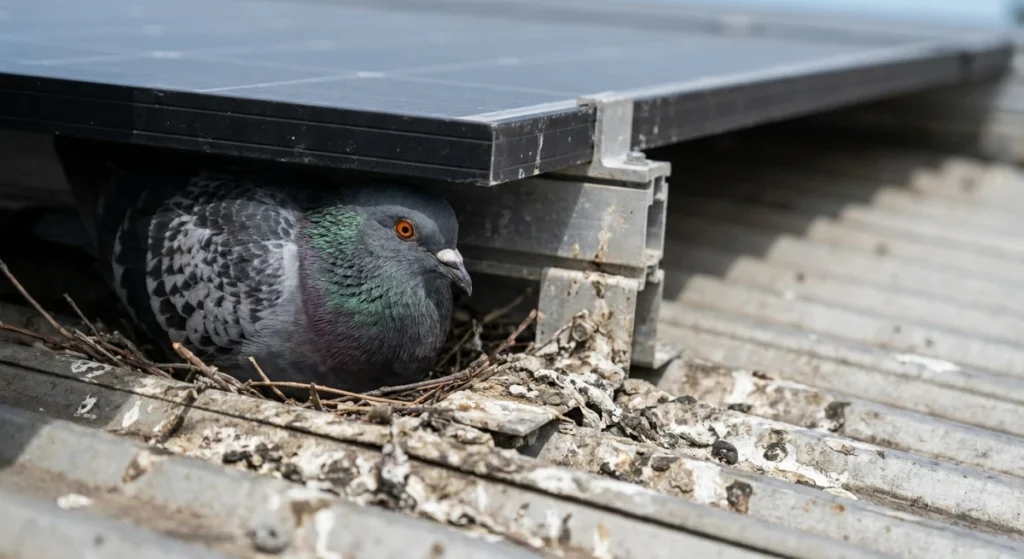
Commercial properties across the Auckland region are under constant siege from an aerial threat. Feral pigeons are more than just a noisy nuisance; they are a severe biosecurity and structural hazard. When these birds decide to roost on your HVAC units, warehouse beams, or retail awnings, the resulting mess can literally shut down operations.
You cannot afford to ignore the problem or wait for them to leave on their own. Pigeon droppings accumulate rapidly, eating through expensive steel roofing and spreading dangerous pathogens. Effective pigeon nest removal is the first critical step in breaking their breeding cycle and reclaiming your commercial property.
We do not just spray water and walk away. Our scientific approach targets the root cause of the infestation. We ensure nests are cleared safely, biohazards are neutralised, and structural entry points are permanently excluded.
Spring Breeding Season: Acting Before the Flock Multiplies
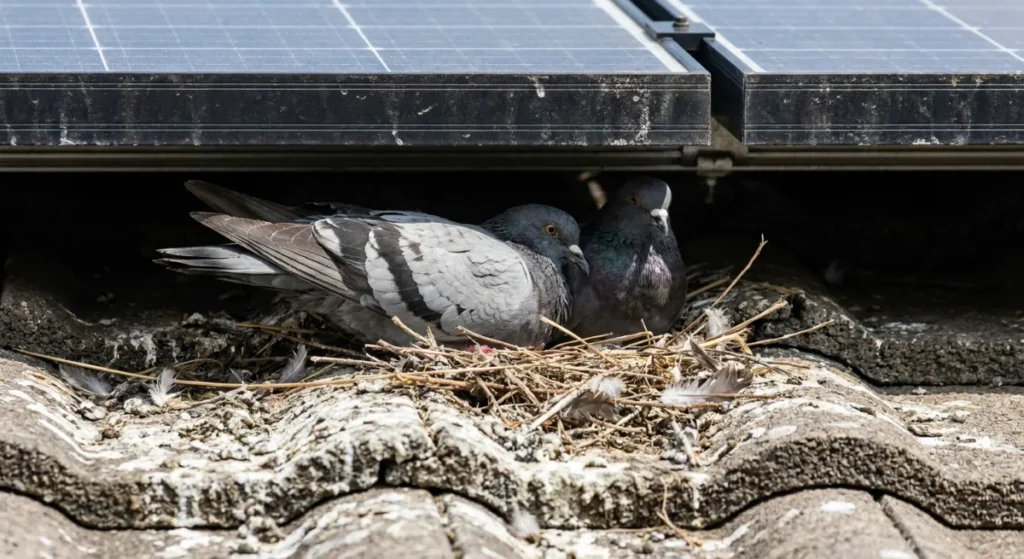
Feral pigeons are prolific breeders that have perfectly adapted to Auckland’s urban and commercial environments. Unlike many native bird species, pigeons can initiate a nesting cycle in almost any month of the year if food is available. However, their breeding activity spikes dramatically during the warmer spring and summer months, typically from September through to February.
If you leave a single nest unchecked on your property, one pair of pigeons can produce up to six clutches in a single year. This means a minor, easily solvable nuisance quickly escalates into a massive, entrenched infestation. Professional pigeon nest removal must be timed correctly to disrupt this rapid population growth before the flock multiplies out of control.
We see property managers fall into the “DIY cycle of despair” every year. They knock down a nest with a broom, only to find the birds rebuilding in the exact same spot 48 hours later. To stop the cycle, you need professional intervention that pairs removal with immediate structural exclusion.
Early intervention saves thousands in property damage. Remove nests before the spring breeding peak to discourage the flock from establishing a permanent roost on your building.
Identifying Active vs. Abandoned Nests
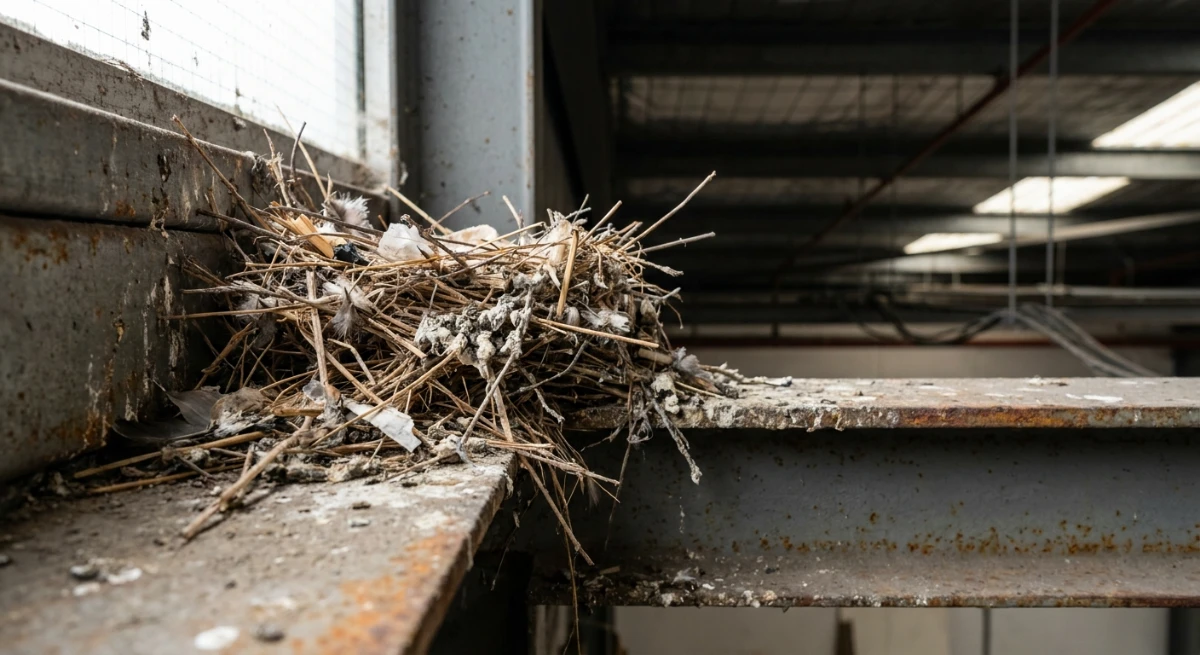
Before touching any nesting material, you must definitively determine its current status. Active nests will contain eggs, squabs (chicks), or show obvious signs of fresh, wet droppings nearby. Pigeons are notorious for building incredibly flimsy nests out of twigs, wire, and urban debris, often balancing them precariously on narrow ledges.
Abandoned nests, on the other hand, look dry, flattened, and heavily caked in old, white guano. Removing active nests requires careful, humane handling to comply with local animal welfare standards. We always assess the site first to ensure our methods are both highly effective and strictly ethical.
You should never attempt to handle these materials without proper personal protective equipment (PPE). Even an abandoned nest is a thriving ecosystem of bacteria and parasites waiting to be disturbed.
The Legal Framework for Nest Removal in New Zealand
Auckland pest control operators and property managers must navigate strict regulations when dealing with urban birds. You cannot simply destroy wildlife habitats without understanding the legal consequences. Ignorance of the law is never an excuse, especially when commercial reputations are on the line.
The days of reckless, unregulated pest extermination are over. Today, all interventions must align with national legislation and local council mandates. As the industry prepares for the FAOPMA Pest Summit 2026 in Auckland, the focus has shifted entirely toward predictive Integrated Pest Management (IPM).
Compliance with the Animal Welfare Act 1999
The Animal Welfare Act 1999 dictates that all animals, including feral pests, must be treated humanely. This means that if lethal control or nest disruption is required, it must not cause unnecessary pain, suffering, or distress. You cannot simply leave trapped birds to suffer.
When we perform humane pigeon nest removal, we follow strict, legally compliant protocols. If live squabs are present, we evaluate the most ethical course of action, which often involves waiting for them to fledge or using approved, humane dispatch methods. We never employ illegal or cruel tactics like unmonitored live traps or restricted glue boards.
Property managers can face severe penalties for authorising inhumane pest control methods. Always ensure your contractor is a Level 3 qualified UPM technician who adheres strictly to the Animal Welfare Act 1999.
Protecting Native Birds (DOC Guidelines)
While feral pigeons are an unprotected exotic species, Auckland is home to highly protected native birds like the Kererū (New Zealand pigeon). Misidentifying a nest can lead to disastrous legal and environmental consequences. The Department of Conservation (DOC) enforces strict penalties for harming native wildlife.
Our certified technicians are trained to identify the subtle differences in nesting habits, egg types, and building materials. We ensure that your pest problem is resolved without ever threatening New Zealand’s precious native ecosystem.
If a protected species is involved, we immediately step back and consult with the proper authorities. We will guide you toward the right agency so you are not left guessing about your compliance obligations.
Our Decontamination Protocol After Nest Removal
Removing the physical nest is only half the battle when securing a commercial property. What gets left behind on the ledge is often far more dangerous than the birds themselves. Pigeon roosts are biological hazard zones filled with pathogens, fungi, and aggressive parasites.
If you skip the decontamination phase, you are leaving your staff and customers exposed to severe health risks. We treat the cleanup process with the same scientific rigor as the removal itself, ensuring your site remains perfectly safe.
Eradicating Bird Mites and Parasites
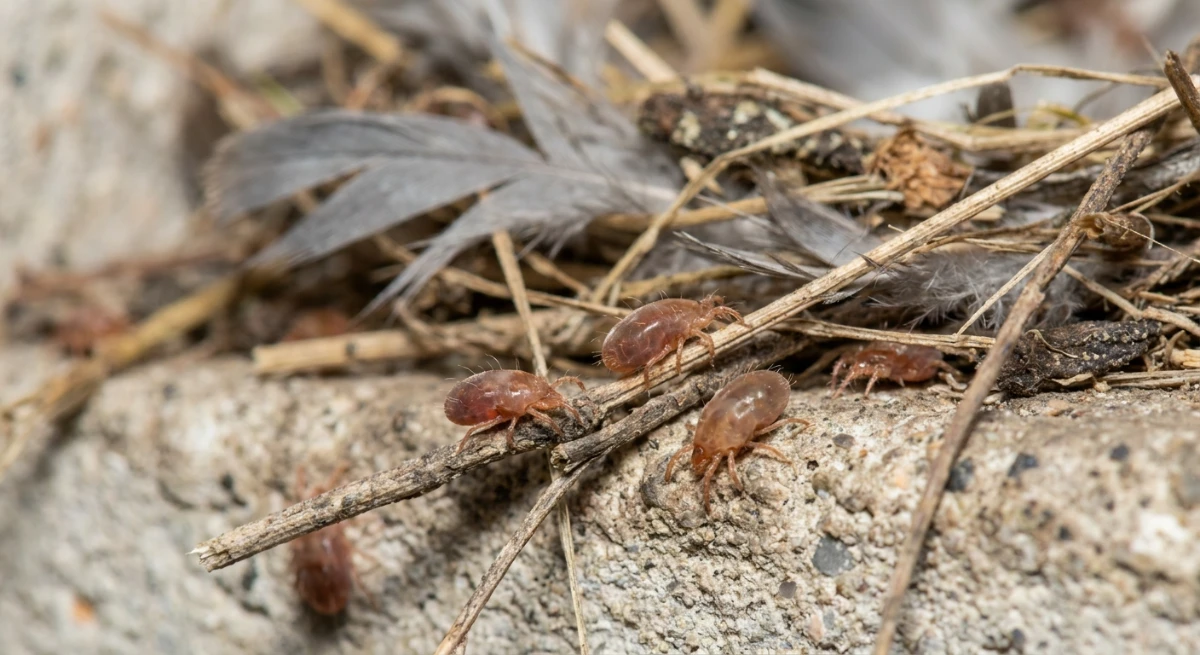
Once the pigeons leave, the parasites they carried are suddenly left hungry and without a host. Bird mites will quickly migrate from an abandoned nest into the building’s interior, seeking a new blood meal. This migration can cause severe skin irritation and widespread distress for your office staff or tenants.
Our process includes a targeted, zero-emission insecticidal treatment directly applied around the nesting site. This eradicates mites, fleas, and ticks before they can infiltrate your HVAC or ventilation systems. We lock down the area to ensure absolute hygiene and prevent secondary infestations.
Bird mites are a common secondary infestation following bird removal. A comprehensive commercial pest management plan must always include residual treatments for these microscopic invaders.
Sanitising Corrosive Droppings
Pigeon guano is highly acidic and will rapidly degrade steel, concrete, and expensive roofing membranes. In commercial food environments, airborne particles from dried droppings can lead to failed MPI health inspections under the Food Act 2014. You simply cannot afford to have bird faeces near food preparation or storage areas.
We use industrial-grade biocides to break down and sanitise the guano safely. Our technicians wear full respirators and Tyvek suits to handle this hazardous material, eliminating the risk of transmitting severe respiratory diseases like Histoplasmosis.
Once the area is fully decontaminated, we install physical deterrents like spikes, netting, or shock track systems. This structural exclusion ensures the birds never return, providing a permanent solution to your pest problem.
Schedule Your Nest Removal and Proofing Service
Choosing the right team to handle your commercial bird problem is crucial for long-term success. DIY methods or hiring uncertified handymen usually results in the birds returning within weeks, costing you significantly more in the long run. You need a permanent, scientifically backed solution.
At Pest Control Auckland, we back our work with the “Silver Bullet Guarantee.” We fix the root cause, exclude the entry points, and stand by our results. We do not just treat the symptoms; we eradicate the vulnerability.
| Feature | DIY / Uncertified Handyman | Pest Control Auckland |
|---|---|---|
| Legal Compliance | High risk of Animal Welfare Act violations. | 100% compliant, Level 3 Qualified UPM. |
| Decontamination | Surface level sweeping; leaves mites behind. | Industrial biocides & targeted mite eradication. |
| Long-Term Result | Birds return within 48 hours to rebuild. | Permanent structural exclusion installed. |
| Commercial Auditing | No documentation provided. | Full Food Act 2014 & HACCP compliance reporting. |
Do not let a feral pigeon problem compromise your business operations or your health and safety compliance. We provide clear, transparent pricing and rapid response times across the entire Auckland region.
Stop the cycle of despair. Contact Pest Control Auckland today for a comprehensive site audit and a permanent bird exclusion strategy.
People Also Ask

About the Author: Ronnie
Founder, Pest Control Auckland · Commercial & Residential Pest Expert · Certified Urban Pest Management Specialist
With years of experience in commercial biosecurity and structural pest exclusion, Ronnie is Auckland’s definitive expert on humane pigeon nest removal. Having consulted for major hospitality groups and industrial warehouses across the region, he ensures all bird control programs strictly comply with the Animal Welfare Act 1999 and the Food Act 2014, delivering permanent, ethical results.