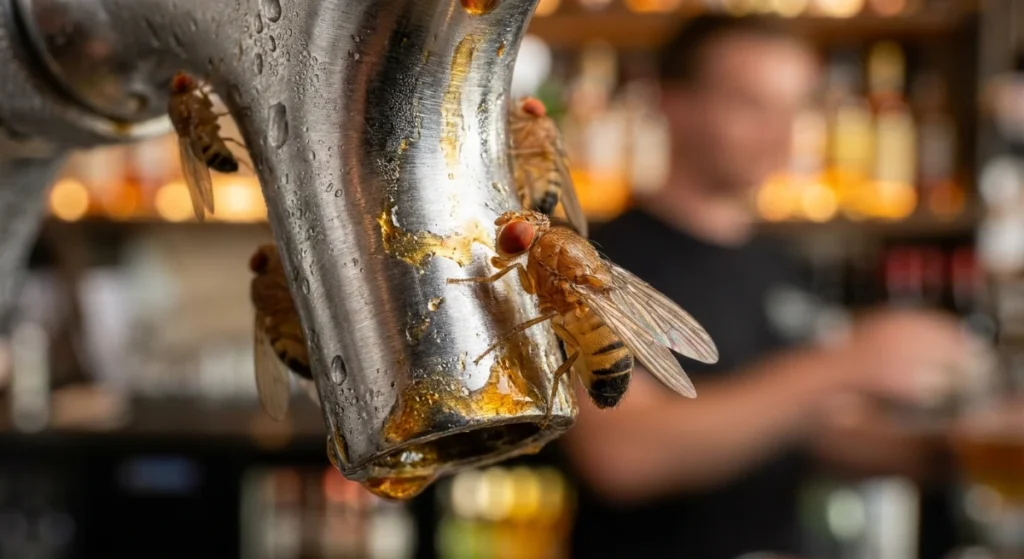
You walk into the kitchen, grab an apple, and a cloud of tiny insects explodes into your face. It’s infuriating, it’s gross, and it’s incredibly common here in Auckland. A mild winter followed by a hot summer has created the perfect storm for urban pests in 2026.
People often ask us how to get rid of fruit flies permanently nz wide. The hard truth is that you can’t just blast a can of fly spray and hope for the best. Surface sprays only kill the adults currently buzzing around your sink.
To actually solve the problem, you’ve got to destroy the breeding ground. If you leave the organic matter where they lay their eggs, a new generation will hatch tomorrow. We see this daily in both residential kitchens and commercial hospitality venues.
Before we dive into the eradication steps, we need to clarify one crucial thing. The common household fruit fly is a nuisance, but it isn’t a biosecurity threat. However, if you spot a larger, brightly coloured fly with yellow markings, you might be looking at a Queensland fruit fly, which triggered a massive biosecurity alert in Mt Roskill in early 2026.
Key Takeaways
To learn how to get rid of fruit flies permanently nz, you must eliminate their breeding source. Stop using bleach, as it cannot penetrate drain biofilm. Instead, use enzymatic cleaners or boiling water to destroy the eggs, and implement strict moisture control to break their 8-day life cycle.
Understanding the Fruit Fly Life Cycle
To beat them, you need to understand exactly how they operate. The common household fruit fly is an absolute breeding machine. A single female can lay up to 500 eggs in her incredibly short lifetime.
These eggs are laid on fermenting organic matter, which provides a ready-made food source for the hatching maggots. This is why a forgotten potato in the pantry or a sticky beer spill under the fridge turns into ground zero. They don’t need much to survive and thrive.
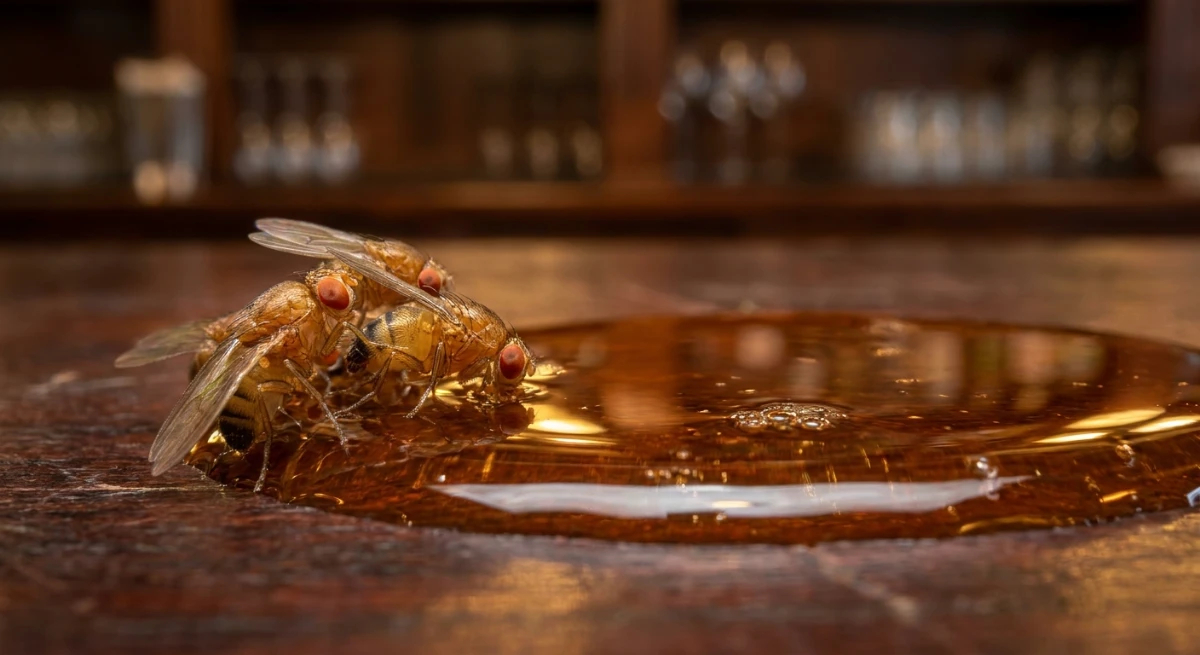
Our technicians often find massive infestations thriving on just a few drops of spilled syrup behind a commercial bar. The key to eradication is understanding their speed. In the heat of an Auckland summer, their reproduction shifts into overdrive.
From Egg to Adult in 8 Days: Breaking the Cycle
Temperature dictates everything in the pest control world. At a cool 15 degrees, a fruit fly takes about a month to develop from an egg into an adult. But at 25 degrees, that lifecycle compresses down to just 8 to 10 days.
This rapid turnaround is exactly why DIY treatments usually fail. You might kill the flying adults on a Monday, but by Wednesday, a hundred new pupae have hatched from your drain. You are constantly fighting a losing battle against their biology.
To permanently break this cycle, you must target the larvae and pupae. If you remove the food source and destroy the eggs, the adult population will naturally die off within a few weeks. It’s a game of patience and extreme hygiene.
Fruit Flies vs. Drain Flies vs. Fungus Gnats
Before you start treating, you need to know your enemy. Aucklanders frequently confuse fruit flies with other tiny flying pests. Treating the wrong insect guarantees failure.
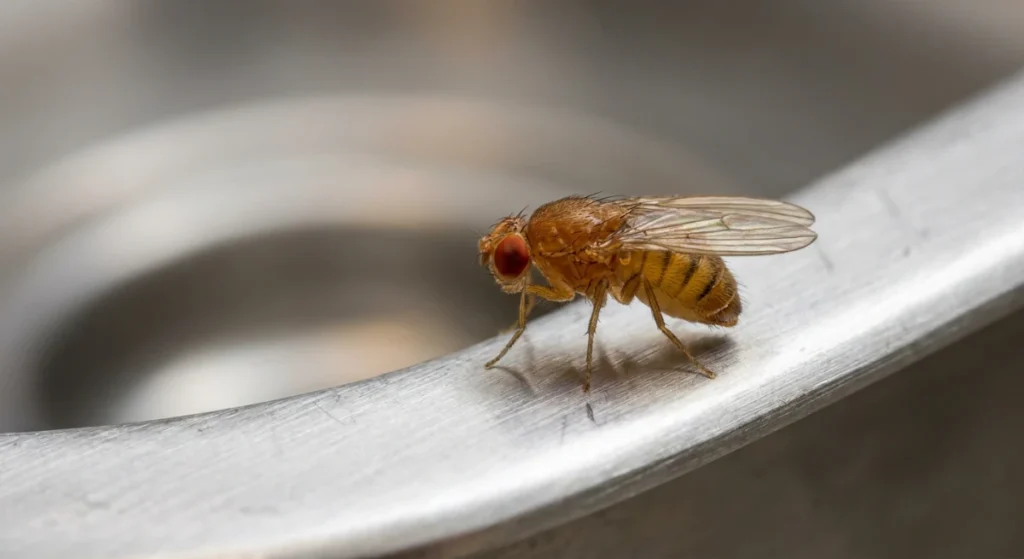
Fruit flies are light brown with distinctive red eyes, and they hover around rotting food or sweet liquids. Drain flies, on the other hand, look like tiny, fuzzy grey moths and stick exclusively close to sinks and showers. They breed entirely in plumbing slime.
Fungus gnats are black, mosquito-like insects that hover around your indoor houseplants. They breed in damp potting soil, not in your kitchen drains. Identifying the specific pest dictates exactly where you need to focus your cleaning efforts.
Step 1: Source Identification and Elimination
You can’t manage what you can’t find. The very first step in our integrated pest management (IPM) approach is a forensic inspection of the property. We don’t touch a single pesticide until we know exactly where they are breeding.
Fruit flies are attracted to the yeast and fungi that grow on decaying organic material. They are essentially tracking the smell of fermentation. If you have an infestation, something in your home or business is rotting.
This isn’t about judging your cleaning habits. We’ve found massive infestations thriving on just a few drops of spilled juice behind a heavy commercial fridge. The key to eradication is finding these micro-environments and completely removing the food source.
Hidden Breeding Grounds: Fermenting Spills and Mops
Most people check the fruit bowl and the rubbish bin, but fruit flies are far more resourceful than that. They will breed in any damp, organic sludge they can find. If it’s wet and rotting, they will claim it.
Here are the most common hidden breeding grounds we uncover during our daily Auckland inspections:
- Floor Drains and Sink Overflows: The gelatinous slime that coats the inside of your plumbing is a five-star hotel for fly larvae.
- Drip Trays: The trays under your refrigerator, heat pump, or commercial beer taps collect stagnant water and organic dust.
- Mop Heads and Brooms: A damp, dirty mop left sitting in a bucket will ferment and host thousands of eggs within days.
- Recycling Bins: Unrinsed wine or beer bottles leave a sugary residue that ferments rapidly in warm weather.
- Cracked Tiles and Grout: Water and food particles seeping under damaged kitchen flooring create an unreachable breeding void.
If you find larvae inside fresh, unblemished fruit (rather than rotting fruit), do not throw it away. This is a sign of exotic pests like the Queensland fruit fly. Seal it in a plastic bag and call the MPI exotic pest hotline immediately on 0800 80 99 66.
The Apple Cider Vinegar Trap: Monitoring, Not Eradicating
Everyone has heard of the classic DIY trap. You pour apple cider vinegar and a drop of dish soap into a bowl, cover it with glad wrap, and poke holes in the top. The flies are drawn to the fermentation, fall in, and drown.
While this trap is highly effective at catching adult flies, it is purely a monitoring tool. It will not solve your problem. Catching the adults does absolutely nothing to the hundreds of eggs currently incubating in your kitchen drain.
We use professional monitoring traps to gauge the severity of an infestation, but we never rely on them as a standalone solution. To genuinely learn how to get rid of fruit flies permanently nz style, you must move past trapping and focus entirely on source removal.
Step 2: Deep Cleaning and Biofilm Removal
Once you’ve located the source, physical removal is your only option. You can’t simply spray insecticide down a drain and expect it to work. The chemicals will wash away, leaving the eggs completely unharmed.
This is where elbow grease comes in. You need to physically scrub away the organic matter. If the breeding site is a rubbish bin, take it outside, scrub it with hot soapy water, and leave it to dry in the sun.
For drains, the process is much more complicated. The sludge inside your plumbing is highly resistant to standard cleaning products. You have to break it down entirely.
Why Bleach Doesn’t Work on Drain Scum
This is the biggest mistake we see Auckland homeowners make. Pouring bleach down the sink will not solve a drain fly or fruit fly problem. Bleach is a liquid that flows quickly over the surface of the pipe.
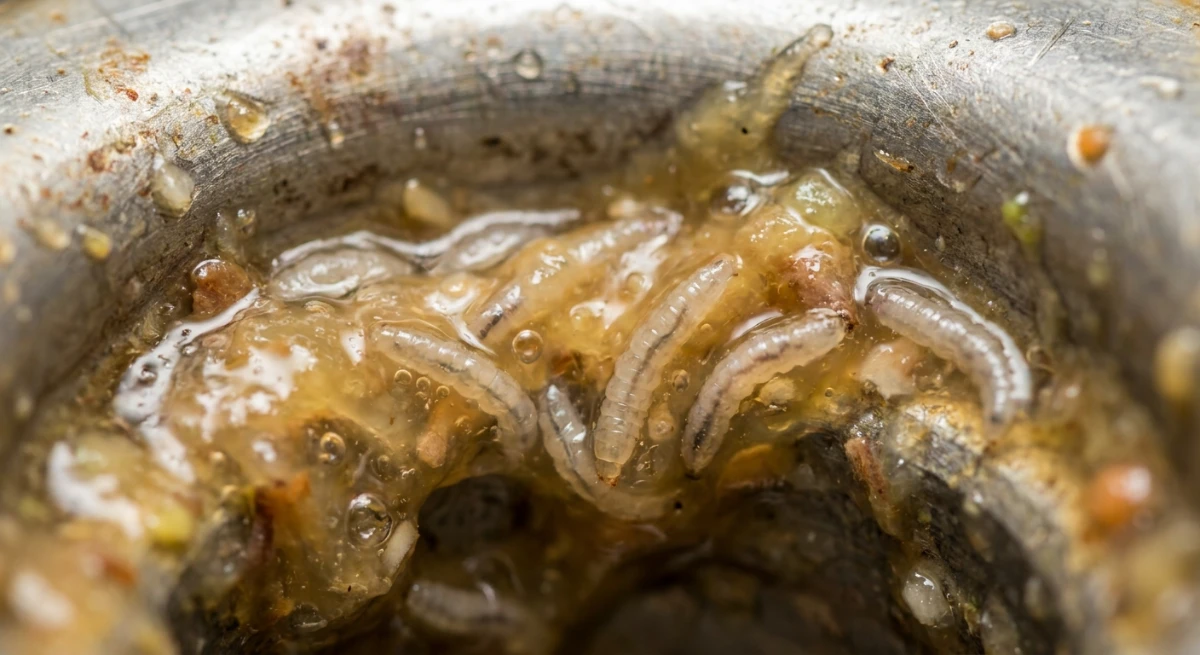
Inside your drain, bacteria and decaying food create a thick, sticky layer called biofilm. This biofilm acts as a protective shield for fruit fly eggs and larvae. The bleach simply glides over the top of the slime without penetrating it.
Biofilm is highly resistant to standard chemical cleaners. To destroy the fruit fly eggs embedded within it, you must use a biological enzyme cleaner that actually digests the organic matter, or physically scrub the pipe with a stiff wire brush.
Here is a breakdown of common drain cleaning methods and why they succeed or fail when dealing with severe infestations:
| Treatment Method | Effectiveness on Biofilm | Pest Control Verdict |
|---|---|---|
| Household Bleach | Very Low | Fails to penetrate. Glides over eggs. Do not use. |
| Boiling Water | Moderate | Kills exposed larvae, but may not remove the root slime. |
| Baking Soda & Vinegar | Moderate | Good for light maintenance, but weak against heavy infestations. |
| Enzymatic Cleaners | Very High | Digests the organic matter entirely, destroying the breeding ground. |
The DIY Cycle of Despair
We constantly get calls from frustrated homeowners stuck in the ‘DIY Cycle of Despair.’ They spend a fortune on hardware store bug bombs and automatic spray dispensers. These products release neurotoxins into the air, killing whatever happens to be flying past.
The problem is that these sprays offer zero residual protection against the eggs hidden in your drains. The moment the chemical dissipates, the next generation of flies emerges from their hidden breeding site. You end up exposing your family and pets to unnecessary chemicals without actually fixing the issue.
Our scientific approach eliminates this cycle entirely. By focusing on structural entry-point exclusion and root-cause eradication, we stop the breeding at its source. We don’t just treat the symptom; we cure the disease.
Step 3: Professional Enzymatic Treatments
When DIY methods fail, it’s time to bring in the professionals. At Pest Control Auckland, we don’t waste time with generic surface sprays for fruit fly issues. We focus purely on root-cause eradication.
For severe infestations, especially in commercial kitchens, we apply industrial-grade enzymatic foams. These foams expand to fill the entire void of a drain pipe or wall cavity. The active bacteria in the foam consume the rotting organic matter, literally eating the fruit fly’s home.
Once the breeding ground is digested, the lifecycle is permanently broken. We then apply targeted, zero-emission treatments to eliminate the remaining adult stragglers. This scientific approach is the only reliable way to figure out how to get rid of fruit flies permanently nz.
When to Call a Level 3 Qualified Technician
If you run a hospitality business in Auckland, fruit flies aren’t just an annoyance; they’re a massive commercial risk. New Zealand’s hospitality sector turned over $15.99 billion in FY2025, and the competition is fierce. You can’t afford to fail a Food Act 2014 health inspection.
Commercial food preparation areas prohibit the use of standard toxic sprays. You need a Qualified Urban Pest Management Contractor who holds a Level 3 Certificate. We understand exactly how to implement compliant, non-toxic monitoring and eradication systems.
With the FAOPMA Pest Summit coming to Auckland in July 2026, the industry standard for pest management is higher than ever. We use predictive Integrated Pest Management (IPM) to stop infestations before they start. If you’re constantly battling flies, your current hygiene protocols are failing.
Don’t wait for a customer to complain about flies in their wine glass. Contact Pest Control Auckland today for a comprehensive biosecurity compliance audit and long-term preventative treatment plan.
The Pest Control Auckland “Silver Bullet Guarantee”
We stand by our work because we rely on science, not guesswork. When you hire us, you’re getting local Auckland expertise backed by rigorous entomological knowledge. We don’t just spray and walk away.
Our ‘Silver Bullet Guarantee’ means we’re committed to thorough, reliable work that gives you absolute peace of mind. We identify the source, destroy the breeding ground, and provide you with a clear, actionable prevention plan.
Whether you’re a landlord dealing with Tenancy Tribunal disputes or a homeowner wanting your sanctuary back, we provide transparent, upfront pricing. There are no bait-and-switch tactics, just honest, highly certified pest management that works.
People Also Ask (FAQ)

About the Author: Ronnie
Founder, Pest Control Auckland · Commercial & Residential Pest Expert · Certified Urban Pest Management Specialist.
With years of experience managing complex biosecurity and commercial hygiene compliance across Auckland, Ronnie is the definitive expert on how to get rid of fruit flies permanently. Having consulted extensively for the hospitality sector under the Food Act 2014, his entomological approach ensures businesses and homes achieve total root-cause eradication without relying on toxic surface sprays.