It is May 2026, and if you have walked face-first into a web strung across your hallway this morning, you already know the autumn pest surge has arrived in Tāmaki Makaurau. Following last year’s mild winter and scorching summer, Auckland’s insect populations have exploded. Now that the weather is cooling down rapidly, those insects are moving indoors to survive, and the spiders are following right behind them.
Look, spiders are not plotting a coordinated home invasion to terrorise your family. They are simply predators following the food source. If your house is suddenly crawling with eight-legged guests, you do not just have a spider issue—you have a broader insect problem that is ringing the dinner bell.
The era of reactive, toxic “spray and pray” applications is dead. Today, effective spider prevention in Auckland requires a smarter, entomological approach. We focus on Predictive Integrated Pest Management (IPM) to stop them at the structural level before they ever cross your threshold.
Key Takeaways
Effective spider prevention in Auckland relies on Predictive Integrated Pest Management (IPM). Sealing structural entry points, managing exterior lighting to reduce prey insects, and scheduling targeted, zero-emission exterior treatments before the autumn surge will keep your home spider-free without harming native ecosystems.
Understanding Spider Behavior & Prevention in Auckland
Spiders are highly pragmatic creatures. They set up camp where the hunting is good and the shelter is dry. They do not waste energy building webs or nesting in areas devoid of prey.
In Auckland, our humid, coastal environment creates the perfect breeding ground for a massive variety of flying and crawling insects. When you leave porch lights on or have gaps in your window frames, you invite these prey insects inside. The spiders simply follow the buffet line straight into your living room.
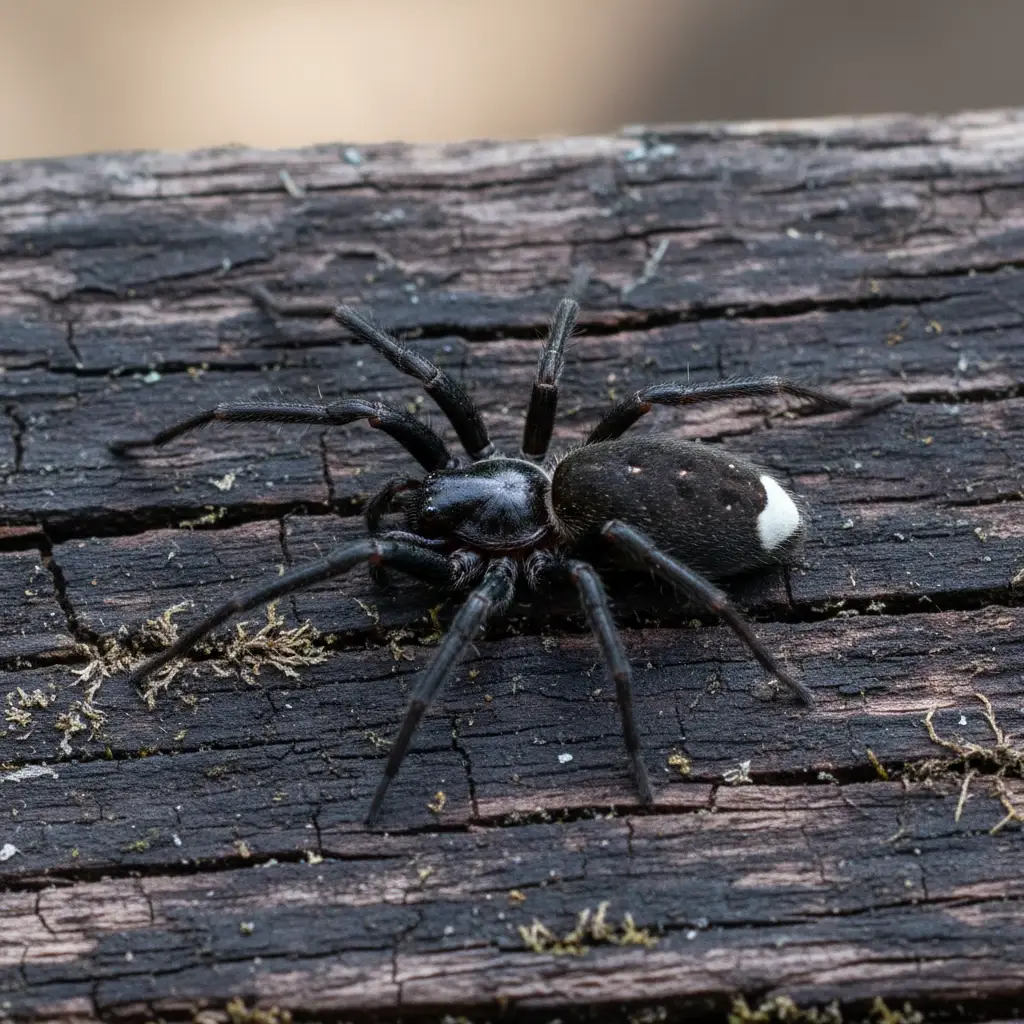
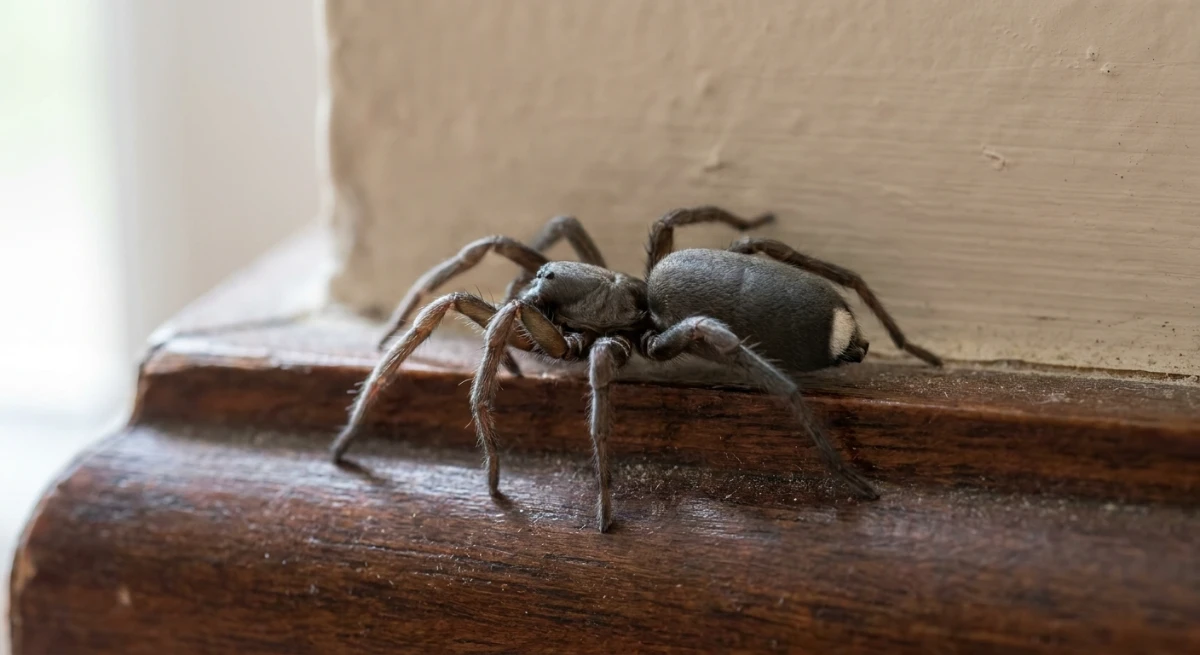
The notorious White Tail spider (Lampona cylindrata and Lampona murina) is a prime example of this behavior. Unlike web-weaving spiders that passively wait for food to come to them, White Tails are active nocturnal hunters. Their absolute favorite meal is actually the common Grey House Spider, which is exactly why you often find White Tails prowling around your skirting boards and dark roof cavities.
Common Auckland Spider Species You Should Know
To effectively manage a spider problem, you need to know exactly what is crawling across your ceiling. Auckland’s climate supports a wide variety of species, but only a few are regular indoor intruders. Identifying the specific species helps us determine their nesting habits and preferred structural entry points.
The Black House Spider (Badumna insignis) is incredibly common around aluminum window frames and the corners of exterior brickwork. They build messy, lacy webs that look like tangled funnels. While they are timid and rarely bite humans, their webs quickly accumulate dust and insect carcasses, making your property look unkempt.
Then you have the ubiquitous Daddy Longlegs (Pholcus phalangioides). These fragile-looking spiders set up camp in the upper corners of your rooms and bathrooms. Interestingly, despite their harmless appearance, they are actually highly effective predators that will hunt and kill much larger spiders, including White Tails. However, their rapidly multiplying webs can quickly become a nuisance in a clean, modern home.
The Ecological Role of Spiders in New Zealand
Before you grab a rolled-up newspaper, it is important to understand that spiders are not the enemy. In fact, they are one of nature’s most efficient and cost-effective pest control agents. A healthy outdoor spider population keeps mosquitoes, flies, and agricultural pests strictly in check.
New Zealand is home to thousands of native spider species, many of which are completely harmless and vital to our delicate ecosystem. The Auckland Regional Pest Management Plan (RPMP) 2020-2030 strongly highlights the increasing pressure on our local biodiversity. Indiscriminately wiping out native spiders with cheap hardware store chemicals does vastly more harm than good.
Balancing Pest Control with Environmental Stewardship
Our goal as certified pest professionals is never blanket eradication. It is about creating a distinct, impenetrable barrier between the natural world outside and your family’s sanctuary inside. We want the spiders to thrive in your garden, not in your bedsheets.
This requires a highly targeted approach. We identify the specific invasive species causing the issue—like the Australian White Tail—and apply precise, MPI-approved treatments only where necessary. This protects the beneficial native spiders outdoors while entirely securing your interior walls.
If you are seeing a sudden influx of White Tail spiders in your hallways, it almost guarantees you have an established population of web-building spiders hidden in your roof void or subfloor. You have to eliminate the prey to evict the predator.
Predictive IPM: Stopping Spiders Before They Enter
The foundation of reliable spider prevention in Auckland is Predictive Integrated Pest Management (IPM). Instead of waiting for spiders to overrun your home and then spraying toxic chemicals everywhere, we address the root cause of the infestation. We look at your property structurally to deny them entry in the first place.
Spiders do not chew through wood or brick like rodents do. They exploit existing structural vulnerabilities. A gap as thin as a credit card is a wide-open front door for a juvenile spider seeking warmth.
Sealing Entry Points and Weather Stripping
The most effective pest control you can do happens at the hardware store with a simple tube of silicone sealant. Walk the perimeter of your home and inspect the foundation line closely. Look for cracks around pipe penetrations, deteriorating weather stripping on doors, and torn window screens.
Pay special attention to your roof cavity vents and subfloor access grates. These areas provide the dark, dry shelter that spiders desperately crave during the wet Auckland winters. Installing high-quality, fine-gauge mesh over these vents restricts access without compromising your home’s necessary airflow.
- Weepholes: Install specialized stainless steel weephole covers that allow internal moisture to escape but block crawling insects.
- Door Sweeps: Fit heavy-duty bristle sweeps to the bottom of all exterior doors, especially garage doors where gaps are usually widest.
- Vegetation Management: Trim back tree branches and dense bushes so they do not touch the siding or roofline. Spiders use these as direct bridges into your gutters.
Check the rubber seals around your aluminum window frames. Auckland’s harsh UV rays degrade these seals over time, creating micro-gaps that spiders easily use to slip inside during cold nights.
Managing Exterior Lighting to Reduce Prey Insects
Your outdoor lighting choices directly impact your spider population. Bright white or bluish LED lights are highly attractive to nocturnal flying insects like moths, midges, and mosquitoes. Where the bugs gather by the hundreds, the spiders will quickly follow to spin their webs.
By changing the spectrum of your exterior lights, you can drastically reduce the amount of insect traffic around your entryways. This simple adjustment forces spiders to build their webs further out in the garden, away from your doors and windows where you actually walk.
Swap out bright white porch bulbs for warm yellow, amber, or sodium vapor lights. Insects are far less attracted to warmer color temperatures, instantly reducing the food supply for nearby spiders.
Seasonal Spider Migration Patterns
Spider activity in Auckland is highly cyclical. While you might see the occasional web in summer, the real influx happens when the seasons dramatically change. Understanding these patterns allows us to implement spider prevention in Auckland proactively rather than scrambling to react.
The Autumn Surge: Preparing Your Home in March
As we hit late March and April, overnight temperatures begin to drop across the region. Spiders that happily lived in your garden all summer suddenly realize they need shelter from the impending winter rain. This triggers a mass migration toward the warmth and dryness of your residential framing.
This is why booking an exterior perimeter treatment in early autumn is absolutely critical. We lay down a zero-emission, micro-encapsulated barrier around the foundation and eaves. When the spiders attempt to cross this barrier to escape the cold, they are stopped in their tracks before they can establish nests in your roof void.
When to Call a Level 3 Qualified UPM Contractor
There is a massive difference between swatting a single daddy longlegs and dealing with an entrenched White Tail infestation. When you start finding spiders in your clothing, bedding, or shoes on a weekly basis, DIY methods are no longer sufficient to protect your family.
Under the EPA HPC Notice 2017 and HSNO Act 1996, handling commercial-grade, highly effective pest control substances requires a New Zealand Certificate in Pest Operations (Level 3). As Qualified UPM Contractors, we have access to advanced formulations that hardware stores simply cannot legally sell to the general public.
With Auckland hosting the FAOPMA Pest Summit in July 2026, the industry standard for safe, effective eradication has never been higher. We utilize targeted, pet-safe treatments that bind to surfaces and provide months of residual protection without off-gassing toxic fumes into your living space.
Hardware store bug bombs are highly ineffective against spiders. Spiders keep their bodies off the ground and do not groom their legs like cockroaches do, meaning they rarely ingest the poison. Bombs just cover your kitchen benches in toxic residue while the spiders stay safe up in the roof.
| Method | Effectiveness on Spiders | Safety Profile | Long-Term Prevention |
|---|---|---|---|
| DIY Bug Bombs | Very Low. Spiders avoid the settled residue. | Poor. Leaves toxic residue on food prep surfaces. | None. Only kills what it directly touches. |
| Hardware Store Sprays | Moderate. Kills on direct contact only. | Moderate. Often contains harsh propellants. | Low. Breaks down quickly in sunlight. |
| Level 3 UPM Contractor (Us) | Extremely High. Targets nests and entry points. | Excellent. MPI-approved, zero-emission treatments. | High. Micro-encapsulated formula lasts for months. |
When you hire us, you are not just paying for a spray. You are paying for a comprehensive structural audit, targeted eradication, and our Silver Bullet Guarantee. We fix the root cause so you can sleep soundly without checking your duvet for eight-legged surprises.
People Also Ask (FAQ)

About the Author: Ronnie
Founder, Pest Control Auckland · Commercial & Residential Pest Expert · Certified Urban Pest Management Specialist
With years of experience crawling through Auckland’s roof voids and subfloors, Ronnie understands the unique seasonal behaviors of New Zealand’s spiders. Having consulted for numerous property managers and homeowners, he specializes in structural exclusion and targeted, eco-friendly eradication strategies that keep families safe without harming local biodiversity.