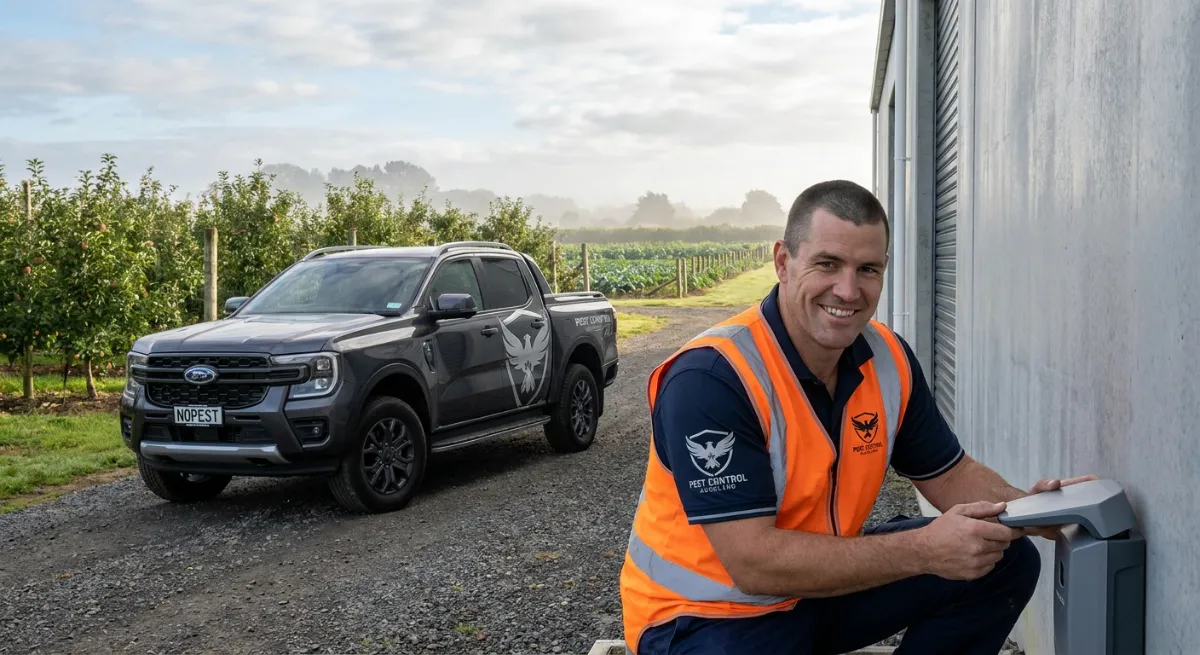
G’day, I’m Ronnie. It’s May 2026, and Auckland’s unusually warm autumn has been a bit of a double-edged sword. While it’s been fantastic for a late-season barbecue, it has also created a perfect storm for both urban and agricultural pests. Here at Pest Control Auckland, our phones have been ringing off the hook with commercial and residential callouts as these bugs look for a place to hunker down for winter.
Growing up in South Africa, I learned early on that you don’t mess around with serious pests. Whether it was checking your boots for a scorpion or keeping an eye out for a snake in the shed, the threat profile was always top of mind. Here in New Zealand, our biosecurity threats might look a bit different, but they are just as economically deadly to our primary industries.
When we look at the Pest Control Challenges in NZ Horticulture: Protecting Fruit & Vegetable Crops, the stakes have never been higher. New Zealand’s hospitality sector recently reached a record $15.99 billion turnover, and the foundation of that success is pristine, pest-free local produce. If invasive bugs establish a foothold, our export reputation and local food supply take a massive hit.
Key Takeaways
The primary Pest Control Challenges in NZ Horticulture: Protecting Fruit & Vegetable Crops involve battling invasive threats like the Fall Armyworm and Brown Marmorated Stink Bug. Success in 2026 requires transitioning from toxic chemical sprays to Predictive Integrated Pest Management (IPM) to ensure strict MPI biosecurity compliance.
The 2026 Biosecurity Landscape in Aotearoa
A major part of understanding the Pest Control Challenges in NZ Horticulture: Protecting Fruit & Vegetable Crops is recognising how easily these pests travel. A moth or a stink bug doesn’t care if it’s sitting on a sweetcorn leaf in a rural paddock or hiding inside a shipping pallet bound for an Auckland distribution centre. They are opportunistic hitchhikers, plain and simple.
In July 2026, Auckland is proud to host the FAOPMA Pest Summit at the NZICC, with the overarching theme being “FutureProof: Smarter Pest Solutions.” Naturally, the Pest Control Challenges in NZ Horticulture: Protecting Fruit & Vegetable Crops will be a central talking point among global experts. It’s a clear signal that the world is watching how New Zealand defends its borders and its crops.
We are moving away from reactive measures toward highly predictive models. It is no longer enough to wait for a pest to destroy a crop; we have to intercept them at the border, monitor them with smart traps, and physically exclude them from our commercial facilities.
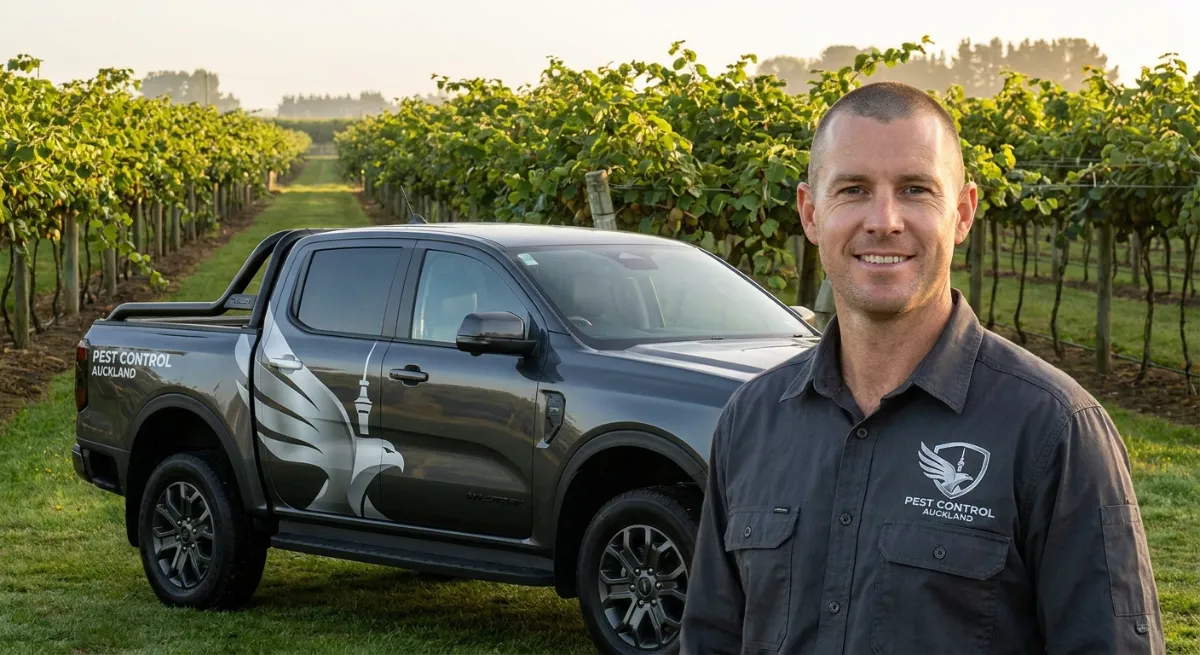
Major Invasive Threats to Our Crops
Not all bugs are created equal. While we spend plenty of time dealing with common urban rodents and cockroaches, the agricultural sector faces a unique set of devastating adversaries. These are the heavy hitters that keep biosecurity officials awake at night.
The Fall Armyworm
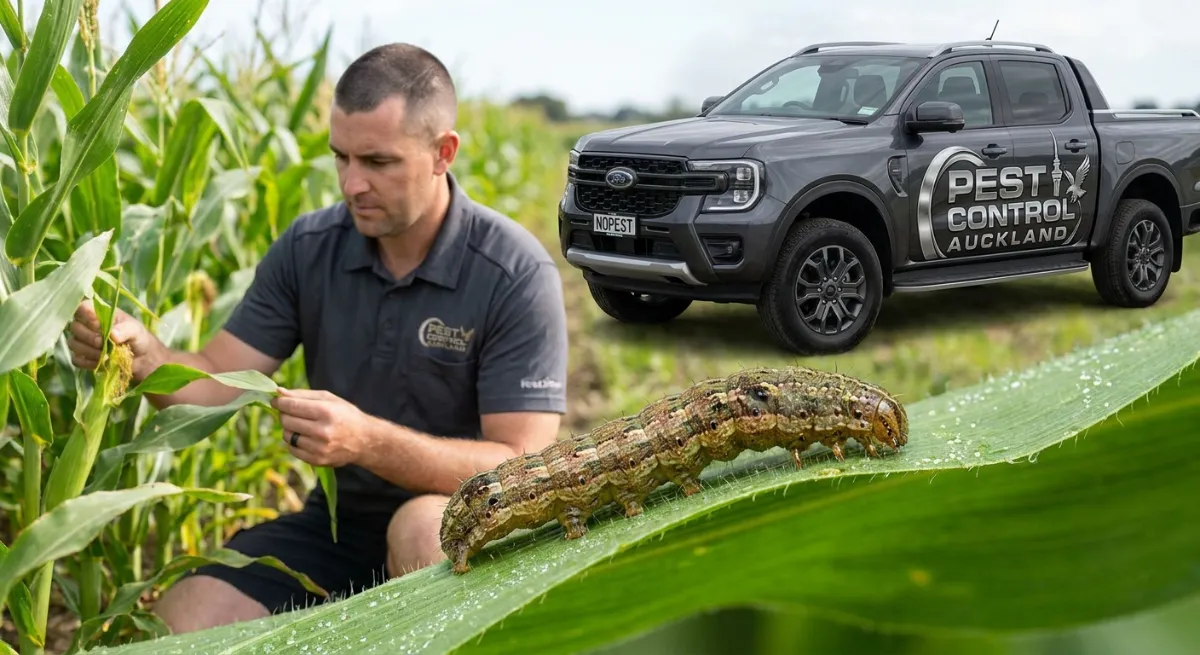
The Fall Armyworm (Spodoptera frugiperda) is a relatively new arrival, having blown over from Australia in early 2022. By the 2025/2026 season, it has become a massive focus for crop scouts, particularly in Northland and the upper North Island.
This pest is notorious for devastating sweetcorn, maize, and various vegetable crops overnight. Because it spreads so rapidly, early detection through dedicated pheromone trapping networks is our absolute best line of defence.
The Brown Marmorated Stink Bug (BMSB)
If there is one pest that unites urban exterminators and rural growers in pure dread, it is the Brown Marmorated Stink Bug. This highly invasive insect feeds on over 300 different plant species, making it an existential threat to our kiwifruit, apple, and wine industries.
The BMSB is the ultimate global hitchhiker. During the high-risk season from September to April, they are frequently intercepted at our borders hiding in imported vehicles, machinery, and shipping containers.
If you spot a Brown Marmorated Stink Bug in a shipping container or imported machinery, do not kill it and throw it away. Catch it, photograph it, and call the MPI exotic pest hotline immediately on 0800 80 99 66.
The Packhouse Overlap: Protecting the Supply Chain
You might be wondering why a team based in Orewa is talking about crop pests. While we don’t drive tractors through kiwifruit orchards spraying hectares of land, we handle the critical next step. Once that fresh produce hits a commercial packhouse, a warehouse, or a hospitality venue here in Auckland, it falls strictly under our jurisdiction.
If you are involved in the commercial supply chain, staying updated on the Pest Control Challenges in NZ Horticulture: Protecting Fruit & Vegetable Crops is essential for your own compliance. Failing an MPI or Food Act 2014 audit because a rural pest hitched a ride into your urban facility is a nightmare no business owner wants to face.
That’s why we back our commercial clients with honest advice and our Silver Bullet Guarantee. We focus on sealing the building envelope so that these unwanted houseguests can’t get inside in the first place.
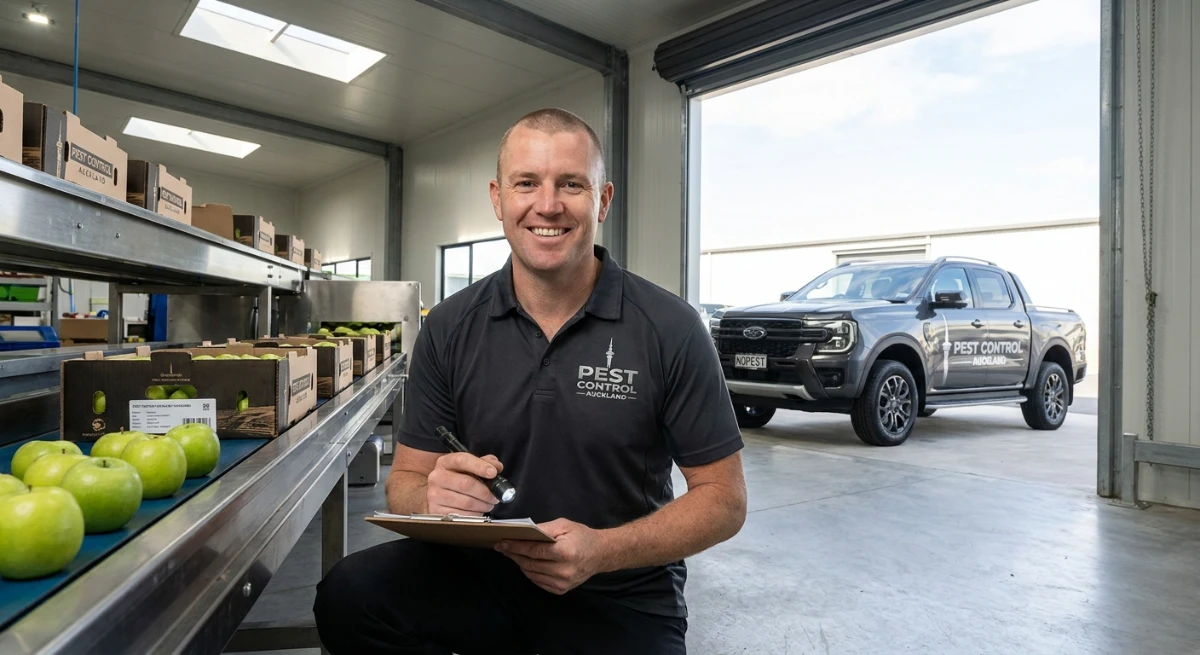
For commercial packhouses, the best defence is a good physical barrier. Ensure all loading dock doors have heavy-duty weather stripping and that ventilation screens are completely intact to prevent invasive moths from entering.
The End of “Spray and Pray” Tactics
Effectively managing the Pest Control Challenges in NZ Horticulture: Protecting Fruit & Vegetable Crops requires a permanent shift away from toxic sprays. The era of reactive, “spray and pray” applications is completely dead in modern commercial environments.
Under the EPA HPC Notice 2017 and the HSNO Act 1996, the rules around applying ecotoxic substances are incredibly strict. You can’t just blast a facility with chemicals and hope for the best. It’s dangerous for the environment, it risks contaminating food, and it’s highly illegal without the proper certifications.
Today, it’s all about root-cause eradication. We act as entomological detectives, tracking down exactly where the pests are nesting and how they are entering the building. By fixing the structural flaws, we drastically reduce the need for chemical interventions.
Handling Class 9 ecotoxic substances in New Zealand requires a technician to hold the New Zealand Certificate in Pest Operations (Level 3). Always ask to see your provider’s credentials before they apply treatments near food zones.
Predictive IPM and Smart Technology
Integrated Pest Management (IPM) is the gold standard for both agriculture and urban commercial properties. Instead of relying on a single method of extermination, IPM uses a layered approach to create an inhospitable environment for pests.
- Root-Cause Eradication: Finding exactly how the pests are getting into the facility in the first place.
- Structural Exclusion: Sealing gaps, fixing weather stripping, and upgrading ventilation screens.
- Zero-Emission Treatments: Using MPI-approved methods that won’t contaminate food or harm staff.
- Digital Monitoring: Utilising IoT-enabled smart traps that send instant alerts when triggered.
To give you an idea of how rapidly this landscape is changing, just look at the data on biosecurity interceptions over the last few years. The volume of threats is rising, which means our technological response has to be sharper than ever.
Navigating Legal Compliance in 2026
If you’re running a commercial facility and these rural hitchhikers are becoming unwanted houseguests, give us a buzz. But be aware that the legal framework governing how we handle them is tighter than ever.
Under the Food Act 2014, any facility handling or storing fresh produce must adhere to rigorous hygiene standards. Furthermore, HACCP protocols prohibit the use of toxic rodenticide baits in sensitive food prep areas. We have to rely on non-toxic monitoring blocks and highly targeted mechanical traps to keep the area secure.
Then there is the ethical side of trapping. The days of throwing down cheap glue boards and forgetting about them are long gone, and rightly so. We ensure that all our commercial clients remain fully compliant with national welfare standards.
Under the Animal Welfare Act 1999, any live-capture traps used for rodent monitoring around food storage facilities must be physically inspected within 12 hours after sunrise every single day.
To help you understand the broader picture, here is a breakdown of the primary threats facing our horticulture and logistics sectors right now.
| Pest Threat | Primary Targets | Biosecurity Status (2026) | Management Focus |
|---|---|---|---|
| Fall Armyworm | Sweetcorn, Maize, Vegetables | Present (Arrived 2022) | Crop scouting, targeted IPM, packhouse exclusion |
| Brown Marmorated Stink Bug | Kiwifruit, Apples, Wine Grapes | High-Risk Border Threat | Fumigation of imports, Samurai Wasp biocontrol readiness |
| Yellow-Legged Hornet | Honeybees (Crucial Pollinators) | Active Eradication Response | Public reporting, nest destruction by MPI |
| Urban Rodents (Rats/Mice) | Stored Produce, Packhouses | Established Nationwide | Structural exclusion, non-toxic monitoring, daily trap checks |