
Look, aged care facilities are built for comfort, not quarantine. When you have a constant rotation of nurses, family visitors, and hospital transfers, pests are going to hitch a ride inside. It is not a reflection of your cleaning staff. It is just the reality of operating a high-traffic building in Auckland.
You are dealing with vulnerable residents, strict health regulations, and families who expect a pristine environment. A single bed bug sighting can damage your reputation overnight. The difference between a contained incident and a facility-wide crisis comes down to how quickly and ruthlessly you respond.
Key Takeaways
Managing bed bug outbreaks in aged care facilities requires immediate isolation of the affected room, laundering all linens at 60°C, and deploying a Level 3 qualified pest technician. Effective eradication relies on combining targeted heat treatments with EPA-approved chemical applications to destroy both live bugs and hidden eggs.
Why Aged Care Facilities Are Prime Targets
Bed bugs are world-class hitchhikers. They do not care if your facility is a budget rest home or a luxury retirement village. They travel effortlessly on clothing, walking frames, and the bags of visiting relatives.
Once inside, the environment is absolutely perfect for them. Aged care facilities are climate-controlled year-round, offering a stable breeding ground regardless of the weather outside. Furthermore, the high density of beds means a constant blood meal is always within crawling distance.
By May 2026, Auckland is experiencing a noticeable autumn surge in cryptic pests. Following a mild winter and hot summer, insect populations have exploded across the region. As temperatures finally drop, these pests move indoors seeking warmth and stability.
We are already seeing this exact topic dominate the agenda for the upcoming FAOPMA 2026 Pest Summit here in Auckland. Industry leaders recognize that commercial facilities are facing unprecedented pressure. Traditional, reactive pest control simply does not cut it anymore.
Many elderly residents have compromised immune systems and do not react to bed bug bites. They often do not produce the classic itchy, red welts, meaning an infestation can grow silently for months before a staff member notices a problem.
The Legal Reality: Ngā Paerewa Health and Disability Services Standard
You cannot just send a maintenance worker in with a hardware store bug bomb. That is a fast track to a compliance failure and a potential lawsuit. New Zealand’s aged care sector is heavily regulated, and pest control is no exception.
Under the updated Ngā Paerewa Health and Disability Services Standard (NZS 8134:2021), your facility must maintain strict environmental safety and infection control. This standard emphasizes safe, high-quality care for all residents. Using unapproved, highly toxic chemicals around elderly patients with respiratory issues is a massive liability.
Furthermore, the EPA HPC Notice 2017 mandates strict rules for handling Class 9 ecotoxic substances. Anyone applying these chemicals in an urban commercial environment must be a qualified professional. You need a technician holding the New Zealand Certificate in Pest Operations (Level 3).
Do not risk your Ministry of Health certification on cheap, unverified contractors. When auditors review your facility, they want to see a documented Integrated Pest Management (IPM) plan. They expect to see transparent safety data sheets (SDS) for every product used on site.
Our approach at Pest Control Auckland aligns perfectly with these legal requirements. We utilize MPI-approved, zero-emission treatments that are rigorously tested for efficacy and safety. We protect your residents, your staff, and your operating license.
Spotting an Outbreak Before It Spreads
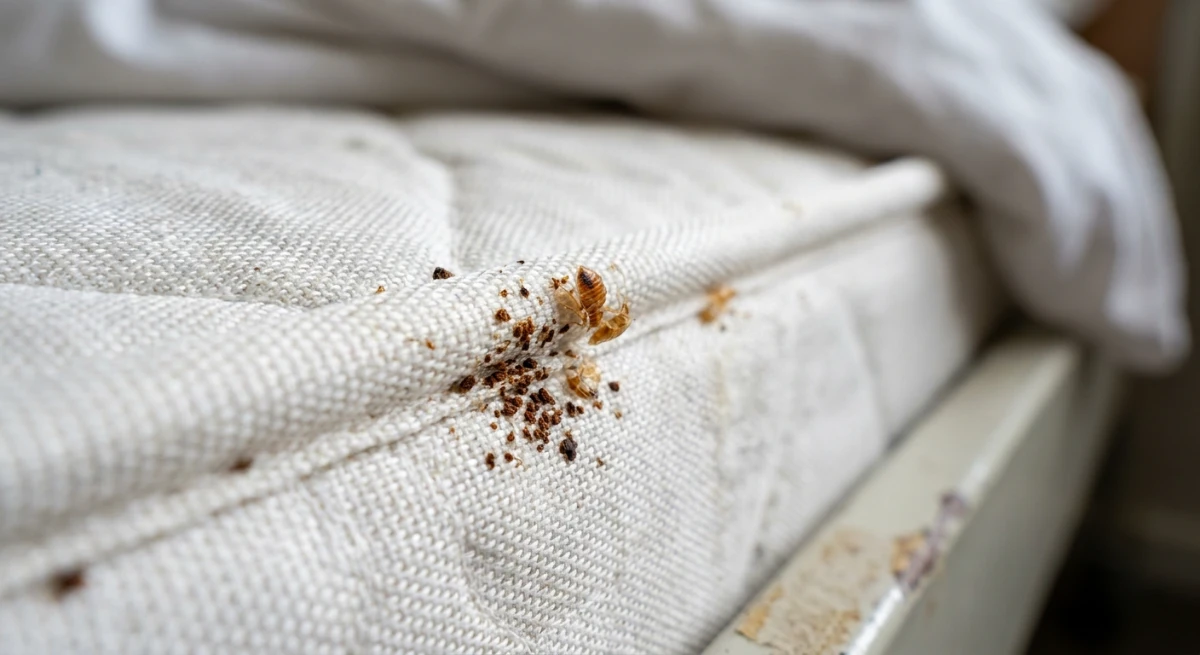
When it comes to managing bed bug outbreaks in aged care facilities, early detection is your absolute best defense. Since residents might not complain about bites, your staff must be trained to spot the physical evidence. You are looking for the signs the bugs leave behind, not just the insects themselves.
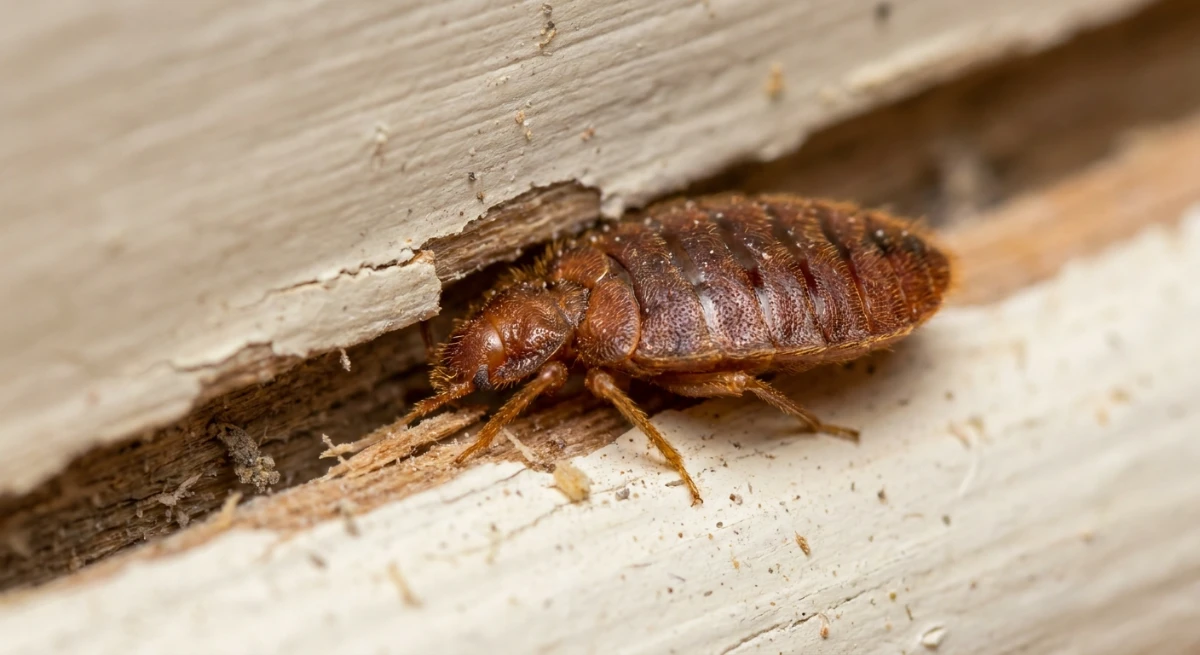
Bed bugs are nocturnal and highly photophobic. They hide deep in cracks during the day and only emerge at night to feed. Therefore, a casual glance around a sunny room will usually reveal nothing.
Check the seams of mattresses, the piping on chairs, and the corners of wooden bed frames. You will often find dark, rusty spots of dried blood and fecal matter. You might also spot pale yellow, translucent shed skins left behind as the nymphs molt and grow.
Train your housekeeping staff to inspect the mattress piping every time they strip a bed. A ten-second visual check during routine linen changes is the most effective early warning system your facility has.
Another key indicator is a strange, sweet, musty odor in the room. This scent is produced by the bugs’ alarm pheromones. If a room smells slightly like rotting raspberries or damp mold, you need to investigate immediately.
Step-by-Step Eradication Best Practices
When a staff member reports a suspected bed bug, stop everything. Do not move the resident to a new room immediately without decontaminating them first. If you move an infested resident or their belongings, you just spread the problem to a second room.
Never drag infested sheets down the hallway. Strip the bed carefully, seal the linens inside a heavy-duty soluble laundry bag right there in the room, and transport it directly to the wash.
First, bathe the resident and provide fresh, uninfested clothing before transferring them to a temporary room. Next, isolate the infested room completely. Tape off the door and do not allow housekeeping to run a vacuum cleaner inside, as the exhaust can blow tiny eggs into the corridor.
Finally, call in a certified pest management professional immediately. Effective management of bed bug outbreaks in Auckland aged care requires a multi-faceted approach. We use a combination of targeted heat treatments and low-toxicity chemical applications.
Heat treatment is the undisputed heavy hitter for bed bugs. We raise the ambient temperature of the room to a level that is lethal to all life stages, including the highly resilient eggs. Heat penetrates deep into wall voids, mattresses, and wooden furniture where sprays cannot reach.
We then follow up with an EPA-approved residual chemical barrier along the skirting boards and entry points. This ensures that if a single bug somehow escapes the heat, it will cross the barrier and die shortly after. This dual-method approach forms the backbone of our Silver Bullet Guarantee.
| Treatment Method | Efficacy on Eggs | Penetration Depth | Best Use Case |
|---|---|---|---|
| Targeted Heat Treatment | 100% Lethal | Deep into wall voids and mattresses | Primary eradication for active, severe infestations |
| Residual Chemical Barrier | Low to Moderate | Surface level only | Secondary prevention to catch migrating stragglers |
| DIY Bug Bombs | Zero Efficacy | Airborne only (repels bugs deeper) | Never recommended for commercial facilities |
Auckland Bed Bug Trends & Data
If you feel like you are fighting an uphill battle against these pests, the data backs you up. Bed bugs are not just an aged care problem; they are a severe urban density issue across New Zealand and globally.
Recent 2025 survey data from the National Pest Management Association (NPMA) highlights exactly where pest controllers are spending their time. While residential homes take the top spots, commercial care facilities remain a highly targeted environment.
In fact, 57% of pest control professionals reported treating bed bug infestations in nursing homes and assisted care facilities over the past year. This proves that even facilities with rigorous cleaning schedules are vulnerable to introductions.
The high turnover of residents and the constant influx of medical equipment create a perfect storm. It is a statistical certainty that bed bugs will enter your building eventually. The goal is to catch them at the introduction phase, before they reach the infestation phase.
Long-Term Prevention Strategies for Care Providers
You cannot stop bed bugs from entering the building, but you can definitely stop them from establishing a colony. These best practices for Auckland care providers are focused entirely on proactive defense and structural exclusion.
Implement a strict luggage protocol for all new admissions and returning hospital patients. When a resident moves in, their suitcases and soft furnishings should be thoroughly inspected. Ideally, all incoming fabrics should be heat-treated before going into their permanent room.
Launder all incoming second-hand clothing or bedding at 60°C for at least 30 minutes. This temperature is lethal to bed bugs at all life stages, including the highly resilient eggs.
Staff education is just as critical as physical treatments. Caregivers, launderers, and maintenance staff should receive bi-annual training on pest identification. A report passed up the chain must reach someone with the authority to call a pest controller immediately.
Maintain a clear line of communication with your pest control partner. We highly recommend setting up quarterly proactive inspections using specialized monitoring traps. This is part of our Predictive Integrated Pest Management (IPM) strategy.
By shifting from reactive panic to proactive monitoring, you protect your residents and your bottom line. We fix the root cause, identify the entry pathways, and provide the ongoing support you need to run a safe, compliant facility in Auckland.
People Also Ask (FAQ)

About the Author: Ronnie
Founder, Pest Control Auckland · Commercial & Residential Pest Expert · Certified Urban Pest Management Specialist
With years of experience in commercial biosecurity and urban pest management, Ronnie is the definitive expert on managing bed bug outbreaks in aged care facilities. Having consulted for numerous Auckland care providers, he specializes in zero-emission, root-cause eradication that strictly adheres to the Ngā Paerewa Health and Disability Services Standard.