
I have seen stable flies strip the weight off a prize horse in a matter of weeks. Out here in Franklin, the mix of livestock, abundant moisture, and Auckland’s humid autumn creates the absolute perfect storm for a fly explosion. If you run a stable or an animal shelter, you already know that reactive, hardware-store sprays are a complete joke against a real infestation.
You need a system. A real, scientifically backed system that actually targets the source of the problem. We do not just spray chemicals into the wind and walk away hoping for the best. We use entomological science, strict environmental management, and targeted mechanical interventions to break the breeding cycle permanently.
Let’s get into exactly how we manage fly control protocols for Franklin stables and shelters. We will cover how to keep your facility compliant with MPI standards, protect your animals from immense stress, and reclaim your property from these relentless pests.
Key Takeaways
Effective fly control for animal shelters and stables relies on eliminating moist, fermenting organic matter where larvae breed. Combine rigorous daily sanitation with strategic mechanical trap placement. Professional, MPI-compliant Integrated Pest Management ensures long-term eradication without exposing sensitive animals to toxic, uncertified chemical fogs.
The Real Cost of Flies in Franklin Stables & Shelters
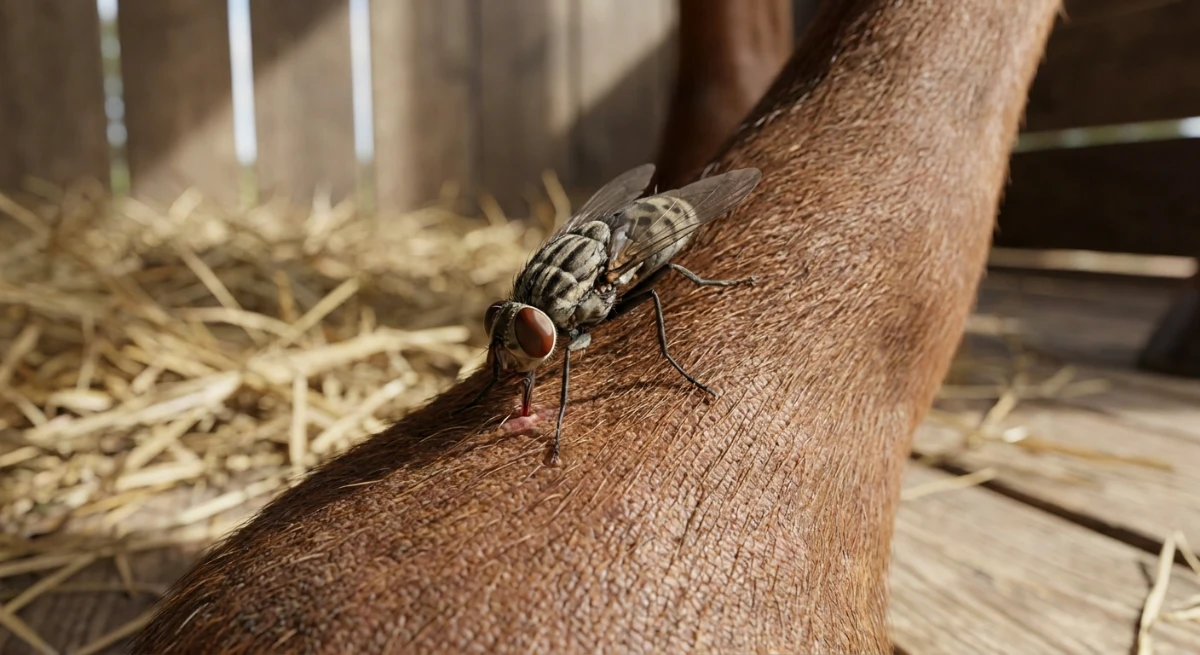
In the rural fringes of Auckland, particularly around Franklin, equestrian centres and animal shelters face a relentless enemy. The stable fly (Stomoxys calcitrans) is not your average, harmless house fly. It is an aggressive, blood-feeding pest that inflicts incredibly painful bites on horses, dogs, and livestock.
When populations spike, the physical and psychological stress on the animals is immense. I have seen horses stomp their hooves so violently they cause long-term damage to their joints, purely out of desperation to escape the biting. In animal shelters, already stressed rescue dogs suffer from severe fly-strike on their ears and muzzles.
This is not just a minor nuisance; it is a critical animal welfare issue. Relying on cheap, reactive measures simply prolongs the suffering of the animals in your care. You must attack the root cause of the infestation.
The Legal and Financial Repercussions
Beyond the welfare of the animals, there are serious legal and financial implications. If your facility includes a commercial aspect—such as a cafe attached to an equestrian centre—you fall strictly under the Food Act 2014. Health inspectors have zero tolerance for filth flies near food preparation areas.
Failing an MPI or council health inspection can shut down your secondary revenue streams overnight. You need professional commercial pest control in Auckland that integrates seamlessly with your daily operations. The cost of prevention is always cheaper than the cost of a forced closure.
The Science of the Swarm: Stable Fly Life Cycles
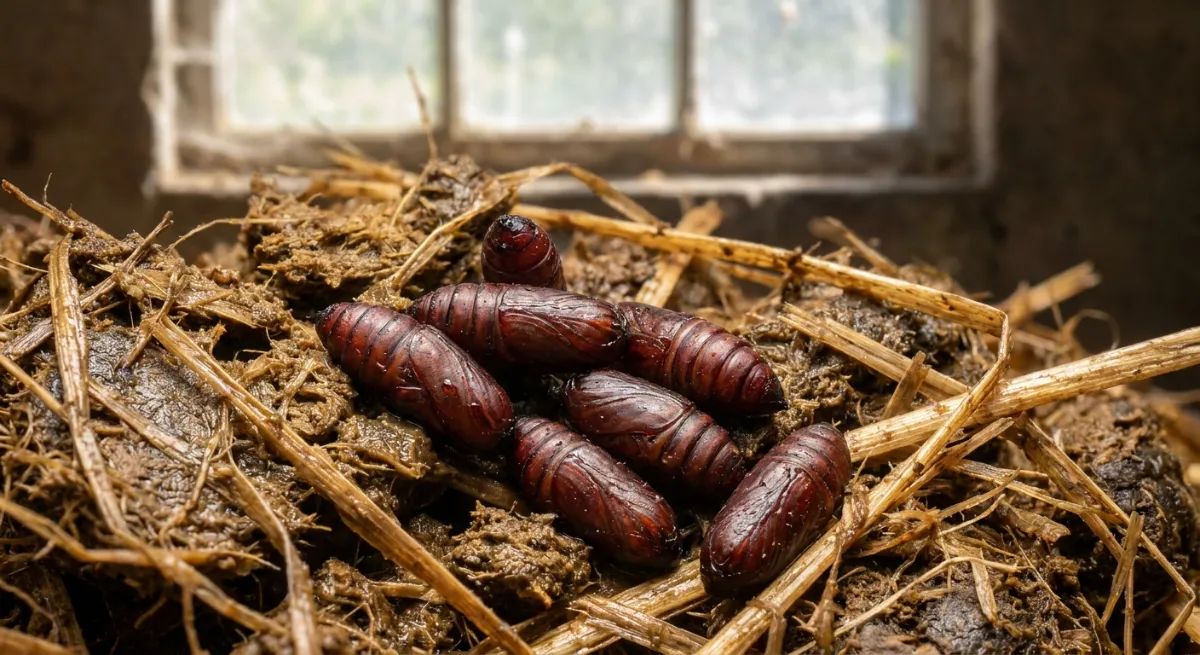
You cannot defeat an enemy you do not fundamentally understand. Stable flies breed exclusively in moist, fermenting organic matter. Think soiled straw bedding, wet hay rings, and manure that has been mixed with urine and trampled into the mud.
They do not breed in pure, dry manure; they require that specific decaying, vegetative moisture to survive. A single female fly can lay up to 600 eggs in her short lifetime. If you are only treating the adult flies you see buzzing around, you are completely ignoring the millions of maggots incubating in your stalls.
True eradication targets the larval stage before they ever hatch. By understanding their biological needs, we can manipulate the environment to make it hostile to their survival.
Why Auckland’s Climate is the Perfect Storm
Auckland’s climate is practically a purpose-built laboratory for breeding flies. We recently experienced a mild winter followed by a hot, humid summer, which led directly to a massive autumn pest surge. Temperature dictates the speed of their entire life cycle.
At a cool 15 degrees Celsius, a stable fly takes over a month to develop from an egg into a biting adult. But when the temperature hits that sweet spot of 25 to 30 degrees, that life cycle shrinks drastically to just 12 to 18 days. This rapid development means a minor issue can become a biblical swarm in less than three weeks.
Climate-driven pest surges are a major focus at the upcoming FAOPMA Pest Summit in Auckland (July 2026). The industry is rapidly shifting toward Predictive Integrated Pest Management to stay ahead of these accelerated breeding cycles.
Core Sanitation: Breaking the Breeding Cycle
The absolute foundation of sanitation and trap placement is ruthless, uncompromising cleanliness. You can buy the most expensive, high-tech traps on the market, but if you leave wet, soiled bedding in the corners of your stalls, you will lose the war.
Sanitation is your first and most vital line of defense. Moisture control is critical to this process. Fix leaking water troughs immediately, improve the drainage around your paddocks, and ensure that water does not pool under hay feeders.
When hay gets trampled into the mud and mixed with animal waste, it ferments rapidly. This creates the exact biological recipe stable flies need to lay their eggs and thrive.
Waste Management Protocols
To effectively break the cycle, you must implement strict daily protocols. This is not a once-a-week job; it requires daily discipline from your entire staff.
- Daily Mucking: Remove manure and soiled bedding from all stalls every single day. Do not let it sit and ferment.
- Compost Management: If you compost on-site, cover the piles tightly with black plastic. The solar heat generated will literally cook and kill the fly larvae inside.
- Feed Spillage: Clean up spilled grain and green chop immediately before it gets wet and starts to rot.
- Vegetation Control: Keep grass and weeds trimmed very short around buildings to reduce shaded resting areas for adult flies.
After mucking out, apply a commercial agricultural drying agent or hydrated lime to the wet spots on the stall floor before putting down fresh bedding. This eliminates the micro-moisture that larvae need to survive.
Strategic Trap Placement and Mechanical Control
Once you have locked down your sanitation protocols, you need to physically reduce the adult breeding population. This is where strategic trap placement comes into play. However, you cannot just hang sticky paper randomly and hope for the best.
Trap placement is an exact science. Stable flies hunt primarily by sight and smell, usually staying quite low to the ground to target the lower legs of animals. Therefore, placing traps high up in the rafters of a barn is completely useless for this specific species.
You need to position your traps at a height of about one metre, near the perimeter of the paddocks or just outside the main airflow of the stalls.
Baiting Mechanisms vs. Visual Traps
For shelters and stables, we highly recommend a perimeter defense system. Place odour-baited traps well away from the animals to actively draw the flies out of the stalls and away from your livestock.
If you put a highly attractive bait trap right next to a horse, you are simply inviting the swarm directly to the animal. Draw them away, trap them, and dispose of them safely. Visual traps, like biting fly cylinders, should be placed in sunny areas where flies naturally congregate to warm up.
Under New Zealand law, if you utilize any live-capture traps on your property, they must be physically inspected within 12 hours after sunrise every single day. Furthermore, the use of glue boards is heavily restricted and should not be used where non-target animals or birds could be caught.
Chemical Interventions: When to Call the UPM Certified Techs
When sanitation and mechanical trapping are not enough to break a heavy infestation, chemical intervention becomes necessary. But let me be perfectly clear: blasting a stable with cheap, hardware-store insecticides is both dangerous and ineffective.
You are exposing highly sensitive animals to unregulated toxins while failing to solve the root problem. Professional intervention is required to ensure safety and efficacy. We utilize targeted, MPI-approved, zero-emission treatments that are rigorously tested.
Instead of fogging the air and risking inhalation, we apply specialized residual treatments directly to the specific resting sites of the flies. This includes the sunny sides of fences, barn walls, and exterior structural posts.
Understanding the EPA HPC Notice 2017
Under the EPA HPC Notice 2017, handling Class 9 ecotoxic substances legally requires a Qualified Urban Pest Management (UPM) Contractor. You cannot cut corners here.
Our technicians hold the New Zealand Certificate in Pest Operations (Level 3). We know exactly what chemical matrix to use, precisely where to apply it, and exactly how to keep your animals, staff, and property entirely safe during the process.
| Control Method | Effectiveness Level | Primary Purpose |
|---|---|---|
| Sanitation & Moisture Control | High (Long-term) | Preventing larvae development at the source |
| Mechanical Trapping | Medium (Immediate) | Reducing adult breeding populations away from animals |
| Professional UPM Residuals | Very High (Targeted) | Eradicating persistent adult swarms safely |
| DIY Hardware Store Sprays | Low (Reactive) | Temporary knockdown; high risk to animal welfare |
Before leaving the facility each evening, ensure all wet bedding is removed, water leaks are shut off, feed bins are swept, and all mechanical traps have been inspected per legal requirements.
The Silver Bullet Guarantee for Auckland Facilities
At Pest Control Auckland, we operate on total transparency and straight talk. We do not hide our pricing behind frustrating, high-friction quote forms, and we certainly do not make promises we cannot keep.
Our approach to Integrated Pest Management is designed to give you back complete control of your facility. We offer the Silver Bullet Guarantee: we focus entirely on root-cause eradication, structural exclusion, and long-term prevention.
If you manage a stable in Franklin or a busy animal shelter on the North Shore, we will build a custom defense plan that actually works. We assess your specific environmental challenges, audit your sanitation protocols, and deploy commercial-grade solutions. You get peace of mind, and your animals finally get relief.
Frequently Asked Questions

About the Author: Ronnie
Founder, Pest Control Auckland · Commercial & Residential Pest Expert · Certified Urban Pest Management Specialist
With years of experience in rural and commercial biosecurity, Ronnie is the definitive expert to write about Fly Control Protocols for Franklin Stables and Animal Shelters: Sanitation and Trap Placement. Having consulted for numerous equestrian facilities across the Auckland region, he specializes in MPI-compliant, zero-emission Integrated Pest Management systems that prioritize animal welfare and root-cause eradication.