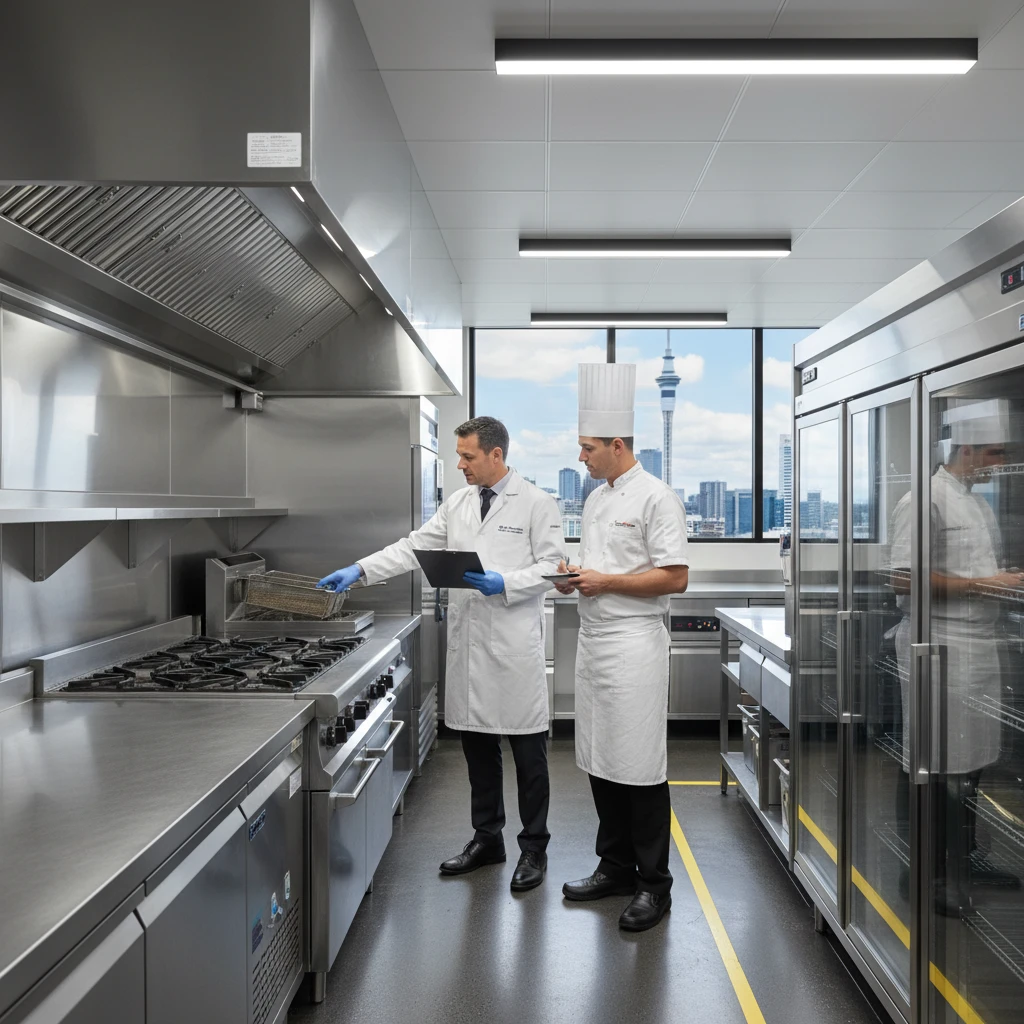
Running a commercial kitchen in Auckland right now is high-stakes. With the New Zealand hospitality sector hitting a massive $15.99 billion turnover in FY2025, the pressure to maintain immaculate hygiene standards is relentless.
We are currently seeing a severe autumn pest surge in May 2026, driven by last year’s mild winter and scorching summer. This weather pattern has driven rats and mice straight out of the cold and into warm commercial food spaces.
I have seen it a hundred times. A restaurant manager panics over a rat sighting, buys a bucket of cheap bait from the hardware store, and tosses it under the commercial dishwasher. Two weeks later, a rat dies inside a wall cavity, the venue smells like a corpse, and the Ministry for Primary Industries (MPI) shuts them down.
You need to know exactly how to monitor rodents in commercial kitchen without poison. It is not just about keeping your venue smelling fresh; it is about strict legal compliance. Let me walk you through exactly how we keep Auckland’s best hospitality venues pest-free and legally compliant, without using a single drop of toxic bait in food prep zones.
Key Takeaways
To learn how to monitor rodents in commercial kitchen without poison, you must implement non-toxic tracking blocks, UV dust, and digital IoT sensors. The Food Act 2014 strictly prohibits toxic rodenticides in food zones. Furthermore, any live-capture traps must be checked within 12 hours of sunrise under the Animal Welfare Act 1999.
The Legal Ban on Rodenticides in Food Preparation Areas
The days of reactive, toxic “spray and pray” applications in the hospitality sector are dead. Under the Food Act 2014 and strict HACCP guidelines, you simply cannot place ecotoxic rodenticides anywhere near food preparation, cooking, or storage zones.
MPI auditors have a zero-tolerance policy for this. If an inspector finds a block of toxic bait sitting exposed under a prep bench, your business is facing immediate suspension. The risk of chemical cross-contamination into the food supply is too high.
Using toxic bait indoors means the rodent will wander off and die in an inaccessible void. In a hot commercial kitchen, a decomposing rat will attract blowflies and create an unbearable stench that drives customers away permanently.
Instead of relying on poisons, we use an entomological approach to achieve root-cause eradication. This means we find the exact structural entry point and physically exclude the pests, rather than just treating the symptoms.
If you want to pass your health inspections with flying colors, you have to transition to a Predictive Integrated Pest Management (IPM) system. This relies heavily on non-toxic rodent monitoring to detect activity before it becomes a full-blown infestation.
Effective Non-Toxic Monitoring Techniques
When a client asks us how to monitor rodents in commercial kitchen without poison, we deploy a three-tiered approach. We use physical evidence, UV tracking, and digital alerts to map the rodent’s exact runway.
By understanding their behavioral patterns, we can intercept them at the perimeter. We do not want them getting anywhere near the ovens or dishwashers in the first place.
UV Tracking Dust and Fluorescent Bait Blocks
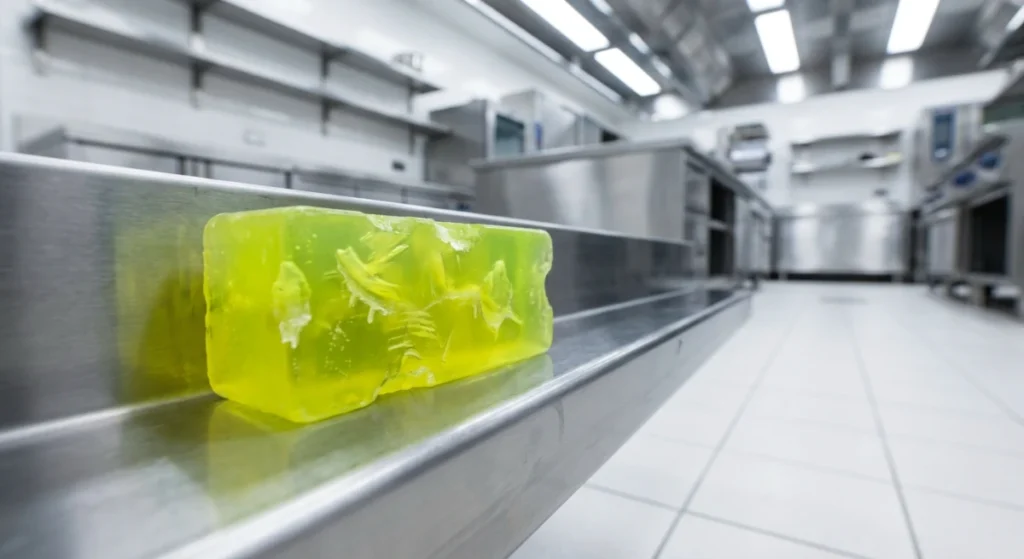
One of our most effective tools is the non-toxic fluorescent monitoring block. These blocks contain zero active poison, meaning they are completely safe to use in sensitive food zones.
When a rat gnaws on the block, they leave distinct tooth marks that tell our technicians exactly what species we are dealing with. More importantly, the block contains a UV-reactive dye.
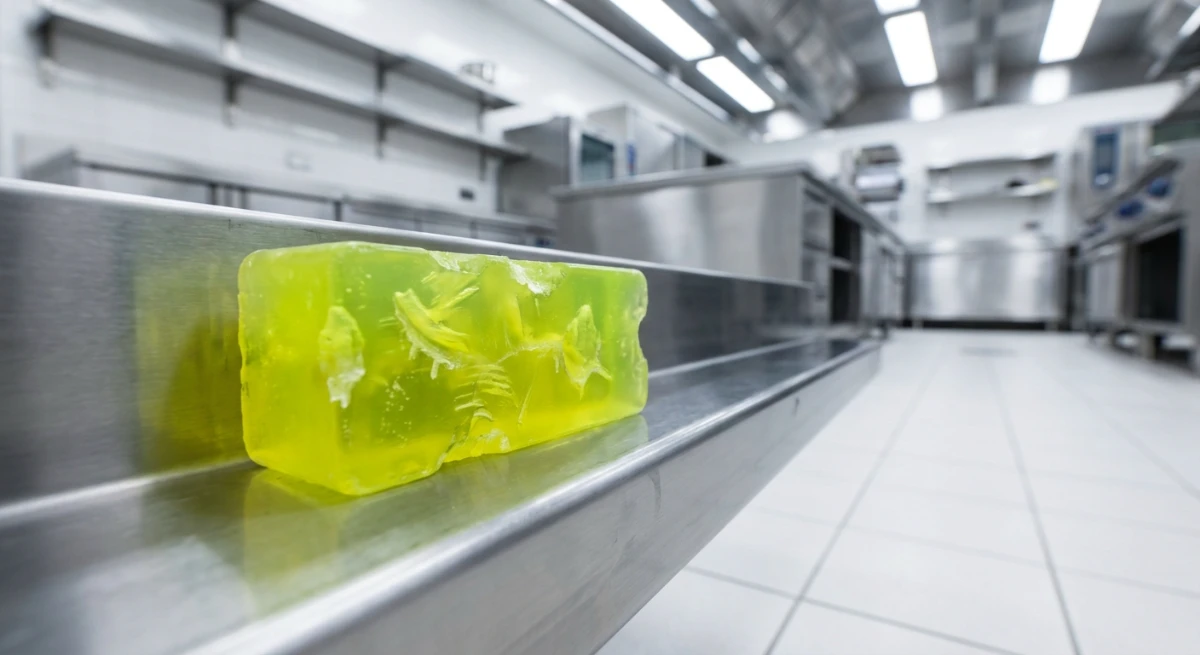
When the rodent consumes the block and walks away, their droppings and urine will glow under a professional blacklight. We simply turn off the kitchen lights, shine the UV torch, and follow the glowing trail straight back to the hole in the wall they used to get in.
Finding the entry point is the “Silver Bullet.” Once we locate the structural defect using UV dust, we seal it permanently, stopping the cycle of infestation dead in its tracks.
Digital IoT Sensor Stations
The pest control industry is rapidly modernizing. As highlighted at the upcoming FAOPMA Pest Summit 2026 in Auckland, digital monitoring is the new gold standard for commercial venues.
We install IoT-enabled sensor stations along the perimeter walls of the kitchen. These devices use infrared sensors to detect heat and motion. When a rat scurries past, the sensor logs the exact timestamp and sends an alert directly to our technicians.
This means we are not just guessing when the rodents are active. We know exactly when they are moving, allowing us to target our physical trapping efforts with pinpoint accuracy.
Digital sensors provide automated, timestamped reporting. When an MPI auditor asks for your pest management records, handing them a clean digital log proves you are proactively managing the site.
Mechanical Snap Traps in Tamper-Resistant Boxes
While technology is great, sometimes you just need to physically remove the problem. Mechanical snap traps remain a highly effective, poison-free method for immediate population reduction.
However, you cannot just leave exposed snap traps lying around a busy kitchen where staff might step on them. We secure high-tension mechanical traps inside heavy-duty, tamper-resistant bait stations.
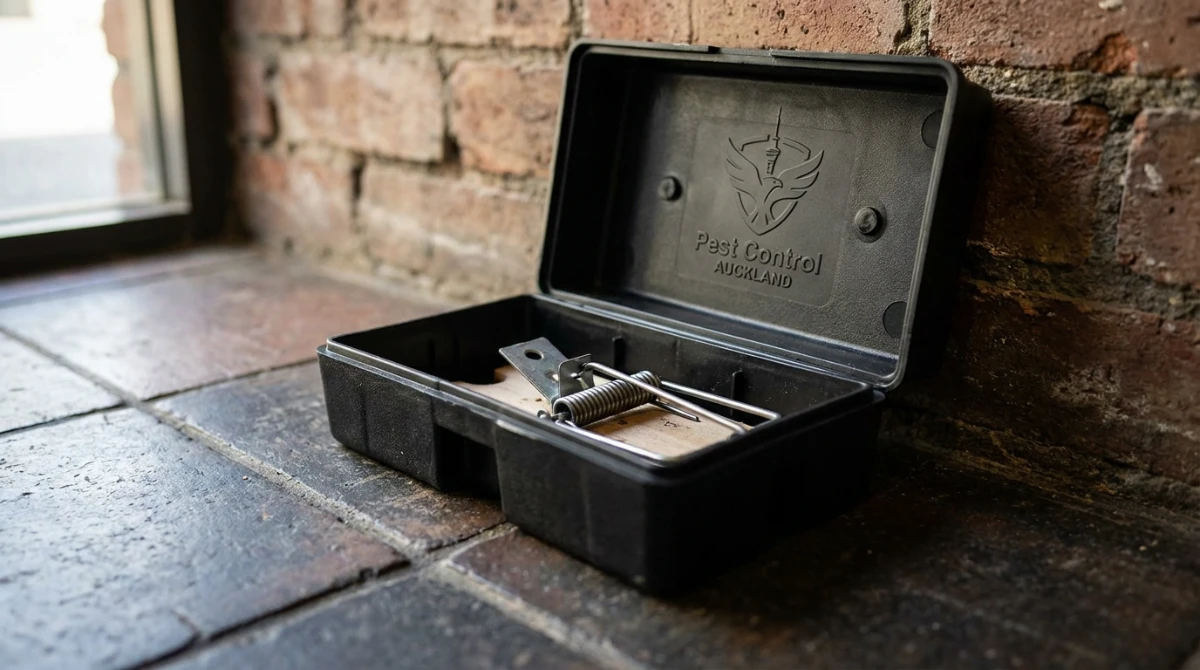
These stations are locked, anchored to the floor, and clearly labeled with a unique barcode. This ensures staff safety and satisfies the strict documentation requirements of commercial pest management in Auckland.
Daily Inspection Requirements (Animal Welfare Act 1999)
If you are going to use non-toxic trapping methods, you must understand the law. New Zealand has incredibly strict animal welfare regulations that dictate exactly how you can interact with pests.
Many business owners assume that because rats are pests, they can treat them however they want. This is a fast track to a massive fine. You must operate within the legal framework.
The 12-Hour Sunrise Rule for Live Capture
Under Section 36 of the Animal Welfare Act 1999, if you set any live-capture trap in New Zealand, it must be manually inspected within 12 hours after sunrise every single day.
Failing to check a trap and leaving an animal to suffer can result in a fine of up to $5,000 for an individual, or $25,000 for a body corporate. Furthermore, the use of glue boards for rodents is heavily restricted and generally prohibited without explicit ministerial approval.
If your venue uses live-capture mechanisms, assign the morning prep chef to visually inspect all stations before 7:00 AM. Log this inspection in your daily food safety diary to ensure legal compliance.
Transitioning to a Poison-Free Monitoring System
Making the switch to a poison-free system is easier than you think. It starts with a comprehensive biosecurity audit of your premises. We look for the structural gaps around plumbing pipes, under doors, and in the roof cavity.
Once the building is physically sealed, we deploy the non-toxic monitoring blocks and digital sensors. This proactive approach is exactly why our clients sleep soundly at night, knowing their venue is protected.
As you can see from the data, the Auckland hospitality sector is rapidly moving away from toxic chemicals. The liability is simply too high. To help you understand the differences, we have broken down the two approaches below.
| Feature | Toxic Baiting (Outdated) | Non-Toxic IPM (Modern) |
|---|---|---|
| Food Act 2014 Compliance | Fails MPI audits in prep zones | 100% Compliant and approved |
| Odor Risk | High (Rodents die in walls) | Zero (Rodents are trapped/excluded) |
| Data & Reporting | Guesswork and visual checks | Timestamped digital IoT alerts |
| Focus Area | Treating the symptoms | Root-cause structural exclusion |
When you partner with us for pest control in Auckland, you are getting certified Level 3 Urban Pest Management specialists. We do not cut corners, and we do not use cheap hardware store chemicals.
Our goal is to protect your staff, your customers, and your brand reputation. We provide the documentation you need to satisfy your landlords and pass your council health inspections without breaking a sweat.
If you are dealing with the autumn pest surge and need to monitor rodents in commercial kitchens effectively, give us a call. We will sort the problem out safely, legally, and permanently.
Frequently Asked Questions

About the Author: Ronnie
Founder, Pest Control Auckland · Commercial & Residential Pest Expert · Certified Urban Pest Management Specialist
With over a decade of hands-on experience navigating MPI audits and the Food Act 2014, Ronnie specializes in zero-emission commercial pest management. Having consulted for top Auckland hospitality venues, he provides strictly compliant, science-based strategies for monitoring rodents without relying on toxic bait.