Winter in Auckland changes pest behaviour overnight. As temperatures drop, pests that were happy outside or in wall voids suddenly need warmth to survive. German cockroaches are no exception to this rule. They are tropical insects by nature, meaning our damp, chilly Auckland winters are lethal to them if they stay exposed.
They do not just wander inside; they actively hunt for the warmest, most humid micro-climates they can find. If you run a restaurant or cafe, your heavy equipment provides the exact environment they need to breed. We are seeing a massive autumn surge right now in May 2026, and it is only going to get worse as winter sets in.
Key Takeaways
Winter German cockroach clustering in commercial kitchens is driven by their biological need for heat and humidity. They nest inside oven insulation, fridge compressors, and dishwashers. DIY sprays scatter the infestation. Eradication requires precision gel baiting by Level 3 certified technicians to ensure Food Act 2014 compliance.
Why German Cockroaches Thrive in Winter
You might assume that winter kills off insect populations. For many species, that is true, but German cockroaches play by entirely different rules. Originally hailing from warm, humid climates in Asia and Africa, they cannot survive freezing or even moderately cold temperatures for long.
When the chill sets in, they migrate aggressively toward artificial heat sources. This behaviour is exactly why winter German cockroach clustering in commercial kitchens is such a massive headache for Auckland hospitality operators. They pack themselves into tight, warm spaces to maintain their body temperature and protect their egg cases.
This clustering behaviour is driven by a biological trait called thigmotaxis. They prefer to feel solid surfaces touching both their backs and their bellies simultaneously. A tight gap behind a warm commercial oven is their idea of absolute paradise.
With Auckland hosting the FAOPMA Pest Summit in July 2026, the global focus is shifting toward predictive, climate-driven pest management. Smart hospitality operators are already winter-proofing their kitchens before the cold truly sets in.
Seeking Heat in Commercial Ovens, Fridges, and Dishwashers
A commercial kitchen is essentially a five-star resort for a German cockroach. They need three things to thrive: heat, moisture, and food debris. Your heavy equipment provides all three in absolute abundance, 24 hours a day.
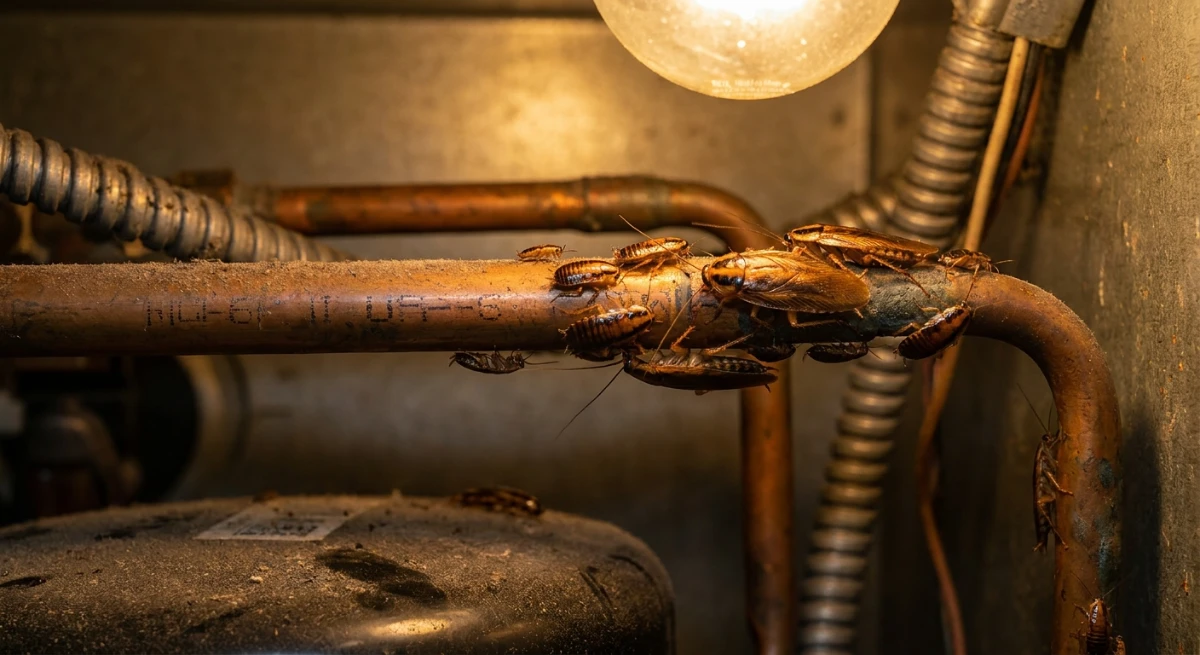
We routinely find them clustered around fridge compressor motors, inside the digital display panels of dishwashers, and packed into the insulation of commercial ovens. These machines run constantly, radiating a steady baseline heat. It creates a micro-climate where the cockroaches completely forget it is winter outside.
Because these heavy machines are rarely moved during daily cleaning, the pests remain entirely undisturbed. They build massive colonies just inches away from where your chefs are preparing high-end meals. If left unchecked, they will eventually short out the electrical components, leading to thousands of dollars in equipment damage.
Rapid Breeding Cycles in Warm Environments
Heat accelerates their breeding cycle dramatically. A female German cockroach carries an egg case, known as an ootheca, which contains around 40 individual eggs. In a warm environment like a fridge motor housing, those eggs incubate and hatch in just 28 days.
Within 60 days, those tiny nymphs become fully mature, breeding adults. If you leave a small cluster unchecked in May, you will be facing a full-blown structural infestation by July. This exponential population growth is why early intervention is critical for protecting your MPI food safety rating.
Identifying Early Signs of a German Cockroach Infestation
You rarely see a German cockroach during the day unless the infestation is already severe. They are strictly photophobic, meaning they scatter instantly when the kitchen lights come on. To catch them early, you need to look for the physical evidence they leave behind in the dark.
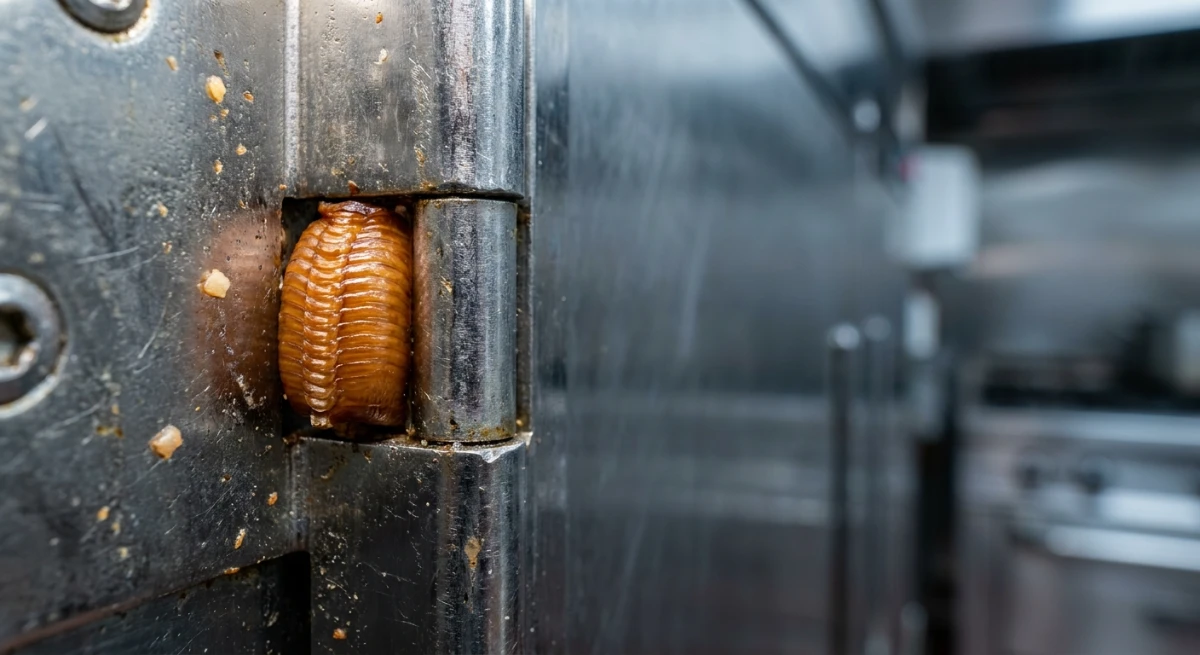
Check the magnetic rubber seals of your commercial fridges and the internal hinges of your prep cabinets. You are looking for tiny, dark specks that look like ground black pepper. This is cockroach faeces, and it is usually concentrated heavily near their nesting sites.
Shine a torch through the ventilation grates of your under-bench fridges. If you see brown, pill-shaped casings (empty oothecae), you have an active breeding cycle on your premises that requires immediate attention.
You might also notice a distinct, musty odour in confined spaces when populations grow large. If you spot these signs, do not wait. The Food Act 2014 requires you to have proactive pest management in place, and an Auckland Council health inspector will spot these signs instantly during an audit.
Eradication Strategies for Sensitive Equipment
You cannot just start spraying toxic chemicals around a commercial food preparation area. The Food Act 2014 and strict HACCP standards prohibit the use of airborne pesticides near food contact surfaces. We have to be highly surgical about how we remove them to keep your business compliant.
Our approach focuses on the root cause and the specific nesting sites. We do not just treat the visible symptoms by spraying the skirting boards and walking away. We target the exact mechanical voids where the cockroaches are clustering for warmth.
Precision Gel Baiting in Electrical Housings
The absolute most effective weapon against winter German cockroach clustering in commercial kitchens is professional-grade gel bait. We apply tiny, precise dots of bait directly inside electrical housings, door hinges, and compressor voids where sprays cannot reach.
The cockroaches consume the bait, return to the cluster, and die. Because they are cannibalistic, the other cockroaches eat the dead one, spreading the active ingredient through the entire nest. This cascading transfer effect wipes out the hidden population entirely without contaminating your kitchen.
Crucially, this method involves zero airborne emissions. It is completely safe for use in active commercial kitchens, allowing you to stay open while the treatment works. It complies strictly with MPI health and safety regulations.
Why DIY Aerosols Backfire and Spread the Infestation
Hardware store bug bombs and aerosol sprays are the worst things you can use in a commercial kitchen. They do not penetrate the deep mechanical voids where the cockroaches are actually hiding. Instead, the harsh chemical irritants simply cause the cockroaches to panic.
They will flee their current nest and push deeper into your wall voids, ceiling spaces, and clean equipment. You turn a localized problem behind one fridge into a massive, kitchen-wide infestation that is ten times harder to eradicate.
Deploying unapproved DIY chemical aerosols near food prep areas is a direct violation of the Food Act 2014. It contaminates surfaces and can result in immediate closure by Auckland Council health inspectors.
Leave the aerosols on the shelf. You need a Level 3 qualified Urban Pest Management technician to handle this legally, safely, and effectively.
| Treatment Method | Food Act 2014 Compliant? | Eradication Effectiveness | Risk of Spreading Pests |
|---|---|---|---|
| DIY Bug Bombs / Aerosols | No (Highly Illegal near food) | Low (Only kills surface pests) | Extreme (Causes rapid scattering) |
| Professional Gel Baiting | Yes (MPI Approved) | High (Destroys the entire nest) | Zero (Targets the exact cluster) |
Preventative Maintenance for the Winter Season
Eradicating the current infestation is only half the job. You have to stop them from coming back. The industry focus is heavily shifting toward Integrated Pest Management (IPM) and structural prevention, rather than just relying on reactive spraying.
Start by sealing the physical entry points around your kitchen. Use high-quality silicone caulking to seal gaps around plumbing pipe penetrations under your sinks. Fix any leaking taps or condensation issues immediately, as cockroaches cannot survive without a reliable daily water source.
- Seal all plumbing penetrations: Use silicone to close gaps around pipes under sinks and dishwashers.
- Fix water leaks immediately: Cockroaches require daily water; eliminating condensation starves them out.
- Discard supplier cardboard: Corrugated boxes are a primary transport method for cockroach eggs entering your kitchen.
- Deep clean under fryers: Remove hidden grease buildup that serves as a high-calorie food source for breeding colonies.
Implement a strict overnight deep-cleaning protocol. Grease buildup under fryers and food debris kicked under prep benches provide a limitless food supply. Cut off their food and water, and your kitchen becomes a much less attractive target.
You must also manage your incoming stock carefully. German cockroaches frequently hitchhike into pristine kitchens inside cardboard delivery boxes from suppliers. Unpack your dry goods immediately and throw the cardboard straight into the outdoor recycling bin.
By combining strict hygiene, structural exclusion, and professional monitoring, you ensure your kitchen remains safe, compliant, and completely pest-free throughout the long Auckland winter.
Frequently Asked Questions

About the Author: Ronnie
Founder, Pest Control Auckland · Commercial & Residential Pest Expert · Certified Urban Pest Management Specialist
With years of experience managing complex commercial infestations across Auckland, Ronnie is a leading authority on MPI-compliant pest eradication. Having designed Integrated Pest Management systems for top-tier hospitality venues, he understands exactly how to eliminate winter German cockroach clustering in commercial kitchens without disrupting business operations.