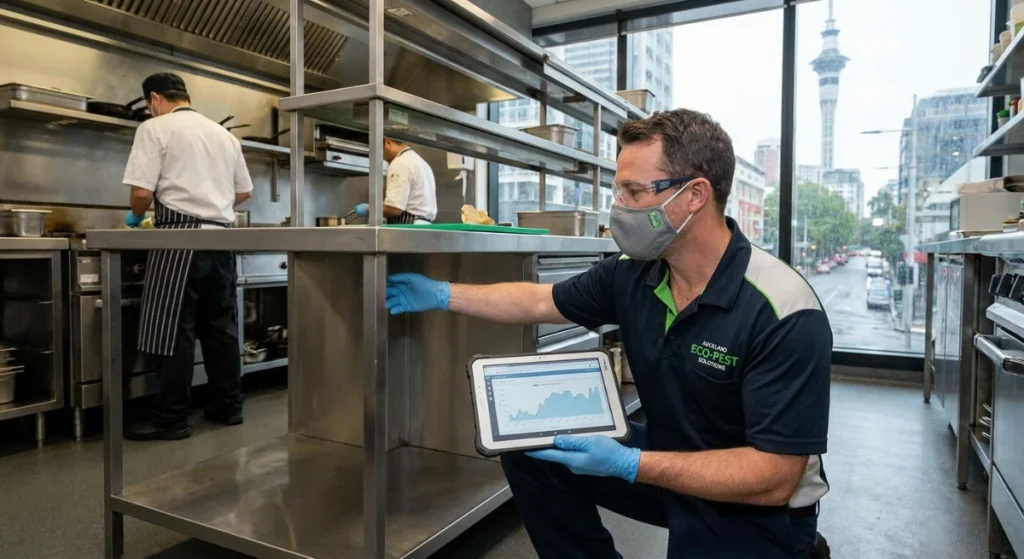
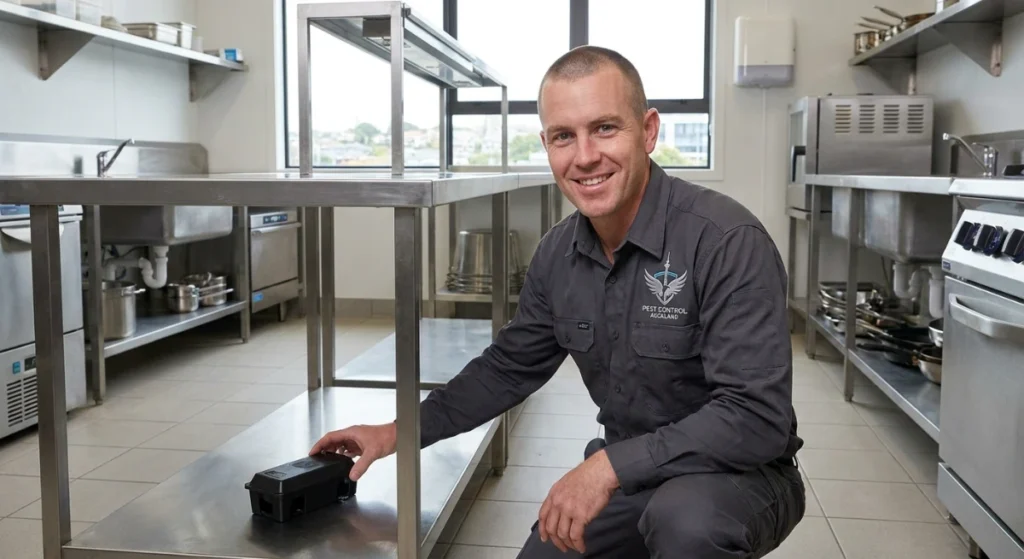
Professional pest control technician inspecting an Auckland commercial kitchen

Are Glue Boards Illegal in NZ

As Auckland faces an unprecedented autumn pest surge in May 2026, homeowners and commercial operators are desperately seeking effective rodent control. A mild winter followed by a scorching summer has created the perfect breeding ground for rats and mice across the region. But before you reach for the cheapest option online or at the hardware store, it is critical to understand New Zealand’s strict animal welfare laws.

One of the most common questions our technicians receive is, “are glue boards illegal in nz?” The short answer is yes. Using them without explicit government approval can result in devastating legal and financial consequences for both homeowners and businesses.

New Zealand is currently leading the world in ethical, predictive pest management. With the FAOPMA Pest Summit coming to Auckland in July 2026, the global spotlight is on our local practices. The days of reactive, cruel pest control methods are over.

Today, we rely on smart technology, integrated pest management (IPM), and humane solutions to protect our homes and businesses. We ensure your property remains pest-free without compromising on ethics or safety.

Key Takeaways

Yes, rodent glue boards are illegal in NZ under the Animal Welfare (Glueboard Traps) Order 2009. They cannot be sold or used without a rare Ministry for Primary Industries (MPI) exemption. DIY live-capture traps are legal but require mandatory manual inspections within 12 hours after sunrise daily.

Understanding the Animal Welfare Act 1999

The foundation of ethical pest management in New Zealand is the Animal Welfare Act 1999. This landmark legislation ensures that all animals, even invasive pests, are treated with a baseline level of humaneness. It sets the standard for how we interact with wildlife and manage pest populations.

Under this Act, causing “unreasonable or unnecessary pain or distress” to any animal is a strictly prosecutable offence. For property managers and landlords navigating the Residential Tenancies Act, understanding these rules is absolutely essential. It helps you avoid nasty tenant disputes and severe legal liability.

When people ask are glue boards illegal in nz, they often don’t realize that the laws apply to all forms of trapping. Whether you are dealing with a minor mouse problem or a massive commercial infestation, compliance is mandatory.

Professional pest control technician inspecting an Auckland commercial kitchen

The Strict Restrictions on Rodent Glue Boards in 2026

So, exactly why and how are glue boards illegal in nz? The absolute prohibition stems directly from the Animal Welfare (Glueboard Traps) Order 2009. This order officially banned the sale and use of rodent glue boards in New Zealand starting January 1, 2015.

Today, in 2026, the enforcement of these rules is tighter than ever. You cannot legally purchase, import, or deploy a rodent glue board without a highly specific ministerial exemption from the Ministry for Primary Industries (MPI). Online retailers caught shipping these into Aotearoa face massive fines.

⚠️

Severe Legal Penalties

Using a rodent glue board without an MPI exemption is a criminal offence. Individuals can face fines of up to $50,000, and body corporates can be fined up to $250,000 under the Animal Welfare Act 1999.

These rare exemptions are typically only granted to Level 3 Qualified Urban Pest Management (UPM) Contractors. Even then, they are restricted to highly sensitive food production facilities where all other methods have failed and biosecurity is at severe risk.

Why We Never Use Inhumane Glue Traps

At Pest Control Auckland, we firmly stand against the use of glue traps under any normal circumstances. The welfare impacts on trapped animals are severe, prolonged, and completely unnecessary given modern alternatives.

When a rodent steps on a glue board, its natural instinct is to panic and struggle violently. This often leads to torn skin, broken bones, and extreme psychological distress. Animals can remain stuck for days, slowly dying from dehydration or starvation.

Furthermore, glue boards are entirely indiscriminate. They pose a massive risk to non-target species, including protected native birds, lizards, and even family pets. In a region like Auckland, where protecting our native biodiversity is paramount, using indiscriminate traps is deeply irresponsible.

We believe in the “Silver Bullet Guarantee” methodology. This means finding the root cause of the infestation and fixing it permanently, rather than relying on cruel, temporary band-aids that cause immense suffering.

Humane electronic snap trap in a tamper-proof bait station

Many Aucklanders, wanting to avoid toxic baits entirely, turn to DIY live-capture traps such as wire cage traps. While these seem like a humane alternative to snap traps or poisons, they come with intense legal obligations.

Setting a live trap in your backyard or commercial premises means you are legally responsible for the welfare of whatever you catch. Ignorance of the law is not a valid defense in New Zealand courts.

If you capture a rat, a possum, or even a neighbour’s wandering cat, you must handle the situation ethically. Failing to provide basic care or a humane dispatch method puts you in direct violation of national animal welfare standards.

The Mandatory 12-Hour Inspection Rule

Section 36 of the Animal Welfare Act 1999 dictates a strict, non-negotiable mandate for any live-capture trap. You must manually inspect the trap within 12 hours after sunrise on each day the trap remains set.

If you are using an approved electronic remote monitoring system, you must inspect the trap within 24 hours of an animal being caught. Failing to adhere to this rule is a criminal offence that can result in heavy prosecution.

Compliance Action Plan

If you are setting live traps, set a daily alarm for immediately after sunrise to ensure you remain fully compliant with the Animal Welfare Act 1999 inspection rules.

Furthermore, once you have captured a live rodent, you must know how to humanely euthanize it. Drowning is strictly prohibited and highly illegal under the Act, as it causes severe distress.

This is exactly why we strongly advise against DIY live trapping. The legal risks, combined with the “DIY Cycle of Despair” where infestations simply return due to unsealed entry points, make it an inefficient approach.

Humane and Highly Effective Alternatives

With the hospitality sector in New Zealand reaching a record $15.99 billion turnover in FY2025, commercial kitchens in Auckland cannot afford a single pest sighting. Maintaining compliance with the Food Act 2014 is critical for business survival.

However, under strict HACCP standards, toxic rodenticide baits are often prohibited in sensitive indoor food areas. When business owners ask are glue boards illegal in nz, they are usually desperately looking for non-toxic, compliant alternatives.

The modern pest control industry has evolved dramatically to meet these needs. We now utilize Predictive Integrated Pest Management (IPM) to stop pests before they ever breach the perimeter.

Rodent Eradication Success Rates Comparison Chart

Instant-Kill Mechanical Traps

The most humane way to deal with a rodent that has breached your perimeter is an instant-kill mechanical trap. Modern snap traps are designed to deliver a lethal blow instantly, ensuring the animal does not suffer.

When placed inside secure, tamper-proof bait stations, these mechanical traps are entirely safe for children, pets, and non-target native birds. They provide the perfect balance of safety and lethal efficiency.

💡

Smart Digital Trapping

For our commercial clients, we utilize IoT-enabled smart monitoring systems. These digital traps instantly alert our technicians when triggered, allowing for rapid response and zero-emission eradication.

This technology completely bypasses the need for toxic chemicals or cruel, illegal devices. It provides 24/7 monitoring and verifiable data for your council health audits.

Pest control technician sealing rodent entry points in Auckland

Professional Exclusion Techniques

The ultimate alternative to trapping is ensuring the pests never get inside in the first place. This structural exclusion methodology is the core of our service at Pest Control Auckland.

We conduct meticulous property inspections to identify hidden entry points. Common vulnerabilities we look for include:

  • Unsealed weep holes in brickwork.
  • Damaged or missing sub-floor ventilation grates.
  • Tiny roofline gaps and displaced tiles.
  • Gaps around plumbing and electrical conduits.

By permanently sealing these vulnerabilities, we cut off the pest’s access to food, warmth, and shelter. Look at the recent successes in the Hūnua Ranges, where rat tracking plummeted to just 1.3% following comprehensive interventions. We apply that same rigorous, scientific approach to your urban property.

Control Method Legality in NZ Humaneness Long-Term Effectiveness
Rodent Glue Boards Illegal (Requires rare MPI Exemption) Extremely Poor Low
DIY Live Trapping Legal (Strict 12-hour inspection rule) Moderate Low
Toxic Baiting Legal (With commercial restrictions) Moderate Moderate
Predictive IPM & Exclusion Fully Legal & Recommended Highly Humane Extremely High

Choose Ethical Pest Control – Contact Us

If you are dealing with a rodent infestation, do not risk your reputation, your family’s safety, or your legal standing by using prohibited devices. The short-term convenience is never worth the massive legal fines.

People frequently search online wondering are glue boards illegal in nz because they are desperate for a quick fix to a stressful problem. But the only true, lasting fix is professional, root-cause eradication.

📝

The Auckland Winter Defense Plan

Our signature subscription focuses on proactive exclusion, saving homeowners thousands of dollars in potential wire damage and contamination clean-ups throughout the colder months.

Pest Control Auckland is led by Level 3 Qualified UPM Contractors. We provide honest, transparent pricing and a steadfast commitment to safety-first, eco-conscious treatments.

Contact us today to book a comprehensive property inspection. Let us protect your home or business the right way, ensuring peace of mind for you and your family.

Clean Auckland home exterior with safe rodent bait station

Frequently Asked Questions

Are glue boards illegal in NZ for catching insects?
No. The Animal Welfare (Glueboard Traps) Order 2009 specifically prohibits the use of glue boards for catching rodents. Insect monitor boards are still completely legal and widely used in the professional pest control industry to track cockroach and ant activity.
What happens if I am caught using a rodent glue trap?
Using a rodent glue board without a formal MPI exemption is a severe breach of the Animal Welfare Act 1999. You can face criminal penalties, including fines of up to $50,000 for individuals or $250,000 for businesses.
Can I buy glue traps online from overseas websites?
While some overseas websites may illegally list them for shipping to New Zealand, importing rodent glue boards is strictly prohibited by NZ Customs. If intercepted at the border, the items will be seized, and you may face prosecution.
How often do I need to check a live-capture cage trap?
Under Section 36 of the Animal Welfare Act 1999, you must manually inspect any live-capture trap within 12 hours after sunrise every single day the trap remains set. Failure to do so is illegal.
What is the most humane way to kill a trapped rat?
The most humane method is using an instant-kill mechanical snap trap from the outset. If you use a live cage trap, the animal must be euthanized quickly and painlessly, typically via a sharp blow to the head by a trained professional. Drowning is illegal and inhumane.
Why is my DIY hardware store rat bait not working?
Auckland rats are increasingly showing behavioral resistance to standard DIY baits. Furthermore, if the root entry point isn’t sealed by a professional, new rats will continually replace the dead ones, trapping you in a frustrating cycle of recurring infestations.

About the Author: Ronnie C.

Ronald Cronje (Ronnie C.) is the founder and lead technician of Pest Control Auckland, an Orewa-based family business serving Rodney, the Hibiscus Coast, and the wider Auckland region. He is a Level 3 Qualified Urban Pest Management Contractor dedicated to ethical, prevention-focused solutions.

With years of experience in commercial biosecurity compliance, Ronnie is uniquely qualified to explain complex legislation like the Animal Welfare Act 1999. Having consulted for numerous Auckland hospitality businesses to ensure Food Act 2014 compliance without the use of prohibited devices, he is a definitive expert on why glue boards are illegal and how to implement safe, highly effective alternatives.

Leave a Comment

Your email address will not be published. Required fields are marked *

Scroll to Top