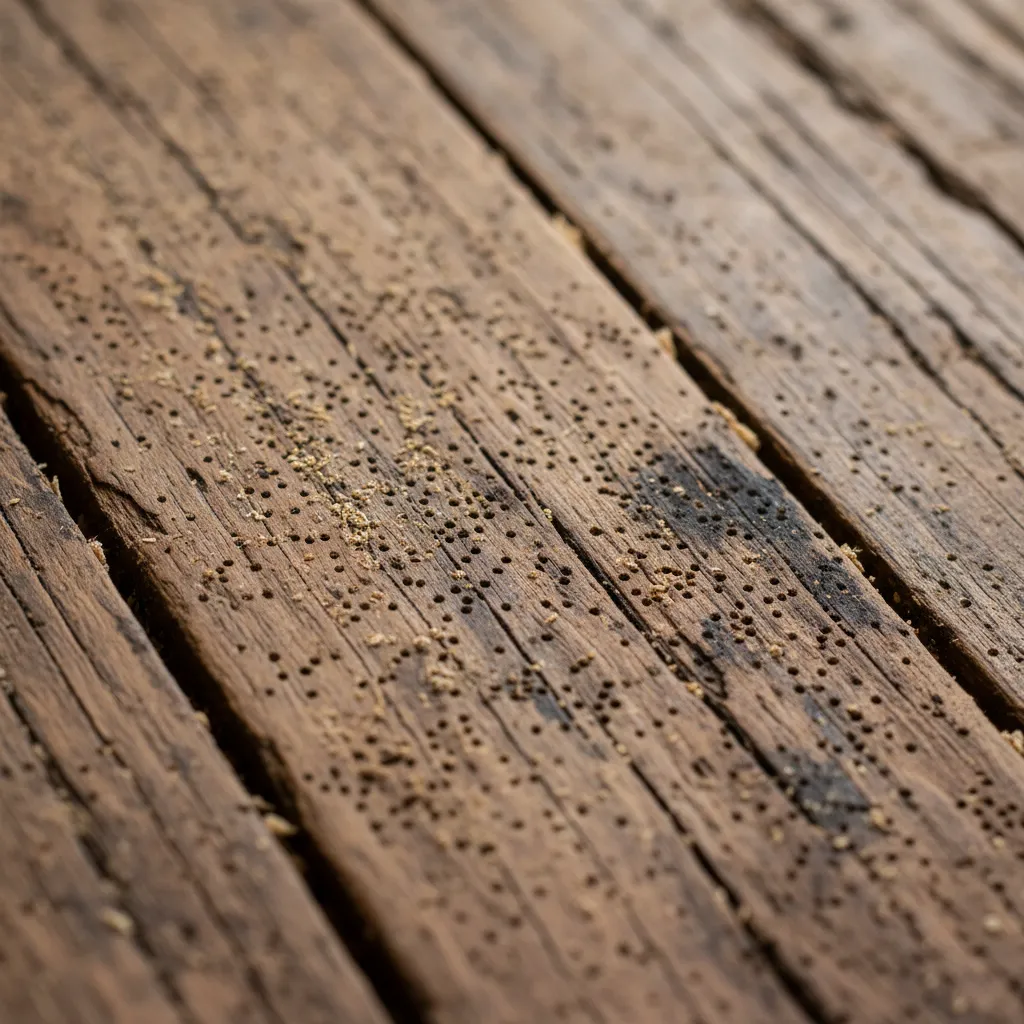
Imagine walking into the hallway of your classic Auckland villa, only to notice a tiny, cone-shaped pile of pale dust on the skirting board. You wipe it away, but a few days later, the dust returns directly beneath a cluster of tiny holes. This scenario plays out in thousands of New Zealand homes every year. It is the silent, destructive calling card of the Anobium punctatum beetle.
Mastering common house borer id is essential for any homeowner wanting to protect their property’s structural integrity. Because these insects do their worst work hidden deep inside your timber, early detection is your absolute best defense. By the time you spot the adult beetles flying around your windows, the larvae have likely been hollowing out your floorboards for years.
Key Takeaways
For accurate common house borer id, look for 2mm perfectly round flight holes in untreated timber. Active infestations produce small piles of gritty, cream-colored dust called frass. Adult beetles emerge during the New Zealand flight season between October and March, leaving behind these visible exit holes.
Visual Signs of a Borer Infestation
Because the adult beetles are small and short-lived, you will rarely catch them in the act of damaging your home. Instead, a proper common house borer id involves checking the timber itself for specific damage patterns. The most obvious indicators are the exit wounds left behind when the mature insects leave the nest.
These visual clues are especially prevalent in older Auckland homes built before the 1960s. Native timbers like Rimu and Matai, while beautiful, are highly susceptible to borer attacks if they were not chemically treated. Recognizing the early warning signs can save you thousands of dollars in structural repairs down the line.
Flight Holes: Size and Shape
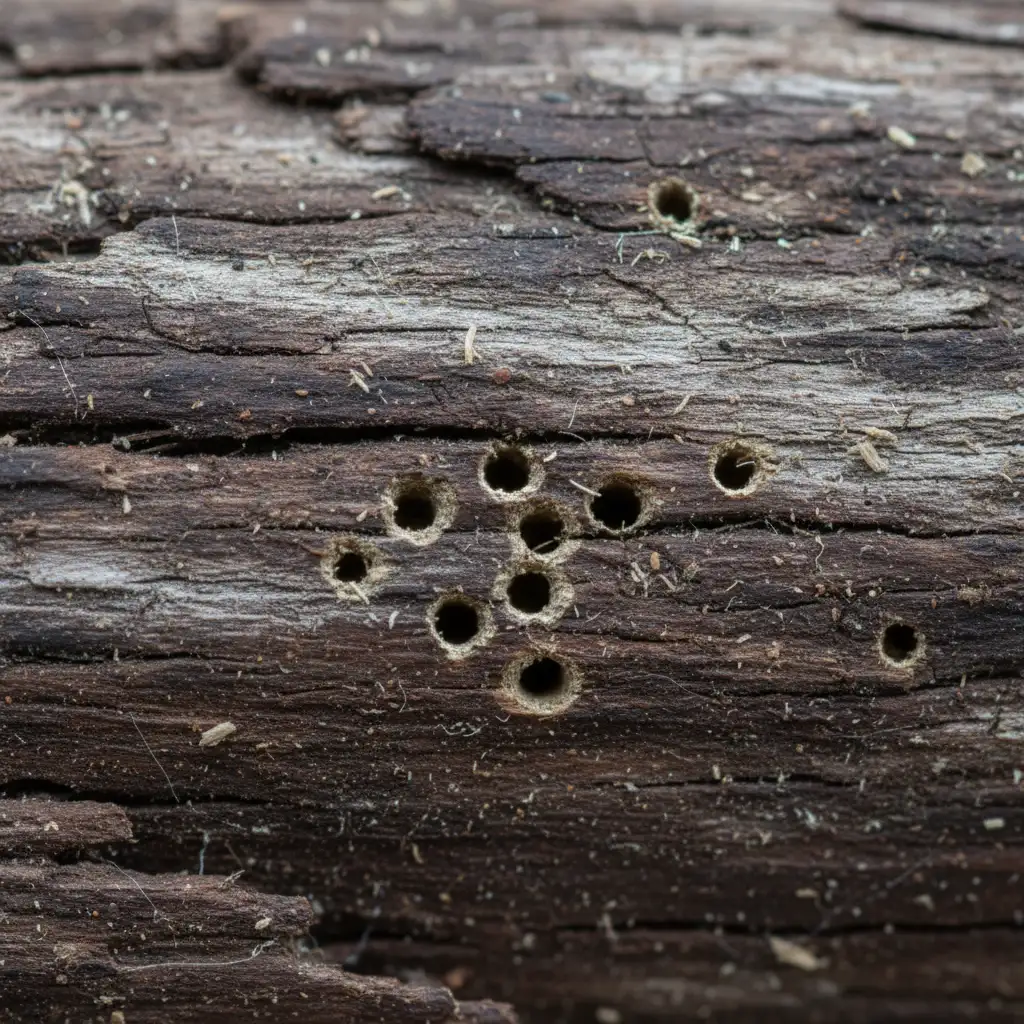
When inspecting your home, the physical size and shape of the holes in your timber are crucial diagnostic tools. The Common House Borer creates perfectly round holes that are approximately 2mm in diameter. They often look as though someone has pushed a drawing pin directly into the wood.
If you notice oval-shaped holes or holes larger than 5mm, you are likely dealing with an entirely different species. For example, the Two-Toothed Longhorn Borer leaves much larger, 7mm oval holes. Paying close attention to these dimensions is the fastest way to confirm which pest has invaded your subfloor.
Borer Dust (Frass): What to Look For
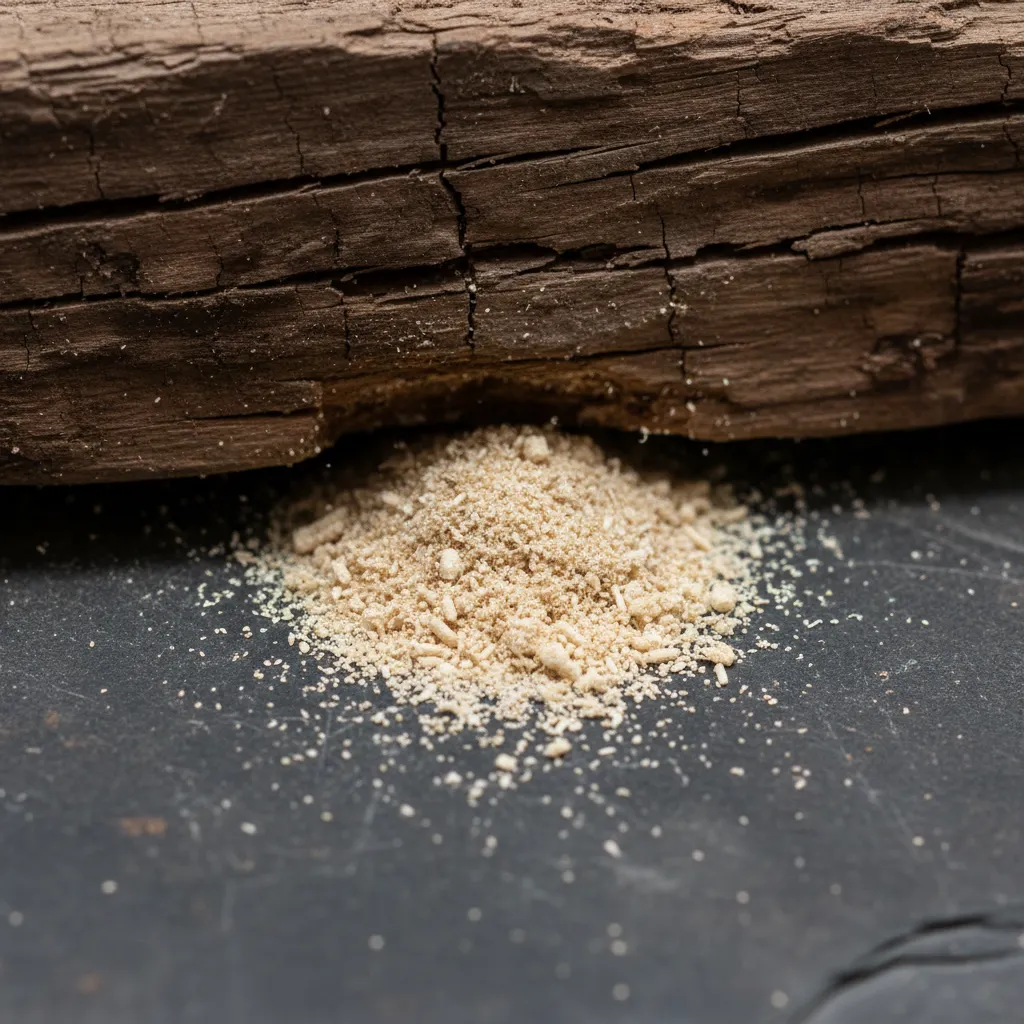
Finding holes is only half the battle; you must also determine if the infestation is currently active. The most definitive sign for common house borer id is the presence of gritty frass. Frass is essentially wood dust and insect excrement created by the larvae as they tunnel endlessly through the timber.
Fresh frass is typically pale, cream-colored, and feels slightly gritty when rubbed between your fingers. If the holes in your wood are dark, clogged with dust, and have no fresh frass beneath them, the infestation may be historical. However, if bright, clean dust is actively accumulating, the larvae are still eating your home.
Place a sheet of black paper directly under the suspected timber holes. Check back in 48 hours; if you see fresh white dust on the dark paper, you have an active borer infestation.
Sapwood vs. Heartwood Preferences
It is important to understand that borer beetles do not attack all wood equally. They have a very strong preference for sapwood, which is the softer, nutrient-rich outer layer of the tree. Heartwood, the denser inner core, is much harder and often contains natural toxins that repel these insects.
This biological preference explains why you might see one floorboard completely riddled with holes, while the board directly next to it is pristine. When conducting your inspection, focus heavily on the lighter-colored edges of your timber boards where sapwood is most commonly found.
The Lifecycle of Anobium Punctatum
To truly understand how this pest operates, you need to look closely at its lifecycle. The structural damage is not caused by the flying beetles you see in the summer, but rather by their hidden offspring. Understanding this cycle helps homeowners time their pest control treatments for maximum effectiveness.
Egg Laying in Timber Cracks
The destructive cycle begins when a female beetle finds a suitable piece of untreated timber. She actively seeks out bare, unpainted wood, often utilizing existing cracks, crevices, or even old flight holes to deposit her brood. A single female can lay up to 100 eggs at a time, ensuring the rapid spread of the colony.
These eggs are microscopic and virtually invisible to the naked eye. They are strategically placed in areas with higher humidity, which is why poorly ventilated subfloors in Auckland are prime real estate. The eggs incubate for about four to five weeks before hatching into hungry larvae.
Borer beetles cannot chew through thick layers of modern paint or polyurethane to lay their eggs. They specifically target bare, untreated timber, which is why subfloors and the undersides of furniture are so vulnerable.
The Destructive Larval Stage
Once hatched, the tiny larvae immediately burrow downward into the timber. This is the longest and most destructive phase of the insect’s life. The larvae will live entirely inside the wood for two to five years, silently chewing through the cellulose to fuel their growth.
During this extended period, they create a complex labyrinth of tunnels that severely weakens the structural integrity of the wood. Because they remain completely hidden, homeowners are usually unaware of the ongoing destruction. Only when the larvae pupate and mature do they finally reveal themselves.
Adult Emergence in Spring
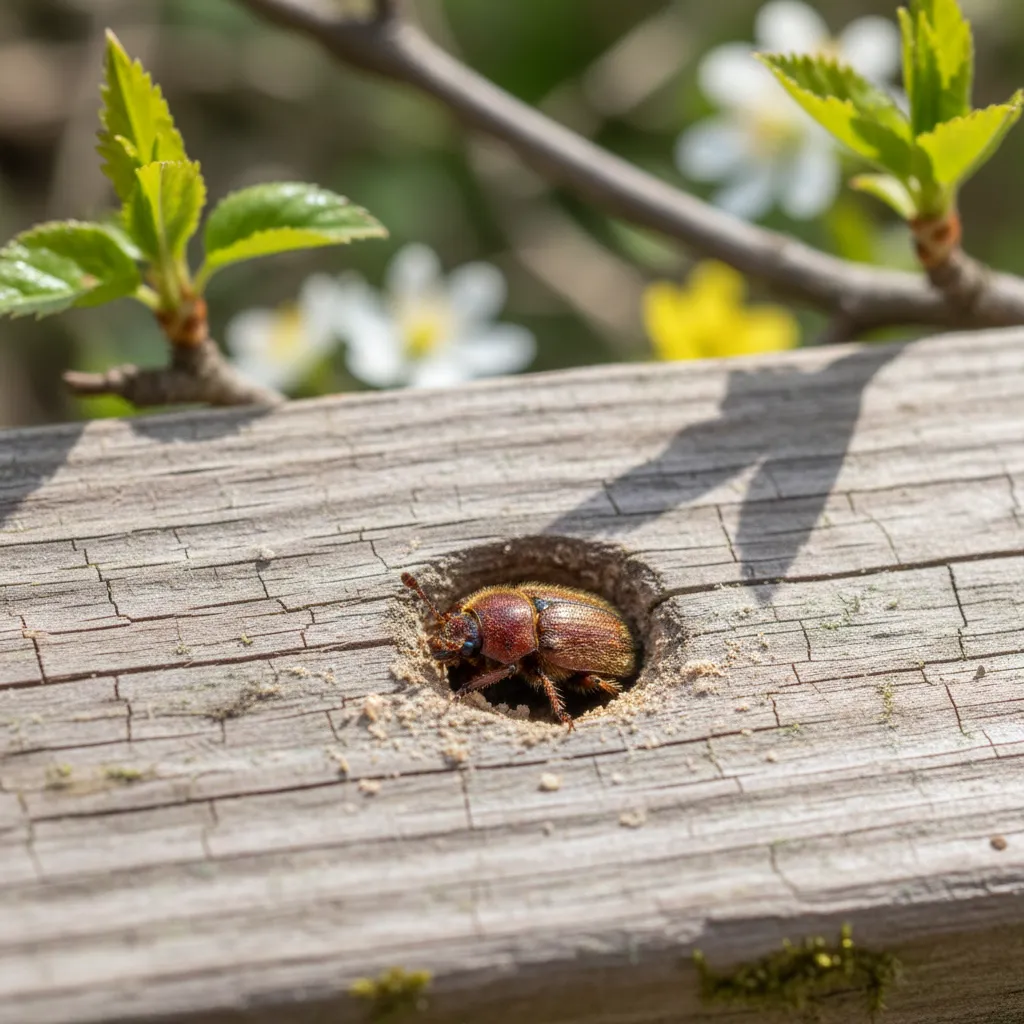
After years of tunneling, the larvae pupate just below the surface of the wood. Between October and March, the newly formed adult beetles chew their way out. This mass emergence creates the characteristic 2mm flight holes discussed earlier in the article.
The adult beetles have a very short lifespan, surviving for only three to four weeks. Their sole purpose during this brief window is to mate and lay eggs, restarting the destructive cycle. If you see small, brown beetles congregating around your windowsills during the New Zealand summer, you must act quickly.
Mark your calendar for late October. Inspect your subfloor, roof void, and antique furniture for new flight holes to catch the emergence early.
Differentiating Borer from Termites
If you are struggling with a common house borer id, you are certainly not alone. Many property owners mistakenly assume that any insect damaging their wood must be a termite. While both pests consume cellulose, their behaviors, appearance, and preferred environments are entirely different.
Termites are social insects that build massive colonies, whereas borers are solitary beetles. Understanding the distinction is vital because the treatment methods for these two pests vary drastically. Applying a termite baiting system will do absolutely nothing to stop a borer infestation.
Why Termites are Rare in Auckland
Unlike Australia or the United States, New Zealand does not have a widespread problem with destructive subterranean termites. We do have the New Zealand Drywood Termite, but it behaves completely differently than its overseas cousins. Our native termites prefer damp, rotting wood, such as old tree stumps or severely moisture-compromised timber.
If your home has dry, structural timber that is being hollowed out, it is almost certainly a borer problem. Termites leave behind distinct fecal pellets and hollowed-out galleries that follow the grain of the wood, rather than the tiny, random pinholes created by beetles.
| Feature | Common House Borer | NZ Drywood Termite |
|---|---|---|
| Visual Damage | 2mm round flight holes scattered across the surface. | Hollowed out wood along the grain, thin outer veneer left intact. |
| Debris Left Behind | Fine, gritty, pale-colored dust (frass). | Distinct, hard fecal pellets. |
| Preferred Environment | Dry or slightly damp untreated structural timber. | Highly decayed, wet, or rotting wood. |
| Insect Type | Solitary beetle. | Social colony insect. |
When to Seek Professional Identification
While DIY inspections are a great starting point, there comes a time when you need an expert eye. Professional pest controllers use moisture meters alongside visual common house borer id techniques to assess the full scope of the threat. They can determine exactly how deep the larvae have penetrated into your framing.
If you find flight holes in load-bearing timbers, floor joists, or roof trusses, do not attempt to treat it yourself with hardware store bug bombs. Surface sprays only kill the emerging adults and do absolutely nothing to the larvae actively eating the core of your wood. A licensed exterminator will use penetrating borate treatments or injection methods to eradicate the nest entirely.
If floorboards feel spongy or joists crumble when probed with a screwdriver, the structural integrity of your home is compromised. Seek immediate professional intervention.
High-Risk Areas in Your Home
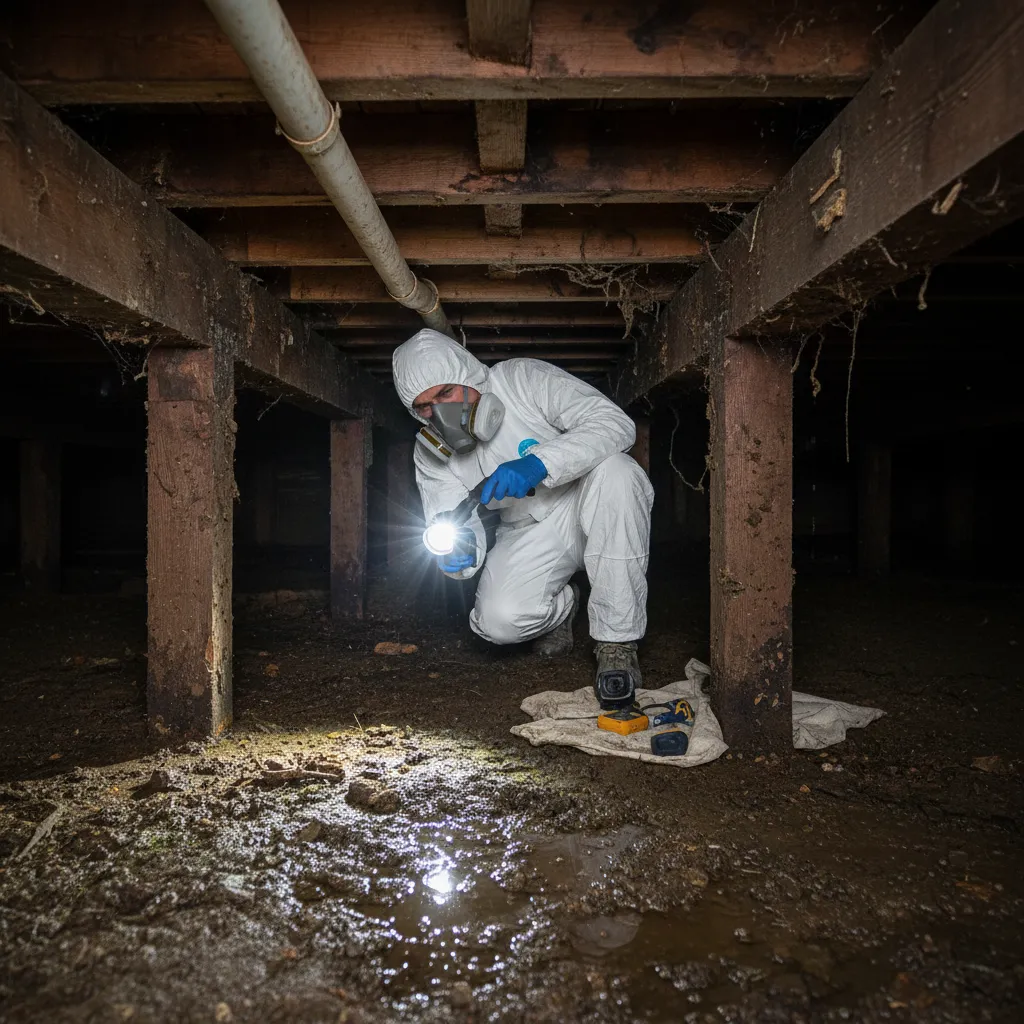
When a professional arrives, they will immediately target the areas of your home most prone to moisture retention. Auckland’s climate, with its high rainfall and coastal humidity, creates the perfect storm for borer. Subfloors with poor drainage or blocked vents trap moisture, raising the timber’s moisture content above the critical 12% threshold.
- Subfloors and Bearers: Damp, dark, and poorly ventilated spaces are prime breeding grounds.
- Roof Voids: Exposed timber trusses can harbor infestations for decades unnoticed.
- Antique Furniture: Untreated wooden heirlooms are frequent targets and carriers of the pest.
- Weatherboards: The shaded, south-facing side of Auckland homes often retains enough moisture to attract borer.
Furthermore, a professional can accurately identify whether you are dealing with the Common House Borer or the more aggressive Two-Toothed Longhorn. Misidentification can lead to inadequate treatment plans, allowing the damage to spread unchecked. Investing in a professional assessment provides peace of mind and protects your home’s long-term value.