Auckland heritage villa exterior

Protecting Historical Timber in Auckland Villas

Stepping into an Auckland heritage villa is like walking through a living museum.

These architectural treasures, built predominantly between the 1880s and 1930s, boast high ceilings, intricate fretwork, and stunning native timber floors. Suburbs like Ponsonby, Grey Lynn, Mount Eden, and Parnell are defined by these historic properties, which represent a golden era of New Zealand craftsmanship. However, beneath the polished surface of that century-old Rimu or Kauri, a silent destroyer may be lurking.

The Common House Borer (Anobium punctatum) is a relentless pest that threatens the structural integrity of these beautiful homes. For homeowners, protecting historical timber from borer is not just about routine pest control. It is a critical aspect of heritage preservation and safeguarding a multi-million dollar property investment.

Key Takeaways

Protecting historical timber from borer requires identifying active infestations through fresh flight holes and frass. Native NZ sapwoods like Rimu and Matai are highly susceptible. Effective treatment involves subfloor ventilation, residual surface sprays during the October-March flight season, and targeted timber injections for severe structural infestations.

Auckland heritage villa exterior

Why Native NZ Timbers are Vulnerable to Borer

New Zealand’s native timbers are world-renowned for their rich colors and historical significance. However, the construction methods used for early Auckland villas relied heavily on untreated wood. During the Victorian and Edwardian eras, chemical timber treatment processes were virtually non-existent.

Builders simply utilized whatever native timber was readily available from local mills. This reliance on untreated wood created a massive, unprotected food source for wood-boring insects. These pests thrive in Auckland’s humid, subtropical climate, which keeps timber moisture levels high enough to sustain hungry larvae.

When it comes to protecting historical timber from borer, understanding the biological difference between sapwood and heartwood is essential. Sapwood is the living, outer layer of the tree, which is softer and incredibly rich in starches and sugars.

📝

Borer Flight Season

The flight season for the Common House Borer in New Zealand runs from October to March. This is the critical period when adult beetles emerge to mate and lay eggs on bare timber.

Heartwood, conversely, is the older, inner wood that is much denser and contains natural extractives that resist pests. Unfortunately, many heritage villas were framed and floored using a mixture of both, leaving the sapwood sections highly exposed to infestation.

Rimu, Kauri, and Matai Susceptibility

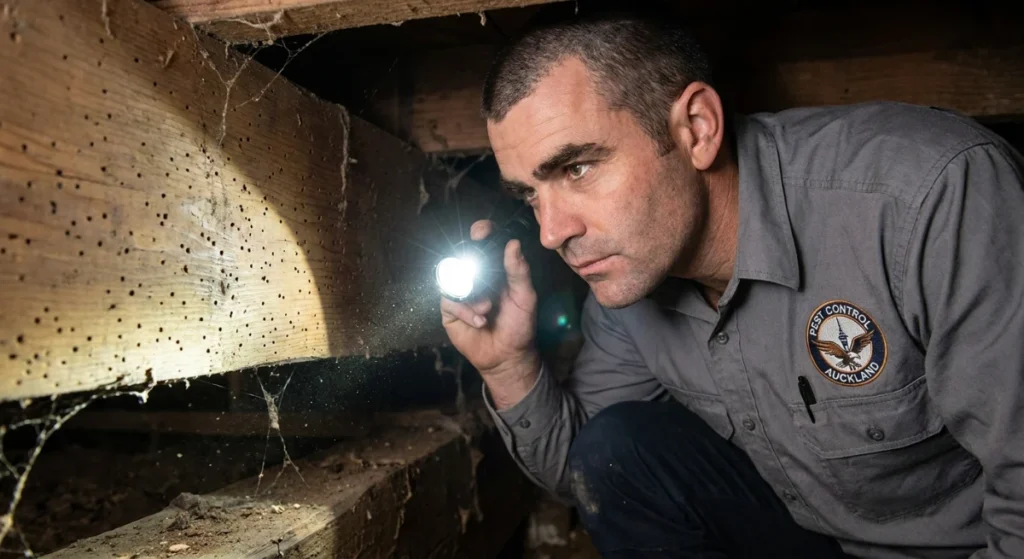
Rimu is by far the most common native timber found in older Auckland homes. While highly prized for its beautiful grain, Rimu sapwood is notoriously susceptible to borer attack. It is incredibly common to lift a carpet in a heritage villa and find Rimu floorboards riddled with tiny flight holes.

Interestingly, this damage is often restricted entirely to the lighter-colored sapwood streaks, leaving the darker heartwood untouched. Matai and Kauri follow a very similar biological pattern. Matai heartwood is incredibly durable, but its sapwood offers little resistance to larvae.

Kauri heartwood is practically impervious to the Common House Borer, yet its sapwood remains highly vulnerable. Because early builders often mixed these grades to save money, a single floorboard can be half-destroyed while the other half remains perfectly intact.

Borer flight holes in native Rimu timber

Native Timber Species Heartwood Resistance Sapwood Vulnerability Common Villa Usage
Rimu High Extremely High Flooring, weatherboards, framing
Kauri Very High High Premium flooring, doors, joinery
Matai High High Flooring, sarking
Kahikatea Low Extremely High Shelving, backing boards

Structural Damage Risks for Villa Owners

The ultimate goal of protecting historical timber from borer is preserving the structural integrity of your villa. The real danger of a borer infestation lies in its hidden, prolonged nature. By the time you notice the tiny 2mm exit holes on your skirting boards, extensive internal damage has likely already occurred.

Adult beetles only live for three to four weeks, just long enough to mate and lay up to 100 eggs in cracks and old flight holes. However, the larval stage is where the true devastation occurs. Once hatched, the grubs burrow deep into the timber, completely out of sight.

These larvae spend anywhere from two to four years eating their way through the cellulose structure of the wood. They create a complex network of tunnels that systematically hollows out the timber before they finally pupate and emerge as adults.

⚠️

Hidden Structural Failure

Ignoring flight holes can lead to catastrophic structural failure. By the time you see adult beetles or exit holes, the larvae have been hollowing out your subfloor for years.

While the Common House Borer is destructive, villa owners must also be wary of the Two-Toothed Longhorn Borer (Ambeodontus tristis). This native beetle is significantly larger and far more aggressive than its common counterpart.

Unlike the common borer, the Two-Toothed Longhorn will readily attack heartwood as well as sapwood. Its flight holes are large and oval-shaped, and it can rapidly compromise primary structural beams if left unchecked.

Assessing Load-Bearing Beams and Floorboards

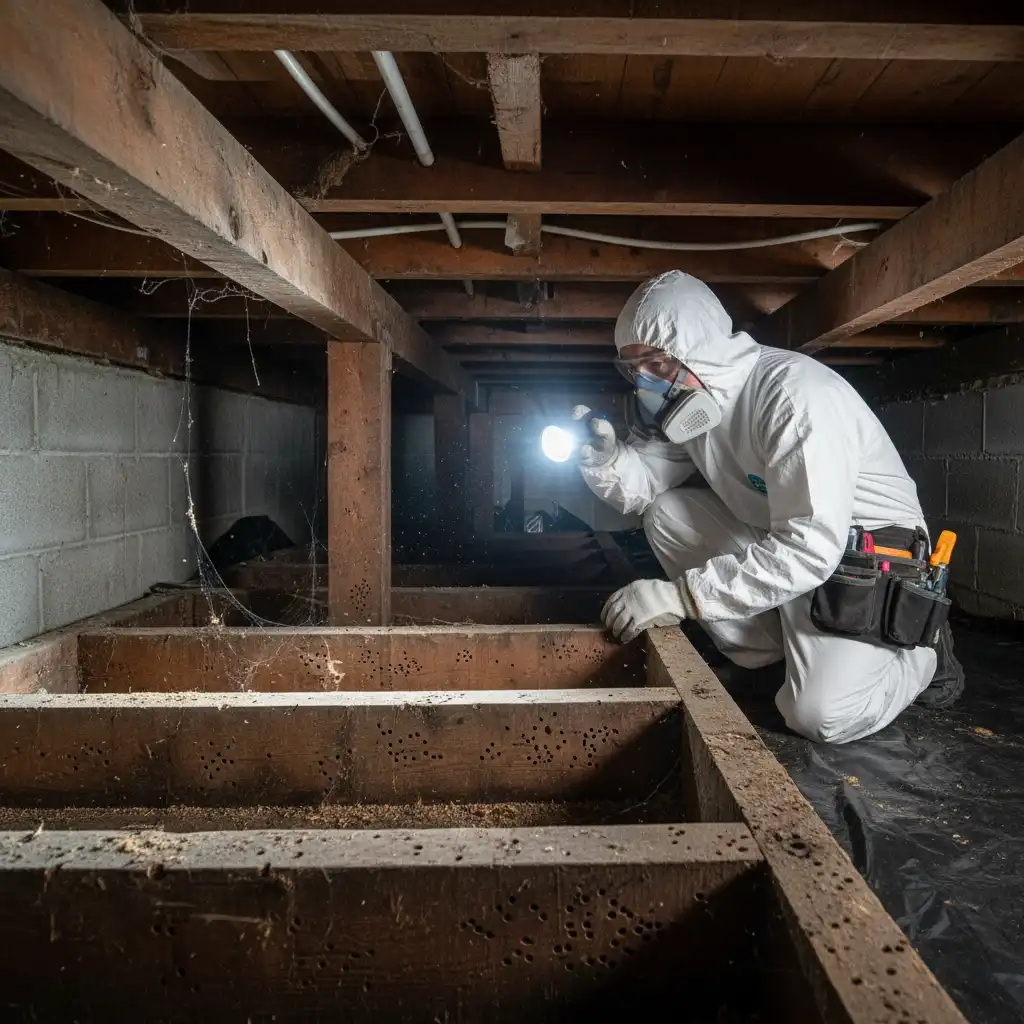
Routine inspections are vital for early detection and prevention. You must regularly assess the subfloor environment, paying close attention to floor joists, bearers, and the underside of weatherboards. A visual inspection involves looking for fresh flight holes, but because old holes remain visible forever, you must check for signs of current activity.

💡

The Black Paper Test

Place a piece of black paper under suspected borer holes. If you see fresh, light-colored dust (frass) accumulate over a few days, the infestation is currently active.

You can also test the structural integrity of a beam using a simple screwdriver. Gently press the tip into the timber near a cluster of holes; if the wood yields easily and feels spongy, the beam has lost its structural integrity and may need replacing.

Inspecting subfloor joists for borer damage

Safe Treatment Options for Antique Wood

When considering protecting historical timber from borer, standard commercial pest control methods must be carefully adapted. You cannot simply soak a century-old, French-polished Kauri door in harsh chemicals without destroying its aesthetic value. Heritage homes require a delicate, targeted touch to preserve their charm.

For exposed, unpainted timber in the subfloor or roof cavity, a residual saturation spray is highly effective. Professionals apply specialized, water-based insecticides that soak deep into the bare wood fibers. These treatments kill larvae as they eat and prevent newly hatched adults from laying eggs on the surface.

Because the borer life cycle is up to four years, this residual treatment provides long-lasting protection. For finished interior timbers, such as varnished floorboards or antique architraves, treatment options must be more refined.

  • Targeted Injection: Professionals use specialized equipment to inject insecticide directly into existing flight holes, reaching the larvae inside without damaging the surface.
  • Surface Wiping: Applying specific penetrating oils that can bypass light varnishes without stripping the historical finish.
  • Fumigation: In severe cases, full-scale gas fumigation may be required to penetrate deeply, though this is rare for residential villas.

The cost of treatment varies widely depending on the size of the home and the severity of the infestation. Preventative measures are generally affordable, while extensive injection work can be costly. Below is a breakdown of average professional treatment costs in the Auckland region based on recent market data.

Average Borer Treatment Costs in Auckland

Long-Term Preservation Strategies

Eradicating an active infestation is only the first battle. Long-term success in protecting historical timber from borer relies on creating an environment where these beetles simply cannot survive. Borer larvae require a specific moisture content within the wood to thrive.

Dry, well-ventilated timber is naturally resistant to attack. In many Auckland villas, poor subfloor ventilation is the root cause of widespread borer issues. Damp volcanic soil combined with blocked air vents creates a humid microclimate perfect for pests.

Subfloor Moisture Control

Inspect your subfloor ventilation. Ensure all air vents are clear of debris, install a polythene vapor barrier over damp soil, and fix any leaky plumbing immediately.

Additionally, consider applying a fresh coat of paint or polyurethane to exposed interior timbers. Adult beetles strongly prefer to lay their eggs on bare, untreated wood where the larvae can easily burrow.

By sealing the surface, you effectively remove their preferred breeding ground. Combined with professional residual treatments and strict moisture control, this multi-faceted approach is the ultimate defense for your heritage home.

Professional borer treatment on villa floorboards

People Also Ask (FAQ)

How do I know if borer is active in my villa?
Active borer is indicated by the presence of fresh, light-colored dust (known as frass) beneath tiny 2mm flight holes. If the holes look dark, dirty, or are painted over, the infestation may be historic. You can place a piece of dark paper under the holes to see if new dust accumulates over a few days.
What time of year is borer flight season in New Zealand?
The borer flight season in New Zealand typically runs from October through to March. During these warmer months, adult beetles emerge from the timber to mate and lay eggs, making it the most critical time for preventative surface treatments.
Can borer completely destroy a house?
Yes, if left untreated for decades, severe borer infestations can completely hollow out structural timbers. This reduces the load-bearing capacity of joists and bearers, potentially leading to catastrophic structural failure, especially in older homes built heavily with untreated native sapwood.
How much does borer treatment cost in Auckland?
Basic preventative subfloor and ceiling treatments for a standard 3-bedroom home usually start around $300 to $500. However, comprehensive treatments for severe infestations involving timber injection across an entire heritage villa can range from $2,500 to over $5,000.
Do borer bombs actually work?
Borer bombs (fumigators) are only effective at killing adult beetles that are actively flying or resting on surfaces during the flight season. They do not penetrate the wood deeply, meaning they cannot kill the larvae that are actively eating the timber from the inside.
Is it safe to treat antique furniture for borer?
Yes, but it requires specialized care. Standard liquid sprays can ruin antique varnishes and French polish. Professionals typically use targeted injection methods or specialized penetrating fluids that treat the wood without stripping the historical finish.

Leave a Comment

Your email address will not be published. Required fields are marked *

Scroll to Top